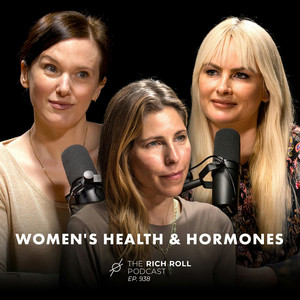
We're brought to you today by the wonderful folks at Go Brewing.
Let me tell you a story.
A few years ago, this guy, Joe Chura, rings me up out of the blue and he asked if I'll fly out to Illinois and speak at this event that he was hosting, called Go, which ended up being this really incredible weekend oriented around taking inspired action.
Joe and I hit it off, but...
You know, that was kind of that.
And it wasn't until I ran into him a couple of years ago at Jesse Itzler's Running Man event that I realized that he had taken inspired action himself by creating this new enterprise that was also called Go.
Go Brewing, in fact, which from Go has grown into what it is today.
One of the most exciting revolutions in craft brewing.
One of the many things that makes Go Brewing extraordinary is that they don't outsource, like most companies.
They handcraft everything from scratch in small batches.
In fact, this commitment to quality has fueled their growth into one of America's fastest growing breweries, now in over 5000 locations across 20 states and available online.
The salty AF gelato earned the untapped number one non-alcoholic lager in the United States.
And they're constantly creating bold new flavors almost every month that push the boundaries of what non-alcoholic beer can be.
Double IPAs, mouthwatering sours, all with zero added sugars and none of the junk.
Hear that?
Incredible stuff.
The non-alcoholic revolution is here, people.
I am proud to help champion it alongside Joe.
So get on board by getting with Go, by going to gobrewingcom where you're going to use the code RICHROLL for 15 off your first purchase.
Go.
Movement is so much more than just exercise or training or motion even.
Movement is a language.
It's a way of connecting body, mind and environment.
Movement as a way of being, a way of being that brings me close to myself, closer to other people and to what matters most in life.
And for me, what we wear in that pursuit plays a crucial role.
And that's what I appreciate about On.
They don't just make gear.
They engineer apparel that supports and elevates the practice of movement itself.
From running shorts with built-in support to technical tees that cool you down right where it matters.
Every detail is widely intentional.
Scene placement reflectivity breathability, minimalism.
That works together, so the gear disappears and nothing gets in the way.
This is apparel born from precision and tested by elite athletes, but made for anyone committed to the path.
I've been with On since 2023 and I'm still just so impressed by how they continue to elevate and innovate in the name of purpose, not flash.
Head to On.com slash Rich Roll to explore gear that supports you every step of the way.
So what we know about estrogen is that estrogen is the master regulator of women's brain health.
86% of American women will have had a baby by the end of her childbearing years.
That's the first radical health transformation.
And the second one is menopause.
As a scientist, menopause is a riddle.
Fat cells are not just little lifeless bags of calories.
They are hormone factories.
Feeding our gut microbiome affects our hormone regulations.
Stress can affect your hormone health.
You want to be able to have a positive mindset or a glass-half-full outlook on your stress.
Increased fiber is so important.
Let's use foods to get you into balance, not a pill, not something else.
Let's use diet and lifestyle.
Hey, everybody.
Welcome to the podcast.
Super geeks assemble because today we weigh deep into the weeds of science, hormones and women's health.
Here are a couple of clips that I believe you will find helpful.
Up first is Dr. Robin Berzin.
Women in particular go through this radical health transformation that men do not go through twice.
They have babies.
86 of American women will have had a baby by the end of her childbearing year, so it's still the vast majority.
And that is a huge health transformation for women.
It their lean muscle mass.
I lost all of my core strength that I had built up through.
I'm not an athlete, to be clear.
But just like sports and life and moving and doing yoga and all these things, three kids in a row I lost all my core strength.
I lost a lot of lean muscle mass.
You deplete the good fats in your body because one baby will take all of those omega-3s, especially if you breastfeed, let alone three.
And there's no... protocol or recipe for women who go after childbirth to be like, what do I do now?
And so that's the first radical health transformation.
And the second one is menopause, which 100 of women will go through, which is finally getting the attention it deserves.
And unlike men who go through andropause and yes, they go through sort of a slow decline of testosterone that accelerates in their 60s and 70s it has a couple sort of cliffs.
But it's not these same radical health transformations that women go through twice within roughly 15 or so years of one another, depending on when women have kids, sometimes less.
And in that women are almost set up for weight gain, for poor metabolic health, for brain fog, for osteoporosis, for all of the things that we do not want.
And essentially a worse health span, whether or not they will live longer than men, because on average they do a little bit.
One of my friends you know, a while back, like a year ago, signed up for Parsley and said to me can I like please come see you?
I just turned 40.
I had a baby.
I went through the whole IVF journey.
This woman is a former athlete, like former professional athlete.
You would look at her on the street and be like, healthiest person ever.
Like she doesn't have to think about anything, right?
But she's like, I'm 40.
I had a kid.
I'm finally done with this fertility journey that I felt like took over my life and psyche for years.
And I don't feel great.
I don't know why.
You know, is it just because I'm a mom?
Everyone tells me I'm a mom, so therefore I'm not going to feel great.
And I don't know what to do for my health now.
And I'm not a professional athlete anymore.
You I guess I'm just like waiting around for menopause to hit.
And I realized when she said that, that so many people, especially women, are in that boat.
They don't know what to do, specifically what to do besides eat less and move more.
What does that mean?
And what should she be doing?
What could it mean to have a great menopause that's totally asymptomatic or a lightly symptomatic?
What could it mean to... feel as good and look as good as she has until this point in the future.
And when she came to me, I was like, all right, I'll see you.
I like never seen new patients, but this was a friend.
So I was like, all right, I'll see a new patient.
We ran a bunch of tests, turned out she had early onset Hashimoto's thyroiditis.
So she had an autoimmune disease she didn't know she had very early, like hadn't hit her numbers yet in terms of thyroid function, but was there?
She was feeling really depleted.
She had a really pronounced imbalance in that omega-3 to omega-6 balance.
She had a number of other nutrient deficiencies.
And She had not at all in perimenopause what we would call perimenopause, but we got kind of a baseline on her hormones that her overall testosterone level was already in the low end of normal.
So she's going to be one of these people that really loses her testosterone by the time she's 40, by the time she gets closer to 50.
And so I was really inspired by that, by this comment of like do I just sit around and wait for menopause to hit and then like kind of let everything fall, apart from there?
And I realized no one is anywhere telling women what to do.
Except for Lisa Moscone.
Yes.
Who's the best?
Yeah, there are a few.
And then the response is we'll do HRT.
And we're prescribing and HRT is hormone replacement therapy and we're prescribing way too little and way too late in HRT.
But it's not enough.
It's not the only answer.
And so I developed this protocol that addresses not getting osteoporosis, building up lean muscle mass in very specific ways by eating adequate protein, by doing strength training, to make sure that your metabolic level doesn't just fall off a cliff, because these hormonal changes will drive it there if you don't heavily intervene.
And taking care of your brain health, which is highly specific.
Things from omega-3 fatty acid supplements.
I drink a tablespoon of really high quality olive oil every single day to taking certain supplements from lion's mane and other things that help improve synaptic activity.
To you know everyone's favorite intervention, which is exercise, because exercise and building up lean muscle mass has been shown to really improve cognitive function.
And by implementing this protocol that's highly specific, foods, supplements, exercise.
And in the case of brain meditation, because meditation does improve gray matter and does improve brain health and cognitive function over time.
You can give women especially although all of this applies in most ways to men as well you give women especially, a very specific recipe and blueprint.
And then you can add hormone replacement therapy onto that which I do and we do in a way that says all right, we're going to not only maintain your good health from pre kids, pre health transformation one, but we're going to even accelerate it and even give you this opportunity, now that you're done with having children, to double down on your health and to set yourself up for not having all the things that women are told are inevitable, which is gaining weight and brain fog and exhaustion and bone density depletion and et cetera.
And higher risk for Alzheimer's and dementia-related conditions.
Exactly.
And so we talk about a lot I think you talk about this the four horsemen of cancer and dementia and heart disease and diabetes that are killing America essentially.
And This is a plan that will help people, especially women, not get there.
And I think we need to be talking to women about it, who are 35 plus, who are ending or maybe even is still in the middle of that fertility journey and thinking about what are we going to do for your health so that that doesn't become your inevitability a couple of years from now.
That's great.
I mean the idea that it's like well, just go on HRT and that's the end of the conversation is like shocking right.
But after talking to Lisa, it's not surprising.
And you shared with me some of the statistics around the longevity research.
I mean, essentially, it's all data based on studies on men, right?
There haven't been any women-specific studies on healthspan.
Is that correct?
Yeah, nothing.
That's amazing.
Yeah.
You said women account for just 41% of research subjects today.
And that's for all research?
That's in general and also in any studies related to longevity.
And women weren't even included in research until 1993.
Any research?
There were in some, but they were systematically excluded from research because it was felt that women and their hormones made things complicated.
And so a lot of generalized research was done exclusively on men.
Women are just complicated.
They're just fucking things up all the time.
It's the best.
They're a problem.
You know, what we have is relatively recent.
And, you know, so I'm a big proponent of hormone replacement therapy.
I think we've underutilized it.
And I actually think that It is part of the brains, bones, and booty protocol.
Like we wait way too long to put women on hormones and we don't test them.
There's so little testing of women's hormones to say, are you making any testosterone?
A lot of our testosterone, you know, testosterone is made by ovaries.
It's also made by adrenals.
And then, after menopause, when your ovaries call it quits and they're over and done with, you're still making testosterone through your adrenals.
And so a lot of women have depleted their adrenal function and their ability to make good testosterone for their adrenals.
So we'll see women with really bad, really low testosterone.
I know I say bad, very low testosterone, way before menopause.
We'll see women who have very low progesterone levels.
And testosterone and progesterone are also really critical not just estrogen to maintaining brain health, maintaining bone health and maintaining energy and blood sugar.
And so we test for these things early.
And I recommend for women who are 40 plus, at 40, get a baseline of your hormones, a complete baseline, and test them once a year, at least every two years.
And then, if you start to have symptoms, test more frequently and use testing as a guide for hormone replacement therapy.
The other thing that I find somewhat terrifying is there's a lot of now selling of hormones online, a lot targeting men as well as women.
And Anyone who's recommending hormones to you, especially as a woman who has never given you full testing and doesn't know your other health risk factors.
Do not take hormone replacement from that person.
And if your baseline results are irregular, that could be the result of many different things, right?
That could be rectified short of replacement therapy.
Yes.
And there's so much we can do.
Like I mentioned earlier, blood sugar is a huge driver of hormonal balance.
I see this in moms like myself all the time.
Sleep deprivation and just sheer exhaustion, dehydration impacts our hormonal balance.
There's some supplements that have good evidence-based behind them not a lot, but some that can be supportive to things like progesterone balance and overall cycle health that you could start in your perimenopausal period with some direction before HRT.
And then HRT can be started in phases.
We can start with a little bit of testosterone a very low-dose progesterone testosterone and then make our way to estrogen when we need it.
But all of the research shows that you know women who are on HRT, who started it around 50 or around when menopause onset, had a 40 reduction in all-cause mortality.
And it was just the women who started it, like 10 years after menopause, at 60 plus, where there was higher cancer risk, higher dementia risk.
And so a lot of the research, the Women's Health Initiative research that was sort of misinterpreted as saying that HRT was dangerous, really deprived a lot of women from getting support with their hormones.
And what we see now is that it's heart protective, neuroprotective, and cancer protective.
And I'm gonna put a big caveat there if used in the right way.
And there are of course, some women for whom it's not appropriate.
That cancer fear has a long tail, like it seems to persist.
And, you know, I think most women are walking around with that apprehension.
Yeah, I think so too.
And I think it's based on misinformation largely.
And then the medical community perpetuates it.
I was giving a talk on women's health recently and you know someone says in the chat my PCP told me, you know, HRT is dangerous.
And the medical community at large hasn't gotten up to speed.
And the more recent interpretations of the data that show that actually, hormone replacement therapy, if used in the right way, is highly protective for some of these same issues that we were so scared of.
Okay, up next is the plant power doctor herself, Dr. Gemma Newman.
What is the role that nutrition can play in women's health specifically?
I think in terms of practical things that people can do, increased fiber is so important.
Main reason being that if you're constipated, you're actually potentially recycling unwanted hormones through the body.
Hormones that you would have otherwise got rid of, you're actually reabsorbing.
So trying to make sure that young girls and children and everybody in general doesn't get constipated is quite a good way of reducing our excess hormone exposure.
I think it's important to mention that our fat cells in our body are also hormonally active.
They can produce estrogen.
If we have more of those, then we also have more exposures to estrogen as a result of that, which can affect men as well as women.
But I think that that's a really important thing.
That again, is not necessarily talked about much the fact that our fat is also hormonally active too.
And Yeah, so I think fiber is a really important thing.
It reduces our hormone exposures.
It helps us to produce short-chain fatty acids, which is also great for helping our hormone regulation, feeding our gut microbiome, which is important as well for hormone regulation, which is also important for our immune system, which affects our hormone regulation.
So all these things are linked.
Wait, you're saying it's all related?
I have.
I had Dr. B in here the other day going deep on fiber once again.
Yeah, of course.
Yeah, and his whole thing about eating 30 different plants and setting that as a goal, the importance of fiber for any number of things and just how critical it is.
In this conversation, it tends to get lost.
We focus on macronutrients or protein or our omega-3s all of which are important, of course, but most people are fiber deficient.
Like where's the?
Again back to the low-hanging fruit.
Like what is the quickest, easiest change that you could make that could have the biggest impact, and increasing the fiber and your diet seems to have just a multiplicity of downstream health benefits it does, and there was a study uh, i think it was actually led by dr neil bernard um looking at how this could affect people and their periods um, And they had a two-month cohort of women.
Half were on a healthy plant-based diet.
The other half were a control group.
And they wanted to see, could it affect their periods?
And what they discovered was that it did make a statistically significant difference in the length and the heaviness of the women's periods.
Just by increasing fiber.
Yep, just by increasing fiber.
And it also showed a raised SHBG sex hormone binding globulin which is an important protein that essentially holds on to hormones until we need them.
It's kind of like a storage molecule, if you like.
And what's interesting is it was able to increase that for the women who are consuming a healthy, plant-based diet, which is important because that can help regulate their unwanted hormone exposure as well.
And is that a function of just an increase in plant foods and by definition, an increase in fiber?
Or is there an aspect of that that has to do with the removal of the meat and dairy products?
It could be a bit of both.
So this is postulation-based.
So that study didn't say specifically why, but we know that fibre is so crucial for reducing recycling of hormones, as I mentioned, but also meat and dairy does have a role to play with regard to hormone exposure itself.
So when we consume dairy, we're consuming the milk from a cow who's been pregnant and obviously is lactating, which has extra hormones bio-equivalent hormones to human hormones.
But also in the meat that we eat, there is some hormonal exposure there as well.
But also interestingly, I think, is that meat is one of the main ways that we get potential for microplastics exposures, which are also affecting our hormones.
I think in the UK, phthalates are highest in fish.
In the US, phthalates are highest in chicken.
And there was some data to show that there was an association between increasing meat consumption and increasing endometriosis symptoms.
Okay.
So this was a fascinating and stimulating conversation.
I think you're going to really dig it.
So without further ado, this is me and Dr. Kyle Chalette.
Let's talk about stress and stress optimization.
So how are you thinking about this in the context of hormone health?
A lot of people have, and this kind of encompasses mental health as well and social health.
But you want to have something that requires great effort.
Life is extraordinarily difficult and you want to be able to have a positive mindset, or a glass half full or even glass quarter full mindset.
Um, outlook on your stress.
There's a lot of tools like mindfulness or meditation or even prayer, which kind of delves into the spiritual pillar as well.
But you want to have just enough effort in the areas that bring you purpose, but you also want to control your stress.
Fortunately, we are concentrated on the self-actualization part of maslow's hierarchy of needs, so we're not as concerned with our physical or bare essential needs, but the level of stress is still there.
So humans have had a very stressful existence.
When the stress is not proportionate to the threat.
It can be unnecessary and it can affect your hormone health and it can affect the health of the rest of your household as well.
Acute stress in certain controllable scenarios, good.
Chronic stress, bad.
But as you know, we live in an epidemic of chronic stress low-level to high-grade stress and we've kind of acclimated to that as a normal right.
Everybody's stressed out, everybody's anxious, and our lifestyles, you know, are kind of oriented around being in environments that produce it.
You know support that and you know You could tell people you need to meditate, you need to have a mindfulness practice, but the boss is yelling and the kids are crying and they're up late.
All of these sorts of things that are just part and parcel of like getting through life, which is difficult, have created in the Western industrialized world this epidemic that's driving downstream all of these metabolic health problems, from obesity to diabetes, et cetera.
Talk about the like, get into the hormones of chronic stress and what that's doing to us and how it's dysregulating our health and how that impacts us down the line in all these other ways.
We can think about the adrenal axis of stress and we can also think about the neurotransmitter axis of stress.
So one of the ways that your body will acclimate to stress, including physical stress, is increasing cortisol, which is a glucocorticoid which can decrease muscle mass and cause an increase in blood glucose.
If you give someone a medication like prednisone, which is basically a medication version of cortisol, and if you give them to them for a long time, then they will develop diabetes.
And also excess body fat and decreased muscle mass.
So basically like sort of extrapolating on that idea essentially, what you're saying is if you're in a chronic state of stress, it doesn't matter how great your diet is or how well you're sleeping.
This cortisol issue could create type 2 diabetes in you nonetheless.
Correct.
A pathologic overproduction of it is known as Cushing's disease.
So that can also be very detrimental for your health.
It needs to follow very closely.
But there's a continuum or spectrum in between where you can have cortisol overproduction.
There's even supplements that can potentially help control cortisol.
Ashwagandha is likely one of them.
And Imodin is another one.
I think it's derived from rhubarb.
So again, with cortisol, the dose can make the poison as well.
The other main axis of stress that would be hormonal would be your adrenergic nervous system.
You also have things like dopamine, epinephrine, and norepinephrine, catecholamines.
Basically.
Think of this as if you're acutely stressed, your fight or flight nervous system is activated.
Classically, this would be you would either fight a lion or run from it.
So you have an increase in those hormones.
Epinephrine is also known as adrenaline.
If they're elevated for a long period of time again, it can lead to body fat accumulation, excess hunger, and it can also lead to desensitization of those receptors.
Dopamine receptors and also adrenaline receptors can be desensitized very quickly.
That's why many individuals that are on medications that stimulate or simulate your dopamine and your adrenaline or noradrenaline, require higher and higher doses.
Adderall would be the main example of one of those medications.
Sure, and obviously that's applicable to the addiction scenario as well substance addiction or behavior addiction.
Right, because hormonally, your does your body even know the difference, and there's many scientists um, for example, andrew huberman, that talk um in detail about the dopaminergic system and how it affects your motivation and how it is closely related to testosterone.
So your androgens and your dopamine are very closely related.
I describe your dopamine as a pool, specifically a wave pool, where you do expect natural fluctuations up and down.
But, depending on if you have an overflow of dopamine, your body can make that wave pool deeper to try to accommodate for that, and then you're only filling up half the pool.
And even if you have a normal amount of dopamine, you can feel depleted.
Interesting.
So for somebody who has enough self-awareness to know that they go in and out of some level of chronic anxiety or stress, what does the science look like in terms of From a hormonal perspective, like if you adopt a consistent meditation practice, like have they studied, okay, here's how this is impacting hormone regulation in the body as a result of like a formal practice or some version of that that is a de-stressor?
From the cortisol or sympathetic overdrive that has been studied and a...
A meditation or a relaxation practice, or even just walking and being around green plants and trees can be helpful, or even being around more sunlight.
But from an androgen standpoint.
I'm not sure if it would optimize your testosterone or estrogen, but clearly effective.
I think you all know that I'm all about wellness, but what I'm not really about is our culture's current obsession with focusing on the margins of wellness.
Things like expensive, exotic adaptogens or the latest extreme biohacking trend.
While also, at the same time, often overlooking the basic fundamentals nutrients that are foundational to thriving.
Research suggests that many of us struggle to get optimal amounts of protein, creatine or omega-3s from food alone.
But these three nutrients are the bedrock of cellular health.
Brain function, muscle recovery, cardiovascular support, it all depends on them.
And that is the philosophy behind the Momentous 3.
Taken daily, this routine supports every cellular function of the brain and body.
Their vegan omega-3 delivers 1000 milligrams of EPA and DHA from marine algae at potency levels that were unheard of in plant formulas until recently.
Their plant protein provides a complete amino acid profile.
And everything is backed by the momentous standard rigorous testing, transparent sourcing and developed alongside leading researchers to serve everybody, from athletes at the highest levels of peak performance to everyday people just looking to level up.
So check it out.
Use code richroll at livemomentous.com slash richroll for up to 35% off your first order.
Just when you feel like maybe you just might get a handle on things.
Life has this way of throwing us off our rhythm because life, no matter what, is just basically fundamentally uncertain.
Work goes haywire out of nowhere.
Routines get interrupted.
Sleep gets disrupted.
And look, before you know it, you're feeling unsteady, stretched too thin.
I've been there.
I've been out of my freaking mind.
And I know from messing up many, many times just how key it is to have a practice to return yourself, not the outside world, the externalities, but you back into balance.
Calm provides you with that practice an easy but reliable way to ground yourself amidst upheaval and put you in the proper frame of mind to move forward more mindfully.
Calm is the number one app for sleep and meditation, giving you the power to calm your mind and change your life.
I really appreciate how it meets you where you are.
Guided meditations for when anxiety creeps in, sleep stories that help you shut down and grounding exercises when overwhelmed.
And I'll see you next time off a calm premium subscription at calmcom slash rich roll.
This is an amazing value.
Go to calmcom slash rich roll for 40 off.
Unlimited access to calm's entire library calmcom slash rich roll.
And tell calm.
You heard about them from me, So my good friend Dr Neil Bernard MD is on the pod today.
And today's discussion is focused specifically on the perils of unbalanced hormones on women's health.
Explain to me what drew your attention to hormonal health and why you've chosen to put a lens on this at this time.
Rich.
I stumbled into this completely by accident, you know, because we think about food as affecting your weight or your cholesterol.
But I was sitting at my desk one day and my phone rang and it was a young woman who said Dr Brian, I can't get out of bed.
What's the problem?
And many women have some menstrual pain, but for maybe one in 10 or so it's off.
The scale cannot function for a day or two days.
And this was her.
She said, my mother told me I should call you and you could help me.
And so I said well, I can give you some painkillers for a couple of days.
But I started to think about what are cramps?
And menstrual cramps, to put it simply, are the lining of the uterus is being thickened up every month in anticipation of pregnancy.
And it's hormones, it's estrogen that does that.
And if you have extra estrogen female sex hormone that uterine lining thickens up a whole lot more.
And at the end of the month, it all disintegrates in menstrual flow.
But as it disintegrates, that thick lining releases prostaglandins that cause cramping.
So she's telling me her symptoms, and I thought, wait a minute.
I wonder if you've got too much estrogen in your blood somehow.
And it ran through my mind that I remembered from Physiology 101 that your liver has a way of removing estrogen.
It takes it out of the blood.
Your liver filters your blood.
It pulls it out and sends it down through the bile duct into the intestinal tract.
And as long as there's plenty of fiber in your intestine, it just flushes all that estrogen away, the excess.
If there's not fiber in your digestive tract because you ate Velveeta for lunch, then those estrogens go back into circulation and your estrogen level stays too high.
So I said to her, how about this?
Let's try an experiment.
I'll give you painkillers for a couple days, but for the next month would you like to try a diet that might help.
No animal products, keep oils really, really low, foods as natural as possible.
Four weeks later, she called me back and said, this is a STEM day.
My period came, zero symptoms.
And then in the months that followed, same story.
But then she loosened up her diet a little bit.
The pain came back.
So I thought, okay, that's one person.
So I connected with our friends at the Georgetown University Department of Obstetrics and Gynecology.
And we did a research study.
We brought in a large group of women.
They all had moderate to severe pain every month.
We split them into a placebo group effectively and a vegan group.
And it works.
The first thing they noticed is that PMS was different.
Bloating and water retention cut way down.
And then mood changes that they had been bothered by were reduced.
And then when we tracked their pain, it was fewer days and less, noticeably less intensity.
So we thought, okay, that's really important.
But Rich, I gotta tell you something.
In the course of this study.
We told all the women Please don't take any hormonal preparations in the course of the study because it's going to goof up our results.
And that includes birth control pills.
So if you're sexually active, please use some other method, because we don't want the hormones to interfere.
One of the women said, don't worry about me.
My husband and I gave up trying to have a baby years ago.
It's not him.
We've been tested.
It's me.
I don't ovulate.
She just was not releasing eggs on any kind of predictable basis.
The second month that she was on the vegan diet, she came in and said Dr Barnard, I've got bad news and I've got good news.
I said, what is it?
Well, I'm leaving your study because I am pregnant.
And she was pregnant.
And about eight years later, I was giving a lecture in a different city.
And I didn't realize she had moved.
She came to my lecture and told me about her three kids.
What I'm saying is that hormones affect pain, they affect fertility, they affect hormone-related cancers like breast cancer, prostate cancer, so many things.
And everybody is whirling these dials on their hormone levels by the food choices they make every day, without having any conception of what is happening.
So the reason I wrote Your Body in Balance is I thought well, let's get your body in balance, because all of these things make people miserable.
In some cases, they just make you miserable.
In other cases, like hormone-related cancers, they can kill you.
So let's get this information out there.
And yes, if people want to buy prescription drugs, fair enough.
If you need to have a hysterectomy for endometriosis, maybe.
But if we can just change your lunch... and your dinner and do it like that, let's do that.
Yeah, I mean, those are some pretty dramatic results.
So walk me through.
I mean, the first example that you gave was the impact of increasing fiber into that person's diet.
But then the study that you conducted was going full vegan.
So those are two different things.
So let's maybe talk about just nutrition in general and its impact on hormonal health and kind of differentiate between those two things.
Okay, the reason that we went full on vegan is I gave you one example of fiber, but it's not all there is to it.
This whole area started being studied, oh, 20 years ago, maybe more, for cancer patients.
Breast cancer patients have one thing on their mind, which is I don't want my cancer to recur.
And so researchers have looked at dietary changes that reduce estrogens for cancer patients.
And they found two things.
The first is fiber, which I mentioned earlier.
A high fiber diet flushes these estrogens away, quite literally.
But the other thing is fat, animal fat, and even oils, vegetable oils.
For a reason that I don't know the mechanism, we haven't figured it out.
If I take a group of women and I put them on a fatty diet, their estrogen levels rise.
And you can do both together.
You could say high fiber, low fat, high fat, low fiber and you could see estrogen levels going up and down and up and down very rapidly.
So we thought, okay, I don't want any animal fat in your diet at all.
That means it's vegan.
But we went a step further and kept oils low.
So what that means is that everything you're eating has fiber.
Everything you're eating is from a plant.
There's nothing in your diet that's not a plant.
And so you're getting abundant fiber, very little fat, and we thought that would work the best, and it does.
Right.
So high fiber, low fat, basically whole food, plant-based diet.
And over the course of this book you kind of go through a whole battery of different maladies that I think are really affecting so many people right now.
I mean, breast cancer is like one out of eight women or something like that.
Prostate cancer is one out of every nine men.
Infertility rates are insanely high right now.
There's lots of opinions about what's contributing to that beyond hormonal health.
Weight gain, thyroid moods, hot flashes, you know endometriosis, which you mentioned menopause, acne fibroids, like the whole thing, right?
So, You make this decision to divide this book up into basically a couple different categories.
The first is related to sex hormones and fertility and ovulation.
The next relates to metabolism and mood.
So why don't we just like go through it?
I mean, we're talking a little bit about sex hormones right now.
But this fertility thing is super interesting.
I mean, I know, I'm sure you know, you know tons of couples that are having trouble conceiving and IVF and the like.
Are you know things that you're just hearing about more and more and more?
All the time.
And I think there are a variety of contributors, and some may have nothing to do with diet that's possible or they may have to do with chemicals you're being exposed to without being aware of it.
But diet is a big part of it.
One of the obvious things is that people are gaining more weight than they used to, and they're gaining weight earlier.
We see a lot of kids where childhood obesity has become a thing.
And if you look at when, at what weight, is your fertility the best?
It's actually not when you're a little bit overweight.
A person might think, wow, if I'm overweight, that's going to be helpful in some way.
When fertility for women is at its highest, it's on sort of the thin side of normal.
You don't want to be overly thin.
That's not good.
But you definitely don't want to be overweight.
Fertility is impaired.
And why would that be?
Because fat cells are not just little lifeless bags of calories.
They are hormone factories.
And this is also true in men.
If you go to the beach You see overweight men with their shirts off and they've got some breast development.
And that is because, as they gained weight, their own body fat is making estrogens, causing breast tissue formation.
So in a woman, you need a certain amount of estrogen.
You don't need a huge boatload because that'll interfere with fertility.
And then there's a dairy connection, which completely blew me away.
The dairy...
In this case, there are hormones in dairy.
As you know, there are estrogens in dairy, and that's probably part of it.
But the sugar in dairy products, lactose, breaks down in your body to release galactose.
It's a breakdown product, and that's toxic to the ovaries.
It's linked to ovarian cancer.
It's linked to infertility.
And the most amazing thing, if you look at countries that have the least dairy intake, they tend to have a pretty good preservation of their fertility.
In a woman who's from her late 20s to her late 30s, she's gonna tend to maintain her fertility.
You go to a place like the United States where people consume a lot of dairy, there's this enormous drop in fertility between the late 20s and the late 30s.
And it goes right along with galactose intake.
So my point is, dairy doesn't do the body good.
Yeah.
Wow, that's amazing.
So, in terms of addressing that, you have dietary protocols, but there's also life studies like look, you got to exercise, you got to lose a certain amount of weight.
There's a whole section on chemicals, which I'm going to get into as well, because I think that's a big part of this that people don't talk a lot about.
But what was amazing is the reversals that you're seeing.
I mean, this book is filled with all these anecdotes of patients that you've treated, where the turnaround times are really quite rapid.
One, yes, they are.
In the menstrual pain study that I described briefly, where the women their pain improved.
That was in the second cycle.
You know, eight weeks time.
Will you get better if you go to 12 weeks?
Sure, 16 weeks, yeah, absolutely.
But the changes are quick.
And one of the stories true story that I have really been struck by was that of a woman named Catherine Lawrence, who was in the Air Force, went to Iraq in 2003.
She designed military bases.
And when she got back home, her friend said Catherine, what all did you miss when you were over in Iraq?
Which foods did you miss?
And she missed cheese.
So she had a friend who gave her I'm not making this up 48 boxes, those little blue boxes of macaroni and cheese.
For 48 days straight, she ate mac and cheese dinners that her friend gave her.
So anyway, she gained weight.
And she started to get pain in her abdomen.
And it got worse and worse, and it worsened with her cycle in particular.
And so eventually her doctor did a laparoscopy, where you look into the abdomen with a little scope, and he gave her a diagnosis, and the diagnosis is endometriosis.
That's where the lining of the uterus is shedding cells that travel up and implant all around the abdomen and they cause pain because they swell with your cycle, but they also will strangle the fallopian tubes, causing infertility.
Anyhow, a lot of women will have a trace of this.
For some women, it is Debilitating.
Yeah, miserable.
I'm talking about fistfuls of ibuprofen don't get you through the day.
And hysterectomy is basically the protocol often, right?
That's what was recommended to her.
And if painkillers and hormonal treatments don't work, that's kind of your option.
And in fact, she scheduled her hysterectomy.
However, before she could have it, a friend of hers said, Catherine, let's try a diet change.
Maybe this will help you.
Wow.
She went low-fat vegan.
That was basically it.
And it started almost immediately to get better, like you were saying Rich, that it wasn't a long time.
And week by week, she was feeling better and better and better.
She went back and had another laparoscopy.
So the doctor looked around in her abdomen and then sewed her up.
And the doctor went out to the waiting room to find her husband and said, this is really amazing.
The doctor said, her endometriosis has effectively disappeared.
And her husband said, I'm not surprised.
You know she went vegan, completely changed her diet and she's been feeling better and better and better.
And the doctor said, no, no, no, no, no, no.
It can't be that.
It can't be that.
Diet doesn't cause anything.
If something was wrong with you, it would definitely be because of the vegan diet.
But if something's good, it can't be that.
The doctor said, there's only one explanation for this.
This must be a miracle.
So the doctor, I think, wrote miracle in her chart.
And she never, she doesn't have endometriosis anymore.
It went away.
She never had the hysterectomy.
She has three children now.
And in fact, she joined the physician's committee's food for life group.
And Catherine Lawrence lives in Dallas and now teaches other women how to take back their their health.
Now, let me be clear.
I do want to say a word for not everybody necessarily gets better.
Life is not fair.
And there's some people who may have endometriosis or cramps or fertility issues or whatever, where a diet change only does so much good or maybe not at all.
Those people should not feel ashamed.
They're not doing it right or something.
Our bodies are fragile.
Things go wrong with it all the time.
Just like your car, it's not going to last forever for any of us.
But we've got some tools that are so cool.
And my message, and the message of Your Body in Balance is let's use foods to get you into balance, not a pill, not something else.
Let's use diet and lifestyle.
Today's episode is brought to you by...
You know, it's funny.
We don't often think of eyewear as performance gear until it starts to get in the way.
And if you're like me, somebody who has contended with eyesight impairment my entire life, it's a very real thing without a real solution for athletes.
I cannot tell you how many times I've been mid-run constantly shoving my glasses back up my nose, tripping on roots and rocks, because I couldn't see them or my glasses had fogged up.
Or what about out on the bike where the treachery is obviously far more intense?
Well, this is why Roka has been a godsend for me.
Approaching prescription eyewear from a performance perspective first, but not at the cost of fashion, I should say.
Helping not only people like me, but all kinds of athletes, including Tour de France cyclists and Ironman champions, with everyday frames designed for movement.
Their secret is their proprietary gecko technology patented nose and temple pads that grip even more securely when you sweat.
No slipping, no distractions, and they're insanely lightweight.
Most frames weigh less than a pencil, super light, even with prescription lenses.
Beyond the function, the craftsmanship is next level.
Razor-sharp optics, durable construction and a design that actually is beautiful and keeps up with you.
So put them on, feel the difference, and wear without limits.
Unlock 20% off your order with the code RICHROLL at ROKA.com.
That's R-O-K-A dot com.
It's pretty crazy how we can be hyper aware of certain costs that we pay for things like an airplane ticket or the plumber.
And, at the same time, pay these other costs, like recurring monthly expenses, without questioning them, as if they're just these non-negotiables.
But they're not.
Take Mint Mobile.
Same nationwide 5G network, same high-speed data, same unlimited talk and text.
You keep your phone, you keep your number, you keep your sanity.
The only difference is that, instead of paying whatever big wireless decides that you should pay, you pay 15 a month for three months of unlimited service.
While everyone else worries about unexpected charges, you're liberated from that for free.
The network quality is solid.
The savings, obviously, are very real.
We're talking about freeing up money for things that actually matter.
If I was switching carriers tomorrow, this would be the move.
That's mintmobile.com.
See Mint Mobile for details.
Okay.
Finally, here to give us guidance on the menopause brain is neuroscientist and author Dr Lisa Moscone.
What's interesting in reading your book is this antiquated notion that menopause was seen as a disease, which is crazy because it happens to every woman.
You know, how could that be?
Lots of people say that today.
And really not studied in any kind of effective way.
But also this idea that it's not an on-off switch, that it is a transitionary phase that has you know sort of sub phases within it.
It's a process.
It's a moving from one state to another that is endocrine driven, but also has these very real implications in terms of of how the brain operates and understanding that as a pathway towards a little bit more self-compassion, like there's this narrative also something that still persists that you know that that women go crazy, or you know they lose their minds and, on top of that, that experience of menopause can vary wildly between women.
And also its onset can vary wildly in terms of when it occurs age-wise.
Yes.
How do you understand why that experience can be so different for different people and why it would show up at different stages age-wise, for different people?
Yeah.
So I think it's really important to clarify that menopause is not just.
I think that, insofar as we have understood menopause at all, it's traditionally or historically been just the half that speaks to the functionality of the ovaries.
And brain scientists were really not involved in that definition.
So now we understand that menopause is actually a neuroendocrine transition state, which means it's a neurologically active phase during which your brain is impacted just as much as your ovaries are, in some ways more.
Because when your brain is impacted, then you have all these symptoms that sometimes really prompt fear.
In many women who have no clue what is happening to them when women talk about having half-losses and night sweats and depression and anxiety and insomnia and brain fog, which is scary, and memory lapses and forgetfulness or panic attacks or even skin-crawling sensations.
If you don't know why you're having those symptoms, it is legit to really worry that there's something really bad happening to you and your brain.
So those symptoms are in fact symptoms of menopause that have nothing to do with the ovaries.
Those are neurological symptoms that are prompted by your brain, because menopause is in fact changing your brain.
When we started looking into this, I come from a different field.
I do Alzheimer's prevention.
And I landed on menopause, which is an interesting story because some of our patients were having a hard time with cognitive testing.
And that's how we kind of made a connection.
And so we started looking at menopause and I was like, well, what's been done?
Let's look at how many brain imaging studies have been published.
What did they find?
What can we learn from it?
How do we move forward?
There wasn't a single one.
Not one.
No one.
They looked at women's brain as they are going through menopause.
All the studies that were published were looking at menopause as the outcome.
So they were all done after menopause, like in women in their 60s and 70s and 80s.
But then you're done.
At that point, you're in the postmenopausal stage, right?
There's not much to learn about how menopause effectively impacts your brain.
And so I said, well, let's do it.
There was this Danish study that came out recently that seemed to say on the surface that hormone replacement was associated with a 24 increased risk of dementia.
Now this created a lot of discourse out there because it sort of upended what people thought about HRT.
So what say you?
Like what's really going on here and how do you think about HRT as an advisable protocol?
Yes.
So that study was interesting because everybody started calling me.
I want to say it.
And that prompted a thorough examination of the effects of hormone replacement therapy on the risk of Alzheimer's disease and dementia.
Because I really wanted to not just give opinions, but actually come up with numbers.
Because I'm a scientist and opinions really don't matter to me, but numbers do.
And so here's the thing.
There's biology and then there's pharmacology and they don't always go hand in hand.
So what we know about estrogen is that estrogen is the master regulator of women's brain health.
It's like the orchestra conductor in women's brains.
It's involved in a number of functionalities that have nothing to do with having kids and everything to do with having a healthy brain.
That's endogenous estrogen.
It's the estrogen your body makes for a reason.
The reason being that the system, the neuroendocrine system is active and responds to estrogen.
So the way the estrogen works is done.
Estrogen alone doesn't really matter.
What matters is the system.
And the system is the estrogen plus an estrogen receptor, which is a compound that you find throughout the body in the brain, in the ovaries, in many, many tissues, everywhere in organs.
That is like a lock and the estrogen is like the key.
So the estrogen has to bind.
And then the receptor triggers a number of transcriptional pathways that lead to high energy levels, glucose consumption, immunity and more neuroplasticity and more blood flow.
Exogenous estrogens.
The estrogens that we introduce in the body are not the same as the estrogen we make.
They could be molecularly speaking the same.
But we also need to understand when to use them and when to stop using them, and who benefits from them and why.
So just for history, because it's frustrating to me, estrogen was discovered in the 1930s.
And as soon as it was discovered, two things happened.
One, it was immediately linked to sexual behavior and reproduction and fertility.
And so it was dubbed a sex hormone.
And we've been stuck with that definition since.
So number two pharmaceutical companies realized that there was also a link between estrogen and menopause.
And so boom.
Estrogen replacement therapy became the number one drug in the United States until 2002, pretty much.
Now, what happened in between?
In 1992, scientists realized that the same hormones estrogen testosterone, progesterone that were so important for fertility and reproduction actually had a huge impact on the brain.
They were just as important for the functioning of our minds.
1996 is when the scientific community really bought into this idea that sex hormones are actually not sex hormones.
They're neuroendocrine hormones, right?
They serve multiple roles.
What's the problem?
When did we get to the moon?
30 years prior.
When did the biggest clinical trial of hormone replacement therapy begin?
1993.
That's the Women's Health Initiative.
It is, to this day, the largest clinical trial investigating hormone replacement therapy for prevention of cardiovascular disease and dementia, also relief from menopausal symptoms.
That trial started before anyone had any clues of how estrogen actually worked in the brain.
So what they did, they powered their study based on outcomes.
They said, we need to know if giving estrogen to women can prevent heart disease and dementia.
When do you start getting heart disease and dementia?
When you're older, after menopause, right?
Well, that's when it shows up.
You start getting it when you're in your teens, probably.
But the measurable outcomes like heart attacks and dementia.
Those are things that happen later on in life usually.
So they said, well, I only have 10 years to do this trial.
So I'm going to start enrolling women who are 65 and older.
What's the problem with that?
They're already postmenopausal.
They're postmenopausal by a decade, at least.
The system has shut down.
You can't just push stuff inside your brain, right?
So what happened in these trials is that they were interrupted earlier on, ahead of time, because the investigators were concerned that they noticed that a lot more women that they estimated were getting heart disease, they were getting heart attacks, they were getting strokes, they were getting blood clots.
And so they interrupted the trials, and they also noticed an increased risk of breast cancer for the women who were taking hormones, as compared to those who were not.
And they noticed a double risk of dementia.
So twice as high rates of dementia among some hormone therapy users as compared to placebo.
And then the media jumped on it and they I think everybody says that so I think it's okay to say that it really inflated the risks to the point that a ton of women just decided to stop hormonal therapy rather than stop.
Both cancer and dementia.
That's enough to scare, right?
Sure.
Yes.
And pharmaceutical development also stopped and so did research.
So that was a problem, because we know that hormones are meant to be taken as you go through menopause, not after, right.
They're supposed to replace the hormones that your body is no longer making, but it's a sort of supplement really, although you do need a prescription.
But if you start too far or too long after this window of opportunity has closed, then we now know that the effects could be either neutral or not so great.
Okay.
Ever since there have been many studies published, mostly observational studies because clinical trials are hard to do.
They look at hormone replacement therapy use in some women as compared to women who decide not to take hormones.
And then what happens later on in life?
Do you get Alzheimer's?
Do you not get Alzheimer's?
Now it's becoming more of a thing.
So every couple of months there's a new study that comes out where in July hormone replacement therapy will completely vanquish any chance of getting dementia.
And then in September I don't remember when it was, but in the fall another study comes out showing that actually it's going to give you dementia.
What do we do?
We cannot look at one study and assume that that is the reality for all the women.
That's one piece of the puzzle.
What we need to do is to take all the available evidence and do something called the meta-analysis, which is a statistical integration of all different findings from different studies all over the world.
That will give us greater confidence of whether or not taking hormones is bad for you or good for you when it comes to Alzheimer's prevention.
So I don't usually do meta-analysis, to be honest.
I do brains, but I said to my team we have to because this is just too confusing.
So I'll show you what we found.
All right.
So far.
As far as I know, this is the largest meta-analysis done including, I believe, close to 6 million women from all over the world and over 50 studies, including the Women's Health Initiative, but also everything else that came after the Women's Health Initiative, which I think is just as important.
And this is what we found.
Two things.
When you take hormones matters.
If you take them for menopause as you go through menopause is different than if you take them later on in life when you're done with your transition.
Number two, the type of hormones that you take also matters.
So if you have a uterus, you need to take estrogen with a progesterone or progestogen.
So there are different types of hormones.
They can be bioidentical, which people talk about a lot, which are molecular replicas of what our hormones actually look like, more or less exactly like the hormones that the ovaries make.
Or you can take slightly different versions that we refer to as synthetic or progestins.
Okay, turns out that matters.
For women who do not have a uterus because they've had a hysterectomy.
Then you don't need to take the progesterone.
You only take the estrogen.
So we have estrogen-only formulations and estrogen-progestogen formulations.
We're going to look at them separately because the outcomes are different based on what you take, at least as far as we're now at this point.
Estrogen-only.
These are women who no longer have a uterus.
If you take estrogen only within 10 years of the final menstrual period, that is associated with a significant reduction in the risk of dementia later in life.
It's about 32%, which is good.
Significant.
Yeah, significant.
And the important thing is that the data was quite I mean, it was variable, but it reached statistical significance, which means that the vast majority of studies showed a protective effect.
If you start taking estrogen only more than 10 years after the final menstrual period, that has neutral effects on the risk of Alzheimer's disease and all-cause dementia.
Doesn't increase it, doesn't make it better.
Estrogen and a synthetic progestin.
If you take it before menopause or within 10 years of menopause onset, there is about a 23 reduced risk of dementia.
However, the data here is a lot more variable.
So this is a trend.
So there's a trend towards reduced risk of dementia, which means the data is not conclusive, because some data, some studies, show an increase in risk.
Like the Danish, I believe.
And some studies show a reduction in risk.
So what determines what different studies find is an interesting conversation.
But then if you start taking estrogen and progesterone more than 10 years after menopause, that is linked with a possible risk increase.
Now the tip of the iceberg here is the Women's Health Initiative.
That we know was really a bit of a problem.
But there are studies that show protective effect even then.
Only when you combine them all together, it looks like there's a possible increase in risk.
If you start taking hormones at that point, not if you start in midlife and keep taking that.
That's a good thing.
Right.
But if you start to like... It looks like more than just a risk.
I mean, that's a pretty steep curve there.
Yes, the point is that it's a trend.
Again, it doesn't reach significance because some studies show protective effects and some studies do not.
And a sub-analysis, which is something you do after, shows that the studies that really show an increase in risk use a type of synthetic progesterone that is called MPA that is no longer in use today.
Whereas other forms of synthetic progesterone do not increase risk nearly as much.
And the most important thing, I think, is that bioidentical progesterone, which is what most people use now, has never been linked with a higher risk of Alzheimer's.
So the takeaway really is we need more research.
Yes, timing and type, and like really being with a practitioner who understands this landscape well.
Yeah, also, these studies are observational, which is a problem from a clinical perspective.
You want clinical trials, right?
Because you can control a lot of variables, you can standardize.
They're more conservative.
It's better.
The problem is you cannot physically run a clinical trial for 20 years.
So to my mind, we should stop trying to correlate, because at that point there's a correlation use of hormones in midlife with something that happens 20 years later.
What would be better is to take hormones at the right time and use brain imaging as the outcome.
Okay, we did it.
I hope this was valuable and helped you on your journey, or could be used as a way of helping a loved one.
And if you have been personally inspired, please consider visiting the full, in-depth conversations with these esteemed guests.
You can find links to each episode posted in the YouTube description or in the show notes at richrollcom.
Thank you for listening.
Thank you for watching.
Until next time, peace, plants.