What does it mean to be a female leader today?
As a Global Women's Summit is set to convene in Beijing?
We find a powerful answer to that question in the story of Dr Lin Li.
She is both a Guzheng virtuoso and a war studies scholar, and her journey is a profound testament to redefining success by embracing multiple, seemingly divergent passions.
Roundtable's Niu Honglin sat down with Dr. Lin to learn more.
We're live from Beijing.
This is Roundtable.
I'm Steve.
Thank you so much for being with us today.
And for the show, I'm with Yushun and Yushan.
First on the program.
In a world that often asks us to choose a single path, how do we redefine leadership on our own terms?
The convergence of global female leaders in Beijing for a major summit brings this question into sharp focus, and few embody its answer more strikingly than Dr Lin Li.
She has masterfully woven together two seemingly opposite worlds.
One, the strategic discipline of war studies and the expressive artistry of the Guzheng II.
Her life is a compelling argument that true influence in the modern era comes not from specialization alone, but from the unique synthesis of diverse passions.
Roundtable's Niu Honglin sat down with Dr. Lin to learn more.
Here's their chat.
A grand stage, a beam of light.
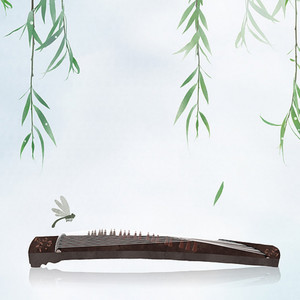
Fingers glide across guzheng strings as melodies echo from ancient dynasties into the modern day.
But offstage.
The same hands flip through academic journals on international politics, preparing lectures and research papers.
This isn't a scene from fiction.
It's a life of Ms.
Lin Li, a young Chinese woman rewriting the rules of what it means to lead, to learn and to live with depth and range.
And here we have her today.
Hello, welcome, Ms.
Lin.
Great to have you on Roundtable.
Thank you so much for having me here.
It's a real pleasure to be here and to share a bit of my journey with you.
Thank you.
So can you do a short introduction of yourself?
Because I gave a little spoiler already.
You dipped into a lot of different areas and you have, I think, both of your disciplines.
The majors are quite surprising.
It's a surprising combination.
So give us a little introduction of yourself.
Thank you, Shaw.
I did my Bachelor in Law at School of International Studies, Peking University.
And then I do two MAs.
The first one is MA Geopolitics and Territory.
And the second one is MA History of Warfare, both in King's College, London.
And then I did my PhD in War Studies in the same university.
And also when you mentioned Gu Zheng.
I consider Gu Zheng and Drama Performance as my second majors.
I already know about Guzheng, but drama performance is something that I haven't heard for the first time.
But let's talk about Guzheng first, because Guzheng is quite a Chinese instrument.
It's something that can be a little bit foreign, a little bit unfamiliar for a foreign audience.
But you have the experience of bringing Guzheng performance to the international stage.
So for you, does performing abroad feel different from performing domestically?
I think the point is when you show up abroad, you are representing your own country.
And that makes me a little bit nervous at the beginning because people see China through you.
I believe this is true for everyone.
Like when you were abroad, your sense of patriotism reaches the peak.
So performing abroad is always special, not just because of the new audiences, but because Every performance becomes a kind of lens, especially when I first started performing internationally, which was over a decade ago.
And then social media wasn't as globalized as it is today.
So for many people in the audience, they had never seen this instrument before.
So I wasn't just a musician for them.
I was their first real encounter with Guzheng, with Chinese music.
So in a way I become part of how they would perceive our country and the art of it, consciously or not.
And yes, sometimes it's even a gentle challenge to their listening habits.
When you perform abroad.
What you could do, and what you should do the most, is to amaze them, make them say wow.
So most of the time I would go for a piano concerto, because the piano is a familiar instrument to many Western audiences and it helps them create immediate bridge and the basic curiosity or willingness to really listen to you.
So once that connection is built, I might introduce more unexpected pieces, like those featuring percussion or modern tunings.
I remember I play one modern tuning piece, like it's written by my teacher.
It's called Western Theme Rhapsody.
And I played that piece in Royal College of Music.
And one Italian professor came to me at the end.
He said, well, I can hear some similarities between us from your piece, from your playing.
So engaging with audience, in your opinion, can be also very important.
Yes.
And I think, especially when you're facing a group of audience that has no idea what you were playing, a bit of talk would help a lot.
One of my, how to say, proud experience is here in Beijing.
A few years ago I worked for International Relations Cooperation Office for Peking University and I was assistant to manager for International Summer School.
And that's hundreds of international students come from top universities around the world.
And that year, I organized a concert.
And I borrow the title from Shakespeare's Midnight's Dream, but it's full of Chinese arts form.
We invited students from various university clubs like Chinese orchestra, Chinese dance, Chinese opera and martial arts, etc etc.
And I asked them to talk through their instrument and the piece they are going to play before they play for the audience.
And that works extremely well because Most foreign students they have no idea what they're listening to.
So there is a barrier when they listen to it, they lost the curiosity, they lost the motivation.
But when they get to know the instrument and the person a little bit, they're more willing to listen to it.
So that form of concert remain every year and grow bigger and bigger.
Now it's a brand event for the Peking University International Summer School, so I'm very proud of that.
It sounds very interesting.
I would love to listen to that one day.
If I have the opportunity to go listen to that though, I would love to continue talking about music.
We have to go into your other a major part in your life, that is the academic work, and you learn about international relation.
So do you think these two disciplines affect each other in your life?
Yeah, I think so definitely.
Music and academic research may seem unrelated, but to me they complement each other in powerful or even magical ways.
So I have different things to turn to.
So for me, music is more than something I play.
It's a therapy to me.
And on an objective level.
I believe music and international politics intersect more often than we realize.
It's not only because music and arts, it's a key role in soft power, as we know.
Because my academic research often deals with international conflicts, power struggles and shifting alliances.
But you can see how music transcends these divisions.
When the power is frozen, the music flows.
I always say music's the only language without a Babel Tower.
So music and war always have been deeply intertwined.
And in times of conflict, music has been used as a tool of mobilization.
And equally, music has played a role in post-war reconciliation and emotional healing.
Now arts reconciliation programs, for example using music and the arts to mend communities fractured by war and historical trauma, is now a very mature program in the UK already.
And I think in both the arts and in global politics it comes down to one thing that the one who's got the strength wins.
So it's earned the hard way.
That is a very philosophical answer.
I quite enjoy that.
And I can see that both disciplines blend very well in you.
Still, I'm curious.
How do you think these two disciplines in your life, these very important things in your life, have shaped your approach to leadership and decision-making?
And do you think that can apply to other females as well?
After all, strategic studies and international politics, it's basically about the art of leadership and decision making.
So it gives me a strong sense of how decisions are made on a big scale, because true leadership isn't just about control.
It's more than that.
It's about judgment, timing, vision, risk assessment, prejud anticipation.
So you are dealing with human nature as much as policy analysis.
And when we study so many leaders, so many historical cases, you start to understand how important it is to keep your judgment steady.
So compared to, of course, compared to those great figures, I still have a long, long way to go.
But it definitely helped me build a kind of macro level and sense of long-term thinking.
And on the other hand, music has taught me how to work with people on the micro level.
It's because in music whether it's chamber music, orchestral work or cross-cultural performances or filming something together, it's all about collaboration coordination, teamwork.
So you realize quickly that leadership is not always about being the loudest voice, but about listening, adapting and building relations.
I learned how essential it is to truly listen to others.
So everyone has to tune in to each other to be at their rhythm.
So leadership to me is not about having all the answers like you should do this, you should do that.
It's about setting the tone and holding the space and helping people move in rhythm, even if the rhythm changes all the time.
So I guess if you ask me for a certain answer, I would say politics gives me structure and strategy.
Music gives me sensitivity and flow.
So I guess strategy trained my brain and music trained my heart.
But it's a very special perspective, isn't it?
That's your special perspective.
And some people say that here in this country we have seen the development of the status of female in the society for a long time.
And some also say that as a female I have a special, relatively special, perspective in my area, even if that subject or that major is a male dominated area.
So we see definitely progress.
For instance, here in this country, the average life expectancy of women exceeds 80 years.
In 2023, women accounted for 43% of all employed persons nationwide.
We see that in 2023, female students made up 499 of students in higher education and women accounted for 506 of all graduate students.
So these are progress.
I want to say we are very fortunate to be living in a time where women have access to higher education, the opportunity to pursue our careers and the space to speak up.
Compared to earlier generations, this is a remarkable shift.
And I feel truly grateful to the revolutionary pioneers who made this possible.
So it's important to remember that what we have today didn't come easily.
It was earned through the vision and efforts of those who came before us.
When it comes to different gender.
There are many different theories and studies trying to figure out whether or not there are different factors concerning different genders.
Statistics from certain surveys show that from assistant professor to associate professor to full professor, the proportion of women declines at each promotion step.
Do you agree with that in your area?
Do you see that in your academic life?
Well, generally speaking, in my field, like when we talk about war studies, international politics yes, statistically women are less than men.
But I'm very happy to see that in my PhD office, there are many ladies.
And beautiful ladies, I have to say.
We dress up every day and give us a good mood to study, to fight on.
I personally do not receive that much gender challenge in my career or process.
Can I understand it this way?
That is because we are developing in each and every generation.
For our previous generations, we see more male dominating almost all the areas.
But that is being gradually changing.
And because of that, change when it comes to our personal development, because I am a young female too.
And in my area, I do not get challenged because I'm a female either.
And I get to feel that because people are being more and more aware of the fact that female has their own strengths.
We can multitask sometimes better than men.
Again, a stereotypical saying, but it happens sometimes.
Might be individual.
I was just joking.
But the idea is that The development is happening.
Generalizing group of people just because of their gender is not scientific and it's not true.
And because of that awareness, we do not see such examples in our lives that much.
But because of the previous situation, we see it in a statistical way.
Yeah, I think another reason might be in professional occasions, people tend not to talk about this, to not be judged as unprofessional.
But in real lifetime, I think we got that challenge more than in professional occasions.
For example, people are always saying like, oh, you're a girl.
You don't need that much education.
Why do you go for a PhD?
Why do you go abroad?
Is the moon fuller abroad than in China?
That's the true saying I got myself.
And in daily life, we got challenged like you should get married early.
As early as I was in undergraduate study, one of my family friend said to me when we have dinner together.
He said oh, you are already in your 20s.
You should find somebody and marry him.
Like women are like fruit.
If you don't get out of the market early, you are not fresh.
That's horrible.
And I said, Some fruit are meant to be wine.
Smart answer.
Yes.
That's the thing.
In academic world, we often see people who understand and appreciate our talent.
But in daily life, you know, people are from all walks of life.
I'm pretty sure whoever is saying anything to you, they tend to or they meant to be nice to give you advices, or give any of us advices that they deem proper.
But Yeah, another trait or feature of a strong independent woman is to know what you want.
And one other thing is that in today's society, we hear more and more discussion about female power.
We hear about girls help girls, girls appreciate girls and understand and support girls.
So do you see that as well in your life?
Do you think it's true that we're being more and more aware of the importance of supporting each other?
When it comes to girl power and girl help girl.
I actually feel quite delightful that in recent years I've genuinely experienced a growing sense of solidarity among women, not just in statements but also in daily life, in real support.
It's powerful about how women can understand and respond to each other's struggles.
That's very important.
Sometimes it's not even grand gestures.
It's just knowing someone has your back and you are not alone there.
And that helps a lot.
And when women support each other in their professional lives as well, like sharing information, mentoring each other and standing up in meetings, it slowly changes the ecosystem.
I feel lucky to have both given and received that kind of support.
And I want to keep passing it on.
Recently, my friend Julian and I launched a small initiative focused on sixth grade girls at Luku Lake region, where it is less developed.
And they're really in need of basic menstrual supplies and proper education.
So we have a small amount of donations already.
And with the first round of donation we were thinking if we should provide like basic menstrual supplies to them.
But after discussion with the local teacher, we decided to purchase 16 newly published a book for the school reading room.
So not just this year's sixth graders could learn about their buddies, but all the girls, different ages, different grades.
They would benefit.
And, more importantly, it could help girls understand and protect themselves at a deeper and more fundamental level, because they can learn about their bodies, how it works.
That is a great cause.
I think we see a lot of different types of voluntary activities in today's society.
I've seen people trying to talk to like what you did talk to schools, public schools, talk to public areas and talk to extracurriculum classes about the sanitary life and sanitary knowledge, about female.
And also on China's social media.
There are all these different types of shorter videos letting girls understand your power, your strength.
Yes, we see the development in the Chinese society.
We see the achievements we've already got, but at the same time we still wanna move one step further.
We wanna continue to push for Better condition, better environment for the young women out there.
And it's done by all people, not only female, but also smart and intelligent young male and any anyone who understands the importance of this because, at the end of the day, it's both male and female cooperating connecting, communicating with each other that can actually create the society we want.
I totally agree with what you mentioned on social media thing.
But there is another sign that I would worry a little bit about.
Because in today's world, as feminism becomes a trending hashtag or a popularized label, when the language bombs of consumerism are launched, they often land first on the most willing to pay group, that is, women.
So the ads say, like, be good to yourself, accept all your flaws, don't suffer.
The earlier you enjoy, the better.
So I sometimes feel that feminism has been wrapped in the glossy packaging of consumerism as a branding tool.
So it's consumption dressed up as empowerment.
They try to persuade girls like, if you buy this, you are empowered, but it's not.
Feminism is misled as like buying expensive things to feel empowered.
But the truth is, when we are constantly being stirred to consume in the name of liberation and self-love, we are handing over the power to define and to control ourselves to capital.
That is very well said.
I totally agree with you.
Yes, definitely.
It's always about that. deeply what we want, not what we are told to want.
Something quite important.
Talking about advice, I think that is one good advice.
But, at the same time, what are some other advice you would give to young women who are, you know, still navigating their path, especially for those who want to follow the path of, for example, being an artist, or who want to study in liberal art area, or who even wanted to study international politics?
Talking about path, I would say there are three dimensions to consider.
Passion, capability, resources.
First, passion is like, do you love it?
It's more than just interest.
Passion is something that even if you don't make money out of it, you're still willing to go on.
And second capability, is like do you have the skill or potential to become truly good at it, like your knowledge, your technique, your capability?
And third, resources.
Do you have access to the resources, whether it's time funding connections, networks or institutional support?
If something satisfied two out of three, give it a go.
And don't chase a perfect path.
There is no such thing as a perfect path.
And don't say, I'm not yet ready, because you can never be ready.
Is there any advice that you've received that you find very rewarding or has helped you a lot in your life?
Don't box yourself in.
I used to be very unconfident about myself.
I thought I'm not good looking enough.
I'm not a traditionally good student because I always do this and do that.
And also there are a lot of people come to me and they say, Like if you can focus on one path, like you can reach much greater achievement than you do now.
But I don't think so.
My different perspectives give support to each other.
And I believe without either, I can't be who I am now.
And I believe that life is not a straight line.
It's layered.
You have colors.
All the things you do gives you a different color.
The shifts don't distract me.
They sustain me.
They bring me joy.
They bring me energy.
So it helps me keep curious and be playful.
Say yes to anything.
You try as much as you like.
It doesn't mean you are not serious to all of them.
That's very interesting.
And at the same time, your answer makes me feel that sometimes, when we give advice to other people, what we can give, the best advice we can give, is actually to give our stories an example and have them figure out what they really need.
Because everyone's life experience could be different and their strengths are different and their combination is different from ours.
And Do you think it's important for successful young Chinese women like yourself to give back to the society?
Oh, absolutely.
First of all, I believe giving back is not something exclusive to women, or even to the successful people.
It's something that all capable individuals should do.
I would personally prioritize three kinds of positive feedback to the society.
Is addressing basic needs.
Rigid demand.
So those are the foundation for dignity.
And second, reaching people or communities who are often overlooked, because that's where you can truly make a difference.
And third, giving out of empathy to them, not out of your own ego.
Help in ways that align with the real needs of others, not just out of your imagination or a sense of heroic.
Since we are talking about women, and two women for quite a long time, anything you want to say to our male counterpart as well?
For the young male out there, anything message you want to send?
Talking about men or women, I think sometimes we need to move beyond gender.
And there is something beyond gender, which is human nature.
Instead of asking whether something is a gender-wise advantage or disadvantage, look at something unisex and something universal, like before you.
Treat me as a man or a woman, treat me as an individual, respect me as a human being.
Of course, society places far more expectations and heavy requirements on women, and we shouldn't shy away from saying that out loud.
But we but me speaking here, and the program here and all the women speaking very loudly today isn't to provoke gender antagonism.
It's to highlight the reality so we can move forward together.
Feminism in its truest form has never been about division.
It's about collective liberation.
And that includes men too.
So real change doesn't come from blame, but from shared courage and collective awakening.
I look forward to the era of herstory.
And thank you very much for having me here.
And the wise men out there understand that and they support us too.
So it's mutual supporting and the kind of cooperation and connection and communication that leads us to here today and also forward.
Thank you so much, Dr. Lin Li, for joining today's Roundtable.
We are bringing more interesting and amazing male and female stories here on Roundtable.
What an impressive conversation.
Thank you to Niu Honglin and Dr. Lin Li once again for that chat.
Good afternoon for the first time, Yushan and Yushan.
What were some of your takeaways from that conversation?
You go first.
You seem like you've got a lot to share.
Not a lot, but very thought-provoking discussions that we heard, absolutely.
And I remembered the idea that Dr Ling was emphasizing that we should not be limited by any stereotypes or perceptions and we should instead stay curious and open-minded and just try out everything that you like or you want.
And you never know what's the result.
And that is actually the thing that you should pursue.
I was also thinking that sometimes it's, it's still, or also the society that reinforces some of the stereotypes.
Of course.
About certain jobs in certain areas.
Certain roles.
Yeah.
For example, in Chinese, um, delivery workers are often referred to literally means delivery guys.
Uh, even though a fair number of women also work in these, um, roles.
So this group is often overlooked because of such stereotypes.
Um, But what I want to say is from a male's perspective, of course.
It can be quite difficult sometimes to notice these issues when you are maybe the beneficiary of this system or haven't personally faced bias like that.
But that's exactly why it's even more important for men to understand and support women's development.
And to listen to conversations like the one we just listened to.
Yishan, what do you think?
I think this chat just perfectly demonstrates her personality, and it's basically the same as how she impressed me personally, because I was lucky enough to get the chance to meet her in person on the very day when she came to our studio to record with Hong Lin.
Well, Dr Lin, like she mentioned, she demonstrates a type of true leadership that I personally have never really looked at it through her lenses before, which involves all different criteria.
It's not just about control, but about judgment, patience and assessment of different status and conditions that you're in.
And it was perfectly demonstrated via that case she shared.
She just mentioned like one to two lines as a case example in the recording we just heard, which was to donate books to the Luku Lake students.
Sixth grade girls.
And that's kind of like a rural mountainous area in southern China's Yunnan province where those girls have limited access to perhaps sanitary napkins and towels and kits, that kind of stuff.
So initially they wanted to donate sanitary kits, but after rounds and rounds and rounds of negotiation they eventually decided to, for the safety and general benefit of the local.
Girls, Let's just and boys, of course, let's just donate books.
So she impressed me as such a female leader who demonstrates her own belief of leadership through practical action and just very well planned and well organized kind of mechanism and negotiation and communication skills in such ways that she makes things happen, like she said, go to those people who are in need of help and bear empathy and just general love for for those people for those young girls in her case and and do something to help them.
That's That's something that I was super impressed when I first heard about it.
And I think the books were a great idea because, as Dr Lin said, you're not only helping that particular group of students at that particular time.
Those books will remain there and those will educate the future students who make use of them as well.
Right, right.
Yeah, great points that you took away from that.
Mine was from a different perspective, because she lived in the UK for a long time and she was questioned by people in China when she was making that decision.
I think the phrase was, is the moon fuller abroad than it is in China?
Yeah.
And when I moved to Asia many, many, many years ago, I got a lot of support from important people.
But there were people around me, too, who said, why would you do that?
What's wrong with homes?
And it's not that there's something wrong with home.
It's just some sort of desire to go and see other parts of the world and hear different languages spoken and eat different foods and be exposed to culture that you're not normally exposed to.
So my response to that would be, no, the moon isn't fuller in other parts of the world.
It's the same moon that we stare at every single night, no matter where you are.
But it's a different set of circumstances and it's a different experience when you look up at that moon from a different part of the world.
So that's what I took away from that.
That was a great chat.
Thank you once again to Dr. Lin Li and Yong Lin for providing us with all of that great information.