These are my personal opinions.
Always seek a professional when you're making choices about your mental health and well -being.
Welcome to the show.
Glad you are here. Somebody wrote to me a while back and said, I used to write a newsletter under a pseudonym until recently.
I think they did it for their organization or their company.
And it was the only way I could finally be known.
and they said, I appreciate the grit that you have to tell your story.
So they were thanking me for helping them get to that space.
At least that's how I interpret this message.
They wrote, I appreciate the grit that you have to tell your story.
And this is what I want to talk about.
They said, I wonder how you came into such bravery.
And then they wrote, I guess your podcast says it all.
thank you for writing that the person who wrote um I want to talk about bravery I talked about courage just recently but bravery in the sense of getting to a point where I felt comfortable being myself I didn't consider that bravery I considered that dealing with the consequences of my actions and taking the risk knowing there would probably be consequences.
And that, somebody might call it bravery.
I call that taking risks.
And the difference is, and I think it's an important difference, the difference between bravery and taking risks, I mean, some people might see it as the same thing, but I see see it as bravery is standing tall and being okay with what happens.
And then taking risks is maybe standing tall, but knowing that you could probably be hurt and not being okay with what happens, but hoping things go well.
So, yes, there was a level of bravery or courage message and the decisions that I've made in life.
And if you've been listening for a long time, you probably heard a lot of my stories.
But if this is your first time, I'm sharing this because I talk about personal boundaries and how you honor those and how I've been honoring them for years and how I learned to honor my personal boundaries and how I learned to live authentically.
And I I share all of that in many of my episodes.
And so if you're new to this, this is what this person is talking about.
Where did you get such bravery?
And I don't see it as being brave. I see it as taking a risk and seeing what happens because I'm, or I was sick and tired of being mistreated.
I was sick and tired of toxic people being in my life and not going away.
way. I was sick and tired of not being respected and not feeling like I was being treated as someone important.
And that doesn't come from ego.
That comes from, hey, basic manners, please.
Basic kindness and respect or at least basic manners, basic civility.
Because I'm not here to be at the whim of someone else's control or manipulation or the victim of their toxic behaviors or abusive behaviors, I finally decided one day that I wasn't going to react or respond the same way I usually react and respond.
And that was the day I decided I'm going to start taking risks.
risks and the risks that I took were basically let's see what happens if I honor myself and choose the path that I really want to choose instead of the one that I believe will be the most acceptable to everyone I stopped choosing what's acceptable to everyone one and started choosing what was right for me.
And then that's what happened over the years.
I just, instead of being brave, I just took risks and I figured out what happened because I was willing to suffer.
It's a, I'm not giving you this advice.
I'm just saying, this is how I got where I am today.
This is why I feel comfortable in my own skin.
This is why somebody can come up to me and call me out for something and say you're a bad person and this is why and instead of recoiling and crawling into my shell I say okay let's talk about it let's talk about why I'm a bad person because I want to know I want to know what you see in me I want to know how you perceive me because clearly you you see something that I don't see in myself, or maybe you see something that you interpret as bad or hurtful or narcissistic or abusive or whatever, I want to talk about it.
I want to put it on the table.
I want to get it out in the open because if you have a thought or a feeling about me, I would rather talk about it than you keep it to yourself.
I'm not the type of person who says if you have anything bad to say don't say anything.
I'm the type of person who says if you have anything bad to say about me let's talk about it but it took me a while to get there because I was so insecure for a long time and I didn't want to talk about things that made me insecure or made me think that people didn't like me and I'm over that and I think it's a healthy place to be when you get past that and you can feel good about yourself because you know you're you're doing your best. That's how I feel.
I know I'm doing my best and I know I'm capable of screwing up too.
And that's a good place to be.
That's my opinion. I think it's a good place to be to know that you're doing your best and you could screw up.
You could mess up and somebody could call you out and then you can hit your hand on your forehead and say, oh, you're right.
I need to work on that.
And so to the person who wrote that, they said, I appreciate the grit you have to tell your story, which is just me being transparent.
And I wonder how you came into such bravery.
The bottom line with that is when I took the risk, I knew there could be a good or bad outcome.
But every time I took that risk and I survived, that's how I can stand up and and feel good in my own skin because I know if I can survive that, then I can survive the next thing and the next thing.
And it gets easier and easier to honor yourself as you do that.
That's my take. That's my philosophy.
Again, I'm not telling you to do that because when you take risks, the other side of the coin is if you take the risk and things turn out badly, I don't want want you to look at me and say hey you told me to take that risk I'm saying that every time I've taken a risk it has always worked out even when initially it seemed like a bad thing like standing up to my boss or quitting a job or leaving a relationship actually they left me Uh, I've learned a lot.
And, um, when those things have happened, they always seem bad at first. And then I find out later on that there was something else in the works for me.
Oh, this came up for me.
That's great. And if I had my other job, then I wouldn't have had this opportunity come up.
So there's a new opportunity.
If I was in this other relationship that I was unhappy in.
Then I wouldn't have had this opportunity with this other person and on and on.
Those things have happened repeatedly because I took risks.
That's how I look at it.
I look into my past and I see the things that I did to get to where I am today all involved risk.
I mean, I was a nine to fiver.
I worked corporate.
I worked for organizations.
I was always somebody's employee.
No problem with that.
I would go back to that again if I wasn't doing what I'm doing now.
But there was a point where that wasn't working anymore.
I was faced with some bad news that somebody else had my leash and they could walk me anywhere they wanted and feed me when they wanted.
I mean, metaphorically, and I realized that it was time to take a risk and try something thing on my own.
That's when I started this show.
I started the blog.
I started everything that I am doing now.
I took a huge risk.
I even lost all my money and got a divorce and all these things happened in the meantime, after I took that risk and they all seem to work out beautifully because I took the risk.
And I think that's important to somebody who might feel like they're in a bad situation and they've been in that bad situation for five years, 10 years, 20, 30, 50.
I mean, there's a lot of years that can go by because we're afraid to take the risk.
When you're afraid to take the risk, you stay where you are and staying where you are is okay if you're okay where you are but moving into a new place in life does involve risks it does involve doing something that you may not be used to or may not know the outcome of and when you do that you might lose what you have or at least a part of it so that you can move into to a new place in your life and have something different.
But that's risky. It is very risky.
That's why I don't say you need to take risks.
I don't want to tell you that because you could end up in a bad situation and I don't want that for you.
But I do know, here's my little caveat to that.
I do know that if you are unhappy in what you're doing or where you are today, day, and you don't take the risks, that unhappiness usually doesn't change.
So to me, putting it all on black and spinning the roulette wheel is worth it because I'm moving out of one phase of my life and moving into another.
But I tell you what, every time it landed on red or green and it didn't give me the winnings that I wanted, I found the winnings later.
later. It paid off in some other way later.
Because I was out of that unhappy situation.
You know, earlier I was talking about taking risks, like if you're stuck in a job you don't love, but making a change feels too risky.
Sometimes talking one -on -one with someone can provide the guidance to figure out what you really need to do.
And that's where today's sponsor BetterHelp comes in.
With over 30 ,000 therapists, BetterHelp is the world's largest online therapy platform serving over 5 million people globally.
It's convenient too.
You can join a session at the click of a button to fit therapy into your busy life.
Plus, you can switch therapists at at any time.
Workplace stress is one of the top causes of declining mental health these days, with 61 % of the global workforce experiencing higher than normal stress levels.
Don't forget that therapy can help you navigate those workday challenges and any other stressors life throws your way.
As the largest online therapy provider in the world, BetterHelp can provide access to of mental health professionals with a diverse variety of expertise.
Unwind from work with BetterHelp.
Get 10 % off your first month at betterhelp .com forward slash brain.
That's betterhelp .com forward slash brain.
So that's my, I don't know what you call it, my monologue on bravery.
What's my next subject?
I do have something else to talk about.
I have a message from somebody who said, first of all, I'd like to acknowledge and thank you for the input on previous questions that I've had.
You're welcome. There's one thing that bugs me.
I understand everyone has the right not to like someone or care about certain people.
Interesting segue here.
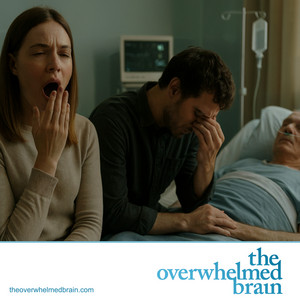
But every time I mentioned something health -wise about my family, when they're are hospitalized, my wife doesn't seem to have any sympathy or interest. Instead, she gets upset.
She'll call me out on it, and she changes the subject.
But when she mentions something about her family, I feel like I always have to be the one to show the tiniest bit of interest. Otherwise, there's a problem.
But when it's vice versa, there's an issue, and I'm questioned as to why I can't have the same reaction she has toward me.
Thank you for sharing that.
There's one thing that stands out.
The first question I have, which I know you can't answer, but let's ask you anyway and see where you go with it in your own head.
You said when she mentioned something about her family, I feel like I have to be the one that shows the tiniest bit of interest. so I don't know if you just said that and you don't really feel interested or if you do feel interested and you want to know but you're just wording it in this way I'm not sure to me I read that as I don't have any interest in her family either but I feel like I should show it that's how I read it I have a feeling you're gonna say no that's that's not it at all and let me just mind read a little bit here.
My mind read is, you know, she's not showing interest in your family and their health and all that.
And so you may feel resentment about that.
And then when she has an issue in her family, you feel this resentment.
So even though you probably would have had, would have had an interest in their health, because she doesn't have an interest in your family's health and you have that resentment, you feel like you are holding back or maybe showing interest in her family is sort of like giving in.
So you don't want to, but you do anyway because you want to show her the right way to be.
I'm totally guessing.
I'm making huge assumptions.
I have no idea, but this is what I'm working with.
This is what you sent me.
And, um, I'm going to comment on what I believe you want me to comment on.
You didn't ask the question like, well, why does she do that?
And, um, you didn't say, should I show interest or not?
So I don't really know the question, but if there was a question in here, it would be, why doesn't she show any interest in my family when I am that way with hers?
So, that's how I read this because the way you started was, there's one thing that bugs me.
I understand everyone has the right not to like someone or care about certain people.
And then you said, but every time I mention something about health, about my family, like when they're hospitalized, my wife doesn't seem to have any sympathy or interest. And then you said instead she gets upset and she'll call me out on it and she changes the subject.
So, there's a point of contention there too.
why does she get upset?
Have you asked her?
Why are you getting upset?
What's the problem?
Again, I have to read into this.
There's not enough information here.
But if I'm reading between the lines, I think what you're saying is that you mention it to her.
You probably say, why don't you feel any care or compassion or even any bit of interest in my family?
why don't you care about them why don't you say anything because i say uh kind and supportive things about your family especially when they're in a bad way so why don't you feel the same way about mine i have a feeling that is the conversation this person had toward his wife or with his wife but maybe toward he had this conversation with his wife and his wife is probably saying, why don't you feel the same way about my family?
Why don't you show little to no interest when they have a health problem?
And that might be it.
So this is very difficult to unwrap because I don't know a lot of the variables.
I don't know what exactly is going on.
I don't know if there's been any tension or contention in your relationship and her family or her her relationship with you and your family?
Does she get along with your family?
Has there been issues?
Have they taken her aside and said, you better treat my brother right or whatever?
What has happened that has caused that?
Has there been any issue?
I had a partner once that she didn't really care too much about what happened to my family, but I didn't really think about it that much because they're my family.
So she didn't really have a vested interest in them.
She felt for me, she cared about me and how my family affected me.
But I've had my family all my life, just like she's had her family all her life.
I had another partner who, um, one of her family members died and I didn't have pain around it.
I cared about her and how she felt, but I didn't feel the same way she did.
And so these are people in our lives that have their own or have had their own lives before we met them.
And they come with a whole package and some of that package we're going to like, maybe some of that package we're not going to like, maybe some of that package we'll hate, but that's the whole package.
So they're going to be affected by what what they have in their life before, during, and after they meet us.
That's their life and what affects them in their life.
And that's always going to be personal to them for them.
And I think it's okay when you are with someone who doesn't have those same feelings toward your family as they have towards your family.
They might not have any feelings much at all.
Does that make them a bad person?
There's a difference between showing no interest and just putting the other people down or saying, oh good, they're in the hospital.
I didn't like them anyway.
Big difference there.
But how does your partner treat you?
How does your partner support you when you're down about your family?
If she is supportive towards you when you are down about your family, I think that's healthy.
I think that's great.
does she have to care about your family?
I tell you it'd be nice.
It would be nice if you went to visit them and they loved her and she loved them.
It doesn't sound like you have that kind of relationship.
Maybe they don't get along or maybe they do but it's not a close connection.
Not everyone can develop a close connection.
And then you have people that are family people people and then you have people that maybe didn't have kids and don't care about having a big family and you know I'm not saying that anybody that has no kids doesn't care.
I'm just saying that some people just aren't family oriented.
But does that make them bad or is that does that make them free spirits?
Who knows? They're just free spirits in the world doing their thing and they meet someone and they have a great time with that person.
And Hey, that person has family too.
And I may or may not care about your family and you may or may not care about mine, but Hey, we're together.
So let's enjoy life together.
You can see I'm trying to put a positive spin on this, a positive outlook.
Some people may disagree with me.
Like I might even disagree with my former self because I've said, Hey, when you marry someone, you marry the whole package.
When you get together with somebody, they have their baggage, they have their family, they have their exes, and that's all part of their life.
And there are going to be parts that you like and don't like, but that is a part of them.
But I don't think showing disinterest is a bad thing.
I think there are some people that may be a little self -absorbed and maybe just really don't have any interest. interest. I'm not putting them in the same category either.
There are some people that are self -absorbed and they're happy to be with another person.
And that is also taking up their time, which is nice to them, but they don't go beyond that to invite other people in their life because they're not family oriented.
So that would be my first question or my second or third. Is that person, is your wife family oriented?
Does she have kids?
That kind of changes people's mindset and I speak from a non parent because I'm not a parent, but I have worked with enough people to understand that when you become a parent, you, you change, you, you have a different set of values.
Your time changes. You can't do what you used to do in the past because you don't have any time left for anything.
Now it's a soccer practice and a band practice and all this other their stuff and so I get it I mean that can happen and some people really love that and they dive right into that family role I would too if I was a parent I would dive right into that family role I know myself well enough to do that but at the same time I've had no kids and I can tell you right now I moved a thousand miles away from my entire family I care about them I love them I go to see them once a year, maybe.
And, uh, I really enjoy that now.
Um, Asha, my wife, she has family too.
And we were so lucky that our families live near each other.
We didn't meet while we were up there in New Hampshire, but, uh, coincidentally our families are near each other.
So when we go on vacation, we can see them both.
And I love them all.
And I would be worried and I would be sad if one of them ended up in the hospital.
So I'm not saying I relate to this person's wife.
I'm saying that we all have different personalities and different things are going to affect different people in different ways doesn't mean they're uncaring.
It just means there are other priorities and values and what we want to include in our lives.
For instance, this person's wife may only really have room in her heart for very few people it sounds cold I know it sounds cold but the people they have in their life they put all their energy towards she might put all her energy toward you and if you didn't have a family and didn't mention a family how would your relationship be then I think That's most important.
Somebody else might think, well, if you aren't okay with my family, if you don't care about my family, then I don't care about you.
Some people may think that way.
More power to you. If you feel that way, that's fine because that's your values.
That's what you value.
If you value family and you want someone in your life who also values your family, that's fine with me.
You're going to have a relationship with somebody who does that that or you're not.
And you might find somebody who's wonderful in every way, but they don't care about your family.
I'm not saying that's a great thing.
I think we should all, when the families are healthy, you know, not toxic, that we should all get along and at least try to care about each other.
But I do still come back to, she has her family, that's her side of the street, and you You have your family and that's your side of the street.
It doesn't mean you can't be on each other's side and care about the family on the other side.
But if it's a requirement for you and she can't get where you can get, is it enough to hold it against her and make her constantly feel bad or try to make her constantly feel bad for not caring about somebody outside of you.
That's the way I paint this.
It's a difficult topic.
I really don't have a great answer for this.
I mean, I don't think it's a great answer because personally, I think when you have a partner, you, you hope that they care for each other.
It would be a wonderful thing if everyone cared for your partner or whoever in your life.
you know I look at my wife Asha when we got married just last year when we got married she was meeting members of my family for the first time and when those people met her they hugged her and before I don't know when it happened but I remember my brother saying I love you to my wife.
I mean, he said that.
And she was shocked.
I don't even know. I mean, it was touching.
It was very touching for him to say that he'd never met her.
And he just pulled that out.
And she was just shocked.
She didn't know how to handle it.
And she said, I love you back.
And we talked about it later.
And she said, I just can't believe how wonderful your family is.
And she had an instant connection with everyone, everyone in my my family and I had two other members of my family told her that they loved her and she was just so touched and now she has a strong bond with them and I wish that kind of bond with every person in a relationship who has a partner who we hope would get along with our families.
It doesn't always happen, but if it can happen, it's a wonderful thing and sometimes it doesn't Sometimes we're looking at a story like this and this person just wants his wife to care about his family.
And I'm here to say if you have a partner that you love and you support and they love you and they support you and, and I think this is important, they support you when you're down about family that might be hurt or in the hospital or whatever if that person supports you and how you feel sympathetically i think that's great and if that person cannot extend that kind of care or what this person writes interest interest in your family beyond that like if they're hurt or something then they're not necessarily a bad person they just don't extend their heart into that area and there could be other
reasons too there could be other reasons she may have had trauma regarding family before she may again may not have gotten along with some members of your family or maybe they don't like her and you don't know or you can't tell or whatever.
What does your family say about her?
What does your family do for her?
Do they say that they love her?
I'm not trying to pin anyone down, make anyone at fault.
I'm not doing that.
I'm just asking you to see it as a bigger picture and also accept that there might be people in the world that aren't able to or don't want to extend end their heart beyond the people that they invite into into their life.
And it may sound strange.
I mean, some people will find that very strange.
What? My partner not caring if my dad's in the hospital?
What? Again, I had a partner in my life that supported me and said, if you need to go see your dad, go ahead.
But she wasn't saying, oh, your poor dad, let's go see him.
I feel so bad for him.
and that was okay with me because it's not her dad it's just me though I'm not saying that you should feel this way because if you have high family values and one of your values is that your partner must care for your family too and they're not able to do that at least to the extent that you want is it their fault that they can't meet you where your values are and I'm not saying it's your fault, but is it something that you need to look at and ask yourself, is this a person that I can keep in my life?
Can I be okay with my wife not having the same amount of care or interest in my family as I do?
Because if she is treating you right and you feel really good with her and everything but family is great, everything but her not having an interest in your family is is great, then maybe you have something really special there.
And eventually she may or may not care about your family, depending on how long you've been together and how much you see them together.
And we'll see where that goes.
But some people are more independent in their heart and very specific with the people they invite into their lives.
And again, there could be more to to the story, even to the point where the more people she lets in her heart, the more pain she feels.
There are people that are in that situation too.
There are people that will only let very few people into their heart because the more people that are in their heart, the more pain you will eventually feel when those people get hurt, when they say something bad to you or about you.
And into their heart.
I'm not saying you should run with that and that's it.
That could be way off.
I'm just trying to paint a bigger picture of what else could be happening.
And unless she is really talking badly about your family or she doesn't support you when you're down, then I want you to look at everything or listen to everything I just said and hopefully make a determination of what you want to do next.
And especially be careful about making your worth or your lovability based on how she feels about your family.
That's taking on way too much. You are your own person.
Your family are their own people and you are completely separate from them even if you are tight with them and the reason i say that is because we might take offense we might feel hurt that somebody we love doesn't love the people that we love and when you take that on personally as a personal affront or i don't want to say attack but you're just affected by that from that situation from that person not being interested or not showing interest or showing that they really care about your family, then what ends up happening is that that person will feel like they have much higher standards to meet
for you. And that can be difficult as well.
Because if you have evaluated your relationship based on how she feels about your family and not directly how she treats you.
And you take that as she must feel that way about me too.
Or if she feels that way about them, then she must not care about me as much as she says she does.
If you're thinking that way, you might be slowly picking away at something that could be great.
So I've given you a lot to think about, a lot to reflect on, I hope.
And I hope it helps you because from what what you're writing here that might seem to be the only issue.
I mean, you didn't really say, uh, that you guys argue, you didn't say anything.
And let me give you one suggestion going forward. When the issue of your family comes up again, or you want to say this out of the blue or whatever, you might want to say, you know, I've been hard on you and I'm so sorry.
I love my family a lot and they are so important to me.
They're like everything to me.
And I have tried to put my standards and my values onto you and that was unfair.
And I'm sorry about that.
And of course, you know, you're not going to have the same level of connection with my family as I do.
So I just wanted to apologize for what I said.
But that you may disagree with that completely.
I know I'm not, I know I'm done saying what you you should say, but I'm talking to you now.
You may disagree with what I just said, but that's not how I feel.
The only reason I tell you to say that, I mean, I hope you want to apologize and feel genuine about it.
But the reason I'm telling you to say that is because I want you to have a real conversation about this.
And I believe the best way to get to a real conversation is to step off and step back and give her the freedom to feel and think any way she likes and when you do that you might have a real heart -to -heart conversation about that now you're not allowed to say well I only said that because I wanted to have a talk about it but you still don't like my family and that's not nice and you can't go there if this is why it's better to mean what I'm saying here and And apologize because what that's going to do is let her guard down and give her an opportunity to share with you.
Maybe, maybe she'll share.
I don't know, but it at least takes her out of your spotlight.
And once she's out of the spotlight, she can feel free to say anything she wants because she might just say, I just don't have any interest in your family, even though they're They're nice to me and they're kind and I'm glad that they brought you into this world, you know, your mom and dad.
And I'm, I'm okay with all of that, but I don't have the same level of connection that you have with your family.
That might be her answer.
And then you have to choose to be okay with it or not.
What I don't recommend is you continue to be upset.
set. That really has to come off the table because you're only going to slowly destroy the relationship by continuing to be upset of something that doesn't sound like it's going to change.
And that's where what I call the problem escape plan comes in.
The problem escape plan is something I created many years ago and it's the four conditions.
You're either going to accept Accept and stay, accept and leave, reject and stay, or reject and leave. That means you either accept how she is and then you stay.
But when you do that, you can't complain anymore because now you're accepting.
So that's a nice place to be.
You accept how she is and you stay and then you get along and it's great.
No complaining, no worries anymore, even though you might think about it every now and then.
But you know what? You've accepted it.
That's who she is. She's not going to change.
Great. If everything else is great, you move forward. Accept and stay.
Or you can accept who she is and that she's not going to change and then leave. I know that's harsh.
What? Leave? Get a divorce?
I don't know what it means.
What does it mean to you?
It means to me that if I can't accept somebody as they are, the way they are, the way they think, the way they feel, if I can't accept them as is, then I shouldn't be the one trying to control and change them.
I should be the one who says, ah, that's how that person is.
So it's my issue, not theirs.
And if it's my issue and I can't handle it, I shouldn't stick around and make their life miserable.
I'm not saying you're doing that.
I'm just giving you the four evaluators here that I use.
So that's accept and leave. I accept who they are.
I'm out of here. Then you have reject and stay.
Reject is I can't accept who they are.
So I'm not going to accept that.
I reject it, but I'm going to stay and I'm going to continue complaining and we're going to continue to have these arguments.
Guess where that leads, that leads to divorce anyway.
That's never going to change.
If you can't accept it and you're going to reject it, but you stick around, that means I'm going to stick around and continue complaining, continue arguing.
And there's nothing's going to change from that until she changes her mind, which will never happen because anyone who changes their mind under coercion does it for you, not for them, which means it won't last. That's not how they think.
That's that's not how they feel.
They're just trying to make you happy.
Or they may never change their mind, which causes more tension and contention, but it's not their fault.
It's yours because they don't want to change their mind.
So that's reject and stay.
And the last one, probably obvious, reject and leave. Reject and leave is I can't accept who they are.
I reject it. This is not what I want in a family.
This is not what I want for a partner.
If they don't like my family, that it's not good enough.
They need to like my family or at least show interest. So I can't accept it.
I'm rejecting it. And because it's so bad and I don't want that in my life, I'm leaving.
Reject and leave. That's it.
You have four options.
You have to choose one.
You have to. What if there's a, no, you have to choose one of those because if you can't accept and stay, then you should accept and leave. Or if you can't accept, you should reject and leave. If you want to reject and stay, that's up to you because that's where you are now.
But that doesn't sound very fun.
It sounds pretty miserable.
That's what I'm thinking.
That's where I am with this whole thing.
So I hope this has been helpful.
I've given you a lot to think about, like I said.
And if you hear this one day and you want to tell me what you did or what happened.
I'd love to know. Thanks for sharing that.
I wish you the best. And thanks for listening to another episode of the overwhelmed brain.
I want to thank our patrons, Maria, Dilek, Heather, Christie, so many super job.
Who's always sending me such kind messages.
I think I thank you so much. Thank you to all of you who, uh, donate and support the show in multiple ways.
I can't even remember so many ways that people write to me and thank me.
I'm just very grateful, very honored.
If you value the show like these patrons and donors do and you'd like to give back, head over to moretob .com and there are options to do that over there.
Thank you again. And if you're looking for a show on how to navigate difficult relationships, and I'm talking about getting into the weeds, manipulation and control and emotional abuse, sometimes we don't even know we're in a relationship like that.
If you need some help navigating something like that, head over to loveandabuse .com.
that is my other podcast called love and abuse and if you've discovered that you're the difficult person in the relationship join the program that is helping thousands of people heal over at healedbeing .com and with that always keep your mind open because that's how you make the best decisions be firm in your decisions and actions so that you can create the life you want always take steps to grow and evolve.
You are powerful beyond measure and above all and this is something I absolutely know to be true about you, you are You are amazing.
Thank you. Thank you.