NPR. This is The Indicator from Planet Money.
I'm Darien Woods. And I'm here today with music reporter Justin Barnee from member station WNXP in Nashville.
Welcome, Justin. Thanks for having me, Darien.
What have you been listening to?
Darien. Bim bap, boom, boom, boom bap, bam.
The kind of stuff I'm on you wouldn't understand.
I'm listening to Kendrick Lamar. Of course you are.
I've been a big fan since Good Kid, Mad City, but of course he's done a lot since then.
Yeah, his new album GNX is flying off the shelves, selling close to a hundred thousand copies on vinyl recently.
That is a lot of vinyl.
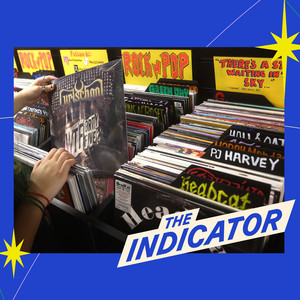
We've covered on the show before how there was this big vinyl shortage a few years ago.
It was a disaster and named the great vinyl shortage.
Well, good news today.
the vinyl shortage is over!
Hooray! And that is largely due because of one company based in a small village in the Czech Republic that has come to dominate the vinyl manufacturing industry.
For this year, we have a realistic plan to press about 70 million records, and we can do theoretically 50 % more.
Today on the show, how a small Czech company went from pressing vinyl for the Eastern Bloc to becoming the biggest vinyl manufacturer in the world.
And how that has become a problem for its competitors.
Imagine, if you will, a show from NPR that's not like NPR.
A show that focuses not on the important but the stupid, which features stories about people smuggling animals in their pants, incompetent criminals, and ridiculous science studies.
And call it Wait Wait Don't Tell Me because the good names were taken.
Listen to NPR's Wait Wait Don't Tell Me, yes, that is what it is called, wherever you get your podcasts.
These days there is a lot of news.
It can be hard to keep up with what it means for you, your family, and your community.
Consider this. From NPR is a podcast that helps you make sense of the news.
Six days a week we bring you a deep dive on a story and provide the context, backstory, and analysis you need to understand our rapidly -changing world.
Listen to the Consider This Podcast from NPR.
To understand how a Czech company came to end the vinyl shortage and become a giant under capitalism, we first need to go back to the 1900s.
At that time, it was Czechoslovakia and they were coup d 'etat, and Czechoslovakia became a communist country.
And they needed exactly one factory for music and built Grammophonov Zavodí.
English translation, Grammophon Record Factory.
Its role was to produce music for the Eastern Bloc.
Usually these were very pro -government, pro -communist, and either very political or that easy cheap pop stuff that would not make any damage by listening to.
That is Michael Stirber.
He is the CEO of the company that is now named GZ Media.
He started as an assistant purchaser in 2003.
One day, the CEO came over to him and asked him how he liked working there.
He said that he was bored and they could do better.
Now he is the CEO. The company began with sort of safe pop music back in the day.
At that time, the biggest artist was a gentleman called Karel Gott.
Yup, certainly sounds like it won't do any damage by listening to this.
Not exactly Rage Against the Machine.
Very safe. Then again, I don't know what the words are.
It could be secretly subversive.
You never know. We will never know.
Any Czech speakers could help us out there.
In 1989 the Communist government fell, and their state -owned business became private.
Being a state -sanctioned monopoly for almost 40 years really gave GZ a leg up in the competitive world of capitalism.
They built up their plants over all those years with expensive equipment, and newcomers found it hard to compete.
The problem was the vinyl industry was in the tank.
Because most of music listening happens in the car, and you can't play a vinyl record record in the car.
Cassettes and CDs took over.
Presses in the United States were in shambles.
Almost every press closed.
Even at GZ, vinyl pressing was down to a drip.
The lowest output of the company was in 1993.
And at that time, that year, we made only 400 ,000 records in that particular year.
So around 2005 something unexpected happened.
Vinyl started coming back.
This was peak Hipster Era.
So fixed -gear bikes, handlebar mustaches, and the feeling of physical vinyl records.
I was part of this.
Like many friends. I inherited my dad's record collection.
So much Rod Stewart.
That's not exactly Hipster Era, but we'll take it.
I became a regular at my local record store, Rushmore Records in Milwaukee.
I stood in long lines on record store day hoping to get a limited edition color variant of the White Stripes elephant, the one with Seven Nation Army on it.
Okay, now we're talking.
And the message coming from my eyes is leave it alone.
This was the first vinyl boom.
And with vinyl sales rising across the world, and GZ went all in.
It was time to expand to North America.
They established Precision, a manufacturer in Canada, and gobbled up Memphis record -pressing in Tennessee.
And then the pandemic hit.
With no restaurants to go to or concerts to attend, people bought records, and the second vinyl boom began.
The entertainment industry publication Luminate reported that vinyl sales more than doubled between 2019 and 2021.
So it was the golden time for us.
The second boom started a gold rush in manufacturing.
A bunch of new vinyl manufacturers popped up but they still couldn't keep up with demand.
Cuz it's an expensive and complicated process.
There are a mystifying amount of small steps involved in pressing a vinyl record. Alright, so big breath here.
You have to mix and master for vinyl.
You gotta etch the music into lacquer, nickel plate the lacquer to create a stamper.
the stampers squish vinyl, then it's packaged, sleeved, and shrink wrapped.
And many of these steps were outsourced.
This is where GZ changed the game.
They started making their own machines to take care of all those small steps so they could do everything in -house.
In business, we call this vertical integration.
GZ is the only fully vertically integrated vinyl manufacturer in the world, allowing them to do things on the cheap.
We spoke with Piper Payne at her small vinyl manufacturing plant just outside of Nashville They've been a growing problem for 20 years Yeah, now it's come to a head because they're buying up other plants and putting people out of business or they're just literally undercutting Over and over and over again It's hard. Piper's plant still has to outsource many of those steps and those costs add up Plus, she's using old machines to press the vinyl.
These presses over here, they're old as you can see, all of our equipment is not, nothing in this building is brand new.
In a record plant, remember everything is hot and it's trying to burn you or knock you on the head or cut you or trip you.
I hope you didn't see this as a threat.
A warning, at best. And actually Piper bought those old machines off GZ.
And meanwhile, GZ was expanding and innovating and it just built a new plant in Nashville called Nashville Record -pressing, just minutes away from United Record -pressing, swallowing up demand and contracts and printing a lot of records.
Since GZ opened up Nashville Record -pressing, the gold rush is now officially over.
The end of the COVID boom has returned vital demand to a normal 7 % growth and now there more capacity to make vinyl than there is demand for it.
A lot of plants are struggling.
That is Mark Michaels.
He is the CEO of United Record Pressing, the biggest US owned vinyl plant.
Every year they make about 9 million records and every year GZ Media makes over 70 million.
You know, the industry probably won't have 200 manufacturers 10 years from now because is it's hard to survive, it's gonna be hard for everybody to survive.
What can I say? I want to be tough like you want to excel that's the nature of human being like I want to win.
And winning for GZ means records on the shelf so when you want to listen to a record it presses like Kendrick Lamar's GNX.
You can just play the song TV Off as loud as you want.
Mustard! You're a true fan.
Kendrick, if you're listening, Justin is a true fan.
We love it! This episode was produced by Lily Quiros with engineering by Robert Rodriguez, it's fact -checked by Ciara Juarez.
Take in Canon is our show's editor, and The Indicator is a production of NPR.
This is Tonya Mosley, co -host of Fresh Air.
You'll see your favorite actors, directors, and comedians on late night TV shows or YouTube, but what you get with Fresh Air is a deep dive.
Spend some quality time with people like Billie Eilish, Questlove, Ariana Grande, Stephen Colbert, and so many more.
We ask questions you won't hear asked anywhere else.
listen to the Fresh Air Podcast from NPR and WHY.
On this week's episode of Wild Card, actress Elizabeth Olson reflects on being a Marvel superstar.
I think I haven't always successfully made choices in my work that are aligned with my personal taste and that is something I feel like I'm still trying to prove.
I'm Rachel Martin. Join us for NPR's Wild Card Podcast, The show where cards control the conversation.