With a Venmo debit card, you can Venmo more than just your friends.
You can use your balance in so many ways.
You can Venmo everything!
Need gas? You can Venmo this.
How about snacks? You can Venmo that.
Your favorite band's merch?
You can Venmo this.
Or their next show?
You can Venmo that.
Visit venmo .me slash debit to learn more.
You can Venmo this!
Or you can Venmo that.
You can Venmo this!
Or you can Venmo that.
You can Venmo that!
The Venmo MasterCard is issued by the Bancorp Bank and a pursuant to license by MasterCard International Inc.
card may be used everywhere MasterCards except Then while purchase restrictions apply.
When you're on the go and it's time to refresh your energy, grab an Ice -Cold SELCIUS!
Where zero sugar, seven essential vitamins, and proven ingredients meet pure refreshment.
Unlike traditional energy drinks, each sip of SELCIUS!
is a perfect balance of flavor and function.
So whether you're hitting the gym, the office, or your next adventure, Grab a Celsius at your local retailer or visit Celsius .com to learn more.
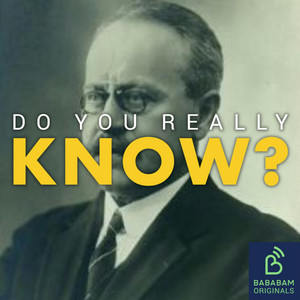
Why did the man who invented the lobotomy win a Nobel Prize?
Thanks for asking! In 1949 neurologist Egas Moniz reached the pinnacle of his career when he was awarded the Nobel Prize in Medicine.
He received this honour for what is now known as a lobotomy, although at the time it was referred to as a leucotomy, for its therapeutic value in certain psychosis.
The controversial medical procedure was widely used in the 1940s but later deemed barbaric and eventually banned in the 1980s.
The legacy of his Nobel prize is now under considerable scrutiny with many critics calling for it to be revoked.
The Nobel Foundation on the other hand stands firm, asserting that Igas Moniz's name will remain among its laureates.
But what exactly is a lobotomy?
According to a dictionary definition, a lobotomy involves sectioning nerve fibres inside the brain.
In practical terms, this surgical intervention aimed to treat various mental disorders such schizophrenia, severe depression and anxiety by altering the brain's neural circuits.
Egas Moniz even went so far as to claim that the lobotomy could cure homosexuality, an idea that was widely criticized.
The procedure itself was extraordinarily brutal.
It involved inserting an ice pick under the patient's eyelid and driving it into the frontal lobe of the brain.
Of the 3500 patients who underwent this procedure by Moniz, 14 % did not survive and many others experienced severe disability or a vegetative state.
In what historical context did the practice emerge?
It began in 1935, with Moniz's first patient, a 63 year old former prostitute who was suffering from melancholy and paranoid thoughts.
Just two months after the procedure, Moniz declared it a success as he observed that the woman exhibited a more docile demeanor.
The majority of lobotomies occurred between 1945 and 1955, a period marked by post -war upheaval and a sense of psychological chaos.
In that era, psychiatrists often felt ill equipped to deal with the challenges of mental health.
One of the most well -known cases involved Rosemary Kennedy, the sister of future US President John F Kennedy.
She had experienced developmental delays from birth in an attempt to make her a useful member of society as the Kennedy family put it.
She underwent a lobotomy at the urging of her father.
Tragically, the operation only worsened her condition, rendering her unable to walk or speak.
Which kind of people were most targeted by lobotomies?
According to official data from a number of countries, a staggering 85 % were women.
Yet there was no statistical basis to suggest that women were more predisposed to psychiatric disorders than men.
Historians have suggested that when boys displayed irregular erratic or violent behavior, society tended to view it as a social issue that could be resolved through guidance, work reintegration and adopting a healthier lifestyle.
In contrast for girls the focus remained on morality social danger and a psychiatric issue that required intervention with the prevailing belief that the problem to be addressed was rooted in their bodies This was tied to issues of power and dominance Where a woman's or young girls lack of consent was considered less significant than that of a man There you have it Now you know why the man who invented the lobotomy won a Nobel Prize In under three minutes we answer your questions and help you understand the true meaning behind the trends, concepts and acronyms that are making headlines.
Listen along and you will really know for sure!