2003.
I was eight.
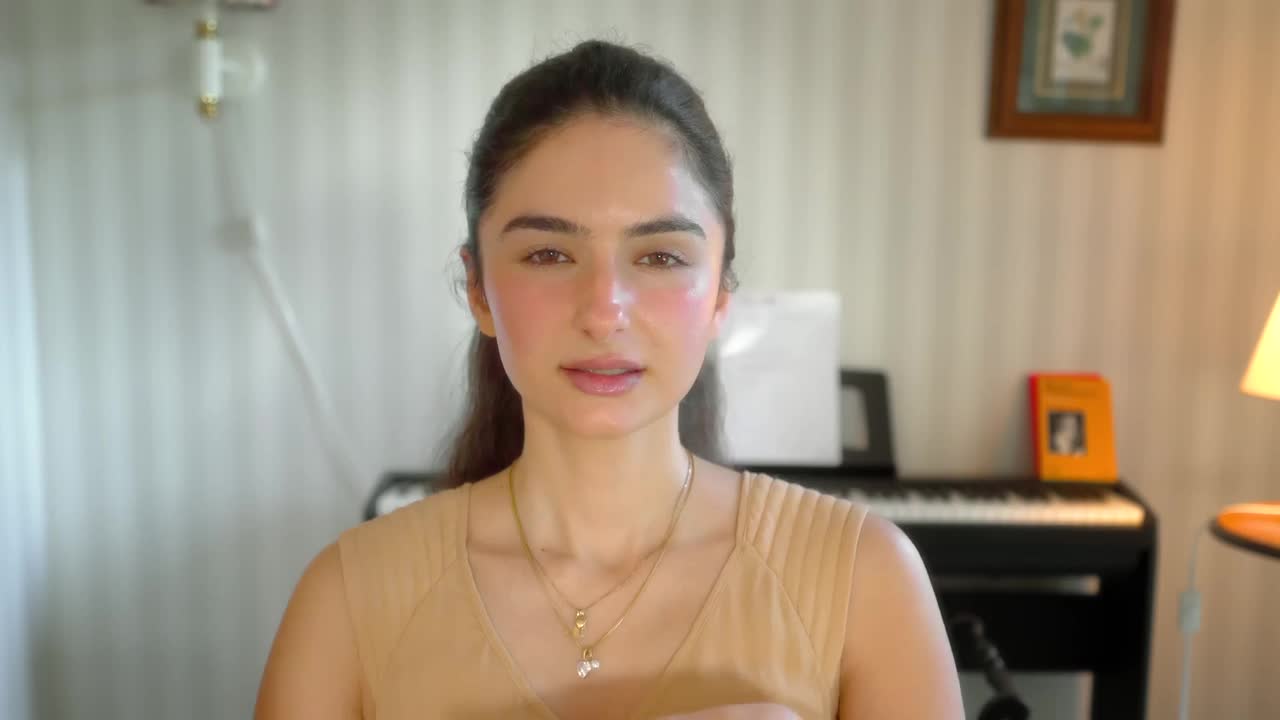
I am a journaling veteran at this point, I think.
This is an early journal of mine, or as we used to call it, a diary, and I feel like it's one of my callings in life to share my journaling wisdom to the world and convert people into starting this meaningful, beautiful habit of writing your life.
There is so much in here and one thing that I wrote was now.
The immediate thought of many people will be discouragement, thinking oh well, i'm in my 20s now, or i'm in my 30s or 60s and it's too late.
Do you think, 40 year old, you will think that your 20s was too late?
Do you think that, 80 year old, you will think that?
Here's what I think to myself whenever I get myself into the self-sabotaging, self-limiting it's too late thoughts.
I imagine myself in an old body, at a lucky age, thinking back to my 30s.
And I imagine myself literally going like this.
You young fool.
And it always works.
I think it also helps that I have friends who are well into their 80s and I would feel so silly ever telling them that I am too old for something or that I am too late.
Now we have notes apps, we have close friend stories, we have voice memos and those are like the new age version of journaling.
We all narrate our lives and self document in different ways, and some of us just like to have a physical collection of it.
Now the most questions that I get on journaling are the following.
Number one, how do I start?
Number two, what is the point?
I would like to address what is the point first.
You know, we almost always ask, what does it mean when we look at art?
And it reminds me of what is the point with journaling?
It's a very modern question.
I don't think everything needs to have a so-called point.
Some things just need a page.
Susan sontag has an essay called against interpretation where she basically argues that we are obsessed with interpreting art instead of experiencing it, and that made me think about this overall obsession we have with.
What does it lead to?
What does it produce?
How does this thing optimize me?
But journaling, for example, can be feeling without optimizing, writing without publishing, thinking without performing.
And now just because there is no clear point to something, it doesn't mean that it is pointless.
I just think it serves a function more so than a grand purpose.
Functions as a mirror, as a space to empty your pockets, as a room to hear your own thoughts without an audience, to create an inner witness, to give your thoughts physical form, to prolong certain impulses, to make life less blurry.
So rather than what does this do or lead to, think, how does it feel to write this?
I personally refuse for everything in my life to exist for the sole purpose of producing something.
Now this is a more recent journal.
You know, it's so interesting reading back on times where I've written things like I'll never recover from this or I've never felt this way about anyone.
I've never felt this way about anyone ever before.
Okay.
Okay, pass Lana, okay.
Now, I don't necessarily often read old entries, but when I do, I also very much enjoy reading about moments of excitement, because it's almost like you get to relive it, you know.
Some moments are so detailed that I can smell them still, even when they are many years old.
And oh my god, sometimes I think about the fact that I lost a journal once.
I was in between apartments, I was moving, i lost it.
Now let's address the first question where to begin?
I want to offer you some soft tips.
You know i don't want to elaborate on each tip because i don't want to guide you too much or for you to over interpret what i'm saying.
I also have an old class on skillshare called memoir journaling.
Link below if you want to check that out.
If you don't know what to write, start with something painfully ordinary What you ate, what you saw, what annoyed you, what you are pretending not to care about.
The boring days are gold.
I promise you that.
And here is a non-negotiable in my opinion.
Write like no one will ever read it.
Especially not your future self.
Because the second you imagine an audience, even a future, wiser version of yourself.
You will start editing, you will start performing, you will start making yourself look better or try to sound more intelligent or poetic instead of specific.
Now, what do I mean by specific?
For example, instead of writing something like I feel nervous, I write something like I stared at my phone for 11 minutes waiting for a reply.
Now there is a scene.
And sometimes the entry is just one line, something like, I'm confused and that's enough.
Your journal does not need structure.
It needs honesty.
You know I don't want to look back at my entries later in life and have to wonder was I being honest?
If you commit to the truth as best as you can, You won't have to wonder.
And honesty and details in the moment can sometimes feel small or insignificant.
But even those things, when you write them down, they become proof.
You know, proof that you were there, proof that you noticed and you experienced and you felt and you lived.
And that's where you begin.
And remember that nothing is insignificant if you experienced it.
And just one more thing that I think is so important.
Don't wait to become more interesting before you start documenting your life.
You know, we seem to think that journaling is for when something dramatic happens, like a heartbreak or a breakthrough, a move to a new city.
But most of life is not cinematic in that sense.
Most of life is repetition.
It's laundry, it's weather, it's conversations that you sort of have, remember.
It's a mood that you can't really shake.
That's exactly why it's worth writing down.
Because, when and if you decide to read back later on, you won't just see events, but you will see patterns.
You will see what you were trying to become.
You will see what you kept circling around.
You will see what mattered. what didn't and why.
Journaling is one of the only places where you get to witness life again at your own pace.
It's where you clearly get to see where you were in the wrong, where you were the happiest, where you were unsure.
And that, to me, feels like enough of a reason to begin.