But Y had a pretty cool year.
We learned about colors, candy, horses, volcanoes, glaciers, oysters.
Macy's Thanksgiving Day Parade wildfire smoke puffins, English language math, spicy food sunscreen, horseshoe crabs.
Walruses, sea lions, atoms, records, tacos, tariffs, tapeworms, and wildcats.
And that was just one year of shows.
What we do in 2026 really depends on you.
In July our station Vermont Public lost 2 million when federal funding for public media was taken away.
We'll be without federal funds for the foreseeable future, so support from our listeners is more important than ever.
Contributions from listeners like you help keep, But Why going?
And freely available to kids everywhere.
If you're able, please consider making a gift to support our show.
You can make a one-time gift in any amount, or you can join our But Why fan club.
Memberships start just at $7 per month.
Head to butwhykids.org slash donate to make your gift today.
And thanks.
This is But Why, a podcast for curious kids from Vermont Public.
I'm Jane Lindholm.
On this show.
Kids around the world send us questions and we find interesting people to offer answers.
Today we have a little bonus episode inspired by a curious adult who sent us a question about doing something together.
Hey, howdy.
I'm Dougie Pickles, your curious, animal-loving guide from the Cozy Critters podcast.
I'm a grown-up who never stopped finding amazement in the small, wonderful things like the sound a caterpillar makes when it chews, or the determined little shuffle of a penguin on a mission.
On Cozy Critters, I help kids wind down at night by visiting incredible animals all over the world.
As he mentioned, Doug hosts a podcast called Cozy Critters.
Cozy Critters is a sleepy adventure podcast for kids love animals and want a little magic at bedtime.
Each episode, my sidekick, Miss Meow Meow and I climb into our magical hot air balloon and float off to visit real animals somewhere on Earth.
We learn about their lives, the sounds they make, and dive into tons of amazing animal facts that you'll want to share with your friends.
The reason it's called Cozy Critters is not necessarily because all the animals they talk about are cozy, but because the podcast itself is designed to be cozy.
It's supposed to help you wind down and get ready to drift off to sleep.
If you already listen to Cozy Critters, you might notice that Doug's voice sounds pretty different right now than what you're used to.
You're right.
On Cozy Critters.
My voice is extra soft and cozy because I'm trying to help kids drift off to sleep.
But here on But Why, I get to bring out my daytime Dougie Pickles voice.
The one that's curious, excited and ready to talk about weird animal facts without putting everyone immediately to bed.
Doug thought it would be really fun to have, But Why?
And Cozy Critters collaborate, do something together.
So I got to be a guest on a really fun episode of that podcast.
And Doug is going to be a guest on this episode.
And he came to us with something he specifically wanted to tell you about.
I wanted to talk about a wild fact that surprises a lot of people.
Some animals can sound just like humans.
They growl, they giggle, scream, or shout in ways that our ears can recognize.
Their voices can be loud, dramatic, and honestly pretty spooky sometimes.
But behind the sound is a whole lot of biology, evolution, problem solving, things like that.
It's like nature is running on its own orchestra and every creature has an instrument.
It learned to play long before humans ever even existed.
So other animals sometimes make sounds that are really similar to human sounds, but that doesn't mean they're making those sounds for the same reasons we do.
Take, for example, a scream.
Why do you scream?
Sometimes we humans scream on the playground or when we're being tickled because we're having fun.
But often humans scream if we're scared or surprised or alarmed.
Doug says sometimes animals that make screaming sounds are experiencing the same thing.
Well, maybe not usually being tickled, but not always.
Foxes make screams that can sound exactly like humans, maybe shouting across a playground.
But they're usually saying, this is my space, or hello, I'm over here.
Mountain lions produce screams that sound kind of like a person yelling for help, but they're actually calling to find a mate.
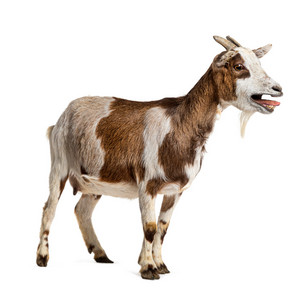
Goats and sheep can bleat in ways that sound superhuman because their vocal cords are shaped a lot like ours.
And there's even koalas, which make a deep bellowing growl that sounds like someone is trying to start a broken motorcycle.
And they're basically saying, I'm big and tough, even though, you know, they're not that big.
So sometimes nature actually has a pretty funny sense of humor.
So why do other animals often sound so human-like?
Well, a lot of it comes down to how the parts of our bodies that make sounds are built.
Humans and many animals both have vocal cords, a throat, lungs and a mouth, or maybe a beak that helps shape the sound.
So when air pushes through those parts, the noises end up sounding kind of similar.
But again, the purpose is very different.
Animals use sound the way we use long-distance phone calls or text messages or alarms.
They allow us to communicate emotions, identity, danger, even location.
And they do this with whatever sounds their bodies make.
Sometimes that ends up sounding like a human scream, even if the animal isn't scared at all.
So let's talk about vocal cords for just a second.
In humans and many mammals there are folds of soft tissue in the throat called vocal cords, or you may hear them called vocal folds.
When we breathe out from our lungs, the air passes through a small gap between the vocal cords.
If the cords are close together, the airflow makes them vibrate kind of like two ribbons trembling in the breeze.
Those vibrations produce sound waves. which is our voice.
And the pitch, that's how high or how low the sound is, depends on how long and tight those folds are.
So if the folds are long and loose, you get a deeper, lower voice.
If they're short and tight, you get a higher voice.
And some animals may have a slightly different vocal system.
For example, some marine mammals don't have typical vocal cords.
For example, dolphins have phonic lips in their nasal passage instead of vocal cords in their throat.
So basically, lungs push air into the vocal cords which vibrate and sound is produced.
The animal then shapes that sound with their cheeks, their throat, their mouth, their tongue, maybe even a trunk or a beak.
And all that helps make their final noise.
That's pretty cool.
And it's neat that Doug could help us think about this interesting feature of the natural world and how we fit into it alongside all the other animals that call Earth home.
Thanks to Doug Frazier Dougie Pickles, as he calls himself for bringing all these neat animal facts to us.
You can check out the podcast he makes, Cozy Critters, wherever you listen to this podcast.
The episode I got to make with Cozy Critters is out now and you can find all the other calming.
Get ready for relaxing episodes too.
Now, if this sparked any questions for you, you know you can always send questions on any subject to us.
Have an adult help you record yourself asking your question.
Tell us your first name, where you live and how old you are, and then have your adults send the audio file to questions at butwhykidsorg.
We wish we could answer all the questions you send us, but we listen to them all and we love hearing your voices.
But Why is produced at Vermont Public and distributed by PRX.
The show is made by Melody Beaudet, Sarah Baik, and me, Jane Lindholm.
Joey Palumbo is our video editor, and Luke Reynolds wrote our theme music.
We'll be back in one week with an all-new episode.
Until then...
Stay curious.
Why is the sky blue?
Why do birds sing?
Why do we need your support?
Because But Why is powered in part by listeners like you.
If But Why sparks curiosity and learning in your home, help us keep the show going strong.
Head to butwhykidsorg slash.
Donate to become a But Why?
Fan club member or to make a gift in any amount to support the show.
Thanks and stay curious.