Hey Proof listeners, Morgan Bowling here, your go-to grilling expert.
I'll be the first to admit, grilling can feel intimidating.
It seems expensive.
The gear can be so involved and sometimes it's hard to know where to even begin.
So Monument Grills set out to make grilling possible for everyone.
They started in an Atlanta backyard with one simple question.
Why does grilling have to be so complicated?
This led to the Everybody Everywhere Grill, a grill designed to welcome everyone to the flame.
The grill is for first-timers and serious backyard chefs alike.
It's built for anyone looking to make monumental memories.
The Everybody Everywhere Grill is made from high-quality materials and has thoughtful features like Clearview lids to help you keep an eye on your food without letting heat escape.
It also comes with app-connected temperature monitoring that helps you focus on what's really important.
Delicious food and great company.
It's everything you need and nothing that gets in your way.
Join over 100000 backyard chefs.
When it comes to gifting, everyone on your list deserves something special.
Luckily, Marshalls buyers travel far and wide, hustling for great deals and amazing gifts.
So you don't have to.
That means your mom gets that cashmere sweater.
Your best friend, that Italian leather bag.
Your co-workers unwrap their favorite beauty brands.
And your nephews, the coolest new toys.
Go ahead.
At prices this good, you can grab something for yourself too.
Marshalls.
We get the deals.
You gift the good stuff.
Shop now at Marshalls.com or find a store near you.
Hey, Lily Miller here.
I am the host of Terrestrials, a show all about animals and nature from Radiolab.
If you've ever wanted to hear a story about an octopus breaking out of an aquarium, or a squirrel that can regrow its brain, or the wild stories unfolding inside a tree stump well, we've got an episode for you.
And did I mention we sometimes break out into song?
Join us, Terrestrials, over on the Radiolab for Kids feed.
Listen wherever you get podcasts.
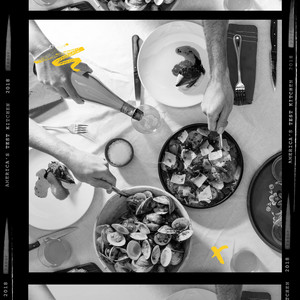
Over the last few years, the dinner party has made a comeback.
Homemade meals that feel almost radical in a world with so much takeout.
But this isn't the first time dinner parties have surged in American life.
They tend to reappear when something bigger is happening outside the dining room.
Moments of upheaval, reinvention, or longing.
And it's usually not just about the food.
Today, Otis Gray takes us to New York as he visits three very different dinner parties.
One for lonely people, one party that you probably can't get invited to and one get-together where the guests are particularly picky.
Today on Proof from America's Test Kitchen, the history and comeback of the dinner party.
Why are they resurging now?
And what are they really about?
I'm Jack Bishop.
Stay tuned.
And if you've ever tried to find a therapist, you know how hard that can be.
Yes, there are lots of options out there, but not all of them are right for your personality and your needs.
And you have to find a therapist who actually takes your insurance.
That's definitely where most online therapy platforms fall short.
Rula does things differently.
They partner with over 100 insurance plans and they make sure the average copay is just 15 per session.
That's real therapy from licensed professionals at a price that actually makes sense.
Thousands of people are already using Rula to get affordable, high quality therapy that's actually covered by insurance.
Visit rula.com slash proof to get started.
After you sign up, you'll be asked how you heard about them.
Please support our show and let them know we sent you.
That's R-U-L-A dot com slash proof.
You deserve mental health care that works with you, not against your budget.
Every holiday shopper's got a list, but Ross Shoppers, you've got a mission.
Like a gift run that turns into a disco snow globe throw, pillows and PJs for the whole family, dog included.
At Ross, holiday magic isn't about spending more, it's about giving more for less.
Ross, work your magic.
Close your eyes, exhale, feel your body relax, and let go of whatever you're carrying today.
Well, I'm letting go of the worry that I wouldn't get my new contacts in time for this class.
I got them delivered free from 1-800-CONTACTS.
Oh my gosh, they're so fast.
And breathe.
Oh, sorry.
I almost couldn't breathe when I saw the discount they gave me on my first order.
Oh, sorry.
Namaste.
Visit 1-800-CONTACTS.com today to save on your first order.
1-800-CONTACTS.
Otis Gray has the story.
Act One, All the Lonely People.
This is one of my favorite sounds.
A crowded dinner.
The low roar of people who've stopped checking their phones.
Distracted by each other and really good food.
We got a scrambled tofu and egg with pickled onion served on top of a crispy rice paper.
It's mandarin.
Chicken salad, prawns, pan-seared fish, smoked and baked inside of a banana leaf.
The guy running this dinner is 33-year-old Bagus Razwandi.
My friends call me Goose.
I'm the founder of Studio Bumi.
Goose is a friend now, so I'll call him that.
Tonight's dinner is happening inside a community space called St.
Lydia's in Gowanus, a trendy neighborhood in Brooklyn.
There are three long tables, candlelit, low lighting with flowers everywhere.
There's beautiful place settings.
And the cooks and servers at this dinner are not professionals.
They're volunteers who first came to these dinners as guests.
And now twice a month, they feed about 40 people four courses of Indonesian family-style food.
Three hours ago, this room was an after-school classroom for kids.
Now it's a dining room with a kitchen, some tables, and 40 strangers who showed up hungry.
So a lot of people call it incubator.
We are an incubator of friendship because we create all of the infrastructure for people to actually hang out.
An incubator of friendship is such a funny way to...
Like that's just a table full of food is an incubator of friendship.
But here's the thing, right?
At the end of the day, people come here for food, sure.
But then they come back for each other.
In just a couple of years, this dinner has gained kind of a cult following.
But it started in Goose's apartment.
Just him.
He moved here from Jakarta in 2021 for school and loved being in the college bubble for a couple of years.
And I feel like, as soon as those bubbles pop, Every single person that I saw was just like who do you guys hang out with?
During COVID, Goose saw how hard it had become to make friends in this city as an adult.
I observed a lot of lonely people.
I think that's the fair way to put it.
That said, Goose made friends very easily.
He's pretty magnetic.
But he saw everyone around him isolating in this massive city.
And he says he just wanted everyone to hang out.
But he felt like we need some excuse to do that today.
And he thought, oh, food is the easiest one.
I'm not a good cook, but maybe we start with something that's like we all cook together.
He started researching too about quote urban loneliness, about why people feel lonely in spaces filled with people.
Like people would say it was like the price of togetherness and community's inconvenience.
The price of community is inconvenience.
It's kind of a trending phrase right now.
It means that real community takes effort.
You have to show up even when it's inconvenient.
So Goose started cooking.
He started dropping off homemade meals during lockdown, and people loved the food and him.
One guy named Jason who ordered a meal said, hey, I'll be your chef.
You run the thing.
Two years later, Goose has used his tech and business savvy to scale what began in his kitchen, running it with a few regulars who he pays, and Studio Boomi now sells out dinners twice a month.
If I came in too strong, just like, are you lonely?
Hang out.
It would not work.
But then if we frame it in a way that's relatable.
In reality, you're kind of like reverse engineering connection.
Well, that's the goal.
Thank you for summarizing it.
And it's been working.
And I feel like it works because I led with an assumption that people want this.
What I found in my reporting on dinner parties is that a lot of the resurgence around dinner parties is in response to what they're calling a loneliness epidemic.
This is Sam Stone.
He's a staff writer at Bon Appetit, and he's been reporting on dinner parties just like this one.
These sort of like very intentional dinner parties popping up in New York, in LA, around Florida Providence, Rhode Island.
I would say it's fair to say that it is quite a national thing.
You know, for people around our age, we'll just say millennials and Gen Z are spending the least amount of time with each other.
According to some studies, a 2023 Pew Research poll revealed that less than a third of respondents under 30 said they had five or more close friends.
That stat is honestly sad to hear, but it really resonates.
Living in a city like this, everyone is just so busy and tired and spread out.
Now you can keep up with people on social media instead of having to do the work of meeting in person.
I think for a lot of people, it goes back to COVID.
I think for people who are a little bit younger, it has to do with going to school during the pandemic, working remotely after that, perhaps moving to a new city and frankly, just not really knowing how to build those new networks of friends.
Stone says a big thing people just used to have more community spaces where you would meet and make friends.
Places like churches and community centers, what we call third spaces.
A park is a third space.
Starbucks used to be a third space until they started making you buy something to use their bathroom and to stay there.
Libraries are a third space.
Yeah, they're becoming increasingly hard to find.
A dinner party is just one way of enjoying company of your friends.
After world war ii the dinner party became kind of part of the american ideal, a symbol of prosperity and polish.
There were even educational films that taught teenagers how to host and attend one.
Well, the purpose of a party is to have fun together and a successful party needs planning and skill.
I think people For a long time there was like a social contract of like yes, you have people over
You offer them, you know, a welcome drink.
And then you sit down and you have a salad and everybody knows which fork to use.
And you drink a polite amount of wine.
And then the women do the dishes and the men smoke the cigars.
Don't forget that it is by their manners that polite people the world around show their consideration for one another.
It was the first time since the Depression that Americans were flush.
The middle class was booming.
Hosting a dinner party was a symbol of arrival.
Proof that you had taste, means, and friends to share it with.
But then how do you take out the pit?
With your fingers?
And when you have the pit, where should you place it?
And I think, along with a lot of breaking down the gender roles there over the last few decades great work, yes.
Round of applause for everybody.
We've forgotten a lot of the social contract that goes into hosting and being a guest.
So even if those dinners were performative, maybe even a little stuffy maybe you were just terrified the entire time of using the wrong fork they were still about gathering on your own terms, in your own space.
That's what a dinner party is for.
Dinner is the gateway.
This is Goose again.
For people to actually try to feel like they belong to something.
As soon as they invested, they experienced the dinner.
They invested in the mission and inherently make community.
I just don't need to start with a community.
I start with like, hey, you belong here.
And I mean it because I need your help next week for another dinner.
Goose is clear that he is trying to create a, quote, third space.
That's why he calls the dinner series a, quote, studio.
That's why he invites anyone to stop by their prep kitchen in downtown Brooklyn just to say hi or grab a bite whenever.
And at the end of every dinner, when everyone's full and happy and a couple of drinks, deep Goose gives a little speech.
So I would love to introduce every single one of them, and I hope you guys have the patience.
He introduces each and every single person on staff for the night, which has some real camp counselor energy but is genuinely delightful.
Hi, everyone.
My name is Angelina.
Hi, Angelina.
I heard about Studio Boomi from my friend, and I went to the dinner and I loved it.
So this is my second dinner helping out my third dinner overall.
Everyone who works at these dinners has a day job.
They're in tech or law or design, real jobs, but they come here to cook on their free time for free.
Hi, guys.
I'm Michelle.
Hi, Michelle.
My first dinner was in August and I had so much fun.
So I basically begged him to let me get involved.
If someone comes in and volunteers and says, hey, I make a really good Vietnamese dessert.
Goose just says, great, make enough for 40.
Hi, everyone.
My name is Isra.
Hi, Isra.
Legend.
I did back of house.
I'm doing front of house.
I want to know how it all works.
I even showed up once to help and Goose put me in charge of the salad dressing.
I asked for the recipe and he said, I don't know, if you've got one you like, just do that.
We have 8 point something million people in New York City.
There must be a lot of things that people do in order for them to feel like they belong to something out of their homes, out of their workplaces.
Our mission is to see how to make sure that we have a kind of third place that is engaging and also really, really demands that you put in the work in order to actually belong there.
Men don't cry.
So write that down.
I hope you guys continue to choose community and choose each other.
Go beyond your comfort zone.
Relationships needs a lot of work and trying to belong to something requires a lot of going out.
We cannot be the only solution to loneliness.
And again, thank you for choosing us and have the best weekend.
All right.
Thank you.
So i think part of this dinner party resurgence is about creating spaces where people can actually let go of control to risk a little bit of chaos, and the food is just the excuse, because i think what they're really hungry for is unpredictability who they'll meet, what they'll eat, how it'll all turn out and for a generation living mostly online, that feels radical.
It's a return to something simple and human just showing up, eating together and feeling like you belong somewhere.
After the break, we head to a dinner party where belonging isn't guaranteed.
This party is famously exclusive.
Next stop, Manhattan.
Hi, listeners.
It's Morgan Bowling.
You know, every recipe starts on a cutting board.
So if you want cooking to be easier, you need a better board, one that handles all the chopping and slicing and looks good enough to bring to the table.
That's where Teak House comes in.
They transform one of the most beautiful woods on earth teak into cutting and serving boards that not only look gorgeous but go far beyond functional.
Each board is handcrafted using teak from sustainable plantations, so you're bringing sustainability, beauty and longevity into your kitchen with every use.
For more than 10 years, Teak House has been a top choice for wooden boards, so you know you can trust them for their quality and performance.
Teak House's boards aren't just cutting boards.
They're kitchen masterpieces.
And with the right care, a Teak House board can last for decades.
Visit teakhouse.com to learn more.
That's T-E-A-K-H-A-U-S dot com.
Eczema is unpredictable, but you can flare less with Epglyst, a once monthly treatment for moderate to severe eczema.
After an initial four-month or longer dosing phase, about four in 10 people taking EBCLS achieved itch relief and clear or almost clear skin at 16 weeks.
And most of those people maintained skin that's still more clear at one year with monthly dosing.
EBCLS, labricizumab LBKZ, a 250 milligram per two milliliter injection is a prescription medicine used to treat adults and children 12 years of age and older who weigh at least 88 pounds or 40 kilograms with moderate to severe eczema.
Also called atopic dermatitis that is not well controlled with prescription therapies used on the skin or topicals, or who cannot use topical therapies.
Eblis can be used with or without topical corticosteroids.
Don't use if you're allergic to Eblis.
Allergic reactions can occur that can be severe.
Eye problems can occur.
Tell your doctor if you have new or worsening eye problems.
You should not receive a live vaccine when treated with Eblis.
Before starting Eblis, tell your doctor if you have a parasitic infection.
Ask your doctor about Eblis and visit eblis.lily.com or call 1-800-LILY-RX or 1-800-545-5979.
Wayfair's big sale is returning.
Get ready for Wayday.
For four days only, score up to 80% off all things home with free shipping on everything.
From October 26th through 29th, score Wayfair's best deals, like up to 80 off area rugs, up to 60 off mattresses, up to 60 off bedroom furniture and more exclusive doorbuster deals.
So mark your calendar and shop Wayday starting October 26th at wayfair.com.
And now back to our story.
Act two.
If you have to ask about this Harlem dinner party, you're not invited.
That's the actual title of an article from The New York Times in March 2025.
It's about the dinner parties thrown by Alexander Smalls in his eccentric little enclave in the hills of Harlem.
My whole life and my environment is built for the art of the dinner party.
When I got in touch with Smalls, he admitted the title of that article was pretty, quote, sassy.
But still, he does throw these dinner parties in his home and he's very intentional about who he brings in.
So he had me over for tea one day.
I brought cheesecake.
We talked.
And a couple months later he texted me and told me to come over for dinner on a Thursday to bring some bourbon and be hungry.
People come into my apartment.
There may be a second person who encounters them right here and take their coat, etc.
So then they can come in here.
They get their drink at the bar.
Begin to partially mingle here in the bar room.
Then they enter into the music room where the majority of people have gathered and engage.
And then dinner is announced.
The curtains are pulled back into the dining room.
Smalls' apartment is a character in itself.
Each room feels like its own scene.
There's a lounge with a piano and a Christmas tree that stays up year-round, a cocktail room with a bar and couches in the center, and then a dining room in the back with a long table.
The whole thing feels alive, cluttered but intentional, highly curated.
There's not... a vacant space on the walls.
But for me, it's really living in a container that catalogs my life and my life's experiences.
As I travel, I collect art, music, books, fabric.
The theme that he set for that night was Trini, or Trinidadian food.
It was the same weekend that Carnival took over Brooklyn.
Trinidadian chef Osei Blackett, also known as Chef Picky from Crown Heights, was in the kitchen serving oxtail in every possible form.
The fridge behind Chef Picky in the kitchen is a little bit famous.
It's covered top to bottom in Polaroids.
Essentially, the people I've entertained over the years had fed, etc.
It's a candid scrapbook of some of the most iconic people in the last few decades.
There's Oprah, Roberta Fly, Lena Horne.
Jacob Lawrence, over here, the artist, and boom, boom boom.
Sidney Poitier, Tony Morrison Cicely Tyson, Gordon Parks, Stevie.
He means Stevie Wonder.
Tony Bennett.
Oh, my God.
That night I joined the party.
The place was teeming with musicians, filmmakers, and writers.
The mayor of Newark was there.
I was handed a ginger hibiscus mocktail wandered around meeting everyone Ogling at the pictures and articles on the walls, meandering down the hallway, which is covered floor to ceiling with these elegant family portraits.
I call it the gallery of the ancestors with my family in portraits.
That really is the heartbeat of my life being here.
After an hour of cocktails, the long table in the dining room was revealed.
Ladies and gentlemen.
This is Chef Piki who curated the food for us this evening.
On the menu tonight, Trinidadian doubles, fried chicken, plantains, oxtail mac and cheese.
This is some suya spiced okra, fried chicken, boneless fried chicken.
This is Piki's famous pineapple pepper sauce.
I was going to look at him like...
Sometimes Smalls hosts formal sit-down meals.
Other times he just cooks one big pot of gumbo or something himself.
Tonight is a self-serve affair.
Guests grab paper plates, find a seat wherever they can in the room and start talking to someone new.
The food tonight is extraordinary.
And despite the high-caliber guests, the vibe is extremely relaxed.
Your sense of time kind of goes away here.
Because at these parties, it is so clear you are in Alexander's world.
I'm a curator.
I've done this my whole life.
Someone told me once that there are two kinds of people in this world.
There are guests and there are hosts.
Alexander Smalls is a host.
He always has been, even as a kid growing up in Greenville, South Carolina.
When I was in elementary school, my father built me a clubhouse in the backyard.
Of course, it was my club.
I ran everything and people were my guests.
What generally happened is we'd all come together to plan a cookout, you know, and it was always hot dogs hamburgers, and I'd make my pork and beans which potato salad.
I was really good at potato salad.
I was in charge of everything.
No one challenged me.
You know, I decided what color the paper plates were going to be and whether or not it was going to be strawberry or grape Kool-Aid.
We would rock it and have a great time.
I understood early that the person who willed the spoon really had the power.
His uncle Joe was a chef and would throw formal dinner parties with press napkins and nice china.
Smalls loved the whole ritual and the art of it.
And at the same time, his aunt Laura, a classical pianist, exposed him to opera and Shakespeare.
Langston Hughes.
And yes, I knew that I wanted to one day tour the world and sing opera.
I came home and told my parents one day, when I was in junior high school, that I was going to be an opera singer.
Smalls said he was lucky.
His parents supported him in everything he did.
And they watched as he grew up and did exactly what he told them that he would do.
My operatic career started off with a bang.
By his 20s, Smalls was performing opera around the world.
He won a Grammy and a Tony for his role as Crown in Porgy and Bess and was considered a most promising artist in that field.
And the sky felt like it was a limit, except that the sky fell on me.
I hit the glass ceiling.
Smalls was living in paris, he was rising through the ranks and he eventually got an audition with the metropolitan opera, which is a huge deal, a huge deal, it's a huge deal, and i was excited.
So he flew back to new york ready for his big shot.
I sang two arias and then they asked me um, just out of the blue, if i could possibly sing a negro spiritual.
You know, it was a hush in the room.
I mean, they weren't asking any white folks to sing spiritual.
Smalls said he hadn't prepared any spirituals.
And then they offered him a small role in the chorus and asked if he'd be interested.
I heard myself say, no, I would not be interested in that.
I grabbed my coat and I headed for the door.
My agent ran behind me and she said, you know, This is a great opportunity.
You know, sometimes you have to come through the back door, you know, but you know it'll be well worth it.
And I said to her, I said, you don't seem to understand.
I don't have a problem coming in the back door, the side door.
I'll fly through the skylight.
But I've just been insulted.
And I'm the only one in this room that seems to know that.
That night he retreated home, drank a bottle of French Burgundy, fell asleep on the floor and woke up knowing that his career in opera was over.
In that moment, it destroyed me.
I was absolutely lost.
It was my greatest dream, since I was about eight or nine years old, that I was going to be an extraordinary international black male opera star.
It meant everything to me, and that day it died.
That particular dream died.
And, you know, I had to rise like the phoenix.
What I learned in this experience is that, in order to control my reality and my career, I had to own not just the seat at the table.
I had to own the entire table.
I couldn't own an opera house, but I could own a restaurant.
Within 18 months, Smalls opened Cafe Bayoula in the Flatiron District of Manhattan and was named after his aunt.
Critics called it the first fine dining African-American restaurant in New York City.
There were other African-American chefs who were much more talented than me, but because they didn't own, they couldn't make their food.
Most of the people who owned the restaurants would only let them make their food for a staff meal.
I could because I own the shop.
Cafe Beulah became a phenomenon.
Toni Morrison was the first paying customer.
Oprah would come through.
After Cafe Beulah, Smalls opened Sweet Ophelia's in Soho and the Shoebox Cafe in Grand Central.
Eventually, he came back to Harlem to help lead the Cecil and revived Minton's.
These historic places that carry the spirit of the old Harlem salons and dinner parties that fueled the Harlem Renaissance 100 years earlier.
They were everything.
It was a place where black people could could gather without scrutiny, without persecution.
It was where they could be their most creative selves and most powerful.
And engaging.
Through each venture, he expanded his vision of african-american cuisine global, elegant and rooted in history, showcasing to his northern audience that it was more than just quote soul food.
It is complex, elevated cuisine.
And as his restaurants came and went, his books were published.
The one thing he always did was curate dinner parties, just like he did when he was a kid and just like the groundbreaking intellectuals of Harlem had done for generations before him.
Food is a huge activist weapon.
I'm woven into the fabric of Harlem and so humbled and happy I have the opportunity to not only live here but be a part of its ongoing legacy.
We're headed to one last party.
These get-togethers started a few years ago and the guests are a little pickier.
Act three, get that away from me.
This is our last dinner club of the season.
This is the social eating club for picky eaters.
In midtown Manhattan, 18 floors up there's a small classroom with a little table, tiny chairs, and at this dinner party kids run the show.
What's your name?
My name's Otis.
This after-school club is run by Kids Thrive NYC, an occupational therapy center that helps children explore sensory experiences, including through food.
Can I sit here?
Okay, I'm gonna sit right here.
I'm sitting in a very tiny chair and on the table in front of us chickpeas, cheese crackers, apple slices, kale a rainbow of snacks scattered across the surface like an interactive choose-your-own-adventure charcuterie board.
There's no pressure to eat any of it, just permission to explore.
Ooh, what are you making?
A salad.
Last time I did a salad, but I did not eat it because I didn't want to eat it.
I'm just looking.
I'm trying to make a good salad.
At a normal dinner party, the guests probably wouldn't say anything if they didn't like the food on the table.
This is not that kind of party.
I do not like it.
Why don't you like couscous?
I don't know.
I just don't like it.
I just don't like the taste.
There's levels of picky eaters, by the way.
This is Abbey Broadrosen.
There's like picky eaters that are just really trying to control their environment and just sort of trying to be the boss of something.
Abby is the founder of Thrive NYC and she oversees the social eating club for picky eaters with her cohort, Rebecca Fried.
Both are occupational therapists.
Food is energy.
And without energy, you're not your best self.
And so this group, it starts to empower our kids to be able to say I don't like the slimy or the burst in my mouth.
I'd like something else, because that's going to be able to empower them to be like.
This is what I like.
This is what I don't like.
You're exploring tomato?
Yeah.
Do you like it?
Yeah.
You do?
What do you like about it?
That it's juicy.
It is juicy.
Rosen started the club back in 2022.
It happened organically because in the midst of COVID she was trying to create a space for her kiddos to just feel safe.
They talk about back in the day, these grandparents will say, like, my kids ate everything.
They had no choices.
We have a lot more grace and compassion for this generation because there's a lot more coming at them than there was 40 years ago, 50 years ago, 60 years ago.
There's just the world is busier.
This is a big field of picky eaters.
This is a thing now.
Rosen says kids have always been picky, but it just looks a lot different now.
In the age of screens competing for kids' attention, access to social media at a really young age, everything is uniquely louder and faster than it's ever been.
Kids are in a very busy, anxious world right now.
Very stimulated.
Very stimulated.
Right out of the gate.
Like, right out of the gate.
I mean, just everything kind of is coming at you all the time.
We need to try mint.
Like a little, like, spicy-ish feeling.
Do you like mint?
Yeah.
I like the taste.
But at the end, it is bitter, though.
We all can have different experiences.
Maybe it tastes spicy to one person and sweet to another.
Maybe it feels hard or rough.
It's not really a hot take that the world is overstimulating right now.
I think grownups feel that too.
I do.
All this overstimulation is scary.
It's stressful.
And for kids, maybe even more so.
Here's like an example.
I found a comfortable place to play right now.
I'm sitting here.
I'm comfortable.
The sun's not too bright.
The noise isn't too bad.
That whatever I'm playing with is just the right challenge for me.
I'm happy.
Right.
And then mom comes in and says, OK, we're leaving.
And you're like.
I'm not going anywhere.
Like it took me a while to like make sure that, like my pants didn't bother me, and I liked the pillow I was sitting on and the game was just right.
I don't want to go anywhere, so I'm not gonna move.
Gotta say, I can relate.
And so then they come across as being controlling, when maybe what they're just trying to do is kind of control their environment and feel safe, feel comfortable.
And then we're asking for a transition.
To take them out of a safe space.
To take them out of that safe place.
So they try to control their environment.
Like however they can.
However they can.
At least in this room, the kids are given free reign.
Facilitators just sit behind them and watch them do whatever they want at the table.
Some of them truly are picky eaters.
But some of the kids at the table are just really shy.
So it's also a social skills group at the same time.
But it's based around food.
But it's also, you know, learning to not yuck someone's yum.
Is there something that you didn't like before that you like now?
Sweet peas.
You didn't like chickpeas before.
And now I like them.
A home can be loving, chaotic, strict, somewhere in between.
But regardless, for a kid, it's usually a place where adults clearly make most of the calls.
Bedtimes, routines.
So at home, you learn early that you're not the one steering the ship.
And one of the only places a kid can push back, quietly or loudly, is at the table.
What they'll eat and what they won't.
They're, like, tightening up their lips.
They're like, nothing's going in there, you know?
Like, you could try all you want, but I'm just not doing it.
But in here, they're taking the spinach and they're touching their lips.
Like, they're trying because the pressure's not there.
Do you want to lick it?
What are you doing?
Put Mexican cheese in there.
On the salad.
How does that work?
Knowingly or not, this club is part of a long lineage of diners who gather around a table in this city a safe space with a busy hectic, unpredictable world outside, where they can be themselves, be messy and play with other people just like them who are in the same boat.
And I just want to tell you all, including you Otis, proud of everyone's exploration.
You all explore it in your own way.
The super salad.
Yep.
So very proud of you guys.
And I want a little more chocolate chips.
Can I have some more chocolate chips?
When the world is loud, a table lets you set the tempo.
At Goose's, you don't just belong at the table, you build it from nothing.
At Alexander's, the room is a stage, his stage.
At the Picky Eaters Club, kids learn a very important rule.
You get to say yes, you get to say no, and both are power.
Maybe dinner parties are trending because the world outside feels expensive, rushed.
Third spaces have thinned, screens have replaced small talk.
People are lonely.
Food is never just food.
It's a language, it's a truce, a protest, a love note.
It says you belong here.
So are you a guest or are you a host?
If you've been thinking about hosting, do it invite four people or invite 40?
Make some paella.
You might burn it, and that's totally okay too, because the bottom of the paella pan is the best.
Anyway, you'll still have made something that matters.
A room where the rules are yours, or one where there aren't any, a place where the world slows down just long enough to pass a bowl and look someone in the eye.
And if you get invited to a dinner party, show up.
Hosts need guests.
You're probably going to be glad you did.
The table is a stage.
Be a part of it.
In whatever way, it's a really good time to do it and you'll be in good company.
Thanks to Otis Gray for bringing us today's story.
If you like Proof, be sure to subscribe wherever you listen so you can get new episodes as soon as they drop.
And while you're there, why not leave us a rating or write us a review?
It really helps other people find the show.
This episode was hosted by me, Jack Bishop.
And the podcast is made by the following cast of characters.
I'm Yumi Araki, the managing producer.
I'm executive producer Caitlin Kelleher.
I'm senior producer Alex Curran-Cardarelli.
I'm associate producer Angelica Quintanilla.
I'm associate producer Louise Curran-Kensler.
And I'm Kyla Forman-Andrade, the TV and podcast intern.
Audio services are provided by Ultraviolet Audio with Scoring Mixed.
And our director of production is Diane Knox.
Fact-checking and additional research by Sarah D. Collins.
Special thanks to Grace McNally, Rachel Schneider, Lane Samada and Danny Aziz, Tanya Hopkins aka.
The Food Griot, and for the piano music at Alexander Small's apartment by Sean Hefeli.
Nina Gianelli is the Senior Vice President of Television, Video, and Podcasts.
Dan Souza is the Chief Content Officer, and Dan Surratt is America's Test Kitchen's CEO.
Proof is a production of America's Test Kitchen.
This podcast is part of the Airwave Media Podcast Network.
Visit airwavemedia.com to listen and subscribe to their other fine shows.
An Airwave Media Podcast.