Hello and welcome to Women in Retail Talks, the podcast where C-suite executive women in the retail space share their stories of professional growth leadership development, personal journeys and more.
I'm Marie Albages, Senior Editor of Women in Retail, a membership-based community of executive women at leading retailers and brands.
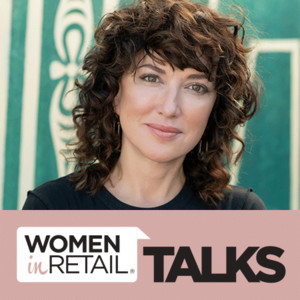
Today, I'm joined by Diana Barnes, who goes by DB.
She's the chief brand officer and creative director of Y Brands, which is the parent company to the baby lifestyle brand Munchkin, as well as Curio Home Goods, which is a premium brand of curated collections of home goods.
DB and I will talk about her career journey from music and entertainment all the way to retail, her focus on her CSR initiatives And how she cultivates a culture of innovation with her team.
So db, I want to bring you in welcome.
Thank you so much for joining me.
Thank you so much for having me.
Yeah, i'm really looking forward to this conversation because I love the breadth of your career and your experience and I want to get into all of that.
But first I would love to hear a little bit more just about Y Brands and its portfolio, Munchkin Curio.
What are the brands?
Tell us more about it.
Tell us who the target customers are.
Y Brands is the parent company for Munchkin Inc.
Which has been around for 33 years 34 years, I think founded by Steve Dunn, who is still our CEO today.
We're number one in the child and toddler space and seven out of the 12 categories that we play in.
We're number one in Target, Walmart, and Amazon.
And also we have our own thriving D2C business with our customers through imagine.com.
And we also just launched Curio HomeGoods, which is an inspired home goods, high design, premium brand D2C.
And we just recently launched RD8, which I'll talk about a little bit, which is our innovation think tank for insights and partnerships.
So you mentioned Munchkin's been around for 30 plus years.
A lot of innovation happening across those decades.
So how do you kind of maintain the relationships that you have with your customers through the 30 plus years and more?
Well, I think it's important to know a little bit about who is on the inside of Munchkin and what we do all day and really keeping an honest dialogue with our consumers, I think has been the key to our success.
You know, knowing what is important to consumers tells us why they choose us or why they don't.
And so creating that connective tissue between our consumers, which also includes our retailers.
Finding the heartbeat is a defining factor in our success.
We do this by listening to them.
As I said, listening is really the key, I think, to any successful business.
So we do this in a number of ways.
Our five-star reviews, we have more than any other brand, any other baby brand.
I think it's hedging close to 2 million.
We read those every day.
All of us read them every day from any department can sort of send something over or comment over from a customer saying hey, this is kind of a product idea that we had.
Why don't you guys think about doing this?
Or they'll tell us something about maybe, how they're not happy with something that we have, so that we can course correct that very quickly.
I think it's interesting in our company that our CEO mandates that if we don't have a 45 star review or above on all of our products, We have about six to eight months to correct it or we take it down.
We don't do it anymore.
So we really do address what our consumers are saying very quickly in a very monumental way.
We can actually, they have total say over what we're doing in that aspect.
We also listen to them on our social media channels.
We do not buy followers.
I know that's something that a lot of brands do on a regular basis to sort of appear that they have a stronger following than they do, but we don't, so that we know exactly who is with us and why and want to know everything we can about them.
They're very vocal on our social channels.
And then we also have a personal in-house customer service staff.
That's very unique too.
We don't drop this out to another country.
There are actual people sitting in our building every day that feel these calls.
I think that's something that's very different as well.
And they're also on a channel with us all day, telling us what these customers, or what our consumers, are asking for.
I can hear how important the relationship between the company and the customers is for you all.
And it sounds like it's a really core value, which is awesome.
It is.
And then our, our last, um, most recent, uh, connection point has been our number one podcast.
Um, this really is typically a one-way conversation, but for us it has not been.
They're so um, dialed in and they're very interactive with us about what we have on our podcast, what they would like to hear about.
That's been incredibly enriching, just just from my own professional um standpoint.
I love that we're making an impact on parents every day and giving them some love back.
That they've certainly showed us.
That's awesome.
Can you plug the podcast?
What's it called?
Stroller Coaster, a parenting podcast, which actually just won Digiday best branded podcast.
And it's number in the top number 1% on Spotify and Apple.
So we're very, very proud of that.
I'd love to hear more about that.
But first, I want to know how you ended up at these brands.
Can you walk us through your career journey a little bit?
Yes, I'm happy to.
I started out in music and entertainment at Sony and later EMI, as a creative director at both of those labels, creating from the ground up creative departments or being brought into underdeveloped creative departments and uh, revising those um to meet the business goals.
So I think I was always interested in storytelling and I'm so happy that that began with songs.
Um, so that's really an interesting part of the journey um, and being a brand storyteller for a corporation.
Um, I just really always wanted to either write or, um think.
I, you know I was an English major, so to me it just felt very natural to have that evolution and from there I was recruited to go and sort of impart that entertainment value into a tech company Dell but in between I kind of hopscotch to agencies.
So I've always had sort of an in and out jungle gym and my career certainly hasn't been linear.
You know, to go from music entertainment to tech to CBG.
It's a different, it's an atypical career trajectory, but every single stop along the way has informed the next one.
So I feel really lucky to have landed here.
That really resonated with me.
I'm an English major too, and like first and foremost, a storyteller as well.
And I love that you you put on your LinkedIn profile that you call yourself, you know, the chief storyteller of the brand, of why brands.
I was wondering if you could kind of share a little bit more about why you identify your role in that way and how do you keep the creative process flowing when you're, you know, so far up in the company?
And then you have all of these other responsibilities, all of these teams that are reporting to you.
How do you keep that creative process strong in the fact that you can still identify as the chief storyteller, as like your primary role?
Well, I'm very lucky that Y Brands specifically Munchkin, which is where I started before we formed Y Brands is a design company first.
First and foremost, it's a cornerstone of our innovation.
So for me to land here felt completely natural in that way.
I always stay with my feet and hands firmly planted in creative, because that's the most value that I bring to a company.
And if I didn't have um creative teams reporting to me and being able to critique work with my design teams every day, i don't think i would bring as much value to a company.
It sort of begins and ends there.
The culture at munchkin is in-house, you know.
Our brand design team is there.
Our product development team is located in our hq at la in la.
So it seems um to me that the storytelling um strengths that I brought to the table were perfectly aligned to bringing the story from the inside out, which is typically what I do for any company that I work with.
And I'm so grateful that I get to do that every day here.
I don't think I would bring as much value to a company if I didn't hold on to that creative director title as well.
Yeah, that's awesome.
So tell me a little bit more about Curio.
You mentioned.
It's the newest launch for you guys and it seems like a natural progression for Munchkin.
So walk me through how Curio came to be and some of maybe, the challenges that you faced in launching that brand.
That's a great question.
Curio was to me and to the CEO was kind of our, our baby.
It's, you know, as we sort of looked at it as the design that we wanted to see in our own homes didn't exist.
So we wanted to create it ourselves because we knew we could.
And as I said, Munchkin organically is a design company first.
So just as your child grows, so should your home.
You know your home should be elevating and every step of the way when your child is progressively older,
And so extending and leveraging what we already know and already leaders in our space and you know, for instance, bottle brushes and starting with the cleaning capabilities that we knew we had to take it to the next level felt very organic and we were very excited to do it.
Although Curio will be in every room of the house.
Eventually, we started in the kitchen, extended into the bathroom and now we're heading into the dining room.
And it sounds like the demographics, the audience that you're reaching is really an extension of the audience at Munchkin.
Would you agree?
Well, actually, let me clarify that. amazing opportunity for us.
It's a DTC brand and it is not a mass brand, just the price point, the design elevation.
It really is more for, um, tastemakers or design aficionados or, um, people.
I mean, this is a generation of people who've grown up with HDTV and are much more inspired by, um, elevated housewares and furniture and, you know, the whole, um, ethos of the home is now much more important to these you know zen zen genials i think that's what they're and so um it is a completely different brand so we were excited to get to um have this learning experience about how do we market to d2c um we're only in one retail space right now it's just a sort of our test kitchen a retail um boutique center in montecito which is a very um exclusive uh vacation area outside of santa barbara and a home store there and so we've learned a lot and um i think it's something that we had to do just steve and i really were interested in more elevated design brought into the home things that weren't necessarily always left on display but now they're so um what we're doing is so beautiful they're conversation starters They're little pieces of architecture that you really can't walk by and not notice.
So to us, this is an exciting opportunity.
And obviously, the TAM is much wider, the total addressable market.
I mean, I think it's, I don't know, $5.6 billion industry.
So we're really excited to tackle this.
What were some of the biggest things that you learned about kind of the home goods industry that you didn't know before, having just been at Munchkin?
Any like massive learnings that you are kind of taking with you as you look towards the future of the home goods sector.
Well, let me say the first eye-opening experience is going to just learning what's already out there in the space and trade shows and seeing what already exists.
It can be intimidating, but it's also really encouraging to see where our white space is.
And it has been sort of illuminating just to see the breadth and depth of brands that are out there in the D2C space.
So it has been a little daunting, but it's also to me just what keeps me engaged every day.
See how I can do this better.
So what's next for that brand specifically for Curio?
What are you guys keeping your eyes on?
You mentioned you're in one retail space.
Are there plans to go into more?
What are you looking forward to in the next year or so?
Well, definitely we are reaching into new categories, new rooms of the house, fine dining, experience gathering.
The next collection that we're releasing is around gathering.
Um, so I just saw the whole, um, pitch yesterday from our team.
It's gorgeous.
And I really can't wait for it to, to be, um, more widely known.
Again, we're just looking into different ways to market in our.
It's been a learning experience, a lot of testing on how to reach those audiences and the most effective and efficient way to spend.
Yeah.
And so what about the kind of baby lifestyle space on the other end of things?
Where do you kind of see that industry headed in the next one, five, 10 years?
I know where we're headed.
We have two very disruptive product launches that will happen in the Q1 of next year.
And one is kind of infusing what we've learned and what we're learning in RD8, which is our research and development company.
And it's around how to improve and extend the life of breastfeeding for moms on a global scale.
It's something, a product, that's never been seen or And this is the first invention that we know of for sure.
And we just can't wait to bring that to market.
And then the second one is sort of a follow on in a category that's in dire need of some refreshment.
Okay, nice teasers.
I like it.
I can't wait to see what it is.
You mentioned the RDA, the Research and Development Department, or you mentioned it was an innovation think tank.
Can you tell us more about it?
I think it was born out of sheer need and necessity.
We really didn't have the insights available that we needed, especially when I'm just talking about these two new products just a second ago that we were talking about.
I just feel like, as a leader in our space, we should be initiating our own insight work, very deep, global insight work to inform our innovation.
So we're in clinical trials, as I just mentioned, on the breastfeeding side.
And it's massive and it's so interesting to be able to tap into our own insight, work to inform what we're doing.
And then also our partnership work.
So also funding new startups and new little ventures that we're just naturally curious about on a global scale.
So it's another curiosity arm for us, but it's also feeding, a necessity for work that just hasn't been done in the maternal health section.
How do you get your team on board for something like this?
I think it requires a lot of intuitive, innovative people.
So how do you look for people that are going to bring that kind of innovation to the table?
And of your existing employees, how do you get them on board?
How do you get buy-in to launch something like this with full participation?
Well, it's on everyone.
We have a small company for being such a number one in brand awareness. baby brand.
We are a relatively small leaning company.
So all 350 employees worldwide have innovation as part of their goals that we are all reviewed on an annual basis.
So bringing innovation in any way you have in your own department, from accounting all the way to brand design, product development, sales.
That is an expectation that's very clearly defined when we're looking for people.
And it's.
It's amazing how many people really want to do that, in whatever department that they're in.
So it's just a given that that's something that you're going to be expected to do and be embraced.
We have, you know, on the E-team, on the executive team, we have moon shots that we're responsible for three or four times a year or anytime we get them.
And they're brought to life very quickly.
If, if it's vetted and we think there's a um, a reality that can come from it, that will benefit the company.
And my first two actually were Y brands and RDA.
Those were dreams of mine.
I pitched them in March.
They became realities by December, which were massive undertakings.
And so I think, um, It speaks to the CEO who embraces this.
He's an incredible entrepreneur.
We have over 350 patents, which is quite a bit for a company our size.
Innovation just comes in so many different ways.
Somebody has a great product idea.
I think a great example of this is our head of maintenance, who just came up with one of our highest top selling products, which is our night stroller.
It's a stroller that has lights and it's a game changer.
No one ever thought about that.
So it can come from every place in the company and is expected to.
How do you encourage innovation on a daily basis as a leader?
If you've got some employees that you haven't heard from in a while.
When it comes to innovation, It's so easy to get stuck in that, like day-to-day whirlwind or things you always have to do on your to-do list.
How do you encourage them to carve out the time to come up with innovative ideas?
Well, and what there is that I'm responsible for, which are brand design basically any verbal or visual articulation of the brand blows through me.
And so with the exception of product, which I still take part in as well.
But I'm with these teams every day.
And so part of what we critique amongst ourselves is, is this work meeting the goal of innovation?
That's a key pillar in anything that we take on.
And I think it's just ingrained in our DNA.
If it's not groundbreaking or if we've seen it before.
We really work very hard to make sure that we're giving each other the reality checks.
Is this something that's never been done or is this a twist?
I think it's just part of who everyone is.
It's a part of Munchkin.
I love it.
It's almost like you're approaching every conversation with innovation in the back of your mind and asking yourself like is this product going to be innovative enough, or is this idea innovative enough to get to move things forward?
I love that.
It is.
So you've been in this position for quite some time and um, I love the creative aspect that you you're you're using to approach you know your day-to-day and I would love to hear any advice that you have.
You know this is a women in retail podcast.
We have a number of listeners that are trying to aspire to get to the next position and maybe the c-suite, and really make an impact in the retail space, in the design space.
Any advice for you know how they can kind of have a career like yours?
Well, I certainly did not come through the ladder on the backs of women before me, that's for sure.
So I always try to encourage other women to look behind them and look side to side.
And I think We all need to, especially now in the climate that we're in, and fortunately, my company is over 50 female and our board is over 50 female.
And I feel like if people are looking or women are looking at opportunities and ways to move forward on the ladder, it's really about the relationships that you make internally.
I don't think those always have to come from other women.
My mentors were certainly men.
I'm fortunate in certain ways, for sure.
The more challenging ways, and then the ways that they create opportunities.
For me as well is you have to really know who you're working with and the value that they provide in your career.
And maybe who not to, you know, who not to invest in is just as important.
The path for me could be very different for other women, but for where we are right now in the retail space, I think the best advice I could give is I mean for me.
I listen to no less than 10 podcasts a day, which I realize is sort of on the addiction.
You know the border of addiction.
But I always try to hear and listen to and seek out podcasts where I can learn from other leaders or just from other industries.
I listen to tech podcasts.
I listen to the podcasts that are created by chief, which i'm a member of, which actually, i would encourage women to always try to find professional organizations outside of their community, inside their communities or outside their communities.
I mean, chief is global.
That certainly helped me identify opportunities and networking opportunities.
Um, And then also, how do you form that within your own organization?
And maybe you're not a C-suite yet, maybe you're not a VP yet, but maybe you are the one that creates the ERG to support the female employee base in your company.
Ours is a very strong at why it's...
E3, the E3 league, which stands for embrace, empower, and enjoy.
And we meet globally on a quarterly basis.
And we bring in a lot of outside speakers, retailers.
We keep in really close contact with leaders in our retailer partnership space, like leaders at Target or Walmart or wherever the stores that we actually our product is in.
So I would just say you have to be an amazing listener and always be curious about how other people are solving their problems and their challenges.
Okay, so I have to ask, any podcasts that you want to call out that you recommend to the listeners?
Well, I listen to Pivot, which is sort of a tech-based podcast. um, podcast.
I just can't resist Scott Galloway.
I think he's one of the most incredible marketers, um, of our time.
So I learned a lot.
I learned a lot from him and Kara Swisher.
Um, there are many CMO podcasts that I enjoy.
I also listen to IGA.
I mean, there's, You know, I also listen to Dax Shepard, you know, just things that are maybe cultural, you know, there's like guys of what's going on in our, in our culture at the moment.
So it's just a mix, but I start with pivot is the minute it drops.
I love it.
Awesome.
Okay, so the last question I want to ask you about is your focus on CSR initiatives and partnerships.
Could you tell me a little bit more about, you know at Munchkin, the International Fund for Animal Welfare and Treats for the Future?
It's my understanding that you played a pretty pivotal role in kind of growing the brand CSR efforts.
So tell us a little bit more about that.
Well, when I arrived in 2014, there weren't any, you know, long before CSR was an acronym, really.
I just noticed that we had a huge opportunity for giving back.
And you know, as a baby company, as the most, I hope, trusted and respected, most loved, which is our mission baby lifestyle brand, we do have an obligation to give back in ways that impact the next generation.
In the first place, you know, we just sort of thought was a natural progression was animal welfare.
We have three pillars of that really animal sustainability and education.
And so we've sort of built our CSR efforts around that.
For the animal welfare pillar, that was easy for me.
I'm just a.
I'm a huge animal rights activist, so that was, and also our ceo.
So um, we have many initiatives.
That ifa was probably the second or the third one.
We started off with whale sanctuary project and then it progressed to um ifa, which to us.
We had a great opportunity to infuse teaching through our number one category, which is cups.
So we started with our Miracle Cup kind of a partnership with them and, through our packaging and through our marketing outreach, really hoped that we could teach parents how important it is for children to have empathy for animals.
Because if you don't start there, they're probably not going to have empathy for humans.
And also we want these animals in their life and for future generations.
It's also just the natural life cycle. to make sure that we have a thriving animal population.
Trees for the Future was really our first one.
We've planted over 5 million trees to date in the most impoverished places in the world.
And that's something that we really take a lot of pride in.
They're an amazing organization, Trees for the Future.
So we're very proud to be a part of them, a part of one of their corporate sponsors.
I to me when I came to this company and sort of saw what I could do here, how I could be of service quickly.
The CSR was a huge piece of that.
I really didn't want to work for a company that didn't have CSR, as you know, Or be a purpose driven brand is one of their major focal points.
And I'm really lucky that I landed in the right place to bring these to life and have companies, or our company, embrace that.
I love seeing companies make like public commitments to positively impact the world.
And it's not just, you know, a statement on their website.
It is a core value.
So I really admire that.
I admire Y Brand so much.
And you for taking the time and sitting down with me and having this conversation.
I really, really enjoyed it.
DV, thank you so much for joining me.
Thank you, Marie.
I appreciate it.
It was really fun.
Thanks for listening.
For more information on this podcast, please go to womeninretail.com slash podcasts for show notes.
Women in Retail Talks is available on Apple Podcasts, Google Podcasts, Stitcher, and Spotify.
Make sure to subscribe on our podcast channel page as well.
If you've enjoyed this episode, please take a few moments to rate and review our show.
Lastly, if you're a female retail leader interested in joining our community at Women in Retail Leadership Circle, visit womeninretailcom.
Thanks, and until next time, this has been Women in Retail Talks.