Cities are breathing new life into public spaces, and not just with buildings, but with culture.
From round the clock libraries to art filled service hubs, these creative spaces are changing how people connect with their city and with each other.
What does this cultural shift mean for the future of urban living?
After that, imagine watching any film from anywhere in the world in your native languages with performances that feel just as authentic as the original.
Well, new technology and AI dubbing is making that possible. revolutionizing how stories travel the world but with some good come some bad because as the industry embraces this change It's also facing tough questions about the future of human artistry.
We are live from Beijing. This is Roundtable.
I'm Steve. Thank you so much for being with us today.
And on the program, I'm joined by Niu Honglin and Yuxin.
First on the show. As urban centers evolve, cities are increasingly turning to art and culture to not only enhance aesthetics, how spaces look, but to also enrich the lives of residents and foster a greater sense of community.
That's why more and more public cultural spaces are emerging.
From 24-hour libraries, as I mentioned, to tourist service centers set up in scenic spots and hotels...
The goal is to create more livable, more artistic and emotionally resonant environments.
So how are these new cultural spaces redefining the relationship between a city and the people that live in that city?
And what does the success of these programs mean for the future of what it means to live inside a big, sprawling urban area? as so many cities in China can be described as exactly that.
Niu Honglin and Yuxin, good afternoon. Thanks very much for being here as well.
Yuxin, we'll start with you. So when we talk about public cultural spaces, what are we talking about here?
Yeah, so these public cultural spaces are some new and modern cultural hubs or cultural living rooms as people call it.
That's good, isn't it? Yeah, they're popping up basically everywhere.
Let's say city bookstores, cafes, even shopping centers that now... offer these kind of cultural services.
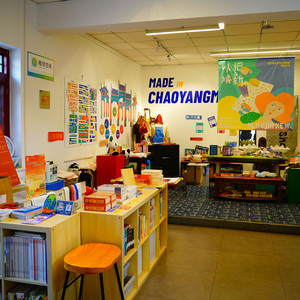
Also, renovated old buildings, industrial sites, and traditional villages and rural homestays are also getting into the idea of integrating the cultural aspect into it and also even some residential complexes are having them. in some let's say community complexes shopping malls cafes and even subway stations we can see some like reading corners or cultural exhibitions and these things have been set up and places that originally had no cultural elements are now infused with these things.
I think I get what your point is. So you think of a community that has a lot of office buildings or towers, things like that.
You have a subway station, you have all the typical kind of generic buildings that a community might have.
But here, we're taking cultural tidbits, if you will, and we're injecting them into those subway stations, into those office towers to make the communities a little bit more All in, I suppose, as opposed to just being an office building or a subway station.
That be accurate? Yeah. And when you are having these kind of spaces, not only I think children, but also adults can get into that spaces. for no matter you're getting into that space for reading or have a break all can do.
When we think about cultural spaces in a city or in a community we would immediately go to the major ones, the really huge ones, the one that is That has everything.
Those places still exist and they are upgrading.
And I think we will discuss a little bit about them.
But for today, these living rooms, these so-called city living rooms, these spaces are giving us this immersive experience.
Of living in the community and enjoying the community and also being able to appreciate the character or the trait of the community.
Yeah, so it's you're right. Yeah, there are culture centers, right?
These big, sprawling buildings. And they're wonderful.
They're beautiful, right? But they can oftentimes be the other side of the city, which means you have to plan for a whole day to go and spend some time there.
This is about bringing those aspects of culture right to our front door, so to speak.
This is very interesting because before giving birth to a I used to think I'm the kind of person who does not really need these places.
I have my own bedroom. and I have a little place little enough that I can walk within 10 steps to get to the food delivered to my doorstep.
And that is all I need. I can stay in my room for the entirety of my life besides work.
It sounds so depressing. No, no, no, no.
I really enjoy being by myself. I know exactly what you mean.
Gosh, I was thinking about that the other day.
If we never want to leave our homes, we actually don't have to.
We don't have to. And it's not because I'm not cultured or educated.
I have my phone. I have my internet. I can look at pictures and digital photographs. format of van gogh if i want sure if i want and the thing is after having a kid you realize you need to walk the kid You realize the kids... Walk the kids.
Yes, like you walk a dog. It's the same thing.
You only realize that... After having a kid, it strikes me so hard.
And then you realize those with kids, with pets, you communicate with each other. for those people who are not as introverted as we are, as I am, they do need a place to socialize with their neighbors.
They need a place to walk themselves and these little places would definitely meet their needs because like Steve had just said if you want to go to the major centers of course those places are amazing.
They held a different kind of exhibitions all the time and they change it and rotate it.
The only problem is that it's so far away.
You need to spend half a day or an entire day doing that.
But when it's, very carefully embedded in a community, that problem is solved.
And also, as you said, we are having these kind of places popping up in our community complexes.
And these are called as by a lot of parents as 六娃圣地.
Yes, walk your kid. Yeah, enjoy a little bit culture.
Yeah, a good place to walk your kids. But the big idea is also not only make the culture really super accessible, and high quality for everyone.
That is another point that we like to mention.
It's a shift from just Do we have culture too?
Is the culture good and easy to get to? That kind of state of mind.
And these are These places are trying to be the spiritual homes for people around it. and bringing culture directly into communities and integrating it into daily life.
Yeah, I like the term cultural living room because it implies that you can feel comfortable there.
You can feel safe there and it's yours. And it's a shared space for everyone to enjoy.
What is the thing, though, that makes these places so special?
Why are people enjoying them so much? Small and beautiful is kind of the mantra of building these things. unlike traditional often large cultural facilities like museums and like national libraries that kind of thing these are designed to be more intimate and adaptable and borderless Integration is the thing that they're trying to pursue.
They break away from administrative boundaries, embedding cultural services right where people live.
For example, you might find a cultural spot in a park, a business district, or even a local tea house.
I guess a good example then would be sometimes in Canada a bookstore, right?
You know, Monday to Friday it's your – normal bookstore.
But on the weekend, they might have an author come in to do a book signing.
They might have a class. on Sundays for children's story time or something like that.
They might have a class there as well where they'll teach, I don't know, pick a subject and they might teach that maybe one evening a week or something like that.
So multifunctional, these are multifunctional as well.
They can kind of cross boundaries. exactly yeah these kind of a multi-purpose functionality or approach is the thing that they want to do and often these kind of approach will also boost local consumption when people are getting into these kind of centers to not only see the shows but also maybe do some purchases.
Oh, they are being very smart about it. Recently, I went to Suzhou It's a city in China.
It's near Shanghai. It's a very beautiful city.
And I've visited several of these different types of so-called cultural spaces because they're in the form of anything.
Like Steve said, it can be a bookstore, it can be a cafe.
It can also be a local community library, which we have here in Beijing just right near our studio.
And for that one that I visited in Suzhou, to start with, the architecture is with Suzhou traditional Chinese garden style.
It's very authentic. It makes you want to lower your voice when you walk in because of the architecture and decoration.
And it is a local community library, meaning that the books there are enjoyed by people living nearby that district.
And one thing about it is I noticed the selection of books is definitely with local characteristics.
They have a lot of books about local history, a little bit about local geology.
And besides that, the place is also a location for activities activities related to traditional Chinese culture.
I think one of the activities they were held in when I was visiting was the one with The Red Mansion, one of the four classics in Chinese traditional literature.
And a group of students from China's Taiwan were there.
They were enjoying the activity. activities.
They were discussing the books. They were listening to lectures, like Steve said.
And they sell one of the well, several of the most beautiful magnet that I've ever bought.
Nice fridge magnets. Yes, so I bought some of those as souvenirs or like you shouldn't said they are making money And the funniest thing is on the side of the gate, adjacent to the gate, there was this very delicious lemonade little stall.
I love it. then realize that that little stall is also managed by these cultural space meaning that they are gaining revenue in all front they are Like we've described, the multifunctionality is being demonstrated by this little cultural center to the fullest. question how did you feel when you were in there and the reason I asked that question is because I think that's one of the main points of establishing these cultural centers. is that you want the people who live in those communities to feel a closer tie to their community, right?
They want to make it feel like it's more home to them than some sterile downtown space that a lot of big cities in the world will suffer from, right?
That's why I asked. So how did you feel?
It's exactly what I felt. I learned a bit more about Suzhou, not the superficial part of it, not the, oh, it's beautiful, it's...
It has nice weather. People there are very pretty in the traditional qipao.
All that besides all that, because I get to pick up the book a little, read a little, know a little of the local history, I do feel closer to the city.
And you don't even live there, but you felt closer to the city.
So imagine how the citizens feel. Yushin, who's running these things?
Who's in charge of these? Mostly the construction and the management of these new public cultural spaces are primarily overseen by the cultural and tourism administrative departments of local governments at or above the county level.
And that is why, let's say the Public Service Department of the Ministry of Culture and Tourism is promoting the development of such spaces through idea exchanges and promotion policy guidance.
And we can see as of now, There are more than 40,000 public cultural news spaces across the country.
And basically, the government primarily plays a coordinating and guiding role rather than just solely investing heavily in facilitating these kind of construction, they are actually inviting or encouraging enterprises, social organizations, and individuals to participate in the construction operation these new cultural spaces.
So you've got the guidelines in place, you've got the support in place.
Yeah, and the local ones will know what kind of standard, but not that specific standard like guidebook for you to follow, but they will know what kind of it can be called as a public cultural space.
This is really good because oftentimes we'll hear, you know, the government is... investing heavily in something but without Profiting as much?
Well, without perhaps I don't know if this is fair to say or not, but what I'm trying to say is here, there's a lot of coordination and there's a lot of guidance. down to a county level, you said, which is really nice.
It's refreshing, isn't it? that there's that level of support because people, when they're starting these, And you'll see, I think here too, it sounds like there's multi-entity collaborations. and a lot of social participation as well.
So you've got the people of the community involved, you've got the guidance and the support from the government.
So it really is a collaborative effort from everyone.
Yes. And I think that is part of the reason why we get to see so many of these places with local characteristics.
Because local people kind of know what they want the best and they can incorporate their ideas, their commercial ideas, their cultural element ideas into the designing of it.
Not only are we seeing these kind of cultural spaces, we're also seeing those that are being transformed to cultural spaces, but originally they were ancient architectures.
I think in Xizang we saw one that was an original temple at the very beginning and yet it was then transformed into an art center.
And these kind of examples happen everywhere.
They find the local building that is a bit too old if you want to repair it.
It's just not that worthy to repair from a point that it's not that historically valuable. and also you cannot really turn it back to what it is and on profit from it but turning it into a cultural center or to an exhibition center would be just the best choice to do so that you can protect and preserve the ancient buildings while having some new purpose for it. it is a kind of way of stressing the unique characteristic of that specific area.
And especially when these areas are not like famous, tourist attractions and in this way they can but they still have that kind of unique aspect, right?
And then they can no matter is monetize it or benefit for local people and the tourists. we have one of these places right around our station here actually it's like a little bookstore, cafe.
Ah, yes. Like pseudo-restaurant. It's really lovely, right?
You go in there. We went in there to study.
And you walk in and it's just this environment where you want to talk like this, right?
I said to the people working, I said, And I said, there's a cafe there, right?
So I said, Look at you, speaking Chinese.
And I said, And she said, And I said, what?
I can go to Manor Coffee and get one for 15.
What are you talking about? If I can complain, they can be a little bit pricey, these places.
Back on topic now. So these are designed, aren't they, to meet?
The needs of the people who live in the community are the needs of those people being met.
Oh, allow me. One of my needs is being met by a special, well, not that special, but definitely a good...
I don't think it's a bookstore, it's a library.
Again, in Suzhou, I visited that library.
One of my childhood dream was you know sitting on a on a grassland in the center of the city enjoying the sunlight and I am sitting next to a tree under the shades and enjoying the bug and it's a beautiful image in my head but I was not able to do that because I had to bring my own book and I never remember to bring my own book to these scenarios.
But this library in Suzhou. They have a almost 20
210,000 square meter large area near the library building.
And instead of you have to read in the library, in the building, you can take your book out. and enjoy that environment.
And this is another trend happening here in China that has incorporated the cultural spaces with parks. with open areas, nature areas, because you want to at the same time bring people to the nature as well as allowing them to enjoy a little bit of cultural element.
Yes, so that need is being met in multiple places in the country.
Those are a couple of examples from Suzhou, but Shanghai is doing their part too, yeah?
Mm-hmm. Yeah, they break administrative boundaries and integrate cultural service directly into daily living circles, making culture more accessible.
Shanghai has added over 3,600 neighbourhood hubs and city reading rooms, significantly increasing the inconvenience and also satisfaction of citizens accessing cultural services and One venue is called Fairy Man Storytelling Venue.
Ooh, I like this one. Yep, go on. So this venue is in Pudong New Area, allows for... let's say zero distance cultural interaction between opera fans and performers in the sense that after maybe let's say a theater performance, you can actually and also directly interact with the actors and let's say taking photos expressing your appreciation and discussing the performance, everything.
It's more of a, let's say meeting campaign after all the concerts.
So. offering that opportunity for citizens to actually get more interaction with the opera than they like.
And there's a dedicated space exactly for that.
Yeah. It's really cool. Another thing Shanghai's doing that I personally appreciate very much is that they are using unconventional locations as exhibition location or venue.
That is, they're using, for example, the janitor's room in the community or the little elevator, the little lift that, cabinet of it and you they are setting up different exhibitions in these tiny little places that you spend little time in, but you spend time all the time.
And these are another approach Shanghai is trying to bring culture, to bring art closer to people.
Any more examples from any other spots around the country that would be good ones of them taking advantage of these spaces?
Oh, yes. They are designed with creativity and aesthetic appeal to become even micro landmarks that enhance quality. or just appearance of Citizens Live.
For example. Zhejiang's Wenzhou City in eastern China uses initiatives like the Most Beautiful Space Competition. and Citizen Experience Day to blend rich historical culture with contemporary needs.
What's that about the most beautiful space competition?
Yeah, so basically the local or the community organizers they will do this kind of activities where each community or cultural space photographs it. their own design and layout and then holds a competition to see which one citizens find the most beautiful.
That is a competition for all of them and then they also like invite residents into these cultural spaces to read play games and so on, serving as both, I would say, promotion and publicity to let citizens know at least that they have these kind of spaces.
And one other thing I have to say is that these cultural spaces are not only being built in the cities, they're also being built in countrysides in county-level places in my hometown Taiyuan, the capital city, provincial capital of Shanxi Province.
Taiyuan's county under the jurisdiction of Taiyuan also has many of these libraries as well as cafes that are being enjoyed by people nearby.
And another thing is in many major industrial parks here in China because those industrial parks are huge and people live there there are schools there are hospitals and just it's a huge community.
It's kind of like a little tiny little city with everything in it.
And many workers there do not leave the community during their days, only weekends or once a month.
And in those places, different enterprises in order to enrich the cultural aspect of life for these workers are also building these different types of cultural spaces.
Yeah, really cool. Why is this happening now, though, I wonder?
I'm guessing, Yushan, is this... What do you think?
Is this in response to... rapid modernization.
We're constantly talking about progress moving forward.
Chips, robots, tech. We have those too. We do indeed, yeah.
But is this kind of... What do you think?
Is this kind of a response to that... Because this is almost like a reminder, isn't it?
That, hey, yeah, these communities, yep, we're moving forward as a country.
We're progressing. We're making progress.
All these amazing technological advances.
But also, hey, don't forget, we have some beautiful culture here. remember that and make it a part of our daily lives and make it accessible.
Do you think that's a response to all the other great, things that are happening progress wise?
I think so, actually. And policy wise, to be honest, this is kind of an important extension and supplement. to China's construction of public cultural facilities network.
And these new spaces stand out with their let's say attractive appearance, strong sense of design and diverse content and also flexible operation.
And they are trying to becoming what we said, like cultural living rooms right next to the people.
But back to life, when we're realizing that these places are becoming like tiny spots for people to actually get in when they have time.
These are the core to culture and modernization, right?
These cultural development is essential for building that spiritual civilization by providing rich cultural products that meet people's like ever increasing spiritual and cultural needs.
Around 9, 10 years ago, when I first visited a mall here in Beijing, a really good one, And I realized there was an exhibition, an art exhibition in the mall.
I was very surprised and I enjoyed it quite so much.
And now I see these initiatives everywhere and it makes me realize no matter how busy we are with our lives, sometimes we forgot the beauty of art, the beauty of culture, because we just simply don't have time for it.
We have our work, we have our kid, we have the family to manage.
And now the society is bringing the culture is shoving the culture right in front of my eyes.
And I appreciate it so much. I get to enjoy life, not only live.
I love it too. I just wish the coffee was cheaper.
Monetization is also a very important part in this.
You're listening to Roundtable. I'm Steve.
She's Ngo Hung Lin. He's Yu Shun. And we've got more on the way.
Stay with us.