This BBC podcast is supported by ads outside the UK.
I've spent the last three decades trying to better understand money across the boardroom, the newsroom and the trading floor.
That's longer than most podcast hosts have been alive.
But even I've got questions.
Join me, Meryn Subset-Webb, every week for my show Meryn Talks Money from Bloomberg Podcasts, where I have in-depth conversations with fund managers, strategists and experts about how markets really work.
And join me for a separate episode where I answer listener questions on how to make those markets work for you.
Follow Meron Talks Money on Apple Podcasts, Spotify, or wherever you listen.
This is Andrew Peach on the way, the story behind those numbers and why people are paying experts to help them find work.
Also coming up the economic impact of us drinking less beer.
And from quirky therapies to longevity labs,
We'll look at the boom in biohacks.
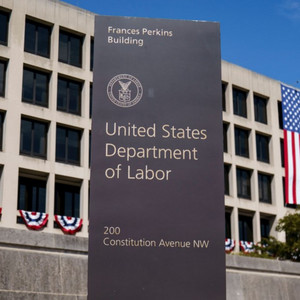
First of those US jobs numbers showing growth, 130,000 new jobs in January.
Unemployment in the state still relatively low.
But while hiring remains strong in areas like health care and governments, other parts of the labour market, particularly white-collar jobs, are flatter.
So what's happening underneath those headline numbers?
Let's get some wisdom from Dr Erica Groschen, Senior Economics Advisor at the Cornell University School of Industrial and Labor Relations.
Former Commissioner of the US.
Bureau of Labor Statistics.
Erica, thank you for being with us.
What do you make of these numbers?
A bit better than expected?
Yes, I think they are.
It's a pleasure to be here.
And yeah, the numbers were good.
I mean, this is the first time in a while that we have had job growth numbers that are significantly different than zero.
Okay.
I mean, I suppose, if you look over even a period as long as a year, the numbers are absolutely terrible, and the numbers for 2025 are awful.
Mm-hmm.
So, of course, now one number does not make a trend, right?
One month is not a trend, but it's certainly heartening.
Yeah, 130,000 is much better than we've seen for a while.
What do you put it down to?
Because I mean, there's so much going on with the Trump administration's policies the immigration crackdown, the effect of tariffs, all in the mix.
What do you think is responsible for the growth that we've seen?
Well, it's quite clear that what's happening is that we've had continued growth in healthcare.
So we added 124,000 jobs in healthcare.
That's more than double what we've been adding recently.
So that's really a very strong sector.
And And then the other area that we had a lot of job growth in and i'm just kind of looking at this um, construction.
So uh, we had a lot of construction jobs and um, that definitely added to uh what we had.
Now government, on the other hand, actually uh, accelerated its job losses lost 42 000 jobs in government, so that went in the other direction.
Um, This time last year on the programme, we were talking day after day to economists saying that Donald Trump's economic plans were bound to fail and that there'd be all sorts of economic prices to pay for them.
Were they wrong?
Well, I...
Of course, one never knows, but many of the sorts of concerns that people have were more long-term than short-run.
So one thing that certainly happened is that there's been a change in the tax structure to incentivize investments in this year or next year.
And so it may have moved forward some investment in that way.
And it remains to be seen whether the long run impact on investment is going to be negative or positive.
And the White House is pushing and pushing all the time for rate cuts.
Do they turn out to be necessary?
Well, if growth continued at this level, this is probably above the level of job growth that would give us stable inflation.
Okay.
So raising rates sorry, lowering rates might exacerbate inflation problems if this were to continue.
All right, Erica.
Thank you very much indeed.
Erica Groshin, former Commissioner of the US Bureau of Labour Statistics, live with me.
Now, for many people, the labour market still doesn't feel strong.
You may remember a few weeks ago, we spoke to Amira Barger on the programme.
Amira's in San Diego, and you found yourself out of work, Amira.
We thought you'd ask you to come back on with us to see how your job hunt is going, how things...
Yes, thank you so much for having me on again.
You know, it's been an interesting job market.
I will say I've had a handful more interviews than I anticipated, considering the chatter that has been happening around the job market for white collar workers like myself today.
What sort of job are you wanting to secure?
Well, I work in the field of communications and marketing.
So I largely have been a consultant or an advisor to big corporations and governments on how they communicate both to their employees but also to their consumers out there in the world.
And I'm looking to be in a senior communications executive role again.
How are you going about it?
What are you finding?
Are you having to apply online?
Are you applying for loads and loads and loads of roles or what's happening?
Exactly.
I mean, I'm doing many things, right?
Many tactics are in play.
I'm certainly checking the job sites like LinkedIn, Indeed and other typical ones and applying online.
But I've found that there are so many swift auto rejections from those tools.
And it might be, you know, because of the way the AI reads my resume, and I've started leaning more into my direct.
And so I've given myself a goal while unemployed of five interesting phone calls a day.
And I'm finding that those networking calls have transpired into these unexpected interviews.
It's really been about the relationships and word of mouth, which is fortunate for me but unfortunate for others, because not everyone has the same level of network or access to people who are in decision making roles.
Amira, stay with us if you would.
Landing a job is so difficult at the moment.
Some people are paying recruiters to try and match them with positions.
Let's hear from Alex now.
Alex Chinkarowski is the founder and chief executive of Reverse Recruiting Agency.
We help folks find a job faster than they would on their own, typically.
So we do everything that is required to find a role, including optimizing their LinkedIn profile, rewriting their resume, applying to 50 to 100 jobs a week and, most importantly, reaching out to five to 10 folks at every company we apply to.
So we submit 50 apps a week and we reach out to 10 folks at every company.
So I suppose people listening might be thinking hang on a minute, these are all things you can do yourself.
And obviously you're charging for this service.
You know at the scale we do so to send 500 emails a week which are highly personalized and highly relevant and don't look like spam or AI.
It's not typically possible for an individual to do that at that scale.
However, I don't recommend everybody works with us.
And I do think folks should try to do this on their own and reach out to just a couple of folks at every company they apply to.
I take your point.
What is it about the state of the job market that makes a service like yours necessary or attractive to people?
50% of the folks that work with us are employed and want to move faster, get a higher salary.
So they're not desperate.
The other 50% are.
And what's changed since about 2015 or so is that you need to submit a number of more applications to secure an interview, because there are a number of AI applied tools that spam applications out there constantly.
So If you look at a given posting on LinkedIn or Indeed or another such job platform in the UK, you'll see 300 400, 500 applicants.
And typically only 20 of those will get interviewed.
And so just the nature of the process has changed.
And that's why bringing technology to bear on such a process as we have is so effective.
So you're trying to participate in a process whereby there are jobs advertised that don't really exist and then many, many applicants who presumably are real, but being artificially pointed towards every job that is advertised online.
Essentially, not all of those applicants for the jobs posted are strongly qualified.
And that's why you see such proliferation of applications.
They're taking their best chance.
They're sending a flyer and saying, hey, I'm a five out of 10 fit on this job, but I'm going to try.
Now, as far as jobs advertised, which do not exist, I've heard of such a practice.
There are also jobs that companies intend to fill internally.
And They end up interviewing a few folks externally to align with U.S. labor laws.
So it's certainly a concern.
And without giving away the secrets of the service that you offer.
What can you do to try and optimize your chances?
What are the tips if you are applying for jobs online that are more likely to get you the interview and therefore potentially get you the job?
First run your resume through a typical resume optimizer, such as Resume Optimizer Pro or Teal Jobscanio.
That's a necessary, it's $10.
Second, when you apply, apply to roles each day that are five out of five fit for you, that are incredible fits for you, and find two people at the company, send them an email and make sure your email has no links, no attachments nothing, just a short, 60 words at max, invitation to chat about the role.
Or may you forward your resume along?
And do you think this is just the way of things going forward now?
The job market is tough.
The process of recruitment has gone online.
There's a lot of AI involved on both sides.
So part of the process of getting a job in the future is going to be to pay for someone to help you do it.
I think it's somewhat of a momentary artifact of the collision of AI and...
Actually recruiters seeing their own headcount drop quite a bit and being laid off on their own and being overwhelmed.
So I hope there'll be a regulatory intervention which prevents ghost jobs, which requires perhaps some verification or a double opt-in system both from the candidate and the company to confirm an application.
Because what's happening right now and we've reverse engineered that process is that everyone's suffering.
Employers are flooded with resumes.
Most of them are not high quality.
Candidates are distraught because, no matter what they do and they're doing everything generally right they're not getting callbacks.
And even good candidates are not getting callbacks.
So it's a broken system.
I hope there'll be an intervention.
That's Alex Shinkarowski from Reverse Recruiting Agency back to Amira Barger in San Diego.
Do you feel tempted by that kind of service, Amira?
I would only pay someone to review and rewrite my resume.
I wouldn't necessarily pay a recruiter.
And part of that's because large recruiting firms are paid by the hiring company, not the candidate.
Their client is the employer.
So as a job seeker, I'm not hiring them.
I'd simply make myself visible to those firms.
And that's where I'd really focus my resources and energy, because they're being paid to fill roles already by the companies I'm interested in and what that looks like.
Oh, go ahead.
I would say that that does exist.
Actually, this firm would be charging you.
You'd be paying them to basically make more connections with potential recruiters than you would physically have time to do yourself.
Yeah, and I just personally, I don't see that as necessary.
I think, reaching out to recruiting firms.
Many of them have available on their website where you can self-upload your resume to be considered.
And so you're not paying to be represented, but you're positioning yourself to be considered for those hidden roles in a hidden job market that will never be posted externally.
And there's no fee, no contract, no obligation.
And that's the route I would take, particularly in a resource strapped position, as someone currently employed is to reach out to firms who have already been paid by the employers that I'm interested in being hired by.
Because it feels a bit like there's an employer who desperately wants your skills somewhere.
And the difficulty with you hooking up with that person is that the whole recruitment process is buried under a load of chaff, you know, under a load of non-existent applicants, applicants who aren't really suitable for the role.
The whole thing is clogged up, you know.
Yes.
And I think that's a big problem with why there are so few white collar workers able to find these roles.
There's all of these jobs out there that are buried in thousands of applications that they'll never make their way through.
And the best way in is to get a referral from a friend of a friend or an employee who works there to find a recruiting firm that's working on that hidden job market and make sure you're visible and known to them as a strong candidate that could be considered for roles they do know about and that are very much real, and they can directly put you in front of a hiring manager.
It's so much more likely that way than you sending out thousands of applications into the void that is the digital sphere.
Amira, thank you.
Good luck with your job search.
Thank you for being with us live from San Diego.
Susan Schmidt now, Portfolio Manager at Exchange Capital Resources.
What do you make of the job numbers, first of all, Susan, that we've heard?
Well... job numbers were good.
130,000 jobs added sounds great, but one month does not make a trend.
So that's a very pertinent statement.
We saw gains really only in two sectors, in the healthcare sector and in construction.
Everything else was flat or negative.
And this can be Because of a surge, we're a seasonal point in hiring.
This is just one month's data.
And also the market isn't quite sure what to make of this, because there's still so much concern around AI and what entry-level jobs are still viable, what companies are willing to hire people in that might soon be able to be replaced by AI.
The market closed flat today.
They're taking this in stride.
But the market did look at this big jobs number and predict that the Fed would not lower rates, at least until June.
And in anticipation, because this big job number does mean that interest rates need to stay high, the economy could be running a little bit hot.
Yeah.
Has everyone stopped worrying about the impact of Donald Trump and his policies on the economy and the jobs market?
I don't think so, but I think that impact has become less of a shock factor.
Remember that a year ago he was just coming into office, and so the market was very reactive.
We saw this also during his first term, when he entered the office and immediately had tweets about various companies going out and you saw big reactions in the market to those companies' stock prices.
Investors are getting more savvy.
They understand that there are a lot of statements, but follow through takes time.
We're still waiting to find out what actually happens with these tariffs.
Some of these numbers haven't been committed on paper and the market is still waiting to see.
Tax reform is happening.
We do see that.
We can calculate it.
But a lot of CEOs are still trying to figure this out and how it will impact them for the longer term.
I've spent the last three decades trying to better understand money across the boardroom, the newsroom and the trading floor.
That's longer than most podcast hosts have been alive.
But even I've got questions.
Join me, Maren Subset-Webb, every week for my show Maren Talks Money from Bloomberg Podcasts, where I have in-depth conversations with fund managers, strategists and experts about how markets really work.
And join me for a separate episode where I answer listener questions on how to make those markets work for you.
Follow Merrin Talks Money on Apple Podcasts, Spotify, or wherever you listen.
This is World Business Report with Andrew Peach on the BBC World Service.
Now the Dutch brewing company Heineken is cutting up to 6000 jobs worldwide as people drink less beer.
The world's second largest brewer says sales fell over 1% last year.
Other beer and spirit makers like Carlsberg already cutting costs because of slow sales.
In the last hour, I've been talking to Bart Watson, president of the Brewers Association.
Beer is one of the most tracked things in the world because it's often taxed and governments like to track their taxes.
So we have a pretty good idea of how much beer people are consuming.
It really depends on where you're talking about.
We don't have full global data yet.
But here in the United States, beer was down probably about 5% in 2025.
And we're seeing similar numbers in many parts of the developed world.
And what's that all about?
Is it a cost of living thing?
Is it a health thing?
Perhaps a mixture of many factors.
Yeah, I think it's a mixture of many factors.
I think you know you can start with the economy.
Consumers you know beer is an affordable luxury.
And when they don't have as much that they can afford that, they're going to spend a little bit less on it.
So the economy and how much consumers feel they can spend is a part of it.
I think there's a wider range of factors, though.
We're certainly seeing that generally.
We've seen some different societal trends around going out in many countries and and how people are thinking about beverage alcohol.
So that's certainly part of the story as well.
Is it that other alcoholic drinks are selling more?
It's a mix.
And certainly if you look at the US, over the last 20 years that's been the biggest part of the story, that the beverage alcohol pie has been relatively static and beer has been losing to other things.
But in recent years I think it's a little bit more than that that we've seen just a decline in total beverage alcohol consumption in some countries, though this varies a lot where you're looking globally.
And I suppose, if you're looking at huge companies like Heineken today, but also Carlsberg, making significant cuts, cutting costs, cutting thousands of jobs, these companies are deciding that this isn't a temporary blip.
This is a new world they've got to adapt to.
I think it's a mix of several things, right?
Some of this is on the demand and the consumption side, and some of it's probably on the cost side as well.
We've seen the cost of global brewing go up in recent years, and so...
These brewers are going to react to what they see in both costs and in global demand.
Could they attack the situation by developing new products, by trying to create new trends that will bring customers back?
We certainly are seeing brewers look at the wider beverage market, particularly non-alcoholic beer, as one option.
And that's growing for many of these brands.
You know, Heineken 0.0 has been certainly one of their growth brands in recent years.
That said, often those growth engines aren't enough to offset the declines you see in their core markets.
If lager's down 5, it's going to be hard to see enough growth from smaller innovative brands to offset that.
Non-alcoholic is really interesting.
And it's the same process.
While the same companies will be experts at making non-alcoholic beer is because basically, it's the beer with the alcohol taken out right.
Yeah, it's actually a very complicated process.
You've got to make full strength beer.
And there's a lot of different ways to do this.
But one way is you make full strength beer and then you remove the alcohol.
And the best companies are then adding stuff back in to make sure it has that flavor, that crisp flavor that people expect.
Part of the consumption of beer, the culture of that, I think, is about drinking with other people.
Tell me a bit more about the trend you mentioned about people being less likely to do that.
Yeah, sociability has long been part of what has driven beer going out and having a few beers with friends, with family, after work or on any occasion.
I think what we've seen is, since the pandemic in some countries, some of those patterns have changed.
Here in the United States, there's been a lot of talk of the end of the happy hour.
So, you know, beer companies are going to have to reckon with that.
They're going to have to shift how they market.
I think we're already starting to see companies tell that story and remind people of the simple joys in life of getting together over a beer.
And Bart.
Finally, do you think the beer industry will battle through these difficulties and come out in good health?
Yeah, within beverage alcohol, I actually think beer is relatively well positioned.
If we think about some of the health and wellness trends that might be affecting beverage alcohol, beer actually has the most low and no alcohol options for consumers.
And so I think it's actually well positioned long term as a beverage of moderation within beverage alcohol to weather some of these changes.
That's Bart Watson from the Brewers Association.
Susan Schmidt from Exchange Capital Resources is still with me.
Give me a sense of how beer and wider alcohol producers are doing in the market, Susan.
Well, investors are skeptical.
And so they see this decline in demand and they recognize that the companies are trying to adjust to it.
They're reorganizing.
They're trying to improve operating performance to make up for some of this decline in sales.
But the stock prices have weakened and gone down in the last year or two.
So investors are savvy to this change in interest from the consumer.
And you're seeing that in the stock prices, where not only brewers but manufacturers of premium spirits are also seeing a relative decline from investors.
In the investor's interest,
And that's reflected in a falling stock price.
Lots of stories we circle back to again and again on the program.
Here's one of them.
What's going on with Warner Brothers?
Oh, what isn't going on with Warner Brothers?
We seem to be in a loop on this one.
Warner Brothers still deciding and trying to move forward with their deal right now.
We have paramount seemingly still in the mix, but netflix going forward with their offer right now it goes to the government and we have to decide at the government level whether this business can combine and it works fairly on a competition level.
That discussion can take many months, and so i expect this to be in the news for at least the rest of the year.
Okay, and there are two different deals.
It's not as simple as one or the other, is it?
This is not an apples to apples comparison.
And so now we have a problem because you do have to take it apart more specifically, and that requires more time.
And we also have investors who are now getting involved, pushing their desires and what they think is the best valuation or the best path forward.
So more voices are getting involved because it's two separate deals Netflix acquiring all of it, or rather, Netflix requiring part of it, Paramount wanting to acquire all of it.
The FCC, Federal Trade Commission, has to sort that out.
And that's going to be complicated and messy.
And again, more headlines.
Susan, thank you.
Now, biohacking was once a fringe pursuit of Silicon Valley execs and elite athletes.
It's now big business now.
This is adjusting your routine for health benefits and in the end to try and make you live longer.
There are all sorts of quirky therapies and longevity labs, and biohacking is now big business, as Michelle Fleury reports from New York.
I'm Anthony.
I'm Teresa.
I'm Legend.
I'm Love.
And we are the Biohack Yourself family.
That's the Lollies, a family of four who have turned their own medical crisis into a high-gloss multi-platform media brand.
This is my gallon of water.
Every day I fill it up with ice and BCAAs.
They're not tinkering in a garage.
They're part of a growing movement that treats the human body like software, something that can always be upgraded.
I hear we have a fun day.
I met them at a high-end biohacking facility.
They're going to do PEMF and red light.
I started by asking the parents, Anthony and Teresa, why they decided to turn their family life into a 24-hour biological experiment.
The spark was when my husband got diagnosed with morbid obesity.
That really hit us hard.
And that's hard to believe today.
Looking at Anthony, now you know that's not.
You know you're a picture of hell.
Yeah, absolutely.
We have to really make this information available to others because you have to biohack yourself.
And it's not just the parents.
Even their children, 9-year-old Love and 7-year-old Legend, are in on the optimisation.
Typical day, supplements, PEMF, books, go outside, ground, red light, play all day.
I want to biohack for the rest of my life because I want to stay healthy, young, live to like 150.
And as families like the Lawleys push the boundaries, a wave of new biohacking businesses is popping up in an industry set to nearly triple by 2030.
How are you guys doing?
Welcome, welcome, good morning.
This is Chuck Morris.
People are no longer accepting that aging and decay are the same thing.
Today, he runs Midtown Biohack.
He says that what used to be reserved for elite athletes is now for everyone.
In the beginning, I think people thought it was a bit of a luxury or an offshoot.
It's on its way to becoming the standard.
One of his most popular treatments, a 10-second electric workout.
It can make your muscles contract faster than you can contract by coming up and down.
There we go.
We're getting the contraction.
Ready?
That was 100 crunches in 10 seconds and I was just lying here relaxing.
But then why don't I feel the level of pain or exhaustion that I would if I had done 100 crunches?
That's the biohack.
And business is expanding fast.
So we already have two additional locations.
We have one in the Hamptons that we're already working on.
And we have one in New Jersey because this one's in Midtown Manhattan.
And we have three more that we're looking at.
He says his target customer is the industrial athlete.
Anyone glued to a screen for 12 hours a day.
It's not a fad anymore.
It's actually the reality of human experience.
It's no longer a fad.
This is the standard.
But not everyone is convinced.
I've just got in the elevator and I'm on my way to the apartment of Dr. Nir Baselai.
What they're doing is not science.
It's not based on science and it could be also dangerous.
He's the director of the Institute for Ageing Research at the Albert Einstein College of Medicine.
This massive growth is because people want it, people need it.
And eventually, it'll become scientifically based.
For now, it's a jungle out there.
A multi-billion dollar industry built on hope.
And for the Lolli family, a question science has yet to answer.
Can it really buy you more time?
Michelle Fleury in New York.
For more on that, just search for Business Daily wherever you get your BBC podcasts.
And from me, Andrew Peach, and the World Business Report team, thanks for being here.
Back with you same time tomorrow on the BBC World Service.
I've spent the last three decades trying to better understand money across the boardroom, the newsroom and the trading floor.
That's longer than most podcast hosts have been alive.
But even I've got questions.
Join me, Maren Subset-Webb, every week for my show Maren Talks Money from Bloomberg Podcasts, where I have in-depth conversations with fund managers, strategists and experts about how markets really work.
And join me for a separate episode where I answer listener questions on how to make those markets work for you.
Follow Merrin Talks Money on Apple Podcasts, Spotify or wherever you listen.