If you haven't kept up with the best songs out thisyear, we've got youcovered.
On All Songs Considered From NPRMusic, we hit pause to look back at the best tracks of 2024 sofar.
Chapel Rowan is just a complete star on this song and it's been wedged in my brain ever since I first heardit.
Listen to All Songs Considered everyTuesday, wherever you getpodcasts.
This is the Ted RadioHour.
Eachweek, groundbreaking TedTalks.
Our job now is to dreambig.
Deliver it at TedConferences.
To bring about the future we want tosee.
Around theworld. To understand who weare.
From thosetalks, we bring you speakers and ideas that will surpriseyou.
You just don't know what you're going tofind.
Challengeyou. We truly have to ask ourselves like why is itnoteworthy?
And even changeyou. I literally feel like I'm a differentperson.
Yes. Do you feel thatway?
Ideas worthspreading.
From Ted andNPR. I'm ManoucheZamorote.
I'm a feeding ourselves sort of front andcenter.
You may remember some of their campaigns to make school lunches morenutritious.
Wait aminute. Are you first ladyMrs.
MicheleObama? Michele Obama on SesameStreet.
Motivating kids to move more and eathealthy.
What are you doing here on SesameStreet?
I'm about to have this nice healthybreakfast.
The idea wasone, can we start to shift theculture?
Like can we really elevate these issues on people's minds and start to shift our corevalues?
And that we care about the health of food and the impact that food is having on our society and on ourculture.
But here we are now a decade later and you have moved on to another pressing foodproblem.
Yep. Tell me about thattransition.
Well I think the health of ourselves as humans and the health of the planet are inextricablylinked.
And climatechange, which ofcourse, food and agonismate or driverof, is starting to decimate our capacity to feedourselves.
And the future is pretty scary when you start to see what the models looklike.
Well those companies truly invest in making products that are both sustainable andaffordable.
We as consumers have to start choosing foods that are produced in a more climate friendly and environmental friendlyway.
And however we can do that by supporting companies that are making any kind ofclaim, even if it's nottrue, we have to start moving the market so that all companies know that if they want to grow and they want to hold onto their consumerbase, they have to start taking the environment intoaccount.
What do you mean even if it's nottrue?
Meaning that right now there's work to do to hold these companiesaccountable.
Because there's plenty of companies who are saying these things and it's justnonsense.
Like it's notreal.Greenwashing.
It'sgreenwashing. There's some companies that are really trying to figure itout.
So there's a bunch of nascent emerging brands that are doing a great job and trying to prove like it'spossible.
But the big companies rightnow, people aren't buying climatefriendly.
It's not a driver ofsales.
So right now for them they look at theirmath.
They're like you need to invest how much money in changing my whole supplychain.
And the CMO is like I can't sellthat.
Like I can't marketthat.
The mass market's not buyingthat.
And presumably it's at apremium.
Pay farmers to solve some of these big problems is theanswer.
The problem right now is like we're asking farmers to make all these changes and take on all the risk in thosechanges.
And with no real short-term economic benefit tothat.
Finally, as more climate friendly farming practices and products becomeavailable, our culture around what we eat on a daily basis has to changetoo, hesays.
This is the one place in our daily lives that we can collectively have a really bigimpact.
And how we eat gives us a shot every single day to try to do a betterjob.
And it doesn't have to be some bigoverhaul.
Little bylittle, it can have a bigimpact.
Not to be stressed aboutit.
Not to get all worked up aboutit.
And if you have to stake everyone so I have to stake everyone sowell.
It's atreat. It's atreat.
It's atreat. I love aribeye.
Like I'm not going tolie.
I'm not going to pretendlike.
Anybody who tells you ribeye doesn't tastegood, I think it'sinsane.
Like I just don't think they know what they're talkingabout.
But like that'sokay. We just can't eat giant portions and we can't eat it all thetime.
When we comeback, we wrap up the last supper with some dessert andcoffee.
And chef-turned-foodpolicy-wank, Sam Cass predicts what happens next for food andclimate.
On the showtoday, the future offood.
I'm Manusha Zamoroti and you're listening to the Ted Radio Hour fromNPR.
We'll be rightback. Here at Shortwave SpaceCamp, we escape our everyday lives to explore the mysteries and quirks of theuniverse.
We findweird,fun, interesting stories that explain how the cosmos is parting all aroundus.
From stars to door planets to black holes andbeyond, we've gotyou.
Listen now to the Shortwave Podcast fromNPR.
Want to maximize your summer without stretching yourbudget?
A life kid's got you covered with guides on exploring your neighborhood forcheap.
Don't let money all time be the thing that decides whether or not you will havefun.
You can have fun almost in spite of thosethings.
Make the most of everyday thesummer, whether you're jet-setting or staying close tohome.
Listen to the Life Kid Podcast fromNPR.
New from the EmbeddedPodcast.
What happens when three Republican women challenge their ownparty?
Maybe we need to speak out a little bitbolder.
Maybe we need to do something to get people'sattention.
They have a front row seat todemocracy.
Now you dotoo. Listen tosupermajority.
From NPR's Embedded andWPLN.
Do you want to maximize yoursummer?
A life kid's got you covered with tips on staying safe in theheat, planning your bigvacation, becoming a grill master and exploring your neighborhood on abudget.
Make the most of everyday thissummer, listen to the Life Kid Podcast fromNPR.
A way-away don't tell me our celebrity interviews aren't quite like anybodyelse's.
Forexample, Countrystar Brad Paisley has multiple Grammys but do his teenage kids like hissongs.
So we listen to it in the kitchenand...
And it huck my oldestson.
Well, they can't all begems.
I'm PeterSagole, a journalist for the show that asks the questions nobody else seems to want to know the answerto.
Listen to the Wait-Way Don't Tell Me Podcast fromNPR.
Heylistener, before we get back to theshow, I want to tell you about our next bonus episode for Ted Radio HourPlus.
I talked to EricLiu, co-founder of CitizenUniversity, about how we can deal with an election season that is already making a lot of us feeloverwhelmed.
Evennumb. Eric is an expert in helping people rekindle their faith in democracy and eachother.
Boy did I need thisconversation.
Maybe you dotoo.Well, it's coming onThursday.
Not a plus supporteryet.
Join your fellow listeners for bonus content and all our episodes sponsorfree.
Just go to plus.npr.org slashTed.
Or give it a try right in the Apple Podcastapp.
Andthanks. It's the Ted Radio Hour fromNPR.
I'm ManusheZamorodi. Onthe...
50% because those production ecosystems have been hammered by drought and extremeweather.
Raise your hand if you've had a cup of coffee today or a cup oftea.
Ohyeah, I'msorry. Iknow.
Just similar towine, if and when we hit twodegrees, that half of the regions that are currently growing coffee will no longer be suitable for coffeeproduction.
About 75 of the 124 wild varieties of coffee on the verge of extinction rightnow.
And that's really a problem because much of the genetic material that we will need to try to produce hybrid varieties that could thrive in much more volatile climate are going to belost.
You said earlier that back when you were in the Obama White House that there was sort of a sense that people were ready for a change when it came to how they thought about theirfood, the cultureimplications, the way that they understood how it related to theirneighborhood, to theircommunity.
Are we ready for this next sort of way of thinking aboutfood?
Arewe? Do we still have a lot ofwork?
Theduration, the quality oflife, the richness and deliciousness of life that we were given is truly atstake.
And that's why these issuesmatter.
And that's why working to make some better food choicesmatter.
That's why votingmatters.
That's why advocacy in your church or your business that you either run or work at in yourschools, wherever youare, putting these issues forwardsmatter, asking the questionsmatter.
That's SamCass. He's the author of Eat a LittleBetter, GreatFlavor, GoodHealth, BetterWorld.
On the showtoday, the future offood.
So that question of how to incentivize farmers to change how they grow staplecrops, so that they're better for the environment and makemoney, whether it's a family farm getting closer to an answer here in theU.S.
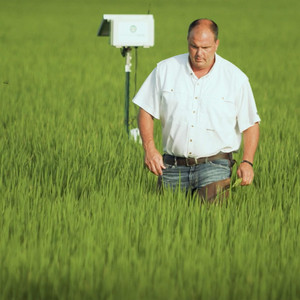
I recently met up for coffee with Jim Whitaker and hisdaughter, Jessica WhitakerAllen, to hear their somewhat radical approach to growingrice.
So, let's go back to how you got to be such a big supplier of rice in thiscountry.
You tell a story about how you were 22 and you werelike,okay, grownup, I'm going to start my ownfarm, but not thateasy.
That wasnot, I remember it like it was just that we drove to the bank and didn't have two nickels to rub together and we got a FHA beginning farmer loan and tookoff.
So my brother and I rented afarm.
Here's Jim Whitaker on the TEDstage.
Farmers are very capital intensivebusiness.
My dad couldn't helpus.
He didn't have thefinances.
He could not help us getstarted.
And let me tell you something about renting a farm when you're 22 yearsold.
No one rents you all the time and it doesn't and they think if I let it dryup, I'm going to hurt it some kind ofway.
So, the varieties we are using are hybrids and they're veryresilient.
So they can take it when the field gets driedout.
They can takeit. Not only did the rice do surprisinglywell, this new method had other advantages for the climatebecause...
So, this full ofmicrobes.
Microbes. That multiply if crops areunderwater.
And what they're doing in the soil on the baselevels, they're down there chewing away eating up the biomass that's left over from the cropbefore.
So they're they're digesters and out of that comesmethane.
The same way it happens in cattle operations orwhatever.
Methane is a notorious greenhouse gas and rice farming accounts for 8 to 11 percent of global methaneemissions.
So when we dry the soil that that anaerobic microbial that's living in that soup that mushysoil, either dyes or goesdormant.
So we break his lifecycle.
And then it stops him in methane but it doesn't hurt therice.
That actually helps the rice when you use lesswater.
That reduces theemissions, the methane by howmuch?
Well last year I documented a emission reduction with 79percent.
Oh,what? Well we say that we're going to reduce it 50 percent on ourpackage.
But our documented last year was 79 percentreduction.
So you're reducing the emissions but you're still growing just as muchrice?
Just as muchrice. So Jessica went tocollege, got a businessdegree, a sustainabilityminor, went on to get herMBA, emphasis onfinance.
Now she's back helping me with protocols and datacollection.
So we established what is called the smart riceprotocol.
And we had one of the first ever third party verifides sustainable rice packages that hit the market a few monthsago.
And we're trying to get in retail locations and I think that's going to be thefuture.
But it's been tough getting retailers to sell climate friendlyrice.
So the Whitakers are now partnering with over 30 other sustainable rice growers to try and create a market for climate friendlyrice.
Recently, Jim also started advising an organization that is working to get more farms to invest in agriculture that earns a climate smartcertification.
Almost like an organiccertification, there are only a few in the world that are doingthis.
So it doesn't mean anythingyet.
We hope it means a lot in a fewyears.
Imean, take a walk through yoursupermarket, everything's greenwash.
You can put whatever you want to on a package and there's no rules there's nostandards.
So we're trying to make thatstandard.
So there is opportunityhere.
There'sopportunity. I'm not doinganything.
Is it going to cost the consumermore?
I think it will until we can get thescale.
And I think it should cost the consumer a little bit more because they're partner in this journey to clean up theclimate.
So we need to expand the price a rice just a littlebit.
And I'm working with a lot of companies that have that mindset to get more money to the farmer and help them do the stuff we're talking aboutdoing.
Our town has 4,000 residents and onestoplight.
The nearestairport,Starbucks, shoppingmall, whole foods is two hours away in anydirection.
And without places like this and farmers likeus, you'd behungry,naked, andsober.
We are going to work with farmers in Southeast Arkansas to educate them about the benefits of growing sustainablerice.
We're going to work withveterans,immigrants, limitedresource, and socially disadvantagedfarmers.
Farmers that aren't so different from my family just a few generationsago.
We will then implement pay for practices such as alternate wedding anddrying, covercrop, no till and lowtill.
We will then help them learn about and document their greenhouse-guisedbenefits.
Monitor,measure,report, and verifythem.
Then market and sell that rice out of premium to help them realize the benefits of producing sustainablerice, the economicadvantage.
Let me tell you why that'simportant.
There are 400 million acres of rice grownglobally.
It is the largest emitter of methanegas.
It is the largest user of irrigationwater.
And ourmethods, if you use camera-reduced greenhouse gas by50% reduce water use by50% and increase yields to feed a hungerworld.
So let's say there's a farmer watching this and thinkinglike, I don't know much about these practices or you meet someone and they'relike, how do I even begin to dothis?
What right now is theway?
Listen to its venom in it fromNPR.
It's the Ted Radio Hour fromNPR.
I'm ManoucheZomerodi.
On the showtoday, the complicated future offood.
So as we'veheard, staple crops like rice are big emitters of greenhousegases.
But even moreso, meatproduction.
Growing and grazing animals takes a lot ofresources.
So what if it didn't haveto?
Yeah, there is so much we could potentially unlock by creating a world where we can farm cells forfood.
This is IshaDatar. She first started thinking about this 15 years ago incollege.
So I started as an undergrad student at the University ofAlberta.
Isha was a cell biology major who really cared about theenvironment, but who also loved to eatmeat.
Yes, I really got into steaktartar.
This is like2008. Imean, I thought that was a bit tooeat.
Because the concept of growing proteincells, it had beenaround.
But applying it to food was prettynew.
And so I wrote this paper really pulling from medical journals that we're lookingat, youknow, growing skin tissue for burr victims like growing cellculture, but for medicalpurposes.
And I wrote about the idea of applying that tofood.
The paper was published in a peer review journal in2010.
And a lot has happened since Isha has become a leader in the field of cellularagriculture.
She's watched as billions of dollars have poured into cultivated meatstartups.
The last grid meat is on therise.
And the science hasaccelerated.
In2013, a professor unveiled the first lab-grownhamburger.
The first lab-grown burger has been cooked atIsha.
It cost over $300,000 tomake.
In2016, there was the first lab-grownmeatball.
The first time a meatball has ever been cooked with beefcells.
And then the first cell-based rib-eyesteak, the first lab-grownsalmon, and the first cultivated chickennuggets.
It tastes likechicken.
Because it ischicken. And in2021, Isha told an excited Ted audience that cultivated meat could be coming to a dinner plate nearyou.
Tome, this chickennugget, thishamburger, thissausage, all made from cells instead ofanimals, aren't just fast foodproducts.
There are ticket to a new foodsystem.
Here's how itworks. Rather than raise a whole chicken withbeaks,feathers,sentience, we grow the meat directly from musclecells.
We take a small biopsy from a livinganimal, and then extract the cells ofinterest.
Muscle cells in particular love to attach ontosurfaces.
It helps them grow any elongate into those long muscle fibers that we're so familiarwith.
So we might provide a scaffolding material for those cells to adhereonto.
Andthen, ofcourse, we have to feed the cellssomething.
So we put them in a liquid medium that provides all the nutrients that these cells need to grow anddivide.
Lastly, the cells on the scaffold in the medium all grow within abioreactor, which is kind of like a largest- It recently became the first country to sell cultivatedchicken.
But those products still mostly contain plant-basedfillers, which is why they'reaffordable.
Esha's learning that lab-grown animal products have a long roadahead.
So around theworld, there are a lot of companies that are doing little tastings here and there of their cultivated meatproduct.
The product on the market on Singapore is made of3%cells,97% probably plantstuff.
And that's actuallyexciting.
Like, that's actually a really great stepforward.
It just feels like disappointment because it's been pitted against this expectation that was set way toohigh.
And that expectation is cool as a kind of futureforward, like holy grail expectation of where we could be oneday.
But that's also the hardest thing you could possiblydo.
And is that because it's so hard to actually cultivate animalprotein?
Like, what's the big challengehere?
Yeah, it is incredibly hard to cultivate animal protein into these kind of 3Dcuts, like a chicken breast or asteak.
In2017, I was able to taste a steakchip, like verythin,crispy.
The reason why it was a chip is because cells grow really well in twodimensions, like in these very thinlayers.
Getting them to grow in three dimensions is a lotharder.
There was a point where just even getting the opportunity to take a taste of this was nearlyimpossible.
And if you did get ataste, that bite morsel would have been worth hundreds of thousands ofdollars,right?
It'sstill, it's pretty much is still thesame.
Ha, so I was at a TED event recently where I had a lettuce wrap with cultivated chicken init.
It was definitely not100% because I think that would have been tooexpensive.
So there's some skepticism there aswell.
Is this product actually going to be viable in the market in the longterm?
But youknow, it's a bigquestion.
Yeah, Imean, nooffense,Isha, but like that is far less sexierthan...
Oh mygosh,no. The simpleheadline, lab meat is going to save us from climatechange.
Here's a big juicy hammerthere.
Iknow, if you have ideas for what a heart are like decklines shouldwe?
Let meknow. But this is the invisible work that really moves biotech alot.
It's not going to be one company that brings it to market in a way that changes theworld.
It's not going to be 10companies.
It's not going to be oneuniversity.
It's going to be an entire new scientific discipline because there's a long technical path ahead ofus.
I guess I'm surprised because like when you gave your TED Talk in2021, you seemed superoptimistic,excited, really talking about the potential behind cultivatedmeat.
Yes. Iactually, I amstill, I am optimistic aboutit.
I think it's an incredibly excitingidea.
I don't necessarily know if meat is the thing that's going to change theworld.
I'm very fixated on this idea of growing food from cells morebroadly.
Meat is onesuch... And in1990, a cell-cultured version hit themarket.
A version of the keyenzyme,kymason.
Andtoday, only 30-ish yearslater,90% of rennet used for cheese making came from a buyer reactor instead of acalf.
We're used to transforming food withbiotechnology.
It's arguably like the oldest technology we have is when we started fermentingfoods.
And we started making beer and kimchi and pickles and yogurts and cheeses and all that kind ofstuff.
Like that was us transforming foods with cellcultures.
We could have never looked at a glass of milk and said we wanted it to be stinky with like veins of mold goingthrough.
And it's hard and itmelts.
And you mean like cheese is basically what you just described in the most disgusting waypossible.
Okay. When someone had envisioned cheese fromscratch, had they never had cheesebefore?
And sosimilarly, if we looked at milk and couldn't have envisionedcheese, today we're looking atmeat.
And we're just trying to make meatagain.
But maybe we can make the cheese ofmeat.
That is such an exciting vision for me is unlocking the power of cell culture to just increase food culture instead of replicating a culture we alreadyhave.
Okay, lastquestion. Do you still love steaktartar?
I do still love steaktartar.
I've gone through long bouts of not eatingmeat, veganvegetarian, all that kind ofstuff.
Hmm, butyeah,no, I'm still that conscious and conflicted carnivore that I was when I got intothis.
That was IshaDatar, executive director of the non-profit NewHarvest.
You can see her full talk atTed.com.
We started today's show by talking about how we can preserve many of the foods we love from crab cakes to the Georgiapeach.
We want to end the show with an artistic twist on the future ofagriculture, specifically stonefruit.
Artists Sam Van Aiken works at the intersection ofbotany,conservation, and creativeexpression.
Here he is on the Ted stage in2019, talking about hisproject, The Tree of FortyFruit.
100 yearsago, there were 2000 varieties ofpeaches, nearly 2000 different varieties ofplums, and almost 800 named varieties of apples growing in the UnitedStates.
Today, only a fraction of thoseremain, and what is left is threatened by industrialization ofagriculture,disease, and climatechange.
The Tree of Forty Fruit is a single tree that grows 40 different varieties of stonefruit, so that'speaches,plums,apricots,nectarines, and cherries all growing on onetree.
It's designed to be a normal looking tree throughout the majority of the year until spring when it blossoms in pink andwhite, and then in summer bears a multitude of differentfruit.
I began the project for pure closely tied to theculture, thecultivation, and the story of ourfood, and we've been separated fromthat.
The open orchard creates the opportunity not just to reconnect to this unknownpast, but a way for us to consider what the future of our food couldbe.
Thankyou. Sam Van Aiken is an artist and an associate professor at the School of Art at SyracuseUniversity, and you can still visit the open orchard project on Governor's Island in NewYork.
Thank you so much for listening to our show about the future offood.
This episode was produced by JamesDelahousi, Rachel FaulknerWhite, MatthewCloutier, HarshaNahada, and ChloeWeiner.
It was edited by Sana's Mechkin Poor andMe.
Our production staff at NPR also includes Fiona Girin and KatieMontellione.
Irene Nguuchi is our executiveproducer.
Our audio engineers were NeilT.
Vault, RobertRodriguez, GileMoon, and DavidGreenberg.
Our theme music was written by RomteenArablui.
Our partners atTed, our ChrisAnderson, RoxanneHighlash, AlejandraSalazar, and DanielleLeballo-Rezo.
I'm ManouchaZamorote, and you've been listening to the Ted Radio Hour fromNPR.
Was it just me or did brands seem a little quieter for Pride last month than they usuallyare?
Actually, brands generally aren't jumping at the chance to advertise to marginalized communities or weigh in on politics like they usedto.
Thisweek, we look at why brands got woke thenunwoke.
Why was that sounusual?
And what could it say aboutyou?
Listen on its been a minute fromNPR.
On this week's episode of WildCard, actor Ted Danson says it's possible to embrace yourregrets.
I wish I hadn't become aliar, youknow, early inlife, but even yourwounds, you kind of have fondness for if you've lived through it and made amends and all of thatstuff.