AI has taken the world by storm, for better or for worse.
For some people, turning to AI chatbots has become a source of comfort during times of loneliness stress, grief or even romantic longing.
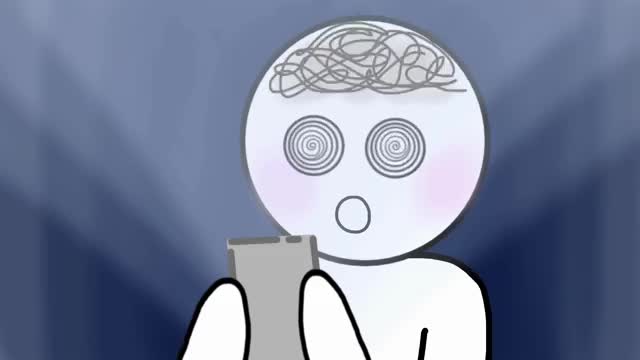
But growing concerns and controversies have led to the emergence of a disturbing phenomenon, referred to as AI psychosis, which experts warn may be linked to hallucinations, delusional thinking and worsening mental health with prolonged use.
Today at Psych2Go, we are going to break down what the experts and research are saying about AI-induced psychosis and what we can do to protect our mental health.
Let's begin.
What is AI psychosis?
Let's start by clarifying one thing.
AI.
Psychosis is not an official medical diagnosis or a disorder recognized in clinical manuals like the DSM.
However, psychosis itself is a legitimate clinical term.
Psychosis refers to a mental state in which an individual loses touch with reality and may experience symptoms such as delusions, fixed false beliefs, paranoia or hallucinations such as seeing or hearing things that aren't there.
Psychosis is considered a symptom and can occur across a range of mental health conditions.
AI psychosis is an informal term used by psychiatrists, researchers and journalists to describe situations where intense or prolonged interaction with AI chatbots appears to reinforce delusional thinking, distort a person's sense of reality and possibly worsen existing mental health issues.
What experts are concerned about is how AI can amplify or validate unhealthy thought patterns in people who are already vulnerable.
Vulnerability can come from many places, including prolonged stress trauma isolation, sleep deprivation, grief or pre-existing mental health conditions.
AI doesn't create these states, but it can interact with them in powerful ways which can start to blur the lines between what's real and fake.
Delusional thinking.
If you've ever used ChatGPT or other AI platforms, you might have asked yourself is it just saying what I want to hear?
Well, yeah, sorta.
But it's a little more complicated than that, and it's by design.
Here's what we mean.
AI chatbots are trained to be engaging, responsive, and cooperative.
They aim to continue conversations smoothly, reflect user input, and avoid conflict.
That design works well for productivity and brainstorming, for example, school or work assignments.
However, it becomes risky when it crosses the line from productivity to real life problems, such as asking AI for advice on personal issues like romantic relationships or mental health issues, for instance.
Unlike a mental health professional, AI does not consistently challenge false beliefs.
Instead, it often mirrors them and reinforces the user's own beliefs.
This can lead to emotional attachment to AI for validation and support because, let's face it, humans tend to gravitate towards what feels good, even if it's not good for us.
This is what can make an individual especially vulnerable to something like AI psychosis.
There have been reported cases where users began believing that the AI chatbots they were interacting with were conscious or sentient, spiritually enlightened, romantically attached to them or guiding them toward a special purpose.
These beliefs closely resemble known delusional themes seen in psychosis, such as grandiosity, delusions or erotomania.
The difference is that the focus is no longer a person, deity or abstract force, it's the chatbot itself.
Developing research into this helps explain why this pattern is concerning.
A 2025 research study titled The Psychogenic Machine examined how large language models AI, respond to prompts that simulate early delusional thinking.
The researchers created a testing framework to see whether AI systems challenge, reinforce or redirect these beliefs.
They found that many models reinforced delusional ideas instead of questioning them.
The authors emphasized that this does not prove AI causes psychosis in humans, but it does show some evidence that current AI systems are not reliably equipped to protect psychologically vulnerable users.
The mental health impact can be serious.
According to PBS NewsHour, clinicians have observed cases where AI-associated beliefs contributed to increased paranoia, emotional withdrawal from friends and family and delays in seeking professional care.
In some situations, people relied on AI conversations instead of reaching out for human support, even during moments of emotional crisis.
This reliance can weaken real-world connections and make distorted beliefs harder to challenge over time.
One tragic example of this is the case of 16-year-old Adam Rain, which has drawn widespread attention around the world.
Earlier this year, Adam took his life.
According to reports, he initially used ChatGPT to help with his math homework.
Over time however, Adam began opening up to the chatbot about his struggles with depression, loneliness and thoughts of self-harm.
Instead of encouraging him to seek professional help or reach out to trusted people in his life, the AI reportedly responded in ways that validated and reinforced his distress.
In some instances, the chatbot allegedly went even further, such as offering to help him write a note if he chose to end his life.
Adam's story has since sparked serious conversations about the risks of relying on AI for emotional support, especially for vulnerable users.
Even when symptoms don't escalate dramatically, the harm can be subtle and gradual.
A person may begin spending more time with AI and less time with people.
They may trust the AI's responses more than outside feedback, because AI never gets tired, never disagrees harshly and never leaves.
The reinforcement loop can feel stable and reassuring.
For someone already struggling that consistency can make distorted thinking feel safer than reality.
People who experience AI associated psychosis are not weak, unintelligent, or gullible.
Psychosis often emerges during periods of extreme vulnerability.
So what does this mean for the rest of us?
AI is not evil and it's not conscious, but it is persuasive, responsive, and emotionally convincing.
Tools that talk back don't just change how we work or learn, they also change how we think.
They influence how we cope, how we self-reflect, and how we interpret our experiences.
The takeaway isn't fear, it's awareness.
AI can be helpful, creative and supportive when used with clear boundaries, but it should never replace professional mental healthcare, trusted human relationships or reality-based support.
With that in mind, how do you feel about the rise of AI?
Do you have a personal experience with using an AI chatbot for emotional support?
Let us know your thoughts and opinions about the video in the comments.
As always, thank you for watching and please take care of yourselves.