Hey, approved listeners. I don't know about you, but I cannot wait to get outside now that grilling season is here.
I've been grilling for 45 years. Everything from casual weeknight suppers to an elaborate beach party with 75 guests, two different grilled entrees and one cook.
Yeah, that's usually me. So how do I pull that off?
Well, all successful grilling starts with surprise.
With its unbeatable power and its versatility, the Eminence 605 Grill from Atlanta-based Monument Grills lets you grill like a pro.
Whether I'm making a show-stopping paella or serving up burgers and steaks, six Blaze infrared burners with stainless steel grates get the job done.
Thank you, 66,000 BTUs. The Eminence 605 also comes with a heavy-duty rotisserie kit so you can make a succulent leg of lamb rubbed with garlic and herbs or the world's best chicken. to top it off the eminence 605 has a bluetooth app so you can monitor the temperature of what's cooking create alerts and more Now I can make my famous smoked turkey breast and still join the party.
The Eminence 605 really is the grill of the future.
Learn more about the Eminence 605 and their other grills at monumentgrills.com.
Hey Proof listeners, it's Morgan Bowling.
In these hot summer months, I know we're all looking for ways to keep our things cool.
Whether you're packing up for that weekend camping trip, loading your cooler for your backyard barbecue, or taking a fishing trip and need to keep your prize catches cool, Arctic Ice makes the ice packs for you.
Arctic Ice Pack's slim shape makes them easy to pack in coolers, lunch boxes, and more.
Their hard exterior protects them from punctures and eliminates the awful sogginess you get from other options.
We needed only one of these Alaskan Series Extra Large Packs to line a cooler to keep soda chilled for more than a day. and the pack stayed cold for almost 14 hours when we let it sit out at room temperature.
For all these reasons and more, we found the Arctic Ice Alaskan Series Extra Large Ice Packs to be the winner when put head to head with their competitors.
And that's not all. These ice packs are manufactured in America in a variety of different sizes to fit all your needs.
And they come with a lifetime warranty. Visit arctic-ice.com to learn more.
My 30-year-old daughter turned me on to Quince and now I'm a repeat customer.
I'm not talking about the fruit, which I love.
I'm talking about the online retailer with high-quality fashion at affordable prices.
I'm obsessed with the ProTech golf pants from Quince.
And in case you're wondering, I do not golf.
I started with these pants in khaki, and I must admit I was skeptical when I ordered.
I usually buy pants that cost two or three times as much, but I love the fit and feel of this Quince Classic.
The fabric is so darn comfortable. nights out with my wife and to the office.
I've dressed them up with a collared shirt and blazer and kept it casual with a polo shirt.
I like that first pair of Quince Pro-Tech golf pants so much that I've since ordered them in two more colors, blue and black.
I travel a lot and really appreciate that these pants resist wrinkling.
I'm heading to Europe later this year, and I don't think those more expensive pants in my closet are coming with me.
Keep it classic and cool with long-lasting staples from Quince.
Go to quince.com slash proofpod. for free shipping on your order and 365-day returns.
That's Q-U-I-N-C-E dot com slash proof pod. as in proof, P-O-D, to get free shipping and 365-day returns. quince.com slash proof pod.
As a reporter, I am dogged This is reporter Justin Barney.
By day, he's a music reporter at WPLN, Nashville's public radio station.
I've interviewed like Chapel Roan and Nick Cave and Steve Martin.
How would you describe your approach to reporting?
Do you have a particular style? I like seeing the big thing in something small.
And I think that really lends itself to music.
Today, he's obviously bringing us a story about food.
But before I tell you what that is, I really need to emphasize that Justin is the kind of reporter who really goes all out when searching for that big thing and something small.
I think a good example of that is one time I was listening to this song by the artist Rap Ferreira, and there's a line in it that says, It's epic poetry that keeps the cosmos orbiting.
And he had talked about some monks before that.
And I was like, I need to know what this means.
So Justin interviews Rap Ferreira to ask him about what exactly this Cosmos line meant.
And he was like, well, that goes back to my freshman year anthropology class in college.
And I had this professor who said that there's this group of monks who have this poem and they say the poem every day and they believe that that's the thing that keeps the earth in rotation.
And so I said, who is that teacher and he was like i don't know my college anthropology teacher This is par for the course for Justin.
I let my nose lead me, and I like to go on a little hunt.
He doesn't relent until he gets an answer.
So I found the teacher, the professor, who is now at a school at St.
Andrews in Scotland. I tracked her down.
And I asked her, who is this group of monks that keeps the cosmos orbiting?
And she told me it's the Koji from Columbia.
So when Justin brought us a story about this inexplicable dish in Nashville that was addling him, we were intrigued.
Three years ago, I moved to Nashville from Milwaukee, Wisconsin.
And I was driving down this street. There's this one street in East Nashville where I live.
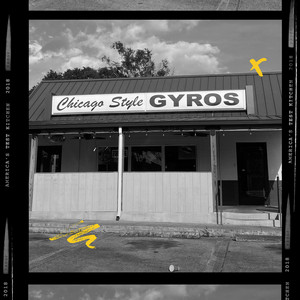
That's Gallatin Pike. And there's a place called Chicago Style Euros.
And I'm from around Chicago. And I thought Chicago style euro.
What's a Chicago style euro? I never heard anyone refer to a euro as Chicago style.
Nobody knew, but everybody had an answer.
Uh... i don't know it's on a pita if you don't meet so it's It's pretty universal.
It's not just like Chicago girls, but maybe there's a lot of Greek people here.
Well, for me, I don't know whether Chicago style gyros.
You know, like hot dog. Hot dog is... Different, you know, Chicago style.
But the gyros is, I don't know, I don't know what they put it, because the gyros, they come in salsas and tomatoes, that's all.
This drove Justin crazy. So naturally, he had to get to the bottom of it.
Today on Proof from America's Test Kitchen, a multi-state, multi-ethnic journey to uncover the history of the euro. its regional variations, and what makes one Chicago-style.
We meet a man from Justin's hometown of Milwaukee, a Greek Eurobaron in Chicago, and a Kurdish immigrant in Nashville, all pursuing their versions of the American dream via processed, seasoned meat.
I'm Jack Bishop. Whip up some tzatziki and get ready for a winding journey.
Hey Proof listeners, it's Jack Bishop. At America's Test Kitchen, we know how important it is to cook with a good sturdy pan.
And Smithy's Ironware, well, it gets the job done.
Smithy Crafts cast iron and carbon steel pans in South Carolina.
They come pre-seasoned with no chemical coatings, so they're ready to go right out of the box.
When our in-house reviews team tested Smithy's the surface the very first time they used it.
The cast iron pan had the same impressive non-stick quality and was our review team's top choice.
And these pants aren't just good looking with that iconic golden hue and sleek finish.
They're balanced, comfortable to handle, retain heat beautifully, and deliver even browning every time.
From weeknight meals to decadent desserts, these pans work hard and look good doing it.
Smithy doesn't just make skillets. They have Dutch ovens, griddles, and more, all guaranteed for life.
And speaking of for life, all of their cookware is engravable, making them the perfect family heirloom.
All that and more is why Smithy Pans are highly recommended by our reviews team.
Visit smithy.com to learn more and get your hands on one of these pans today.
Mint is still $15 a month for premium wireless.
And if you haven't made the switch yet, here are 15 reasons why you should.
It's $15 a month. Seriously, it's $15 a month.
No big contracts. Four, I use it. Five, my mom uses it.
Are you playing me off? That's what's happening, right?
Okay. Give it a try at mintmobile.com. Upfront payment of $45 for three-month plan, $15 per month equivalent required.
New customer offer first three months only, then full price plan options available.
Taxes and fees extra. See mintmobile.com.
Prime delivery is fast. How fast are we talking?
We're talking puzzle toys and look pad delivered so fast you can get this puppy under control.
Fast. We're talking chew toys at your door without really waiting fast.
P-pads, clothing mat, and peg hammer, fast and fast.
And there's training T-R-E-A-T-S, faster than you can say sit fast.
And now we can all relax and order these matching hoodies to get cozy and cute fast.
Fast free delivery. It's on Prime. Reporter Justin Barney has the story.
The first known picture of meat cooked vertically was taken in the Ottoman Empire in 1855.
The technique is thought to have originated in northern Turkey, where it's known as doner kebab.
Doner comes from the Turkish word donmek. which means turning, and kebab, grilled meat.
Around the same time, other places throughout the Middle East shaved stacks of meat onto pita and called it shawarma.
And in Mexico, shaved meat from a spit is al pastor.
The word euro means spin in Greek and refers to the technique of cooking more than it does the toppings. euros in the form that we recognize them today the handheld meat veggies on pita or flatbread started to appear in Athens around the first half of the 20th century, which is surprisingly not that long ago.
And by the 1970s, they'd come over with the people who made them into the United States.
In Nashville, Euros are everywhere, seemingly in different styles.
There's a restaurant called Greek Style Euro.
There's a food truck called New York Style Euros.
There's also a chain of seven restaurants called Chicago Style Euros, which is an institution.
So if you're getting a euro in Nashville, it is most likely Chicago style.
Which begs the question again, Why are the euros here called Chicago-style euros?
And what exactly are they? Since the people in Chicago clearly didn't know what it was, I thought maybe the folks in Nashville might know.
So my quest to find out started at the Chicago-style Euro restaurant on Gallatin Pike.
Hi, ma'am. I'm working on a story about euros.
What is a Chicago-style euro and how is it different from other style euros?
Chicago-style euro? I've never had a Chicago-style euro.
The name of the restaurant is Chicago Style Gyros.
Well, my bad. Well, I guess we're zero for zero here.
As I walked further into the store, I spotted a man over the sneeze glass working on the Euro assembly line.
He was middle-aged, thinning long black hair, He was wearing a headset and a red polo, and he seemed to be in charge.
His name was YL. I'm working on a story about euros.
I'm just wondering, like, what is a Chicago-style euro?
They got a Greek town in Chicago, and, like, they've been famous with the euros there. and we get our meat from them. and we do it from scratch here.
Okay, so they're modeling the euros off the ones that are presumably served in Greektown, Chicago.
But what makes the Chicago-style gyro different from any other style of gyro?
We make our own taziki, homemade taziki, homemade ranch dressing.
We chop our vegetables every morning like fresh brooders and we do it all from scratch.
Respectfully, sounds like many other euros I've eaten before, but I'm not sure that answered my question.
And it doesn't really look like they do everything from scratch.
The pitas are store-bought. And I can see what looks like an industrial cone of gyro meat spinning behind him.
So I pressed YL a little bit more. but is there like uh like the assembly of the euro or the ingredients is it different the meat we have it's uh called like uh number one gyro meat you know we use i can tell you like exactly the type of it because this is our secret.
Nothing makes me want to dig in more than when I hear something is a secret.
Maybe if I found out who owns or started the franchise, they could give me some more clear answers.
Who started it? A guy, his name is Joey, back then, he started. it's sold individual but they're still a franchise you know okay now we're getting somewhere Joey what?
I don't know his last name, but he started back then.
That's 25 years ago. That was 25 years ago.
Have you seen him? No, not lately. Okay, so Weil didn't know what the founder, Joey, of Chicago Style Euro's last name was or his contact info.
Grasping for straws, I asked if I could see where exactly in Chicago they got their meat from.
Can you show me where you get the meat? Can you show me the boxes?
I cannot. A lot of people, they try to copy it, man. be a full answer to the question of why they're called Chicago-style euros.
Yes, but I got two important clues from my conversation with YL.
One, that they get their meat from somewhere in Chicago.
Number two, the Chicago-style euros, the restaurant chain, was started by a man named Joey in the 90s.
From what I know, there's only one other place in the country that I could find that's called Chicago-style euros, and it's in Michigan.
So that means that this Joey figure would likely be the first person to use the phrase Chicago style euros.
I believe he is key. On my way out of the restaurant, I thanked YL for his time and waved to a guy tossing a bag in the dumpster.
And then I headed to the library to figure out who Joey was. the mysterious founder was.
At the library, I typed in Chicago-style Euro and Joey.
Exactly one article popped up. Farmer's Market Continues Growth from the March 1996 edition of The Nashville Scene.
In an article about the farmer's market, it had exactly two lines that read, quote, owned and operated by longtime farmers market vendor, Joey Kahn. who operates Kaan Produce, the eatery offers traditional Greek fare."
Maybe Kaan was his last name. But searches for Joey Khan were maddeningly fruitless.
Absolutely no Internet presence, no LinkedIn for a man who started a franchise with seven locations in Nashville.
No other articles were ever written about him.
The only evidence of his existence was this one mention in one line. of one newspaper in 1996, Joey Khan, The Ghost.
And then I had a breakthrough. While searching through boring government documents for Khan Produce, I found out that it was started by a man whose last name was Khan.
But his first name wasn't Joey. It was Fakir.
Nashville has the largest Kurdish population in the United States.
We have an estimated 17,000 Kurds from Iraq, Iran, Syria and Turkey.
Many own restaurants. A favorite of mine is Fat Moe's Burgers.
Few people know that Moe is short for Mohammed.
So it wouldn't be farfetched to assume that an entrepreneur in 1990s Nashville named Fakir might have Americanized his name to Jogi.
On the LLC filing information document, it lists introduce headquarters address as just a regular house in the suburbs, along with a sounded like a teenager.
He said that Joey was on vacation and he couldn't talk.
But in that call, I was able to confirm that Fakir Khan was indeed Joey Khan.
The young man also told me to call back in three days because Joey would be home by then.
So I waited. I couldn't wait to talk to Joey so I could get some more answers on why he decided to name his restaurant Chicago Style Euros and exactly what makes them Chicago Style.
Please leave your message for. I called three days later, but no dice.
So I called again. All right. This is Justin Barney.
Trying to call Joey Khan. Attempt two. And again.
I'm doing one more. Attempt seventeen. Feeling it.
I'm feeling good. Please leave your message for six.
Reaching a dead end, I went for the one other piece of information that I had.
Okay, I'm back on the case of Joey Khan.
I'm out here in Franklin at what I think is the house of Joey Khan, or let me give him the courtesy of pronouncing his name correctly. of Fakir Khan.
Remember there was a residential address on that con produce filing information?
So I'm coming after hours. And it looks like some of the neighbors are home, but it looks like this place looks almost certainly empty.
I had a bit of luck. The owner of the house said that they have lived there for only a year, had no idea who Joey Khan was, spoke Portuguese. not english but i saw that next door the lights were on and so i knocked on the door next door to people that were older kind of like waving me off being like, leave.
I just sat there until they came to the door.
I asked them if they knew anything about the neighbor before and they said, yeah, that they knew him and that his last name was Khan.
And I said, do you know if he owned a restaurant?
And they said, yes, he owned a restaurant in the farmer's market.
The couple told me that Joey moved to Dallas a couple years ago, which was helpful information.
And that led to more online research with a colleague who was versed in investigations.
Notice of suggestion of death. What? This is like 20 days ago.
April 4th. Oh my. That he is deceased. Oh my god.
Okay. reporters would have been like, I guess the story is not going to happen.
That was really hard. because he had only passed away after I started the story.
Like he was alive when I started the story and he had passed away recently. which made it more difficult.
Honestly, the story sat for a while. It was a real like, What do I do now?
I'm never going to get that answer. But Justin, of course, did not give up.
His search for Joey Khan took six months of off and on work.
He even staked out a house and read legalese.
That's right. Legalese. I wasn't going to let this become a roadblock.
So I went back to the drawing board. The meat we have.
So I can tell you like exactly the type of it, you know, because this is our secret.
When I interviewed YL at Chicago Style Europe, that they get their meat from somewhere in Chicago.
That was, as far as I could tell, the only actual tie to Chicago for the franchise.
YL wouldn't tell me the supplier, so I had to find out myself.
All right, it's Justin Barney for PLN. And I'm at Chicago Style Heroes.
Remember that dumpster I saw on the way out?
Interviewed our man Wally a couple weeks ago.
He's been all cagey about bringing me in the back to see the... the boxes but they have a dumpster out back and it's 10 o'clock at night And I'm just going to see if they have the boxes of the euros back here.
There's bugs, bugs. There's some kind of fire.
There's a little door. Oh man. God. I found a box, but it does say Grecian Delight Olympic Spirit 2004 brand. large euro cones manufactured by grecian delights foods in elk grove Illinois.
So this is a new clue. Yes. It appears that Chicago-style gyros gets its meat from a place called Grecian Delight. in Elk Grove, Illinois.
Now that I knew where Chicago Style Euros gets its meat, I went to their website and I found out that Kronos is the biggest provider of Euro meat cones in the United States.
And if you want to start a Euro restaurant or they offer a couple of selections.
One, the Athenian Eurocone, and the other, Item number MEL179.
The Chicago Style Large Euro Cone. Bingo.
If you want one or want to know more about one, there's a number to call.
If you know your party's extension, you may dial it at any time.
Hi, Carrie. I was looking at the website and saw that you have a couple of different products that are We have like a Grecian style meat and a Chicago style gyro.
And I was wondering what the Chicago style gyro is.
Give me one sec. My computer is kind of acting up a little bit.
All good. I'm just trying to see what the actual difference is on those.
So the Chicago style has a garlic oregano lemon note to it.
And the Athenian is a combination of beef and lamb with select regional spices, so it would be more of a Mediterranean flavor.
So the Chicago style is garlic, lemon, and oregano?
Yes. Those would be the notes that you'd pick up more.
I'll admit... Part of the mystery is solved.
I now know the flavors that go into a Chicago style gyro.
But that whole exchange still doesn't explain why exactly that meat cone is called the Chicago Style Euro.
Is it just because they're made in Chicago?
I had more to find out. On the Grecian Delight website, they say that the company was founded by a Greek man named Peter Parthenis, who appears to live in Chicago.
I'd seen relatively recent videos of him where he was quoted in the press, so I had hope that he was still alive.
If anyone would know why they called it Chicago style, it would be him.
I used the Grecian Delight phone tree to get the voicemail of the head honcho's secretary, I have interviewed hundreds of musicians, some of them pretty high profile.
But for some reason, trying to get in touch with Peter Parthenis was extraordinarily difficult.
Call on a Friday, don't get anything. It's Monday, I'm waiting around.
I'm like, okay, maybe on Monday, I'll give them a day.
My biggest barrier seemed to be Sylvia.
I call back I get the operator same operator I'm like could you put me through to Sylvia she's like yes right away through to Sylvia I get Sylvia the answering machine again.
I leave the same voice memo again. This went on for about a month.
Since I was on deadline, I figured that I would just walk into Grecian Delight headquarters with a hot mic.
So I decided to drive up from Nashville to Chicago.
First thing I'm gonna do, get some coffee.
After driving eight hours, I pulled into the parking lot of Grecian Delight Kronos and my phone rings.
It's Sylvia. She's finally returning my calls.
The timing is unbelievable. Hello. Hi, if you want to go to the vestibule in the front, someone will come out for you. research and development office will come out for you.
Yes. Okay. I'm so thrilled. Peter wasn't available that day, but I was able to get a tour of Grecian Delight Kronos HQ, where the meat cones are made.
So this building here is our test kitchen, and this is where we create everything on a small scale.
I saw all around the huge euro factory and I learned that they are indeed the biggest euro manufacturer in the world.
Grecian Delight and Kronos were two euro factories that started around the same time in Chicago, and they were euro rivals for decades until they merged.
But I didn't find out much about what made the Chicago-style euro Chicago-style.
Even my guide Dan couldn't give me a definitive answer.
Chicago style euro. Is there something different?
No, you know, sometimes you see the West Coast put lettuce on it.
Sometimes you'll see olives and feta cheese, but this is your standard gyro is the red onion, tomato, and tzatziki sauce.
But I did get one key piece of information from the tour.
It revolved around understanding the Eurocone and the rotisserie.
Can we take a look at the broiler? Absolutely.
It's a pretty simple machine. You got a gas line, two broilers that turn on, and then one little switch down here that makes it spin.
And I believe it was, don't quote me on this, Peter Senior that invented a machine like this.
And then they said, hey, we have to find a way to manufacture meat to put on here to sell with it.
And that's how it started. the machine came first.
Again, don't quote me on that. I believe so.
Or at the same time. Because you can't cook the cone without the machine.
So why would you make a cone and not have a place to cook it?
So for me, that makes the most sense. This was an aha moment for me, that Peter didn't start by making the meat cone.
He started by making the machine that heats the urine. out.
And this is important because there's two parts of the euro that have to be together in order to get a euro.
You have to have the meat and you have to have the machine.
Without both things, you don't have a euro.
In terms of the meat, The meat can sometimes be fillets that are marinated, stacked up on a spit, and cooked in the form of a cone.
But the meat cones that I saw at Grecian Delight were sort of like gigantic uniform blocks of meat. made from ground up lamb, beef, and others, mixed with spices and a binder that keeps it all together.
And the machine at Grecian Delight is this crescent shaped rotisserie that cooks just the outer layer of the meat, creating even and delicious char that is cut off into thin strips.
If Peter Parthenis made the euro machine, then who the heck made the euro cone?
After the break, how a hippie entrepreneur and his wife got the idea of industrializing the meat cone from a comedy show?
Funding for Proof comes from American Cruise Lines, proud sponsor of America's Test Kitchen.
On an American Cruise Lines journey along the legendary Mississippi River, Travelers explore classic Southern estates, Civil War battlefields, and historic American towns, Aboard their fleet of modern riverboats, you can experience local culture and cuisine and relive American history.
To learn more, visit AmericanCruiseLines.com isn't always obvious, but it's real. people taking EPCLS achieved itch relief and clear or almost clear skin at 16 weeks.
And most of those people maintain skin We'll see you next time.
250 milligram for two milliliter injection is a prescription medicine used to treat adults and children 12 years of age and older who weigh at least 88 pounds or 40 kilograms with moderate to severe eczema also called atopic dermatitis that is not well controlled with prescription therapies used on the skin or topicals or who cannot use topical therapies Epgliss can be used with or without topical corticosteroids.
Don't use if you're allergic to Epgliss.
Allergic reactions can occur that can be severe.
Eye problems can occur. We'll be right back. relief?
Ask your doctor about Epglys and visit epglys.lily.com or call 1-800-LILY-RX or 1-800-545-5979.
This episode is brought to you by Indeed.
When your computer breaks, you don't wait for it to magically start working again.
You fix the problem. So why wait to hire the people your company desperately needs?
Use Indeed's sponsored jobs to hire top talent fast.
And even better, you only pay for results.
There's no need to wait. Speed up your hiring with a $75 sponsored job credit at Indeed.com slash podcast.
Terms and conditions apply. And now back to our story.
So, Justin, you're basically pursuing two paths at this point.
It's the rotisserie equipment path and you've gotten some progress.
You've gotten inside the factory, but you haven't really talked to Peter.
To my chagrin, I was still working on that with Sylvia.
Now you wanted to figure out where the origin story of that meat cone What did you do next and where did your reporting take you?
At some point during my reporting, I read an article from The New York Times written by David Siegel in 2009.
It said that the idea for The meat cone came from a woman named Margaret Garlick and her hippie husband John in Milwaukee, Wisconsin.
John unfortunately died in 1994. I tried to get in touch with their son, Ian Garlick, but he didn't want to be contacted and he said that he is estranged from his mom. but I'm from Milwaukee.
So nationally, I have lots of contacts and resources there.
And if there was anyone who might be able to tell me more about John and Margaret Garlick, it would be my old buddy on milwaukee.com writer and historian Bobby Tanzillo.
Good. Oh man, the scent of coffee coming out of your car.
I know. Bobby and I met at the site of one of the Garlic's old restaurants, which is now a parking lot in downtown Milwaukee in April.
Alright, so what I found about John Garlick is that he was Jewish, not Greek.
Yes. His last name was Garlick, but not Spelled G-A-R-L-I-C.
It was a Polish last name spelled G-A-W-R-Y-L-I-K.
I love that song. Another Americanized name.
So, presumably he Americanized it, A, because... you can barely spell much less say garlic.
Yes. And it sounds exactly like garlic anyway, right?
Yeah. So at some point he changed it to that.
At some point, John Garlick went off and joined the Marines.
Then he goes back to Milwaukee. Garlick is a colorful guy charismatic and talkative, a bit of a hustler.
His wife's brother said that he was the kind of guy that when he walked in the room, he knew you were about to have fun.
And his former Euros partner said he was kind of a hippie, the big burly guy with curly dark hair and the one... faded sort of picture I've seen of him.
It's in the late 70s. He's got like a classic 70s horseshoe mustache.
I saw that too. And he was apparently the kind of guy that was up for anything.
One night, the idea for the Euro as we know it was conceived.
This is the key moment in Euro history. His wife said she was watching TV and she saw something about euros on TV on What's My Line.
And she saw a guy, a Greek guy, putting euro on a spit.
Yeah. And she said we should look into this because this is going to be huge.
Margaret Garlick saw the potential for euros to be a staple of American life in the early 1970s.
So I guess when she said, let's look into this, he was like, hell yeah.
There were a couple of restaurants in Milwaukee and Chicago making euros the way the Greeks were making them.
They're oftentimes made by fillets of meat that are marinated and stacked on top of a spit.
But the Garlicks thought that if they could simplify the meat cone making process, that there was a potential to sell euros across the country.
So the Eurocone, what they were doing back then at least, and the New York Times had a slight variation on this, so maybe it changed over time.
They would take pieces of lamb and beef and ground them together and add salt, pepper, oregano, and other spices.
And then I think the New York Times said they would also add water.
Some kind of binder. And something else, yeah.
Oh, breadcrumbs. Yes. Yes. Then it said the meat was formed into discs that were four inches thick. and then they were put on a spit one at a time.
You'd stack them on the spit. But each one, the one at the bottom had the smallest circumference, smallest diameter.
And they would get progressively wider and wider and wider, which is how you get the cone.
So the prototype was formed. But the garlic's meat cone ran into some red tape with the National Sanitation Foundation.
Their concern was that while the outside would cook, The interior would be lukewarm for hours.
Their fear was that having lukewarm meat for hours unrefrigerated would be bacterial.
So what they agreed to do was freeze the cones so that when you put it above the heat, it would be frozen, but the outside would cook enough.
Like, you know, you left it on there just enough.
As you start cutting it away, each new layer is heating up, but the inside is still frozen so that it's not lukewarm for hours.
So this seems to be the sort of invention that's involved is the making of the cone to deal with the varying heat. and the freezing of the cone to prevent bacterial growth.
So the garlics now had a workaround version of the Eurocone, approved by the health department.
They make their first sale to the University of Wisconsin-Milwaukee where it does well, but the startup is hard.
In order to cook the gyro, you need a rotisserie spit.
So there's a bit of an entry cost that the restaurants were slow to pick up on.
So Margaret Garlick says we should go to Chicago.
In Chicago, they pitched this idea to a young Greek engineer who was repairing and making bits at the time, Peter Parthenis.
Together, they formed Euro Inc. in 1974.
But then later they get out of the business because They were concerned that it was growing so fast and it was requiring so much attention. that they thought they'd have to move to Chicago to be closer to the plant, but they didn't want to leave Milwaukee.
So they sold their share of the business to Peter.
So Margaret Garlic sees an episode of What's My Life?
Her husband, John Garlick, a wild man with an Americanized name and a penchant for cockamamie ideas, comes up with a Euro meat croissant. cone approved by the sanitation department.
They can't do it themselves. They need the other half of the Euro equation, the machine.
So they go to Greektown in Chicago and they partner with Peter Parthenis.
They form Euro Inc. And in one year, he takes over the operation and changes the name of the company to Grecian Delight.
The Grecian Delight Kronos factory I went to in Chicago, by the way, has a big mural of the history of the company on the wall.
It is 20 feet long. No mention of Margaret and John Garlick.
All right, so how are you feeling about your reporting at this point in the investigation?
I was feeling proud of Milwaukee and its people because what I got was confirmation that they had, in fact, invented the meat cone. and we're the very beginning of the modern Euro as we know it.
The part that I didn't know was then how it became distributed and how I was able to leave Chicago and Milwaukee.
And I still didn't know the answer to what's a Chicago style Euro.
I didn't get that. I got like, how was the first Euros made?
But that was a big question that I still had.
And only Peter would know that. In my mind, the elusive founder, Peter Parthenis, is the only one left to tell the story of how the melding of the minds happened between the garlic. who brought the idea of the meat cone and him, the inventor of the machine.
Sylvia, the secretary who had been bothering for months, finally confirmed via email that Peter Parthenis was back from Greece and would be able to talk at 3 p.m. on Saturday afternoon the weekend after I'd driven to Milwaukee and Chicago.
It was not ideal. but I am nothing if not dogged.
I left after work on Friday and started driving.
But even with this ironclad and well-documented plan, there was drama.
So Sylvia just called at 10 o'clock at night and said, Hey, Justin.
I don't know if we should do this interview on Mother's Day because it's Mother's Day.
And I said, that's okay. We're doing the interview tomorrow, which is the day before Mother's Day.
And I'm six hours into this drive. And I will be in Chicago all day tomorrow.
And my only purpose to be there is to do this interview.
So I'll meet you wherever, whenever. Just let me know.
An hour has passed. It is 11.06pm. I am... two hours and 15 minutes out of Chicago and I called her back and it went straight to voicemail.
I'm hoping that this works out. Sylvia called me this morning as if nothing really happened and was like, we're still on for three today, right?
I drive out to a spacious house in the Chicago suburbs, hoping for the best.
It seems like I had nothing to worry about.
Because Peter meets me outside with a big warm, hello, in his Greek accent.
Inside, the walls are warm. The ceilings are high like a church.
Peter's wife guides me in. So Justin wants to do the kitchen here.
All right. Yes, it sounds good. We sit down in the kitchen and he smiles.
Hi, my name is Peter Parthenis, the founder of Grecian Delight Foods.
I was born in a small village of about 1200 people. in the Midwestern part of Greece, across from Italy.
It was 1945 when I was born. The World War II was at the end.
The Germans were pulling out of the occupied Greece, including our village.
Peter's dad had been an engineer and a handyman Anything that broke in the village, he would fix it Now, my father passed away during that time because of appendicitis.
There was no doctor, there were no cars, there was no medicine by the time they get Doctor is gone so my mother raised me and my two sisters and in the village Life was pretty poor, 1945, as soon as the Germans came out, Greece was in shambles,
But besides being poor in a village, everybody knew each other.
We had love. We had security, safety, so everybody was happy.
But we had big dreams. Young Peter saw the influence of America via the Marshall Plan, America's $13 billion investment into Europe's economic recovery post-World War II.
The US supplied Greece with, among other things, cheddar cheese, butter, and powdered milk.
And they would also play movies about life in America.
They would project them in some wall of a building.
So what America looks like so when I saw the film in America, I said, well, there's another world out there and when I saw the homes, the streets, the sidewalks, the cars.
I'm going there to study. I'm going to be an engineer in America.
I have a vision to build a company. because of another Peter.
My sister knew a family in the next village and that family had a son. in Chicago, studying engineering at the University of Illinois.
So I wrote him a letter. I said, Peter, Your family is saying this and this.
You're studying engineering. You've rented an apartment.
You work in restaurants. You make enough money. to pay for the tuition, for your living expenses, and you sent a few dollars to your family.
Is that true? He says, yes. I said, listen, if you can do it, I believe I can do it.
Amazingly, Peter Parthenos had never eaten a gyro in Greece.
I saw gyros. in America. For the first time?
For the first time. The first euro he ever had was in Chicago.
What Parthenos told me next seemed to confirm what I learned in the factory, which is that the Euro machine came before the Euro meat cone. came to Euros from the rotisserie machine.
I used to go to the Greek restaurants and eat, and the owners knew I'm a Niger, so they would ask me for parts.
To fix the rotisseries they used to bring from Greece So these guys after a while They used to bug me.
Won't you make me a machine for God's sake so it doesn't break down all the time?
I have six machines in the basement and I steal parts.
And they gave me the idea. The idea to make gyro rotisserie spits.
There were five Greek restaurants at that time here on Halstead and Western and Lawrence. all of them all the servers told me there is not one party that sits down and does not order euros for a main course or as an appetizer.
So I confirmed that with about a dozen, maybe 20 servers, I said, wow, this is powerful.
I'm going to go for it. So Peter designed some rotisserie spits and got ready to sell some prototypes.
He took his Euro spit to the National restaurant show in Chicago, the biggest food show in America.
Greek restaurants bought them, but high-end hotel restaurants started buying them up as well.
And when Americans saw that at restaurant tours, even Hilton says, bring it on Hilton on Michigan Avenue downtown.
When I put it in the Hilton, then the product received credibility.
I used to slice gyros for people to taste it, and the lines were so big, the management of the show every year used to stop me, cut me off.
No more, no more, because everybody is blocking the other show booths, and they were complaining.
That's how popular it was. And then we got to the topic of Margaret and John Garlick from Milwaukee, Wisconsin.
John called me and he came to visit me in the factory I used to make the rotisseries.
So he knew I sell the rotisseries to all the restaurants.
He says, hey, we're just doing these things.
You want to partner up? Because we don't know any Greeks.
We're not Greeks, so we don't have any connections.
They came to me with the idea. John was an idea guy.
He saw the potential. So I said, all right, let's do it.
We partnered up and opened up the first factory in Skokje.
Our relationship went sour in about less than a year.
Different vision. He was a thinker, a fun guy, not willing to work a hard worker, not a hard worker. free spirited wild man free spirited wild man John thought he can put it on automatic pilot and run.
Like most of the idea guys. There are good people with ideas, there are good people that execute the ideas.
Yes, and you're an idea executer. I execute the ideas, yes.
So Parthenis built and patented the machine used to make the garlic's meat cone.
And a path to industrialization began. It used to be made by hand.
It used to take half an hour to make one gyro cone. develop a system, I could do it in two minutes.
After that, they started to ship Euro cones across the country.
The first transportation, not legal, not kosher, was the Greyhound bus.
The first shipment out of state was in Atlanta, Georgia.
Joel Brenner had a restaurant there called the Year of Wrap.
It's still there. It's a chain. And we used to ship it by Greyhound.
Okay. Now the gyros cone, if you put it in a corrugated box, It takes 24 hours to thaw it.
So it was six hours, seven hours, eight hours.
It was there. It was perfect. But it was just on the Greyhound bus?
On the Greyhound bus. Along with the luggage.
And then we got to the heart of it. So the part of the way that I got to this story and to you is because there is a chain of restaurants in Nashville called Chicago Style Euros.
Are you aware of this? Yes, we have a brand name called Chicago Style Heroes.
Yes. You know that. And that was... I was like, why is this place called Chicago Style Euros?
Well, because one of the popular items, gyros, cones that we had at the beginning, it was the Athenian gyros.
Yes. When that became expensive to produce and we still sell it today, we had to come up with another formula, less expensive, and we said, well, let's call it Chicago Style Heroes.
I came up with the name because I came from Greece and Athens. was Greece.
For the Americans, Athens is Greece. Nobody really knows.
But we used to make the Athenian gyros. And that was smart, I think.
Because we're telling America, this is a gyros from Athens.
So when we had to come up with another gyros, well, what does it be?
Well, Chicago. Let's call it Chicago. I don't know if it was a good choice, but at that point, I didn't think that Chicago was not known for the euros.
It was because although it was small, that's the only town that had a lot of years Chicago It was not New York It was not Detroit.
It was not LA. It was Chicago. So it's called Chicago Heroes.
So what is a Chicago-style euro? It's a different recipe euro.
That's all it is. needed to make a cheaper euro cone, and because he saw lots of euros in the American city he now called home, He created and coined the term Chicago-style Euro.
Yep. But, and now I'm going to throw the dogged reporter stance back at you.
How then did the Chicago-style euro get to Fakir Joey Khan in Nashville, Tennessee?
There are thousands of restaurants now. We created the demand. the awareness of the gyros, and then these guys opened up restaurants specializing in gyros.
By creating his own American dream, Parthenis ended up creating this system in which other immigrants could achieve theirs.
To start a Euro restaurant, say in Tennessee in 1996, a Kurdish immigrant like Fakir Khan could buy a space like in the Nashville farmer's market and then call Grecian Delight and get everything We were full service euros operation.
Right. We didn't build the restaurants for them.
We just consulted what it takes to... sell gyros in your restaurant.
Our people were trained to help these people set up gyros restaurants, because that's the heart of our operation.
When Joey Khan saw the catalog and saw the Eurocones, he saw Chicago-style Euros.
After my interview with Peter Parthenis, I walked to the heart of Greektown in Chicago.
I walked by a Greek grocery store selling blue and white Greek flags in the window, and I put my belly to the bar at a theme authentic Greek restaurant.
Alright, what do you have to eat? I'm gonna have the Euro plate.
Coming up. Can I get a cup of coffee too?
Thanks. The authentic Euro platter consisted of white chewy pita that was heated on a flat top with a little bit of oil, stretchy and delicious, Homemade tzatziki sauce, slivers of onion, slices of tomato, and uniform spinning on a rotisserie in the back, almost certainly from Grecian delight.
Just like what they serve in Greece nowadays, What was fascinating to me is that the Greek gyro, cup in our mild taste.
The Greek gyro is not spicy like it was 20 years ago.
It's bland. And of course, they copy down rotisserie too.
But the blend, they copy down blend. Because tourism in Greece, the tourists love heroes.
And who are the tourists? The Americans mostly. and british and europeans and they don't like spicy fancy food a lot of garlic a lot of spices like oregano And they're used to eating your euros.
Correct. That's why they go there. They don't know it's an American taste.
It's your taste. But it's our taste. We started by asking, What is a Chicago-style Europe?
It was a name given to a restaurant by Fakir Khan, a Kurdish immigrant in Nashville who saw Chicago-style gyro. on a box, or in a catalog when he was ordering Euro cones and he liked the ring of it.
The Chicago-style Euro cone that he saw was made by Grecian Delight.
And the cone was named by Greek immigrant Peter Parthenos, who needed to make a cheaper version of a Eurocone and called it Chicago style after his new home in America.
And he got the idea to mass produce the frozen Eurocone from Jewish immigrants, John and Margaret Garlick, who are from Milwaukee. where I'm from.
And now, what has become this big global dish might not be in Nashville, let alone Arby's.
If a woman in Milwaukee didn't see them on TV, turn to her husband and say, we should do that.
In less than 60 years, these entrepreneurs have taken a regional dish and made it into an American staple.
The euro is a fast food menu item. That's as American as it gets.
And here's another kicker. As it turns out, the answer to my question, what is a Chicago-style euro, was partially so difficult to answer because the name is deceptive.
Hear me out. When I got back to Nashville after these trips, I had a final Euro at Chicago Style Euros.
It was Chicago Style Euro meat, stuffed into a pocket of a wheat-based piece of pita, lettuce, tomato, onion, and ranch.
This was different from what I was served in Chicago.
Every Euro I've ever had in Chicago and Milwaukee comes with a chewy white flour-based flatbread, more like naan than pita.
Then gyro meat off an industrial gyro cone a la Grecian Delight, tomato, onion, and tzatziki.
I have never been served a gyro like that in Nashville.
So there is a Chicago style. Ironically, it's not the one they serve at Chicago-style Euros in Nashville.
Chicago style is the flatbread, gyro meat, tomato, onion, and tzatziki.
In Nashville, it's Pita Lettuce Ranch, which is now the predominant style of gyro served in Nashville.
I even went to a competitor, Greek Style Euro, and they were copying Chicago Style's toppings.
This is how regionality is born. Like the hot dog and the pizza, the time has come for regional style of Euros.
It is already happening. So in conclusion, a wheat-based pita and in-the-pocket lettuce, gyro meat, and ranch is recognizable as a new regional style.
It's the Nashville Style Euro. The Chicago-style euro is not just a term for the city's twist on an American classic.
It is the American classic, even in Greece.
And in Nashville, Chicago-style gyros, the restaurant, serves a new regionally definitive style of gyro, the Nashville-style gyro.
Thanks to dogged reporter Justin Barney for bringing us today's story.
I'll never look at a euro the same way, maybe ever.
Next time on Proof. Wouldn't you like to fly up and away?
We bring you behind the scenes to a different kind of test kitchen where they're making airplane food for what some call the new golden age of flying.
If you like Proof, be sure to subscribe wherever you listen so you can get new episodes as soon as they drop.
And while you're there, why not leave us a rating or write us a review?
It really helps other people find the show.
This episode was hosted by me, Jack Bishop.
I'm Yumi Araki, the managing producer. I'm associate producer, Angelica Quintanilla.
I'm associate producer, Louise Kern-Kensler.
And I'm Kyla Foreman-Andrade, the TV and podcast intern.
Audio services are provided by Ultra by Matt Boynton, Brian Campbell of Signal Sounds composed our theme music, additional music by Kyle Forrester and Jordan Pearson. is our director of post-production and our director Sarah D. Collins Special thanks to Tony Gonzalez, Emily Siner, Bobby Tanzillo, Sylvia the Secretary, YL, Peter Parthenis, Marlene Wittes,
Andrew Gold, and everyone else who spoke to Justin for this story.
Nina Gianelli is the Senior Vice President of Television, Video, and Podcasts. and Dan Surratt is America's Test Kitchen's CEO.
Proof is a production of America's Test Kitchen.
This podcast is part of the Airwave Media Podcast Network.
Visit airwavemedia.com to listen and subscribe to their other fine shows. an Airwave Media podcast.