Discussion keeps the world turning.
This is Round Table.
You're listening to Round Table with myself, He Young.
I'm joined by Steve Hatherly and Yushan in the studio.
Coming up, once written off as junk, old school CCD cameras and flip phones are now selling for eyewatering prices, sometimes more than brand new gadgets.
Why are people paying more for outdated tech?
And blueberries, long hailed as a superfood, have won over Chinese consumers.
People aren't just eating them, they're growing them from apartments to office desks.
These tiny, but apparently mighty berries grown in pots are popping up.
But how would your boss feel about a mini berry patch next to your office desktop?
Our podcast listeners can find us at Roundtable China on Apple Podcast. Got a question that's keeping you curious, from social issues to tech and everything in between, let us take a stab at it.
Email us at roundtablepodcastatqq .com.
Now let's switch gears.
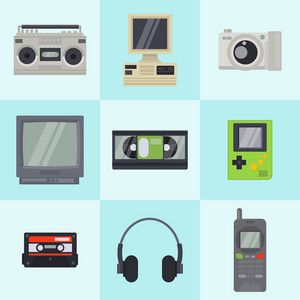
Remember when flip phones and CCD or charge coupled device cameras were tossed aside for the latest and greatest gadgets?
Now they are back and not as a bargain.
Some are being re -sold for five to ten times their original price.
What's behind this bizarre trend?
Are people truly in love with retro -tech?
Or is this just a new way for businesses to cash in on nostalgia?
So, what's new about old digital gadgets now?
That's really interesting because you mentioned this device called CCD camera, Huyang, and that's something I don't think I've ever used.
And I believe that's how young she is These were popular in the 90s and early 2000s, right?
I understand that but that was that was before the time I'm able to grab a camera Yeah, and it's also funny we talked about the early 2000s, and you feel like oh, that's not that long ago That was a quarter of a century ago That's that surprising trend nowadays these kind of what's called the e waste or electronic waste that's emerging in China's tech market again and all of these outdated electronics that's once dismissed they're now selling at premium prices and sometimes even surpassing the cost of brand new products.
Take CCD cameras for example and that stands for charge coupled device cameras.
So like you said Steve, that was very popular two decades more than two decades ago And these cameras, they were once seen by many as the symbol of wealth and cutting -edge technology.
But they were of course quickly phased out as digital photography improved, and nowadays everybody's using a smartphone.
And comparing with a smartphone, the CCD cameras, they have very obvious limitations such as the low resolution sensors, grainy image, and poor low light performances, etc. However, starting from early, just a few years ago I think, second -hand CCD cameras were being sold off cheaply, with prices often falling below 100 yuan, that's about 14 US dollars.
But today, as their popularity skyrockets, some models are being resold for 5 -10 times their original prices.
Their original price?
Mmm, yeah. So thousands, I would assume.
despite having no real functional advantage over the newer alternatives?
I guess flip phones, right?
You said would be another example.
Something's happening in the mobile phone market, flip phones, other kinds of classic feature phones are regaining popularity.
These were the hottest things at one point in time, right?
Having one was a status symbol almost, but you know tech moves very quickly.
And what is cool one day is immediately outdated.
It feels like the next day, but some young younger consumers are going back to the flip phones.
It's almost like almost like a lifestyle choice in a in a sense.
You know what? I will actually try to get if this trend say devour me to it hasn't right now but if I can I'll try to find this one of those old portable cassette players the Walkman yeah the Walkman or we have several domestic brands like that too I can't really remember names I remember that I when I used to row a mow my neighbor's lawn for like 10 bucks right in the summertime when you were a teenager yeah yeah when I was really young in elementary school actually and like I used to clip the Walkman onto my shorts belt, you know, and then you had the wired headphones and those little circle,
those little circle headphones that really are almost useless these days, but at the time they worked really well and I used to click, you really had to press down quite hard on that play button, didn't you?
And then when the tape finished, you'd open it up and flip it around and play the other side.
I mean that became outdated very quickly, but now through the eyes, through nostalgic eyes, it's a pretty cool item.
Not just that company, but just a cassette player like that.
Yeah. What about Game Boy?
For a lot of millennials, and I don't know if Gen Z ever caught on with this one, but for millennials, a lot of us we had our childhoods our childhood memories of playing the Game Boy and sometimes the teacher would confiscate the Game Boy.
Oops. Just like phones in classrooms today, back then it's like, oh distraction, don't want that in the classroom.
The Walkman example, you could get one online now if it's in mint condition, like really perfect condition, or refurbished for as much as $1 ,000.
the the Game Boy, those can those can reach prices of two thousand dollars plus if they're in really really good condition or in their original box.
Interesting so maybe the takeaway here is first of all don't invest in tech as a consumer because your money is gonna it's gonna depreciate but sometimes we need them so.
Or buy it and don't use it.
Just keep it in the box!
Keep it in the box for 20 or 30 years, and you can resell it for 300 times the price of what you bought it for.
Well, joking aside, guys, why do you think these items—and these are only a few examples of many—have they become so popular in 2025?
One major reason I think is that while people are still buying them for very expensive prices, because they feel like it's worth it because there is this rise of ritual aesthetics in pop culture that people just keep on trying to get back to whether it's say of an older model from 20 -30 years ago or just for young people like me who who's never really had the chance of experiencing such or having such rare occasions of using such electronic devices from a previous is just cool for people to get back, even sort of like travel back in time of sort to experience how it was done.
I remember using cassette players as a very early experience of listening to music because back then there were no phone of course, no mp3 player, and the only way for me to listen to music that I like is to record them on blank cassettes and then replay it in that little portable device that I have. So that's the early memory of me appreciating music for real.
So again back to today, there are so many tons and millions of ways for you to listen to music live on your phone and play it out loud through a, say, a stereo player.
Then there's still that very traditional voice that's played from a set of cassette players that's irreplaceable by other, say, devices of any other kind so that's something that people are just trying to pay a bit more to get back to.
I think there's two definitions for cool when it comes to stuff like this.
Either you have the brand newest model of something, the latest cutting -edge tech or the oldest model of something, something that's retro.
Right. If you have a phone that's 4 years old that doesn't fall into any cool category at all, just your phone is old, right?
And I think the word hipster comes to mind here for me.
Oh, excuse me. Right, hipster is this kind of counter culture, subculture movement that evolved over time, but it involves preferences for like independent music or vintage clothing or artisanal products or things like old tech would fall into that category as well.
There's a there is a market for this stuff out there, for sure, and it's for the aesthetic, it represents a little bit about who you are vintage fashion too, obviously, right?
You're saying something about yourself and definitely right?
So you asked the question, why is this stuff popular?
Because I think it's a way to represent a little bit of who you are as a person.
That's so true. And I'll give you the example of, and I reference the celebrity, but apparently for guy's fashion or anyhow, well, I'm still actually quite surprised that people wear watches these days.
Cause I thought that will be phased out cause we all just check the time on our phones, but anyhow, um, some people still wear a watch and um, I saw this comment online saying that The trendiest guy should be wearing, or girl, should be wearing a Casio digital watch that's like from the 1980s or 90s I think.
Not very expensive, but it's got this ritual feel and if there's this other person wearing a Rolex watch, which is very expensive, but hey, so not cool.
You're just nouveau riche and you have no taste.
But you know where the hypocrisy comes from here is that we just talked about you could buy a Gameboy for $2 ,000 Well, you can get a Sony PlayStation 5 for a quarter of the price.
So that argument shouldn't exist You know the argument of oh you're such a loser.
You paid, you know $2 ,000 for your watch Well, you paid $2 ,000 for your 1989 game station, right?
So see what I mean?
Yeah. That's why hipsters take a lot of heat from non -hipsters.
I mean, speaking of the price is also worth mentioning that it's not only consumers, young or old, that's pursuing this trend but also the retailers and shops as well, right?
Because when this mutual tech boom is well on the rise it certainly attracts many sellers and resellers who are now just see this as a lucrative market as well.
Some of them I saw from the news that are buying a bunch of such, say, quote -unquote useless old -style electronics, and then they polish it, they kind of renew it and repackage it, just so that it can be sold at a price that's so much time higher than its original price.
That's really true in the fashion industry too, right, with vintage clothing.
It can be really, really expensive.
And I think part of the attraction there, I get it, is because of the uniqueness of perhaps one piece of clothing.
And I remember being in Seoul and there was a shop in there that had like High School varsity volleyball t -shirt from some random high school in some random town in Wisconsin or something like that.
It was like $45 for the t -shirt.
Now, that's not a $45 t -shirt, but you know when you're buying it no one else is gonna have that, literally no one else.
So I think that's part of the draw when it comes to the fashion side of this.
That's interesting.
That's fashion, but also if we go back to the cameras, actually the camera is such a peculiar thing among the zeitgeist of young people.
Hello, Gen Z these days!
That is, we mentioned the CD camera, well, why do people flock to it and wanna collect it?
It's because the images it generates has soft tones, high contrast and film -like grain, and that is different from the hyper sharp phones produced by modern smartphone cameras.
Yeah, no need for filters.
Exactly. And then also Polaroids, right?
That's always been, It was made popular by Taylor Swift once more.
I can't remember, but it's because of the image, and then Gen Z really like it.
They like the sort of nostalgic, you know, the aesthetics.
I think Outcast made that popular again.
Shake it like a Polaroid bitch or hey ya ya ya ya ya ya ya ya ya ya ya ya ya ya ya ya ya ya ya ya ya ya ya ya ya ya ya ya ya ya ya ya ya ya ya ya ya ya ya you know that song?
Nope. Anyway, you're not supposed to shake those pictures, by the way.
Oh, okay. I bought a camera from 1975.
I didn't buy it in 1975.
I bought a 1975 camera around 2016 or 2017.
And why did I buy that?
Because the picture quality is just different.
It's a film camera that produces images that you just don't really get to see anymore.
So from the camera side of things, the camera industry, I'm guessing that's one of the reasons why customers might enjoy an older camera, film camera.
Yeah, that might be it.
Let's now move on to the last topic discussion today.
Blueberry lovers in China, now is the time to let go of grocery store sales, because a wave of blueberry mania is happening right here in the office.
Yeah, you heard me right.
Get ready to meet a slew of urban farmers and office gardeners who are planting blueberries on their balconies at home and even office desks.
What's behind all this fascination towards blueberries and why are we taking matters and berries into our own hands?
I was laughing so hard when I first did the research on this one, because well apparently this is a trend now.
I didn't know this before but in the past two months many people have been sharing posts on social media about just how growing blueberries, I mean the potted plants, the tiny little trees on their balcony in their offices have been liked by thousands on say platforms like Xiaohongshu or Rednote.
And the point is here that instead of solely being consumers of buying fresh blueberries from grocery stores, nowadays young people, they just want to become amateur growers in a way that they are engaging in earlier stages of the fruits life cycle and of course Sun gained traction online.
Just people are talking on social media, sharing how beginners should start on how to choose the blueberry care for it and even harvest from their tiny blueberry trees, etcetera.
So this is what people are into nowadays, growing potted, tiny little trees as a plant, as a as a way of getting relaxation and joy.
Skyrocketing sales.
246 % year on year increase in sales this spring of potted blueberry trees.
That's awesome. That's the power of social media, isn't it, in play?
In March alone, over 1 million potted blueberry plants were sold on one particular platform.
And peak days saw orders of up to 80 ,000.
80 ,000 in a day! And some individual sellers actually, depending on where you are in the country, But in Yunnan province in the South, they reported selling out of their entire blueberry garden in a day because of the overwhelming demand.
So blueberries have been a super food darling for years, and it's evident that Chinese consumers are eating it up.
So do you think that this planting trend in offices coincides with this overall mania towards blueberries?
I mean, buying blueberries is kind of like part of our, say, lifestyle nowadays.
Nowadays people just know how nutritious it is, and there's been a time in previous years where blueberry are sold at a much higher price.
But nowadays, the price has been lowered because of the massive domestic plant and just growing cultivation regions.
Like you mentioned earlier, Steve, the Yunnan province in southern China is one of those areas that is just like producing the majority of the domestic blueberries nowadays.
And that's such a big market.
I think that's also part of the reason why, say, plant your own little blueberry tree is becoming trendy these days is because blueberries everywhere is almost acquirable at a cheaper price everywhere in China nowadays.
So how about growing a tree of your own and just plant it, take care of it, and end this price issue once and for and have endless blueberry every season.
So I think yeah, social media trend might seem like a small thing when first heard of the news, but still it has like a larger societal implication behind it.
I remember we talked on the show about, was it banana trees or something?
On desk? Green banana trees, yeah.
So I think office, I'm getting the idea now that office workers in China just kind of cycle through different fruits and trees to kind of grow together yet separately depending on the season.
I think it's fun. I think it's cute.
This is really cost effective, right?
The price of a potted blueberry plant you might spend, I don't know, 30 to 60 Yuan or something like that, and then you get to enjoy the fruits of your labor, pun intended.
Right. Well, to me, it's anxiety that is the ever occurring theme in the office.
The Green Bananas is to remind you, stop feeling anxious.
There's a Chinese word pun there.
And with the blueberries, maybe it takes off a little bit of the stress of working when you're cultivating your blueberry patch. And protecting your eyes.
Okay. today. But I wonder how easy it is actually to harvest the blueberries because I heard from farmers, it's not a simple thing.
Not an easy deal. You're listening to Rand Table and that brings us to the end of today's show.
Thank you so much, Steve Hatherly and Yu Shen for joining the discussion.
Thank you for tuning in.
I am He Yang and we will see you next time.