Abercrombie denim is everything right now.
Denim should feel like this.
Confident, easy, like your butt has never looked better.
If you didn't know, Abercrombie's Curve Love denim went viral in 2019 for eliminating waist gap and it's still a game changer.
Between that and their classic fits with a straighter line from waist to hip, the perfect denim does exist.
Shop Abercrombie denim in the app, online, and in-store.
Happy Monday listeners.
I'm Rachel Feltman.
Let's kick off the week with a quick roundup of some of the latest science news.
First, let's check in on vaccines.
On Thursday and Friday of last week, the Centers for Disease Control and Prevention's Advisory Committee on Immunization Practices, or ACIP, met to review and vote on recommendations for official US vaccine guidelines.
Back in June, Robert F Kennedy Jr, Secretary of the US Department of Health and Human Services, dismissed all sitting members of the committee.
Several of the 12 new panel members, all of whom were handpicked by Kennedy, have publicly expressed doubts about the safety of vaccines or the severity of the COVID pandemic.
An agenda released ahead of last week's meeting stated that the ACIP would propose recommendations for the hepatitis B, COVID and measles mumps, rubella and varicella vaccines.
Here's Lauren Young, Associate Editor for Health and Medicine at Scientific American, with a quick update as of Friday.
So far, we've seen a few votes come through.
The first one that they focused on was the MMRV vaccine.
This is the measles, mumps, rubella, and varicella vaccine.
Varicella is commonly known as chickenpox.
And they decided not to recommend the single combined shot for kids younger than age four.
Another vaccine that was discussed was the hepatitis B vaccine.
There wasn't really any changes to this, but members did vote in support that all pregnant people should be tested for hepatitis B infection, which is the current standard practice of care.
ACIP also considered an additional recommendation to remove the birth dose of hepatitis B vaccine, with the first dose not given earlier than one month of age.
But they decided to table that vote because there was some confusion around some of the phrasing around that recommendation.
That's been a really big theme around these meetings this past week.
There's just been a lot of confusion.
So that's just come to show how much these meetings have changed since RFK Jr has overhauled the ACIP panel.
We've seen the shift away from science and away from scientific evidence of reviewing very rigorously vaccine data.
And now it's turned more into a lot of confusion and a lot of discourse around, questioning the evidence in ways that just don't quite always make sense.
And our staff is watching this super closely.
So check out our website for the latest updates.
Speaking of vaccines, last Tuesday AHIP, the National Trade Association representing the Health Insurance Agency, put out a statement on vaccine coverage.
The organization said its member insurance plans would continue to cover all immunizations recommended by ACIP as of September 1 2025 through the end of 2026.
This includes updated flu shots and COVID vaccines.
Now for some public health news on a very different topic, head injuries in sports.
You've probably heard of chronic traumatic encephalopathy or CTE.
This progressive neurodegenerative disease, which can only be diagnosed with certainty via autopsy, is believed to be caused by repeat brain trauma, including the kind of repetitive head injuries one might endure while playing contact sports.
It can include symptoms such as headaches confusion, memory loss, poor judgment depression dementia, sensory processing disorders and other potentially debilitating issues.
CTE symptoms generally appear some years after repetitive brain trauma occurs.
But in a study published Wednesday in Nature, researchers reported that brain degeneration may be detectable in young athletes before CTE starts to set in.
Researchers studied frozen brain tissue from 28 adult men.
Some of the study subjects hadn't played contact sports at all, and others had played American football or soccer but hadn't been diagnosed with CTE.
The rest of the study, subjects played contact sports and had been diagnosed with early stages of CTE.
The researchers found signs of inflammation and vascular injury, including a marked drop in the number of neurons, in all of the contact athletes they studied, even those who didn't have the telltale signs of full-blown CTE.
According to the study authors, this suggests that all athletes who frequently hit their heads could be at risk of experiencing some amount of brain damage.
A separate study, also published last Wednesday.
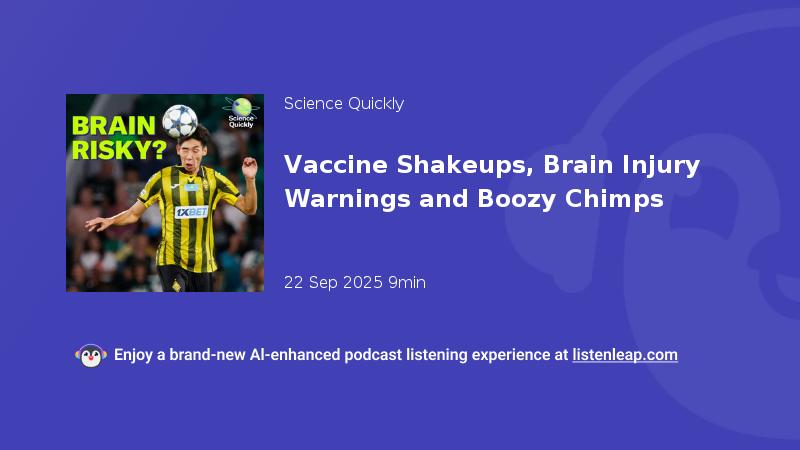
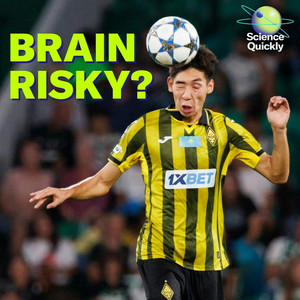
This one in the journal Neurology found an association between headers, or a player using their head to control or pass a soccer ball, and changes in the brain.
The study asked 352 amateur adult soccer players to estimate their number of head impacts over the course of a year.
The use of headers varied pretty widely.
When they divided the subjects into four groups, the top head users cited an average of 3152 headers, while those at the other end of the spectrum estimated just 105 a year.
Researchers then took scans of the players, noting changes in the white matter of their brain folds.
The scientists were particularly interested in how microstructures in the white matter influence the movement of water molecules in the folds, which is an important part of brain function.
They found signs that the organization of these structures degraded as the number of annual headers rose.
The study isn't causational and it relies on players' memories to estimate their actual rates of headbanging.
But studies like this one are important to our growing understanding of the dangers of full contact athletics.
In a combination of health and climate news.
A study released last week found that climate change likely tripled the number of heat-related deaths in European cities this summer.
That's not a huge surprise, given that the Northern Hemisphere's 2023, 2024 and 2025 summers were the three hottest on record.
The new study estimated excess heat-related deaths by combining climate models with temperature and epidemiological data.
In the 854 urban areas the researchers analyzed, there were around 24,000 heat deaths.
The team estimated that 68% of those would not have occurred without climate change.
The authors noted that the regions they looked at were only home to about 30 of Europe's population, so the actual number of excess heat deaths is likely higher.
I know we've covered some real bummers today, so let's end on a couple of fun stories.
In a study published in Science Advances last Wednesday, researchers offered what they called the first real estimate of how much booze chimpanzees consume in a day.
Based on an analysis of fruit collected from two chimp study sites in Africa.
The researchers say the average adult is consuming about 14 grams of pure ethanol a day.
And that's just a conservative estimate based on the fact that the animals consume some 5-10 of their body weight in ripe fruit every day.
If they're preferentially seeking out fruit that's higher in ethanol, they could easily be imbibing more.
But the average chimp doesn't show any sign of intoxication, probably because they consume their alcohol gradually over the course of the day, not to mention with plenty of fiber to slow them down.
Another study published earlier this month in Nature found something a little more majestic than boozy apes, a type of ant whose queen can produce eggs from two different species.
The Iberian harvester ant, or Messor ibericus, has a remarkable method for maintaining its workforce.
In addition to laying eggs of her own species, the queen can also produce offspring from a genetically distinct group, the species Messor structer.
The authors suspect this started with a slightly less bonkers reproductive strategy known as sperm parasitism, where a queen mates with males from different ant species to produce hybridized, sterile worker ants.
But in this case, the queens somehow managed to also develop the ability to produce male offspring with the full meso-structured genome instead of a hybridized one.
That gives them a self-sustaining source of the outsider DNA, allowing them to make as many hybrid workers as they want without actually interacting with the other species.
In a sense, you could say they've domesticated the other species' genome.
Girlboss!
That's all for this week's News Roundup.
We'll be back on Wednesday to talk to Mary Roach about growing human body parts from scratch.
Science Quickly is produced by me, Rachel Feltman, along with Fauna Wongi and Jeff Dalvisio.
This episode was edited by Alex Zaghiara.
Shana Posis and Aaron Shattuck fact-check our show.
Our theme music was composed by Dominic Smith.
Subscribe to Scientific American for more up-to-date and in-depth science news.
For Scientific American, this is Rachel Feltman.
Have a great week.
Thank you.