This BBC podcast is supported by ads outside the UK.
I've spent the last three decades trying to better understand money across the boardroom, the newsroom and the trading floor.
That's longer than most podcast hosts have been alive.
But even I've got questions.
Join me, Meryn Subset-Webb, every week for my show Meryn Talks Money from Bloomberg Podcasts, where I have in-depth conversations with fund managers, strategists and experts about how markets really work.
And join me for a separate episode where I answer listener questions on how to make those markets work for you.
Follow Meron Talks Money on Apple Podcasts, Spotify, or wherever you listen.
I'm Alex Ritson, and in the early hours of Tuesday 10th February, these are our main stories.
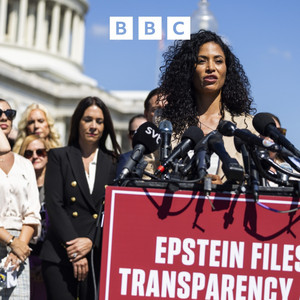
Members of the US Congress get to see the unredacted Epstein files held by the US Justice Department.
Britain's King Charles says he's ready to support any police investigation into his brother Andrew.
Keir Starmer defies some predictions and is still UK Prime Minister, despite calls to step down, also in this podcast.
Clashes in Sydney Australia, as demonstrators take to the streets to protest against a visit by the Israeli president, Isaac Herzog.
The fallout from the Jeffrey Epstein scandal continues to reverberate in the United States and beyond.
Members of Congress in Washington can now view the millions of documents from the investigation into the sex offender without the extensive redactions made by the Justice Department.
According to a letter sent to lawmakers, they're not allowed to take anyone with them and they can take notes, but not make electronic copies.
The senior Democrat congressman, Jamie Raskin, viewed some of the unredacted files and after seeing them he said that it wasn't necessary to censor so many.
I've just gotten back from this Department of Justice satellite office.
I think there were four computers in the room that I was in.
I was at one of the computers.
I believe that there were tons of completely unnecessary redactions, in addition to the failure to redact the names of victims, and so that's troubling to us.
I heard more from our North America correspondent, Peter Bowes.
As we've just heard there, some members of Congress who've seen these files claim that the Justice Department redacted or withheld names of prominent people in Epstein's circle without any clear justification, suggesting that they weren't solely protected for privacy reasons, that it could be to save them from public embarrassment or worse.
The Congressman, Thomas Massey, who's a Republican, said what bothered him were the names of at least six men that had been redacted that were likely incriminated, he said, by their inclusion in these files.
At the same time, they say that and we've known this for some time that some of the victims, the survivors' identities were released in the files, which survivors' advocates have been strongly criticising now for well over a week.
What can we expect next in this long-running investigation into Epstein and his influential connections?
Well, potentially there is a lot that could still happen.
Representatives, including the congressman that we've just heard from, and others, have suggested that they may want to publicly disclose previously redacted names that are likely incriminated.
That would be quite a bombshell if that were to happen.
If the names of individuals were revealed, there could well be formal hearings in the house judiciary committee and continuing in the house oversight committee.
Lawmakers may want to publicly question whether department of justice officials, how they handle these files and why so many redactions remain.
There are so many questions about that, And then, of course, this will be a key event.
Bill and Hillary Clinton have agreed to give depositions before the House Oversight Committee, and they have insisted themselves that this be in public, quite possibly televised live.
And Peter, there was another development today.
Jeffrey Epstein's accomplice Ghislaine Maxwell appeared before a US congressional panel.
Maxwell, of course, serving a 20-year jail sentence for sex trafficking, and video of her appearance from prison in Texas has been released.
Ms.
Maxwell, did you at any time play any role in Jeffrey Epstein's activities involving the recruitment, grooming or trafficking of young women or girls?
I invoke my Fifth Amendment right to silence.
So Peter Ghislaine Maxwell was exercising her right to silence to avoid incriminating herself, but her lawyers did speak at the hearing.
What did they say?
Yes, her response was expected, but what the lawyer David Marcus had to say was interesting.
He said Maxwell would be willing to testify fully and honestly if President Trump granted her clemency.
So a pardon or a commutation of her sentence.
Now, his argument is that it would allow...
Now we know from past statements from the president that while he has broadly insisted that he hasn't given this much thought, he has at least.
At the last time that he was asked about this, he said that he hadn't ruled anything in or out.
Peter Bowes in Los Angeles.
Here in Britain, King Charles has issued a rare statement expressing concern about the continuing revelations relating to his brother Andrew Mountbatten Windsor's friendship with Geoffrey Epstein.
The Prince and Princess of Wales also put out a statement.
There's been mounting pressure on the royal family over the scandal.
Earlier police in England confirmed they were assessing a complaint from the anti-monarchy group Republic relating to the former Duke of York's work with previous British governments.
Helena Wilkinson reports.
Andrew Mountbatten-Windsor served as the UK's Special Representative for International Trade and Investment between 2001 and 2011.
Under official guidance, trade envoys have a duty of confidentiality over sensitive or political information about their official visits.
Materials seen by the BBC suggest that in October 2010, Andrew Mountbatten-Windsor sent Epstein details of his official upcoming trips as trade envoy to Singapore Vietnam, China and Hong Kong.
After the trips, the former Duke of York appears to have forwarded official reports of those visits to Epstein.
In a separate email exchange, the former prince apparently sent Epstein a confidential briefing on investment opportunities in the reconstruction of Afghanistan.
All of these email exchanges took place after 2008, when Epstein was convicted of child sex offences.
The anti-monarchy group Republic have reported Andrew Mountbatten-Windsor to the police.
In a statement, a spokesperson for Thames Valley Police said they were assessing the information in line with their established procedures.
Mr Mountbatten-Windsor has not yet responded to the BBC's invitation to comment.
Eleanor Wilkinson.
He's safe.
For now.
He said that the Prime Minister should resign after months of plummeting poll ratings, policy U-turns and his decision to appoint Peter Mandelson, a friend of Jeffrey Epstein, as the British ambassador to the US.
But soon after, Keir Starmer's ministers fully backed him before he addressed MPs on Monday evening.
One of them said he delivered an almighty performance as he pleaded for a second chance.
Labour's deputy leader, Lucy Powell, was asked whether she was confident that he would still be Prime Minister this time next year.
I'm very confident and I think you couldn't be in that room tonight and not feel that same confidence.
Keir has faced challenges before and he's incredibly stoic.
He's a very resilient person.
He came along tonight and spoke from the heart and he owned it.
He owned what's happened and he set out how he was going to learn from that and change things, and he asked for everyone's support in what is a real fight of our lives and the future of democracy.
And he got everyone's support tonight very, very resoundingly and clearly.
But another Labour MP, Simon Ofer, who also heard the Prime Minister speak on Monday evening, was sceptical about his future.
He's sort of maybe mortally wounded now.
I think that's the feeling I get.
And I don't know how he'll actually get out of this.
You know, I think Keir has to clear his name.
And, you know, we're not sure whether he'll be able to do that.
He's apologised for what he's done with Manderson.
A lot of people in the party are very angry about what's happened.
And so I think at the moment, support is partial for him.
Let's put it that way.
Our political correspondent Rob Watson talked me through the day at Westminster.
Well, it's been a quite extraordinary 24 hours in British politics Alex, even by the standards, the dramatic standards of the last 10 15, 20 years.
And the 24 hours.
The day started with it being really difficult to find a senior government minister to come out and defend Sir Keir Starmer after he'd lost his chief of staff at the weekend.
And so Political correspondents were thinking at Westminster, oh, my goodness, is this it?
Is this the end?
And then there was the blow of the most senior Labour politician so far to call for him to go.
That was Anna Sarwar, who's leader of the Labour Party in Scotland.
And at that point there was a genuine sense at Westminster that it might really be all up for Sakhir Starmer.
These could be the last minutes of his premiership.
And then, about an hour and a half or so after Anas Sarwar had made that statement, suddenly you had senior members of the government running to secure Starmer's support.
And then, of course, there was the extraordinary meeting that he had with the Parliamentary Labour Party.
The party's MPs
I was outside the meeting where there was sort of banging of desks, cheering and applause.
So a quite extraordinary turnaround.
I mean, how did it happen?
I think because the Labour Party looked into the abyss, the idea of an incredibly messy leadership struggle right now, and decided hmm, I don't think we quite fancy that.
Don't think it would be good for the party.
And those contenders who could have wielded the knife against him decided to keep their weapons sheathed.
Yeah, sheathed for now.
But so many people seem to be saying it is a case of when, not if for Keir Starmer.
Yes, it does still feel like he is a prime minister living on borrowed time.
And that is because, despite the banging of the desks that I heard and the cheering and the applause, and it was pretty extraordinary that it would permeate through a committee room.
And we have heard MPs who were in the room saying, you know, Sir Keir Starmer was on fantastic form.
If only he was a bit more like that with the public.
You know, he'd be a much better prime minister and maybe he could stick around.
But I think, despite the euphoria of that meeting, I mean, there is a widespread feeling within the governing Labour Party that Zakir Starmer is not up to what it takes to be a good leader and a prime minister.
Whether that's fair or not is a different matter, Alex.
And that's why people think that it's only a matter of time.
And there is this theory that maybe what's going to happen is that he stays in place for the next few months, but that when there are elections in May big, big elections for the Scottish Parliament, for the Welsh Assembly and English local government elections if, as expected, they go badly,
That's the point at which the Labour Party turns against him and says, time for change.
Do they really think, though, that a new leader would sort everything out?
It's a very good question, and the party is divided on that.
I mean there are some, particularly on the left of the party, who think if we could really get some proper socialist policies, that would do the trick.
There are others, who are not on the left of the party, who think well, the country is in a very difficult position, faces terrible problems economic, societal challenges.
But maybe someone who was just a better communicator, a more likeable politician, someone with a bit more charm and charisma, maybe that would make a difference.
But I think beyond the Labour Party there is a recognition that whoever was leader, they have an extraordinary job, given Britain's many underlying problems which have, let's face it, removed five prime ministers from office before Sir Keir Starmer in the last 10 years in an extraordinary period of instability.
Rob Watson.
Australia's Prime Minister has called for protests to remain peaceful after clashes in Sydney between police and demonstrators opposing Israeli President Isaac Herzog's controversial visit there.
New South Wales police said that 27 people were arrested, including 10 for allegedly assaulting officers, after violence broke out when people failed to leave a planned protest site in central Sydney and police moved to clear access for pedestrians.
President Herzog's trip is to honour the victims of a deadly gun attack in December that targeted a Jewish celebration on Bondi Beach.
Our Australia correspondent Katie Watson gave us the background to Monday's violence.
This was a protest that was organised by the Palestine Action Group for 530 on Monday evening, and it was to coincide with the visit of President Herzog.
Now there are tight restrictions over political protests public protests at the moment.
After the Bondi shootings in December last year, the New South Wales government brought in some restrictions on protesting.
So those restrictions are in place, but there were some extra restrictions brought in because of the visit of the Israeli president.
There were major event powers.
So it gave the police more control over closing down areas of the city in terms of searching people and in terms of fines as well if people were not obeying orders.
Now, this part of central Sydney was under these orders, but they still wanted to go on with the demonstration.
So that started in the evening.
There were speeches.
There was a heavy police presence, mounted police, also some helicopters circling, very low speed.
As the speeches started, but that all went peacefully.
What happened at the end was that there were some protesters who started trying to move, saying let us march.
But, of course, marching and moving forward.
This is something that was not allowed because of these restrictions.
So the police formed lines of police officers on the ground behind them, mounted police lines.
And there was a lot of tension, a lot of shouting, trying to ask to move forward.
But, you know, it got very heated.
There were some protesters who tried to break the police lines and the police pushed back.
And there was pepper spray that was used to disperse the crowds.
And they also brought in reinforcements.
So a demonstration that was meant to take an hour ended up lasting about three hours, with a lot of chaos on the streets of central Sydney.
Katie Watson in Sydney.
Still to come in this podcast.
Oh my gosh, that didn't just happen.
That did just happen.
No, we're going to sort that out.
I'm really sorry about your medal.
I think it'll fix.
It will fix.
Be careful not to jump up and down if you win a medal at the Winter Olympics in Italy.
I've spent the last three decades trying to better understand money across the boardroom, the newsroom and the trading floor.
That's longer than most podcast hosts have been alive.
But even I've got questions.
Join me Maren's Hubset Web every week for my show Maren Talks Money from Bloomberg Podcasts, where I have in-depth conversations with fund managers, strategists and experts about how markets really work.
And join me for a separate episode where I answer listener questions on how to make those markets work for you.
Follow Maren Talks Money on Apple Podcasts, Spotify, or wherever you listen.
A court case underway in Los Angeles on Monday could have serious implications for America's big tech companies.
Facebook and Instagram's parent company, Meta and YouTube, are accused of harming children by knowingly creating addictive platforms.
The case involves a 20-year-old woman identified as KGM, who says that she became depressed after 10 years of social media use and is claiming damages.
TikTok and Snapchat were also originally sued, but have already settled.
Our North America technology correspondent, Lily Jamali, is in LA.
We heard opening statements from both sides in this case.
The plaintiff, that 20-year-old California woman KGM.
Her lawyer, Mark Lanier, laid out the sort of main thrust of his case, which is that these companies Meta, which runs Instagram notably, as well as YouTube, which is owned by the same company as Google that these companies deliberately designed their platforms to make them addictive.
And that because they did this deliberately, they are negligent.
This is a view that is not shared by Meta's lawyers who delivered their openings.
We also heard a lot about the woman, KGM, her history, her past.
We heard from her lawyer trying to paint her as sort of a reluctant advocate.
While Mehta's lawyers really delved into her personal family history, the physical and emotional abuse that she allegedly suffered at the hands of her parents, saying that a lot of the mental health issues that she claims stemmed from social media use actually pre-existed her interfacing with any of these platforms.
Yeah, and a number of social media bosses will be appearing on the stand in court over the coming days.
That's correct.
We expect to hear from Mark Zuckerberg, possibly by the middle of next week.
He'll be here in Los Angeles to take the stand.
And I think we'll probably hear echoes of what he told Congress a bit more than two years ago now, in January 2024, saying that there are no scientifically proven links between using social media and mental health issues.
Also hear from Adam Masseri, probably this week, who is the head of Instagram, and and Neil Mohan, who is the head of YouTube, likely later in the month.
And this case really does have wider implications.
It certainly does.
This is a breakthrough for plaintiffs because for a long time, these companies have been able to hide behind a legal shield known as Section 230 this legal provision from 30 years ago to say they're not responsible for what users post on their platforms.
This case really looks at the issue of design choices made by the companies, how they configure their algorithms and other features to, in the argument of the plaintiffs, keep users, especially these young users, scrolling.
Lily Jamali in Los Angeles.
Now to Iran, where several senior members of the reformist coalition are reported to have been detained by the authorities.
These latest arrests are being seen as a clear sign that the regime is tightening its grip on dissent, following mass anti-government protests last month, which posed one of the greatest challenges to the Islamic Republic and saw thousands of people killed during the brutal crackdown that followed.
The arrests come just days after Iranian and US officials held indirect talks to try to reach a deal on Tehran's nuclear programme.
Siavash Adelan from the BBC's Persian service, told my colleague, Ankur Desai, more about who was detained.
Some of these people were former pro-reform politicians who were inside the establishment in the years before and then they fell out with the system.
They were highly critical of the way the government conducted the crackdown of the protesters last month.
And some of the others were dissidents, voices from civil society and members of a particular very controversial statement that was released last week, calling on the supreme leader to step down.
A very bold move inside Iran.
There were 17 signatories to that statement.
Four of them have now been arrested.
How big a blow is this to the president?
Not so much of a blow to the president because remember, the president of Iran, Massoud Pesachkian, sided very firmly with the government in characterizing some of the protesters as terrorists.
But nevertheless, the government has criticized these new wave of arrests.
And it's not necessarily a blow to the government, but a demonstration of how insecure the regime feels towards groups as restrained as the reformers.
It's often very difficult to source where gold and precious gems were originally mined.
The origins can be opaque and murky, hiding human rights abuses and environmental devastation.
But things could be changing.
A jeweller in London is bringing women together from conflict zones to try to create ethical jewellery.
Our Global Affairs reporter Mimi Swaby has been finding out more.
So which one's this one?
That's the lapis lazuli from Afghanistan, from this Badakhshan region.
Pure pigment.
Can jewellery ever be truly conflict-free?
Well, associations of women around the world are not only creating pieces with fully transparent provenance, but doing it in areas that have been marked by conflict or occupation.
Gems and gold.
The disproportionate value for something very, very small makes it a really difficult material to work with.
Because it can be smuggled, it can be moved very easily.
Pippa Small is a jeweller based in London.
She's devised a system that links all these networks, creating responsible, traceable supply chains for gold and silver, which in turn help their transformation into jewellery.
These kind of beautiful, stormy libra varieties with those flashes of blue and...
Jewellery which reflects the origins of the precious metals and the women who mined them.
The whole process from the riverbeds of say, Colombia to a shop floor in New York is accounted for.
We're really careful to work with small family-run mines, certified fair trade mines.
We work with the women panners to know and be sure and feel comfortable about how they're sourced.
The gold next goes to a refinery.
And from there, a local goldsmith where design collaboration starts.
Looking around, so there are many collections.
And I can see a tray with gold from Colombia.
They are sourced from a group of women panners.
So this means that there's none of the toxic chemicals that are often used with mining.
The women who pan this.
They are so conscious of not allowing in illegal gold miners because they want their grandchildren and great-grandchildren to benefit from this treasure in the rivers.
These pieces are made from gold from Choco on Colombia's Pacific coast, a place where gold has shaped identity, conflict and survival for thousands of years.
Much of today's mining is informal or illegal and often linked to armed criminal groups.
Carmen is a registered miner and member of the Women's Association for Artisanal Miners from Choco.
Mining defines our lives in a challenging and complex way.
I think that the woman miner is a fighting woman.
Illegal mining affects us deeply because we are exposed to gender-based violence, labour exploitation, the dispossession of our lands.
Many people will be wearing gold directly linked to this, but would never know of its bloodied past, which often disproportionately affects women.
PIPA's organization also has a program for women in Afghanistan.
Mara was part of that program.
When women are excluded from education and employment, the whole community suffers.
Teaching, creating and serving my community gave back my dignity and a sense that my life has meaning beyond survival.
Women have been largely erased from society under Taliban rule.
Creating and selling jewellery is empowering.
Nadira is from Bethlehem in the Israeli-occupied West Bank.
The orders we've got from international buyers gave us distraction from the devastating news and gave us stress relief while producing these orders.
Despite numerous logistical and sourcing challenges across these different locations, one thing all the women I spoke to had in common was a determination to continue mining and creating ethical jewellery.
In the process.
The first challenge is often protecting the land the precious metals and gems are mined from.
As Carmen from Chocotomi, land is life.
It must be preserved.
Mimi Swaby.
Let's finish at the Milan Cortina Winter Olympics.
Athletes from around the world have worked hard to get to Italy and for some, the moment arrives when they win a medal which is meant to last forever.
But shortly after it's put around their neck, well...
It breaks.
Yes, really.
It's happened to a few athletes already and it's got the organisers investigating.
With more, here's Joanna Keane.
Oh my gosh, that didn't just happen.
That did just happen.
No, we're going to sort that out.
I'm really sorry about your medal.
I think it'll fix.
It will fix.
The American skier, Breezy Johnson was being interviewed by the BBC about her victory in the women's downhill when her gold medal crashed to the floor.
At a news conference later, she showed the chipped medal to reporters.
And here's the little piece that is supposed to go in the ribbon to hold it in the medal.
And yeah, it came apart.
She isn't alone.
The figure skater Alisa Liu, who also won gold for the United States, posted a picture on social media of her medal in one hand and the ribbon in the other, with the message My medal don't need the ribbon.
The German team, which won bronze in the biathlon, has been affected too.
A video shows the medal falling from the ribbon around one of the athletes as they jumped up and down in celebration.
And a Swedish cross-country skier says her silver medal fell in the snow and broke in too.
Although it's not known exactly what the problem is.
Organisers at the Winter Olympics say they're going to pay maximum attention now because a medal being handed over to athletes is one of the most important moments and they want everything to be perfect.
But for now, some advice from Breezy Johnson to fellow athletes.
Yeah, don't jump in them.
I was jumping in excitement and it broke.
To put it in her words, it's not crazy broken, it's a little broken.
And someone will fix it.
Joanna Keane.
And don't forget our sister podcast.
Global Story which goes in depth and beyond the headlines on one big story, available wherever you get your podcasts.
This edition of the Global News Podcast was mixed by Chris Lovelock.
The editor is Karen Martin.
I'm Alex Ritson.
Until next time, goodbye.
I've spent the last three decades trying to better understand money across the boardroom, the newsroom and the trading floor.
That's longer than most podcast hosts have been alive.
But even I've got questions.
Join me, Merrin Somerset Webb, every week for my show.
Merrin Talks Money from Bloomberg Podcasts, where I have in-depth conversations with fund managers, strategists and experts about how markets really work.
And join me for a separate episode where I answer listener questions on how to make those markets work for you.
Follow Merrin Talks Money on Apple Podcasts, Spotify or wherever you listen.