For America as a win, for TS7C as a race.
This policy overall is a very damaging policy to the global AI chip making industry.
I speak as a former engineer.
A good engineer will always find their way around whatever obstacles are in front of them.
The Chat Lounge. Chat Lounge.
The Chat Lounge unpack views and opinions on hot issues in a more casual way.
Welcome to The Chat Lounge.
I'm Tse -Ying and joining me to discuss whether the United States can regain its position in chipmaking are William Lee, Chief Economist with the US -based Millcon Institute, Dr. Qi Qian, Fellow of the Bellventon Road Research Center at Mingzhou University of China, and Dr. Li Yuan, Assistant Professor of Economics at Peking University.
It's a great pleasure to have you all back at the chat, gentlemen.
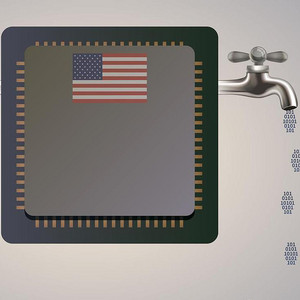
So the United States is trying very hard to regain its dominance in chip making.
There have been a series of news articles about chip production and sales in the US recently.
I think the most important stories may be about the mass production of a four nanometer chips in Arizona, and the new rules on chip export control.
So we first look at the mass production of the advanced chips.
U .S. Commerce Secretary Gina Raimondo has announced the world's biggest chipmaker, TSMC, have begun mass production of 4nm chips at its Arizona facility, hailing it as a milestone event for the country.
So Willem, let's begin with you.
What's your evaluation?
I think this is quite an achievement.
The TSMC, Taiwan Semiconductor, has always been the secret sauce of all these very advanced chips but they've only restricted their production of advanced chips to their Taiwan facilities.
The fact that they actually were able to establish something abroad is a major accomplishment for them because Taiwan Semiconductor is a company that prides itself on a very unique management system that's very top down.
It has a corporate culture that's very unique.
It has fended off every competitor possible in the world.
Singaporeans actually tried to establish some kind of presence in the chip making sector.
And they failed. So the fact that TSMC is now able to establish a second plant outside of Taiwan that seems to be well on the way to making some of the most advanced chips that they manufacture factor is an achievement in cross -cultural and international production that this company has not been able to do for some time.
To Dr. Shui, some people actually have a doubt over the significance and how well the fab operates and say the announcement of the mass production days before Biden leaves the White House is only aimed to highlight the Biden administration's political legacy.
So what's your interpretation?
Does that make any sense to you?
Well, I think, yes, Biden left the White House, and as a Democrat's legacy, I think TSMC actually will face, you know, a lot of things post -Biden administration, especially when Trump gets into the White House.
Many problems probably are not going to be easy to deal with.
For example, everybody knows that TSMC right now faces many problems in America, like culture shock.
You see, the Asian factory culture are not quite something that American workers, employees would like to see.
It's very strict and we've been seeing that many local, hired employees, basically they just quit it.
So which made TSMC basically need to, you know, move sound of their local, well, Taiwan employees to America relocate them.
But here is a problem of the visa.
And probably Visa is one of the most important and sensitive topic in America recently.
So this can be a very different problem, especially when Trump get into the office.
So Visa can be a problem for the SMC as well as for the competition and whole compensation assistance.
Basically, the SMC can use a rather affordable and a very good deal kind of, the salary and package to hire very high caliber talents in Asian market.
But when it comes to America, well, America is not like China.
You cannot just use such kind of a package to hire local top notch talent.
And also, TSMC moved to America from China.
One of the most important reasons is that American government made a promise about the subsidies, basically about 6 .6 billion US dollar.
there are another extra $5 billion U .S.
all -alone interest rate loan for the wafer factories from the chip factories, but now they only get like $5 billion U .S.
dollars, but the rest of the money on more than another half percent basically is nowhere.
Basically Biden is just counting days, and when Trump gets in nobody knows what's going to happen.
So, there's huge uncertainty from the Chief's law and from the financial perspective basically are making things harder.
And also you probably heard that Americans have AI anti -proliferation restrictions happening.
Well, I think most affected companies in Medea, for sure, gives the MC as a most important supplier for the cheap making for Medea, will also get the collateral damage.
So, if media is going to lose China, mainland as the largest market, I think DSMC basically will suffer a lot as well.
So, moving to America, they already take one for the team, higher employee cost, higher land cost, and higher everything cost.
And now, you're telling them, basically, you're going to pay higher cost and then you can sell less product, and you're going to have less income?
Now how is it going to be?
And you have to understand that chips business is actually a very, very intelligent, intensive and a capital intensive industry.
It means you have to roll in and invest in heavily, heavily on the research and development without extra money from the cells.
How can you keep on improve your technology by research?
So that's a problem.
Yeah. Well, talk a little bit more about the outlook, maybe later on, but for now would you call like a milestone event.
No, I wouldn't call it a milestone.
I think even a monkey can do the same job.
Come on, if you give Brazil, if you give India, well, if you give, let's switch to another topic.
Give a Myanmar, like 20 billion US dollar.
They ask TSMc to go there to set up a factory.
Well, as long as they have power, have wifi, have stability in there, you can set up everything immediately over a month.
But they because yeah, but TSMC actually chose the United States, right?
It's a winner for for Washington Well for American is a win for TSMC is a rape because TSMC does Not choose America, but America forced them and strong armed them to there So basically is a rape and with payment, it's not a choice.
Do they have a choice?
No, if they have a choice, they probably would move to China mainland Come on, larger team of engineers.
Very affordable cost.
Very safe and stable policy and environment.
And, you know, lots of support from the government.
What else? And also itself.
China itself is the largest chip market of the whole world.
Everybody builds a factory near the market.
Ok then. To Dr. Li.
How would you evaluate the significance of the FAP21 phase 1 starting operation there in the states?
If the announcement is true, that's a big thing, then I agree with it.
It's actually a pretty big deal.
And not just for TSMC obviously, but also more importantly for the US government.
I'm going to talk about the implication and impact for China, maybe later on in the program.
But what it means actually is that after many years of planning of coordination of construction, and after billions of dollars invested in this plant the Arizona plant is finally delivering the promised to actually manufacture these events chips that's intended to make.
But that said, I do want to point out two observations that I think are very interesting.
First, the announcement of the four nanometer chip production came not from TSMC itself, but rather came from the UN Secretary of Commerce Gina Revondo.
And Gina told Reuters that it's a win for the Biden administration's semiconductor policy.
But when Reuters came to TSMC spoke person last Friday for comment, very interestingly, TSMC spoke person declined to comment.
So that's the first observation that I want to make.
And the second one is that while it looks very likely that if at the current stage, the 4mm chips are currently being made.
How many of the chips are being made every month?
Well, it's a production plant for the rest of 2025.
These all remain unclear.
So is this a rather like the first test run of a commercial production?
Or are we looking at full blown mass production?
So I think it's probably somewhere in between but how much, how close to each end, it's unclear.
And how much capacity are we talking about for this fab 21?
And also the more important question is what cost?
Is it very costly to produce each shift?
And at what sale prices are they selling to US customers?
So I think before we can fully grasp the significance of this announcement itself, those are the questions that we really need to answer before being able Right, good questions, but according to some reports the yield and quality of the chips produced at the fab are on par actually on par with those made in Taiwan right?
William, do you have any like firsthand information on this that you can tell us more about it?
Actually in preparing for the show, I actually looked up quite a bit of material that was published about the chip production and you're absolutely right that the levels of production are very, very high.
In fact, the yield rivals and even exceeds some of the yields that were done in Taiwan.
Now, I have to say, Dr. Lee expresses a lot of the questions I express as well.
Because chip production is not easy, as I said earlier.
Singapore invested not just billions, but really years and years of effort to try to replicate what TSMC does and was not able to do.
So regardless of Dr. Chugh's rhetoric about monkeys and Miramar being able to do this with enough money, Chugh production is hard.
And TSMC itself said that they were not sure whether they could adapt the Chinese management and technology production processes to American culture.
And so these challenges were really quite severe.
And the fact that there are even in test cases being able to make sufficient production to say we are on our way, That's really quite an achievement.
And Dr. Lee also said, you know, very correctly, that being a very capital intensive industry, the United States provided enormous subsidies to get TSMC going in the United States.
Overcoming enormous challenges of being located in Arizona, where if I were to relocate TSMC, I would not choose Arizona because it's a desert.
And the one thing you know about chimp production is that it's very water intensive.
In fact, it strains the water facilities that they have in Taiwan.
So there are challenges locating it there.
I'm not sure why the Biden administration chose that area except that Arizona has become a locust of high -tech production, not only do you have TSMC there, but you also have a lot of American factories there, including fabs by Intel that do the same thing.
So there's an attempt to try to put together a culture and an atmosphere and a workforce that's highly skilled and specialized in production.
I, quite frankly, am not sure whether they will eventually succeed or not.
It is an experiment, and it comes about through an enormous amount of subsidy, because the United States policy considers it very important to have chip production located in the United States, and they're willing to pay the leaders in the industry to come here to do that.
TSMC sees the value of doing that, because, quite frankly, as big as the China market is for TSMC, the bigger market is the west, and the United States being at the top of that bigger market.
TSMC, along with every other international company, chooses to produce their product near the consumer of that product.
Toyota and Japanese car makers, Korean car makers, German car makers have all employed the same production model of relocating the production closest to the in this nation and the United States is that in this nation.
So, I think the judgment is out.
I think Dr. Lieb might be right in asking, did the Biden administration in its waning days try to claim a big victory before Trump comes in?
And the Make America Great agenda, let's remember, is to maximize US employment and high paying jobs.
And I'm sure that President Trump would not reverse decisions made by the Biden administration.
In fact, President Trump probably would finance the subsidies in a slightly different way, probably by the use of tariffs, in order to burden on the American citizen for subsidizing and allowing that chip production to take place in Arizona.
The Chat Lounge The Chat Lounge unpacks views and opinions on hot issues in a more casual way.
Like William just mentioned, there were a lot of challenges, and I'm sure there are a lot of concessions have been made during this process because actually in July, 2023, TSMC set, it would delay opening the first Arizona Chip Factory due to various reasons, like you all mentioned, including shortage of technical workers with critical expertise and some licensing issues.
And also, obviously like Dr. Chiu mentioned, the visa is a big problem there.
But now it's operational, as scheduled, and it shows how determined, if you will, the Biden administration was to make this happen as planned.
And they also got this plan to open Phase 2 in 2028, and it promises three nanometer class process technologies.
and by the decade's end TSMC expects to build Fab21 Phase3 which will produce chips on 2 nanometer and 1 .6 nanometer class nodes.
So going forward Dr. Chi, what could be the major challenges you see in achieving those goals?
Do you expect any interruption or delay in the future?
For this answer, I have to part.
Part one is yes, there is a possibility for sure.
I mean, just to made it clear, making chips is never an easy thing but a move -achieve factor is not that difficult.
And that is the lowest hanging fruit that you can achieve.
So four nanometer, I think TS -MT already got that capacity in their hand.
So four nanometer, okay.
But when we talk about two nanometer and three nanometer, I think the most of the problem did not only come from the management, human resources, well, I think it can still move the top -notch scientists and engineers from some other places globally, concentrate them in America, but still cannot solve the problem.
Number one, 2 nanometers and 3 nanometers requires a lot of more money invested in there, and it's a long -term investment.
Just remember, when we got from the 14 nanometer to 7 nanometer to four, basically, there are like three to five years of at least the span for the research and development.
And that's a problem here is because, as I just mentioned, when they moved to America, all the cost goes up, not only the research and the development, right?
So this is a problem one.
And also secondly, it's what we're talking about is the sales.
So when some other costs are eating away the cake, and then you're telling them the cake are smaller next year because they're blocking China, which are a long list of clients out of the market.
And you're probably going to fewer of your income for your major party a like in video.
So they would not have so much money enough for the next round of R &D.
and also physics leap, from the physics theory, and we are heading what we're called the energy war and the heat problems and the energy efficiency problems are there.
So basically you're seeing that some companies are requiring that Microsoft and some other chip makers are providing them back the old style structures of the chips, like the Hopper structure chips style, Because that old chip basically consumes less of the energy, but delivers and still make the job done.
So they have a better balance between the energy consumption, the heat sending, and also the capacity of the calculation, but the more and more these so -called more advanced chips, the GPU and CPU, they will consume much, much more of the energy, exponentially more of the energy, More of the heat needing some more exponential difficulties to solve the heating problems.
And then the extra power of calculation actually are very little, so it's not very economic.
So I think by physics they are hitting some hard war in there.
If they're going to cross the war and make a breakthrough, they need a longer term of a certain environment, policy, finance, market expectation and also the continuous stable investment, in a very stable team of the scientists that can work on that project, and now I think for Arizona factory, and their new operation in here, especially when Trump is going to get into White House, I think there are many big question marks ahead of us.
So you're saying the chances are very low for them to change?
Chances are low. Chances...
well, if it's not low, they're going to pay huge.
They're going to delete a lot to overcome that difficulties.
Dr. Lee and William, do you have any different opinion there?
I agree mostly with what Professor Chu said.
I'd just like to add one small thing about another challenge that TSMC may face for Phase 2 and Phase 3 production which is the market and outlook for these advanced chips.
So Professor Chu has already mentioned about the cost efficiency of, you know, using these more cutting edge technologies to train, for example, AI models.
But because the production plan is to, you know, start production by the end of this decade, one challenge is that by then, it may not be highly demanded for companies to use these cutting edge chips to train AI models.
The reason I'm saying this, is because we've seen, you know, recent developments such as DeepSeek, a Chinese AI large language model, which uses basically a lot last generation GPUs, and a fraction of time and cost to train one of the almost equivalent AI models to change it.
So in the future, it could be that the trend is going toward not using the fastest or the most powerful chip, but rather to use a cost efficient or energy efficient chip.
So if that is the case, even though TSMC could be successfully selling these chips to Apple or to Nvidia.
I mean, maybe the most of the consumers do not need the most advanced chips.
So that challenge, I think, is for the long term for TSMC to worry about is the market outlook and marketing.
Hmm, quite interesting observation.
And William? Yeah. And we'd also want to remind everybody that chipmaking is an enormously cyclical industry.
There are bean years and there are good years.
So far, all this obsession with AI and chasing after the fastest chip made Nvidia and along with TSMC in the darling of Wall Street in the sense that people have forgotten that it's cyclical.
They just are willing to pay a higher and higher price because of this ever -expanding potential market.
And like everything else, it has limits.
So I tend to agree that the technological problems and the costs involved in solving the size reduction of these chips may be overwhelmed by other considerations.
But regardless of what it produces, the most important aspect about producing in the United States is that they're producing in the United States.
I think that, whether it's a 1 .6 nanometre node or a four nanometer node, the objective for policy in the United States has been to secure our supply chain in a way that guarantees the availability of this kind of technology for use in the United States and in the west in general.
And I think one of the things that the TSMC is going to have to do is it's a management issue as to where and what market you want to focus on.
And they are also focusing on the Chinese market by producing the chips that are saleable there.
And they're not ignoring that market.
All of the people who sell in that market are coming to them for production, because TSMC is the most efficient foundry, and let's not forget they are a foundry, it's the designers of the chips and market for which they'll be used, that determine what TSMC produces.
So those are market forces that are yet to be seen, but the race toward the zero nanometer chip or the most advanced possible is I think one metric which I think is not the most important metric.
Indeed there are a lot of factors that may affect the progress or process of TSMC's plan in Arizona.
But if the plan goes as it's expected, what would be the impact on TSMC itself then, when I'm...
Oh, that's a great question.
A lot of analysts will say it's on its way to becoming ASMC.
Oh, actually, it's going to have to become ISMC.
Do you? national semiconductor because as I said, the model that works best these days is to produce in your end market.
The Europeans are also gonna be an ultimate end market as well as probably the countries in Latin America and the Middle East.
And even though they are not yet on the horizon, their demand for advanced technology is growing very rapidly.
And I think one of the things that Morris Chang has noted is that TSMC success lies in its management style and the dedication of workers, meaning, I think he had an example.
If a machine breaks down in Taiwan at one o 'clock in the morning, it's fixed by 2 a .m.
Whatever engineer is needed to wake up to come to it, they do that and their lives just go back to sleep.
And his question was, will American engineers show that kind of dedication and get up and come fix the machine?
I think one of the things about international production is that management styles will have to change to adapt to their environment you cannot expect global workers to have that kind of dedication so one way to fix that for example would be putting more redundancies so that a failure in one part of the factory will not running the factory to a halt and that you can't wait until tomorrow morning to fix the machine because you gotta figure out why the machine broke so I think the types of management styles that will be adapted by TSMC is their biggest management challenge they're gonna be a global
producer and locating around the world, they will have to change their management style and their engineering management style.
Technology management style in order to adapt the needs of the different areas, which we produce.
So I think that is how flexibility that we need to see the SMC show.
This has been the CHAP Lounge.
When we come back, we'll find out how the European Union and China, the two major markets of advanced chips react.
Stay with us. I cannot marry you while your mother regards...
Stepping to the world of timeless elegance with Mrs. Spring Fragrance, a captivating audiobook by Edith Eaton, read by Manling.
Because the green leaf still clings to the bow.
Experience the lively yet complex lives in Chinese -American communities at the turn of the 20th century as Edith Eaton's delicate prose weaves together themes of tradition, change, love and identity.
Forget all that belongs to the joy of life.
Follow the journey of Mrs. Spring Fragrance and witness the struggles and fights of those living on a rapidly changing exotic land while holding on to their cultural traditions or more importantly to their identities.
He could hardly believe that his daughter was seriously opposed to becoming the wife of a such a good -looking, prosperous young merchant as well.
Join Books and Beyond for Mrs. Spring Fragrance.
Let the stories come to life in your imagination.
Subscribe to Books and Beyond for free on your favorite podcast platforms.
Or log on to radio .cgtn .com for more.
Welcome back to the Chat Lounge.
We continue our chat on whether the United States can regain its dominance in chip -making.
William, you expect TSMC to go international, but there is a bigger question.
Does Washington want it to happen?
Because TSMC opening fabs across the world may be something that the US government doesn't desire, right?
It intends to encircle TSMC on US soil.
for national security reasons to limit the availability of the advanced technologies.
But as I said, you know, the market for chips goes beyond the most advanced technologies, and I think TSMC will be going around the world to whatever the markets are appropriate and produce whatever is appropriate for those markets, and they will find that their management style is not well suited for that as of today, and Washington has acknowledged that in many interviews that they themselves will have to be more introspective and change their own culture in order to become a global company.
But the United States, it's a private company.
What it can and cannot do is something that they have to decide.
Now, the United States will put enormous amount of incentives for them not to do certain things.
And let's remember, a lot of the technology TSMC uses is licensed from American companies.
And so if the US policy for national security reasons puts restrictions on where those licenses can be applied, then that will be another management challenge that TSMC will have to get around.
NVIDIA, by the way, has gotten around those challenges.
The U .S. government has told NVIDIA you cannot sell the most advanced chips to China.
So they thought, okay well put us a different kind of chip.
Some people say if TSMC could have other choice, they wouldn't open a fab in the U .S.
in the first place.
Well to you, and that's like saying, you know, I wouldn't be rich and famous and thin and rich at the same time.
And, you know, I am overweight and I'm not rich.
So I mean, you know, I want a lot of things, but there are realities of the world you have to constrain by.
Right. And Dr. Chi, what's your take there?
How would it would affect or determine TSMC's fate?
Impact on its own? TSMC's fate?
Or determine not by ourselves, in fact, by major players.
TSMC but nothing but little students.
Well, a smart one, but he didn't own his own fate.
His fate is in the hand of America as well as in China.
One is the largest controller and other is largest buyer or client.
I think both size American and China will affect TSMC from two sides.
That number one, if China and America cooperate with each other, TSMC will have no doubt to grow very, very fast like in the past 20 or 40 years.
So this industry will become good, very good for production and very good bird chasing happening together.
On the other hand, when America is saying, okay, we're going to block China's access towards the smart devices, block China's access towards this chip making capacity, and here are only one result left, that is, China will rise up from the largest chip buyer to the largest chip maker.
That's a sure pass, never doubt that.
Right now, China has already found lots of lots of technology, equipment and talent itself to nurture its own chip industry.
Well, you probably, well, feel amazed that like five years ago, I think in 2018, when we just smelt the kind of the smell.
That China is probably going to face some difficulties getting access to chips.
And Americans, probably going to strong on China in that perspective.
If China now well have one voice in China would have one voice.
We're doomed. We have no capacity.
We have no lithography machine.
We have all kinds of the difficulties.
And now when you come to China, just welcome to China.
Well, it's a visa for you anyway.
Come and you all feel it's okay.
We are doing okay. Even though we cannot produce 4 nanometer, or two nanometer, but 14 nanometer, even 7 nanometer, no problem anymore.
We can totally do it ourselves.
So which means even though China has been caught it up, still trying to can survive and survive pretty well.
So I think the survival issue has already been resolved because China's own capacity for cheap making and everything has already been there.
The only problem is that how can we catch up with the gap?
How can we catch up with the latest and the best top notch quality in technology and cheap making.
So here is the only problem facing Chinese chip makers right now.
And I think if the confrontation and tension continues, I think the good days for TSMC, for NVIDIA, for some other countries, for Qualcomm, for Texas devices, and all these good days are numbered.
But of course, personally, I am proud to say that, but I don't think that this is the best idea we can have as a whole human being community, because that means every nation will have to spend their own extra money to build the same type of devices again, to maintain safety.
Yeah, it's not efficient, but we have to do so.
So I think let's drop all this tension.
So let's still come to each other and shake hands and work with each other like before.
That's still the best solution we can fight.
Well, that's what you wish for.
But back to reality, back to US campaign to regain its dominance and chip making, while restoring chip production back to the US, Washington is also stepping up its containment of potential rivals.
Right? Shortly after the US Commerce Secretary announced CSMC's mass production in the states, the Biden administration issued the sweeping rules governing US chip exports and within 100 other countries would face different quotas on the amount of AI chips they could receive from US companies.
So Dr. Li, can you help us understand how this quota system may work?
So the way I understand it to work is that the US basically have categorized countries in different tiers and put basically specific limits on the number of AI chips they can import from American firms.
Very close allies, basically those on the top tier, like Canada or like Germany, can have unrestricted access to the AI chips, while other countries have to face, you know, caps on the total number of these advanced GPUs that they can import.
I think the default number for many nations is around 50 ,000 advanced GPUs per year, depending on the relationship to Washington, you can apply to increase number of GPUs to purchase.
And for countries in the bottom tier, basically you're completely banned from the chips, so I think the Washington's primary goal here is, of course, to prevent adversaries like China from acquiring these cutting edge AI technologies and from acquiring these GPUs to train AI models, and by controlling the flow of these chips, the U .S.
of course want to maintain its technological advantage and also for national security concerns, but I think overall it's very costly to implement such equalism.
First of all, it's restricted countries, they could turn to other suppliers, for example, they could turn to countries in the first, the first year and buy from them.
It's very difficult to track and to monitor.
Basically, these transfers are not happening between different countries in an unauthorized way.
It's very costly. And also I think these quota system also requires a very close understanding of the demand of each country.
So basically different countries, they have different sizes in different markets, so putting the same cap on different countries just by their proximity to Washington in terms of a political spectrum is a very foolish practice from a market perspective.
So overall, I don't think it can quite get what it wants, but importantly, there's like a 120 -day comment period.
So basically, I think the ball is tossed to the Trump administration, and the final call is for the new administration to make.
Indeed, it's not just costly and it also could rank some foreign governments, right?
We see even countries that are close trading partners or military allies of the US, like Mexico or Switzerland, Poland, or Israel will face restrictions on their ability to purchase larger amounts of American AI products.
So William, obviously we've seen the EU commission has voiced its concern about the U .S.
measure. So how do you expect those companies or those countries to be affected and how may they react then?
Well, as the economic story always favors the use of market forces.
This is something that really interferes with market forces to be able to redirect the flow of chips that are allowed to be exported and to put quotas on different countries.
And as Dr. Lee said, it's very difficult to ultimately put quotas on these things because you don't buy just the chip, you generally buy the thing that chip is contained in, and those machines tend to be very, very complicated and full of very different components.
And to just say that, well, if you have a market that has a high demand for advanced AI chip, you have to limit the number of sales of those machines.
It's gonna be very hard to enforce.
My own view is that it's really an attempt by the Biden administration to show yet again in twenty days that it knows the problems that the United States faces.
It knows or recognizes there's a huge amount of competition out there and it's a last -ditch effort to say that the Biden administration made the crowning achievement in limiting and protecting American producers.
I think it's a fallacy myself.
I don't think it is going to work out the way present Biden thinks it will work out because distortions are introduces.
But the thing that I think President Trump is going to have to wrangle with is how to ensure kind of a regionalization of trade to be able to produce in different locations or different markets.
And for the North American market and those of our close allies, President Trump was going We'll also try to assure the security and robustness of supply chains of vital stuff, including advanced chips to these countries and companies that are operating within these countries.
And in the way he normally operates, he says, look, you're our friend, I'm gonna go out of my way to help you, if you're not our friend, I'm gonna go out of my way to make life difficult for you.
So I think, you know, he will probably adapt and change this quota system in a way that achieves that ultimate goal of, you know, getting more people to be friendly with the United States.
Otherwise, they will find their life more difficult.
Yeah, right. Not only those countries, but also industry players.
Inside the U .S., like you mentioned, NVIDIA and Oracle have voiced opposition.
And NVIDIA warned that 80 percent of a GPU or graphics processing unit market may evaporate if the policy is enacted.
But but as an economist, would the damage be that big?
Or 80 % of the GPU market would be gone for Americans?
It shows that Jessam Wong as being a good CEO, trying to protect this market.
If I were him, I'd be making outrageous claims also about, oh my God, this policy is gonna be so damaging to my company, which is so important to you, ease off.
I think these kind of projections are more rhetoric than they are reality.
are the reality they do represent is that it will make his life much more difficult to try to find some way to allocate and distribute his product in a way that conforms with whatever restrictions these photos are supposed to represent at the same time, keep their customers happy.
He's very good at keeping customers happy as every good CEO is.
As I said before, when he was restricted from selling his bestseller to China, he came up with another product that could be sold to China.
So it's just a management challenge.
It's yet another management challenge.
And it's unfortunate that so many challenges are being produced in order to secure supply chains and to secure the safety and solvents of national security.
These things have generally not been taught in economics classes.
That efficiency is sort of the way the markets work and the markets produce the most efficient solutions.
And I think in Covid has taught us that efficiency is not the only objective of policy.
And security and soundness and safety and reliability are things that are important aspects to try to get goals to try to achieve.
The markets are not very good at doing that.
And right now you're finding governments around the world struggling with ways of trying to get more national security and more robust supply chains and satisfy their workers with high salaries.
Those are the policy objectives that every company's facing, in the United States, is one of them.
Yeah, like you said, efficiency is not the only objective.
But some people are saying that those companies are just concerned more about their short term sales and that may affect their share prices, like you just mentioned, or do you think they really think the new rules will only have a counterproductive effect on the development of the U .S.
chip industry? Well, for example, a slightly different area, the green new deal.
It says no more internal combustion engines by 2030.
That imposes enormous costs on a lot of companies, like General Motors and traditional carmakers, but if that legislation were to stay in place, then they're going to have to conform with it regardless, and they would have to learn to produce electric vehicles.
Just like the same thing with the chips.
If you have a weird law that imposes on you, you're going to have to change or adapt the law, go out of business.
The chat lounge. The chat lounge unpacks views and opinions on hot issues in a more casual way.
And you're saying that the opposition from the industry will not change the mind of American decision makers.
Oh, I'm not saying that at all.
In fact, I think President Biden probably would not change his mind because he's got clear set of values, he wants to have in his administration, in deal and these quotas, the use of these quotas, President Trump is much more practical and pragmatic.
If you say that, look, there's a better way to achieve your objective of securing high income for American workers and securing our supply chains, he's going to listen.
And I think you'll see this policy being adapted very seriously adapted, as time goes on and the Silicon Valley of CEOs bring the reality of the world in front of President Trump.
All right then, to the question of how would this policy affect the rest of the world, I think Dr. Jiaos already mentioned that China will survive pretty well.
But Dr. Li, what's your expectation then?
I think what US companies like Nvidia worried the most about is the consumers in China lost the dependence on US technologies.
So this by the administration policy exactly kind of facilitates that, meaning that if you can't purchase the chip from the American manufacturer, then why not turn to other manufacturers and suppliers?
For example, a Chinese one.
So China has also been a major consumer of AI technologies, and also a major developer of you know AI based applications for example the the robotics you know humanoid robots and and so on, so the demand is there the question is who to purchase from right so I think the overall impact on the chip production and other sectors for China is if this policy is implemented I think the impact will be in the short term negative but in the long term very positive because Chinese manufacturers are going to find innovative ways and cost efficient ways to achieve the same goal in an engineering sense but with fewer
costs. I think Chinese companies will also come up with solutions both in hardware and software to meet up these requirements from the consumers and also accelerate the R &D sector and also the chip making sector to make sure its own semiconductors industry in China is developed and improved in the near future.
So I totally agree with William and Professor Xu that I think this policy overall is a very damaging policy to the global AI chip making industry.
But if we were talking about Chinese chip makers, I think maybe there's a little advantage silver lining.
I want to echo exactly what prime minister said.
If I were sitting in China right now, I'd be cheering this policy, I'd be saying, wow, this is the best thing since sliced bread.
This will be the greatest subsidy the Chinese chip making industry ever got from the United States.
For China, this is a great thing.
To the global chip industry then, how would this reshape the whole landscape of maybe willing?
I think what it does, it incentivizes companies to move away from reliance on American technology licensing and developing other technologies that they control.
President Xi's made in China 2025 policy that was put in place ten years ago was to be at the frontier of those industries that don't have standards that are set by the United States.
And so you saw China become incredibly prominent in electric vehicles, solar panels, and a lot of the pharmaceuticals in AI and quantum computing.
So I think a national policy to try to develop this industry is something that you can't put in place, and with enough capital investment, there's no question my mind.
You can come up with technologies that don't require licensing of US technologies.
So, I think that the global landscape will be one where if it's important enough for you as a country to develop your own chip making capacity and the restrictions of using US licensing is a constraint.
If you're willing to pay the price and your citizens are willing to pay the price, you can always get around it.
The question is, how much are you willing to pay to develop your own technology?
Is it cost -effective to do so?
Or can you find a simpler chip and just using more of a simpler chip to get around the restrictions to not having the most advanced chip.
And that is a management engineering problem, which I think every good engineer is willing to take on because they're saying, you know, if I can't do this, I know as a good engineer, I'll find a better way to do this.
I speak as a former engineer, for many years in engineering school, where that is exactly what's taught, a good engineer will always find their way around whatever obstacles are in front of them.
And like I said, these kinds of restrictions that the Biden administration has put on use of American technology and that export quota kind of thing is the best shot beyond for the development of alternative technologies around the world.
Right, and Dr. Chiu, would you draw us a different picture?
Different picture of what?
Of Nvidia? Of the whole industry.
Of the whole industry, come on, we are in a big, what we call the turning point moment.
You know, globalize it, like Willem just mentioned, like TSMC, actually is ISMC, we're actually making is actually a very internationalized and, you know, globalization industry, it happens in a globalized world with the spectrum.
So that can grow that fast, not only the supply chain, not only I mean, the capacities, I mean, from the zero front of ground zero of like research and development and also the supply chain, and then to the market for the sales, it's they're all globalized.
And if there's no globalization globalized market globalized, the talents globalized that supply chain and everything, you wouldn't have this industry in the first place.
But no, isn't changing.
This is not nuclear power.
No clear power and nuclear bomb are actually been happening in a very isolated world.
Everybody tried to develop their own nuclear bomb by themselves, even a satellite and not the chips.
The chips need to work everywhere.
It's because simple as that.
It's because internet need to work everywhere.
There is no something called the Japanese internet or Korean internet or Chinese internet, American internet, internet is everywhere, which means all the machines need to talk to each other.
Therefore, the chipes need to talk to each other.
That's how the situation is.
Now, we have to face the one possibility, and this is called the Dye Touch moment.
That is, everybody needs to do it for their own.
China right now has many of their own ecologies.
We've been saying that because America has a strong arm and restrictions, we cannot get access to the A100 GPU and we cannot use the CUDA ecology accompanied with that.
And we cannot use many of this large language model.
You see, alongside with this restriction, there's not only the access to words, the hardware, but also the software.
For example, the weight on the models cannot be transferred to some other countries, which means China cannot set up a company invested in the third party, for example in Singapore like in Vietnam, and then train their model and shift back all the data back to China.
That is not allowed if Vietnam or Singapore are doing that, probably they cannot be a certificate to get access to Nvidia GPUs by themselves.
So everything has been controlled right now.
And the result is China have to depend on their own, and now, we'll be seeing Huawei are doing pretty well in hardware, as well as in software, and China are migrating from the CUDA ecology to the PyTorch ecology, and also, we have the Mindspore project by Huawei, and I will have Mindstudio, and we have, you know, ZTE, we have all the Chinese shipments are working together.
So, Chinese, I mean, this ecology has been forming based on a totally brand new ecology.
So in the future, we probably will need a new protocol for different countries, a large language model for different countries, machines or chips to talk to each other.
That is very very low efficient, but maybe in the future it is a must.
That is not a very good thing.
I still remembered when the crusade tried to fight against the Islamic countries.
So the whole world has been divided by this religious war.
And then Soviet in the Western camp are divided by that iron curtain.
And now we're facing the chip curtain.
The chip curtain is real.
And it's going to be very dangerous.
It's going to have a long tail effect impacting human beings for the next 10 to 20 years to start with.
And God knows how many other impact we're going to see in the future.
If there is no such a clear picture of the whole industry, maybe we can ask one question, which is our ultimate question here.
Can the United States regain its dominance in the near future?
A few years ago, before enacting the Chips and Science Act, the Biden administration set a goal of the U .S.
producing 20 % of the world's leading -edge logic chips by 2030.
And U .S. chip manufacturing actually accounted for 37 % of the global output in 1990 and now constitutes 12 % of the global supply.
So I'm going to ask each of you, is this goal of rising to 20 % in five years achievable?
Should I start with Dr. Li, please?
Well, I think it's very ambitious.
And more importantly, I think the definition of what the leading edge logic chips are going to probably change by 2030 and also the relevance, will it still be relevant to produce 20 % of the leading edge logic chips?
Does it even matter by 2030?
I don't know. But even by the sentence itself, I think it's very ambitious.
Right. and Doctor Chu?
Well i think it is very hard to say yes.
I agree with Dr. Lee that is very very different the world by 2030.
All the definition, all the scenario all vision is going to change so I don't think twenty percent or even thirty percent, fifteen percent even matters.
We're gonna see a very different world by then and just to get prepared I think in China we have a word that is right across the river about filling the stones.
That is the whole world is need to do so in the next five or ten years.
Get very smart, get very much prepared, and to see what change is coming upon us, and then change, and get used to it.
That's it. Fair enough and last but not least, William, please.
Well, the United States has seen a lot of changes in its industrial structure, especially post -World War II.
It used to be the largest steel maker, largest car manufacturer, largest of a lot of things.
And I think what this intention is is is that the United States remains a significant production force in the high tech sector going forward.
And that's an admirable objective because I think unlike steel and car making, technology is the way of the future.
And the United States is saying, we want to be part of the future, not only part of the future as a consumer, but we're going to be producing at least a significant share, 20, 30, 40 % of the newest technologies that come to influence our lives in the future.
And that's a policy objective of the United States which is I think an admirable one and and certainly achievable.
And probably the same policy objective that every other major economy in the world wants to be.
China has already expressed the same policy as they said in made in China 2025.
And the Europeans are also coming up with similar type statements.
So essentially all the major economies of the world say we don't want to be relegated to backwaters and made irrelevant in terms of future technologies.
So every country will be wanting to be a major player in the production of future technologies that influence how the future will be unraveled.
And with that, we wrap up this session of the chat lounge, many thanks to winning t chief economist with the U .S.
Bay's Milken Institute, Dr. Chi -John, fellow of the Belton Road Research Center at means of University of China.
And Dr. Leland, Assistant Professor of Economics at Peking University for sharing your insights, the show is available on all major podcast platforms.
Please email us your comments at radio at cgtn .com.
I'm Tuning, Thank you for listening!
We'll have more chat after chat language in a week.
Side $line Story brings you all things sports related.
The hottest topics, latest events, juiciest stories, all with a very personal take.
Subscribe to Side $line Story podcast for heated sports discussions, covering events that are happening in China and around the world.
Dive into news like never before with Deep Dive, the podcast from CGTN radio.
Join our global reporters for captivating stories and thought -provoking conversations.
Search Deep Dive on your favorite podcast platforms, and get ready to dive in.