Discussion keeps the world turning.
This is Roundtable.
Hello everybody, welcome to Roundtable.
We're coming to you live from Beijing.
I'm her young.
Good to have you with us on today's show.
This year's June 10th marks the commemoration of Dragon Boat Festival, also known as Duanwu
Festival.
It is shaping up to be more than just honoring an age-old traditional festival becoming,
but becoming a catalyst for a cultural connection with China's rich heritage.
Come along as we delve into the traditional and contemporary customs of the Duanwu Festival.
And we're on a mission of starting your week with a motivational kick.
Our motivational Monday offerings will get you ready to tackle the week.
And also, stay happy on this National Holiday if that's what you're doing.
For today's program, I'm joined by Li Yi and Brandon Yates in the studio, first on
today's show.
While the timeless activities of the Duanwu Festival, such as enjoying the spectacle of
Dragon Boat races and relishing traditional zones of the dumplings, remain popular, new
elements have been introduced.
These include Donning, Traditional Humphoo Atire for photo shoots, exploring ancient towns
and partaking in intangible cultural heritage practices, the growing interest in authentic
cultural experiences is noteworthy.
Let's delve into the factors driving the latest tourism trend and its potential impact on
preserving and promoting traditional customs.
So before we get into that, what is the origin story of the Dragon Boat or Duanwu Festival?
I also want to learn more about this.
Sure, the Dragon Boat Festival is actually one of the four major traditional Chinese
festivals, which has a long history spending over 2000 years.
And the festival is celebrated on the fifth day of the fifth month in the traditional
Chinese calendar.
And the actual date may change from year to year.
So there are actually a lot of legends on how this festival came about.
But the most popular one would just be the story of a renowned point named Tu Yuan.
So this legend takes place over 2000 years ago during the warring state period.
And at that time, the country was really divided into seven states, all of which trying
to conquer each other.
And Tu Yuan was really a devoted minister and a poet at the state of Chu who fell into
despair when the capital city was taken by Qin, the strongest state at that time.
So after realizing that his motherland was collapsing, Tu Yuan was overwhelmed with grief and anger.
So as a result, he drowned himself in the meal or rave on exactly the fifth day of the
fifth lunar month.
So that's how this Tu Yuan Boat Festival or Dragon Boat Festival came about.
And as time passed, I think Tu Yuan Boat Dragon Boat Festival has been celebrated with many
different activities, including eating zongzi and also having Dragon Boat races.
And also particularly in September 2009, UNESCO added Dragon Boat Festival to the intangible
cultural heritage list.
It's also the first Chinese festival to receive the honor.
And I think the Tu Yuan Boat Festival or Dragon Boat Festival is also being celebrated
in some neighboring Asian countries.
Because you can see the Dragon Boat racing has already become an international sport event.
Yeah.
So that's also been celebrated by first of all, just the amount of time that is associated
with Chinese history when you think back to millennia.
That's, I mean, that is just an incredible amount of time.
And I think it's also quite unique to have such a joyous and really exciting festival
that's associated with quite a sad event.
Yeah.
So that's also pretty unique.
That's out of something that was pretty tragic at the time.
And also probably had a huge impact on how the history of China progressed over the years
that that has resulted in one of the most spectacular joyous festivals in the Chinese calendar.
Yes.
And that's why sometimes for some Chinese people, it might be a little bit ambivalent.
It's like, should we say commemorate or celebrate?
It feels like, yeah, because of its rather melancholy culture of roots or origin, or this
is one of the origin stories.
Yeah, there are multiple stories, right?
So maybe some of the other ones are a little bit more joyous.
Mm.
Well, or I think also maybe this shows that with the Chinese people, we are a complex bunch.
Sometimes we…
The whole world is complex.
Don't worry, don't worry.
I think so too.
But sometimes it's almost like there's more cultural value, if not a pension of people
to support when it's a tragic story, a tragic heroic story, and opposed to…
A tragic heroic exactly.
Normally when something tragic happens that is linked to heroism or some sort of devotion
to a cause, that can often result in some sort of, like you said, commemoration or celebration.
So even though it was tragic, a lot of these tragic moments were done for a very significant
reason or led to significant change.
And often that change or that devotion is what's actually celebrated while the actual act
that was really tragic is commemorated if that makes sense.
Yes, I think so.
And this just offers me an opportunity to give a call back to one of the happy places
I shared with you guys a couple of weeks ago about the…
Well, why the Chinese people have this strong affiliation towards seashore power or the
hegemon of Chu?
Yes, and that was a couple of weeks ago.
But now here we are at the Duan Wu Festival.
And what are the classic items on the Dragon Boat Festival, itinerary?
Well, I would say Zon Zidze is definitely one classic pattern.
At this morning, yes.
We'll do this.
I haven't seen any more dinner.
I don't know, maybe I don't know exactly what it looks like.
Well, it smells like…
Well, it smells like…
I'm going around Xi Jinping for some reason, maybe I'll see some in the supermarket today.
I think basically it's because people do typically eat Zon Zidze more often during this
specific Duan Wu Festival, but not really throughout the whole year.
So probably, I would say, in recent weeks or when you're in recent days, you may see
more Zon Zidze being displayed in supermarkets.
I'll look on for it today.
I'll look on the show.
And also in the company cafeteria.
Right, yes.
I saw them for lunch.
Love you.
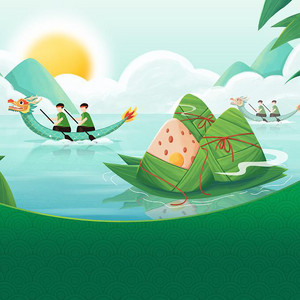
So for those who are not really familiar or who haven't really tried Zon Zidze, it's
actually a pyramid shaped glutinous rice dumpling wrapped in bamboo leaves and is usually
filled with different kinds of fillings, such as red dates, sweetened bean paste, fresh
meat, and egg yolk.
And is usually believed that in this country, northern regions prefer sweet Zon Zidze.
Now people in southern part of China favor Zon Zidze with salty filling.
So why eating Zon Zidze?
This is again, we have to go back to the ancient origin of this Duan.
So as the legend says, people boil the sticky rice with red leaves on that day that Duan
drum himself and to really sacrifice Duan.
So however, more people consider Zon Zidze as a symbol of good luck.
So because the pronunciation of Zon has a similar pronunciation of Zhong or Zhong in Chinese
and this character particularly has a positive meaning often used in words such as winning
the prize or scoring high on an exam.
So that's why people are also eating Zon Zidze for expressing good wishes to prosperity.
So there are different ingredients that feature in different parts of China, but the consistency
is the wrapping, right?
The bamboo leaves.
And just to be clear, you don't eat the leaves, right?
You open it and then you eat the insides just to be just to be clear.
I challenge you to do that.
I don't want to be that tourist that people look at and he's like, look at this crazy guy
eating the leaves.
He's truly vegetarian.
I mean, good luck digesting it.
I don't think you'd be able to swallow it.
So don't eat the the red or bamboo leaves.
Round table tip.
Don't eat the bamboo leaves, guys.
And also I think the filling is always creating this big discussion divide or this
big debate in the country, whether it's the sweet or the savory, completely vegetarian
versus meat content.
I think I would probably lean more towards the savory side of things.
Yeah, maybe something meaty or something salty.
Yeah.
Well, the thing is, if you had the really good ones, I think both could be fantastic.
For sure.
Yeah.
Okay, mouth watering.
But also the dragon boat name kind of gives it away.
So dragon boat race does happen not in every city, but in provinces such as Guangdong, it's
more known to have the dragon boat race.
Yeah.
And there's been a couple of races around the world already.
I think there was one in Luxembourg that I saw recently.
I believe there was one in Germany as well.
So it's definitely taking, well, becoming a trending sport around the world, particularly
during this time of the year.
That's fantastic.
And what are some of the other interesting ways to celebrate this festival?
Well, as we said, the Dwarf Dwarf Festival, Dragon Boat Festival is also an occasion where
people were just, you know, wish for prosperity, health and safety.
So hanging, auspicious leaves is also one custom that you would just observe in some
parts of China because the fifth lunar month or the fifth month in the traditional Chinese
calendar is really marked as a poisonous, poisonous month in the Chinese farmers calendar.
This is because insects and the pests are active during the summer month and people
are more prone to catch infectious diseases.
So that's why during Dwarf Dwarf Festival, you know, some people would just also put
mugwort leaves and also calamans on the doors were windows to repel harmful insects from
the house.
And those leaves are, you know, considered as having curative properties and can also
prevent an epidemic.
But again, don't eat those leaves, guys.
They are purely decorative.
And to ward off the insects traditionally.
Yes, of course.
To keep the disease away, yes, of course.
And also wearing scented sachets, also a traditional custom during the Dwarf Festival.
And the children would just normally wear scented sachets, stringed with five color silk
thread to ward off evil.
And one sachet is an ornament worn on the front of the dress.
And the sweet smelling sachet contains different herbs and is usually wrapped in a silk cloth
and sometimes embroidered with very, very delicate patterns.
Lovely.
And also, you know, tie your five color silk thread is also a common and an traditional
custom during Dwarf Festival.
And also balancing acts is a very interesting fun game because it's said that you will
be lucky in the coming year if you can balance an act upright during the Dwarf Festival.
The act without cracking it?
Yes.
Okay.
Never would I succeed in that one.
That's, I mean, there's something similar, I guess, in South Africa and I think around
the world, you know, like egg spoon racing.
Like there's always those kids sports days where the parents put like an egg on a spoon and
race with it and try and balance it and not drop it.
All right.
So it's kind of similar.
So it's a cook one or a raw egg.
No, it's raw.
Yeah.
And they race with it on a spoon and they try and win the race without dropping the egg.
All right.
The stakes are high then.
I think there's, I also saw something online that I believe was associated with Dragonboat
Festival festivities was kids painting in traditional like figurines.
That was associated with the festival.
So I'm not sure what those figurines, I think they were also figurines of actual Dragonboats
and a couple of historical figures too.
So that also seems to be something that's trending for this year's festivities.
That could possibly be one of those, one of the many intangible cultural heritage
practitioners things.
Yeah, but I just am not immediately able to associate with the locality.
Yeah, yeah, yeah.
And what's new about this year's Duan Wu Festival or Dragonboat Festival is it seems
like people are taking this opportunity to travel and also going to some of these cultural
sites that go back to your cultural and historic roots.
Sure.
I think as usual tourism during this holiday or Duan Wu Festival holidays is just a
prosper.
And according to data from tribal sky, SF May 13th, 13th domestic flight ticket bookings
for a Dragonboat Festival holiday have exceeded two million and international flight ticket
bookings are about nearly 500,000.
So that really represents an increase of about 14% and 70% respectively compared to
the same period last year.
And this year you do see more people are favoring short distance trips.
Data from C-trips shows that bookings for domestic short trips during the Dragonboat Festival
holiday have increased by 20% year on year.
And particularly you see a rise or surge of county level cities.
So people do love to visit smaller scale cities or even counties to experience local culture.
And also we do see a quite interesting trend that is called neo-Chinese travel experiences.
So meaning that people love to experience some traditional Chinese culture, especially
those activities or customs or cultural items related to the Duan Wu Festival during
this holiday.
So in addition to watching Dragonboat racing, these new Chinese traveling trips include
visit to historical museums, intangible cultural heritage experiences, visit to historical
and cultural scenic spots, and also handful, like you mentioned, handful makeup experiences.
So these are some interesting travel trends observed during this Dragonboat Festival holiday.
Yes, and I wonder, Brandon, how do you see this for it to become a big trend when folks
are kind of looking back into their own history?
And also it's like a new discovery for a lot of people, some of the cultural intricacies
that maybe previously just did not know, but actually visiting the place and getting
a nekovit and sort of going deeper into your own sort of cultural history in that sense.
I think in the past there's a lot of talk about going to, well, you know, the modern cities
and there are a lot of the modern and contemporary offerings that these tourist destinations have
to offer.
But now there seems to be maybe also this trend of looking back.
And I think for the Chinese people, there is one advantage that we do have that is there
is more than 2000 years of history that you can go down well.
And it's across the country too, yeah.
So every city and every region will offer some different, you know, slice of that history.
Yes, and also I remember talking about this with you, Brandon, on the show as well, about
the younger generation of Chinese people who have this particular hobby, as opposed,
and also maybe fashion taste in a way that they would actually dawn in Hunfu traditional
have, well, sometimes people would actually argue that this is not so traditional.
This is more of a Hunfu style of attire that you can't generally also see it more frequently
at historical sites.
That's what I've found.
Yeah, I think that possibly makes sense because if you want a nice photo up and you want
your surroundings to be, um, and that's all up the younger generation's care about these
days.
It's just the perfect photo up.
Yes, if you didn't get the photo, you didn't go.
Yeah.
And you want to look, you want to look the part.
Yeah, nicely in that environment.
And therefore, you know, dress up, go to the historic site and get your photos taken.
And maybe we've talked about in one of the previous shows that now there are even traditional
photography, sorry, not traditional, more like professional photographers who can be
hired on site.
And they know where's the best spots.
The good spots, yeah, and the good lighting and yeah, yeah, yeah.
And to take that Hunfu photo there.
I think there's also this international perception when people think about China, they just
think about modernity and, you know, fast trains and, you know, like massive skyscrapers
and, you know, which is to a certain extent true, but I don't think people from outside
of China realize until they get to China or experience China, how much rich history
there is and how it really is being taken on by all generations, particularly around these
major festivals where people appreciate and learn more about this rich history.
And I think that taking note of this, particularly during festivities like the Dragon Boat Festival,
I think is really, really important.
And it's really nice to see people in a modern age connecting with the history that brought
them to the spot.
So to go to these historical venues and see people dressing up in Hunfu and, you know,
learning about their history and their culture and, you know, how much China has gone through
over the, you know, for example, two millennia, I always find that fascinating to see and also
fascinating to experience as a, you know, as a foreigner.
And also, you know, I think when it comes to the celebration of this traditional Chinese
festivals, we have to say that, you know, because of this rapid process of urbanization,
people are getting used to this lifestyle, say busy work and life, that fit into the
urbanization, you know, style, which really leave a little room for people to have a grand
celebration of each traditional Chinese festivals.
I think we've also discussed about this, say, decreasing number spring festival flavor.
But now it's really good to see that there is a resurgence of interest in terms of traditional
Chinese culture.
So maybe that's also why during this year's Duan Wu Festival, you do see more people
that visit places where people still have, say, this grand celebration.
For example, you mentioned Dragon Ball Racing, so popular in Guangdong province.
So you also see like a surge of tourists in the province during this year's Duan Wu Festival.
And also, say, Chinese Zhujiang Province, Wu Jinxin area, they're hosting a series of Dragon
Ball Festival themed activities so that, you know, you can really have a more immersive
and interactive activities of this Duan Wu Festival celebration, which is somehow a rare
case for people living in big cities nowadays.
I think it also just makes sense for, you know, tourism companies and, you know, tourism
departments in different sectors of China to focus on ancient history.
Because when you think of popular tourist destinations around the world, most of them are
linked to some sort of historical meaning or historical significance.
Now don't think there's many countries in the world that can compete with China's, you
know, rich array of history.
So to see that locals and foreigners are like, you know, experiencing all of that historical
heritage that China has to offer, and it really is so vast and so rich, that's really
fantastic to see.
Yeah.
It's really interesting when you mentioned Brandon earlier on that maybe before coming
to China for you, you were thinking about more of the modern...
Yeah, like skyscrapers and, you know, high speed trains and that was kind of my visual
perception of what the whole Chinese experience would be like.
And a part of that is 100% true, but I wasn't...
I didn't take into account how many ancient historical sites would be so easily accessible
for me and to see some of those sites has been, you know, hugely enriching.
And that's fantastic.
And also I think that's one of the great benefits of visiting a foreign country and you
discover so many things that you would never imagine of that place.
But as a Chinese person, I've always thought, and I think this is one of the...
Is it like a cultural difference or something?
Like we tend to perceive ourselves as we come from a country with rich history.
A million times I've seen in Chinese documentaries talking about various things open
with the line.
This is a country with rich history.
But...
And so many themed events and, you know, things that have happened throughout the...
Throughout the normally linked to something historical.
Right.
And the thing is, when you're talking to an international crowd, people don't have the connotation of what
the two little words, rich history embodies and also with what we do, not necessarily always
on round table, but other shows we do and also other cultural products that come from CGT
and Radio.
I think we try very hard in trying to explain to people what this rich history means and
also how it does.
And rightfully so, because it is so vast and it does go back so many years.
There's so much history that needs to be explained and shared with the world because it is
just so fascinating and there's so much of it.
I think it goes beyond the likes of ancient Egypt and some like Inkinen, Mayan civilizations.
China's historical ancient history is just so vast, it's mind blowing.
And I feel the same.
And also not only for international friends, I think even for young people in this country,
there are also somehow risk-a-ring detarming points, or detarming parts of their own traditional
culture, I think.
Maybe a few decades ago when you mentioned traditional Chinese culture or traditional
Chinese cultural elements, maybe because of tourism, say, either tourism operators or
culture operators, they were not really so good at launching different products as they
do nowadays.
So people somehow considered this traditional cultural elements as outdated.
But now I think when you look at so many different efforts to really integrate traditional
culture into modern life, say, either launching different products and also for tourism operators,
they're also trying to offer more tourism products, say activities, performances, and there
are even different themed parks featuring traditional Chinese culture.
So these efforts are making us somehow promoting these three students' interest among younger
generations in the country as well.
I think something that China is also doing incredibly well is linking modernity with history.
So there's a lot of museums and institutions and historical sites that are using technology
to preserve ancient history, as well as to make it available to as many people around
China and the world through AI and putting ancient texts and that sort of thing online,
along with preservation efforts and marketing efforts.
So there is definitely a combination of historical elements with modern tech that is making
history well preserved and accessible to many, many people in China and around the world.
Yes, absolutely.
And if you're a little bit overwhelmed by all that, then you can just eat the zones today.
A lot of the leaves.
Without the leaves is pretty nice too.