On the next ThruLine from NPR.
People have real ethical and moral quandaries about this.
People are uncomfortable from the very beginning.
The business of migrant detention.
Listen in the NPR app or wherever you get your podcasts.
You're listening to Shortwave from NPR.
Hey Shore Rivers, Regina Barber here.
And Rachel Carlson.
With our bi-weekly science news roundup featuring the hosts of All Things Considered.
And today we have the always fun Ari Shapiro.
We're going to miss you, Ari.
Oh, I'm only always fun when I'm with you.
It's a testament to your show.
I love doing it.
So I hear today you're going to tell me about some mysterious red dots in space.
Yeah, and how the brain might fill in missing information.
And lastly, you'll love this, Ari, the wiggly world of octopus arms.
Eight times the fun.
Exactly.
All that on this episode of Shortwave, the science podcast from NPR.
This message comes from NPR sponsor, U.S.
Bank.
With U.S.
Bank Business Essentials, you get more than just a bank.
You get a dedicated partner that provides you a powerful combo of checking and card payment processing with quick access to the money you've earned, proving that there is nothing as powerful as the power of us.
Visit usbank.com today to learn more.
Member FDIC.
Copyright 2025 U.S.
Bank.
Hey, it's Rachel Martin.
I'm the host of Wildcard from NPR.
For a lot of my years as a radio host, silence sort of made me nervous.
That pause before an answer because you don't know what's going on on the other side of the mic.
But these days, I love it.
Hmm.
Ah.
Gosh.
Give me a minute.
Yeah, yeah.
Think.
Listen to the Wild Card Podcast only from NPR.
It's fall, so maybe you're figuring out your Halloween costume or where to get a pumpkin spice latte.
And if you want to know what buzzy movies and TV shows to check out this fall, we've got you covered.
Listen to Pop Culture Happy Hour in the NPR app or wherever you get your podcasts.
Okay, to kick us off, tell me about these red dots in space.
I'm imagining like intergalactic acne.
What is it?
Well, let's start at the beginning, Ari.
The universe probably started with the Big Bang.
At the very beginning.
Very, very beginning.
So, Ari.
This story starts with images from the new James Webb Space Telescope of the very, very early universe.
We're talking like 500 million years after the Big Bang which, since the universe, is 138 billion years old.
That's basically less than 5 of the universe's life.
So when scientists were looking far back into the dawn of the universe, they noticed these very strange red objects in these images of space.
They debated whether the dots were big black holes or galaxies.
But the weird thing was, if they were galaxies, they were much older than they should have been.
It would be like checking on your little kid and finding a fully grown adult.
That's Bingjie Wang, an astrophysicist who is part of a team that published a study about one of these red dots in the journal Astronomy and Astrophysics last week.
What does her team think these red dots are?
So long story short, Ari, we still don't know.
They're all very different.
They all have like different features.
The lead author of that study, astrophysicist Anna de Groff, says that our existing models really just don't explain what's going on in this specific case.
So any normal star or galaxy model or black hole model does not fit the data, essentially.
So they needed a new model to explain this specific red dot's features.
And the study's claiming this new model points to a new kind of black hole.
One surrounded by a dense cloud of cooler gas, kind of like an atmosphere, but it's not a planet or a star.
I didn't know black holes could have an atmosphere.
What does that mean exactly?
It means that this could be a stage in black hole growth that scientists have never seen before.
It could also be a new clue as to how supermassive black holes at the centers of almost all galaxies are made.
But astrophysicists aren't really sure.
Do they have ideas about how that might work?
Yeah.
So I reached out to astrophysicist at Yale, Priya Natarajan, and she says this could be one example of how black holes rapidly grew into supermassive black holes, but that this is only one example of a model that she and her colleague Tal Alexander actually proposed a while ago.
They thought that black holes created soon after the Big Bang, with big clouds of dust and gas around them, could rapidly grow to become supermassive black holes.
So she thinks more work needs to be done.
Okay, let's pivot from black holes to holes in information in the human brain.
What's the second story?
So the brain is wired to fill in visual gaps.
For example Ari, maybe an animal sees the tail of a lion hiding behind a bush, but their brain alerts them as if they've seen the entire lion.
So like the brain fills in the gaps to say, run.
Exactly.
And in that case, that brain feature is really helpful.
But Sometimes, in the case of things like optical illusions, the brain perceives objects that aren't actually there.
And because of that scientists can study illusions to try to understand how the brain fills in those gaps.
A new study in nature neuroscience did exactly this in mice.
So, Ari, I want you to look at an example of what the researchers showed the mice.
It's called the Kinesia illusion.
And tell me what you see.
It looks like three black Pac-Mans heading for a threesome towards each other.
Honestly, I like that description.
A lot of people see a triangle when they look at it.
Oh, OK.
Yeah.
Because like the gaps between the people's mouths makes a triangle.
Yeah.
Got it.
Yeah, exactly.
So to a lot of people it seems like there's a white triangle on top of those black Pac-Man circle things.
So this is an example of how the brain fills in the edges of a shape even when those edges don't exist.
And when researchers at the University of California, Berkeley and the Allen Institute in Seattle showed this image to mice, they found a special group of neurons in mice brains specifically involved in that process of filling in the missing edges.
And researchers have known that the brain has neurons that respond to both the edges of real objects and the edges of illusions or objects that aren't really there, like that triangle.
But these were different neurons, specifically activated by the edges of the illusion.
So what can researchers do with that information, now that they've identified this specific brain circuit?
One of the study authors, Hei-Young Shin, says with a lot more work and, of course, work on humans, this could help researchers understand mental disorders that affect perception.
The most famous example of that is schizophrenia, but also autism ADHD Alzheimer's, many other diseases.
Although one limitation of the study is that it's mice.
A mouse can't say whether they see the triangle or not.
So there's lots more to be done before we can make claims about humans.
Okay, third story, octopus arms.
Take it away.
Okay, Ari.
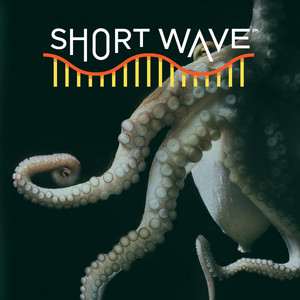
So this new study came out in the journal Scientific Reports and it's all about how octopuses use different arms for different tasks.
Scientists analyzed a bunch of videos of octopuses in the wild and they were like great.
What's each individual arm doing here?
Octopuses have eight arms and to look at what each arm is doing at a specific point, you have to watch that video eight times.
That's Chelsea Bennis.
She's a field biologist at Florida Atlantic University and a co-author of the study.
Sounds like a lot of octopus content to go through.
What did they find?
Two things.
One.
There was no arm specialization, meaning all of their arms were capable of doing all the same actions.
But two, the octopuses still seem to prefer doing certain tasks with certain arms.
The majority of the time, they use their front arms for exploration and their back arms for locomotion.
Just to be clear, octopus researchers have observed some of these arm preferences in lab settings before.
But Kurt Onthank, an octopus researcher at Walla Walla University in Washington State who's not affiliated with this research, says it's important for us to observe it in the wild too.
They're really good at hiding.
Just finding them is difficult.
And then, once you do find them, it's really hard to then ensure that you, the big, hairless monkey covered in neoprene is not like messing up their behavior.
Okay.
Well, what do we get out of knowing that an octopus might use one arm to give a thumbs up and another to give a peace sign?
Yeah, when we asked Chelsea, she told us that it could help us get inspiration for flexible or soft robotics, which she says could be helpful for things like search and recovery or even ocean exploration.
And Ari, if you want to see some of the videos the researchers looked at plus peek at some cute octopuses.
We'll have that video online and in our show notes.
They're not octopi?
I think it's both, right?
I think it's both.
Anyway, regardless, I look forward to watching.
Ari, you are such a great science nerd and you are always welcome on our show.
We're going to miss you.
We'll miss you.
We love having you on for now.
I love nerding out with you.
Thank you for enlightening me every week.
You can hear more of Ari on Consider This and PR's afternoon podcast about what the news means for you.
This episode was produced by Hannah Chen and Jordan Marie Smith.
It was edited by Burleigh McCoy and Patrick Jaron Watanonan.
Tyler Jones checked the facts.
Tiffany Vera Castro and Patrick Murray were the audio engineers.
I'm Rachel Carlson.
And I'm Regina Barber.
Thank you for listening to Shortwave, the science podcast from NPR.
Maybe you're wondering, how do I escape quicksand?
Or how do I break up with my dentist?
Well, season two of NPR's How to Do Everything podcast is launching this fall and we will attempt to answer your questions.
Sometimes we'll actually succeed.
Send us your questions at howtoatnpr.org.
That's howtoatnpr.org.
Did y'all hear?
Code Switch is one of Time Magazine's top 100 podcasts of all time, baby.
They called our show, quote a kind of cultural compass, never preachy, always curious about the roots of inequality in people's lived experiences.
I mean, I'm biased, but we couldn't have put it better ourselves.
And we are digging into all this every week.
So make sure you catch the next episode of Code Switch on the NPR app or wherever you get your podcasts.