just what to do with major economies mounting debt piles.
Those are my choices.
Not austerity, not reckless borrowing, but cutting the debt, cutting waiting lists and cutting the cost of living.
That's World Business Report from the BBC World Service.
I'm Will Bain, and as the UK government unveils its latest budget, we'll be taking a look at how debt is increasingly dictating our economic decision-making.
Also on the programme today the live-streaming shopping firm valued at 11 billion, and the row.
No really about pyjamas on planes.
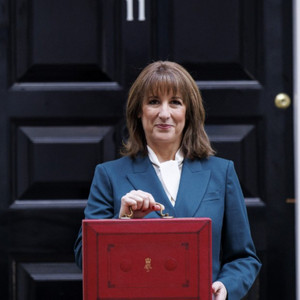
Yeah, pretty lively scene in the UK's parliament on Wednesday, as the country's finance minister, Rachel Leaves, delivered the annual budget.
The budget will maintain investment in our economy and in our national health service.
I said I would cut the cost of living and I meant it.
The budget though, for the second successive year, saw the UK's government go hunting for tax rises as it tried to protect budgets from public services being cut.
Those are my choices.
Not austerity, not reckless borrowing, but cutting the debt, cutting waiting lists and cutting the cost of living.
Those are Labour choices, promised and delivered by this budget, promised and delivered by this Labour government.
And Madam Deputy Speaker, I commend this statement to the House.
The leader though, of the UK's main opposition Conservative Party, Kemi Badenoch, responded by describing it as a budget for Benefit Street, paid for by working people, and didn't hold back in criticising the Finance Minister.
Her position is untenable and she knows it.
She's talking to the Chancellor.
Is he mansplaining to you, by the way?
Is he mansplaining?
Do you want some help?
Would you like some help?
What the Prime Minister should do is grow a backbone and sack her.
But he won't because he knows if she goes down, he goes down with her.
So we're stuck with them both.
Laurel, and foolhardy.
It perhaps got personal and tense because the backdrop to all of this is more tough decision-making.
Not a uniquely British problem, though.
It's once again a major economy weighed down by its debt.
This was the Finance Minister, Rachel Reeves, on that.
Our net financial debt this year will be £26 trillion 83 of GDP, meaning that today, one in every £10 that government spends is on debt interest.
So the UK has today tried to sketch out its latest attempt to get out of its debt trap, if you like.
As we were reporting that though, in Belgium, of course, the response has been to try and tap back on public spending, as you may have heard across the World Service today, and that has led, on Wednesday, to a third consecutive day of nationwide strike action against those planned cuts in public services, with trains, airports and ports all among those shut.
The sounds of some of those workers on strike there in Belgium on Wednesday made us ask here at World Business Report whether debt was now the cause driver of major economic policy around much of the economic world.
And to try and pick through that, we're joined by a panel of guests.
Russ Mould is with us.
He's the investment director at the UK investment firm, AJ Bell.
David Aikman is also with us.
David is the director of the UK Economic Think Tank, the National Institute of Economic and Social Research.
We're also joined by Professor Paola Sabaki.
Paola is the chair in sovereign debt and finance at Sciences Po University in Paris and a partner at Essential Economics, a London-based economic consultancy firm.
And, as always on a Wednesday, we're also joined from the United States by Susan Schmidt, Portfolio Manager at Exchange Capital Resources in Chicago, who's also going to look across what's moving financial markets today for us as well.
Welcome all of you to World Business Report.
Professor Sabaki, perhaps you kick us off here before we get started.
The team to look more specifically at the UK position, but just the general position around the world of government debt, particularly post the COVID-19 pandemic, because this is not a uniquely British or uniquely Belgium issue, is it?
Absolutely.
It's not uniquely British and it's not uniquely Belgium.
I just say actually is a situation that is common to many countries where, including the advanced economies, the G7 countries they all have debt problems and obviously, developing countries.
We were used to think that that was a problem for developing emerging market economies, but it's not obviously the case.
And the advanced economy tend to have a higher level of debt than developing countries.
But there have always been barriers. able to manage this debt in one way or the other.
But, as we heard from what was said before, now we have a higher interest rate, higher spending linked to many different factors, but mainly an ageing population, and question about whether governments will be able to keep up with that sustainability.
David Aikman from the National Institute of Economic and Social Research, put Britain's debt context to that wider picture that Professor Subaki's just put for us, if you will.
I'm very glad to do that.
We're by no means an outlier in the UK, but we do have a high debt to GDP ratio.
So the debt ratio is about 100% of GDP in the UK.
As we heard in the clip from the Chancellor, that means we're spending something like one in every 10 pounds of tax revenue in servicing the debt.
So that's like a little signal that's we're at a level that feels uncomfortably high.
I think now we, you know, we, I think we're at the second, something like the second lowest in the G7 in terms of debt to GDP.
That's just telling you that lots of other countries are in a in a similar position to us.
But really the fundamental thing that's changed and Professor Sabaki mentioned this in her remarks is that interest rates have gone up.
So we've, For some time, we've been running government deficits in the UK.
And we could get away with that because interest rates were super low.
So it wasn't building up debt stock very quickly.
But what's changed is from around 2022 onwards, when inflation started rising, interest rates shot up and that's completely changed the calculus.
So it's become much harder for us even just to stay where we are at 100% debt to GDP.
Russ, just build on that, that kind of how we got there, how the kind of level of debt in a lot of these major economies became almost, as the guys have been saying, 100.
So the entire value of all the output of our economies, how did we get there?
It's been a combination of different things.
Paola mentioned demographics are a key one.
Just looking at the United Kingdom, the old age pension was introduced in 1908, but you didn't qualify for it until you were age 70.
And then the life expectancy was 61.
So you weren't supposed to get the money.
Whereas now we all live for longer.
We have the National Health Service in the UK that does a brilliant job of keeping us all alive.
But again, that's extending life expectancy. putting more burdens on it.
So there are demographics.
You've also had debt crises in the early 20th, in this early stage of the century.
And also you've had COVID, which meant that the economy shut down for a long period of time and governments provided enormous amounts of support.
And that also managed meant that the debt increased very, very rapidly indeed.
So they're now faced with a situation by very big debts in a perfect world.
You grow your way out of it, but your other alternatives are austerity inflation, default inflation or start a war, none of which are very appealing.
So growth is the best one.
Inflation may be the default position ultimately.
Let's come to those difficult choices in a moment, because that'll take us back to those sort of stories today in both the UK and Belgium.
But Susan just round us out with the kind of picture, the debt picture in the world's biggest economy right now as well.
Well, the debt picture in the US, it's 120% to our GDP right now.
And that's of concern to the the investment community and certainly something that markets are watching.
It's important to note that having this debt level changes when interest rates have increased, and we've seen that in the last few years.
Ten years ago, immediately after the global financial crisis, a 0 interest rate made a very different picture for the payments you had to make on the interest on debt and the cost of new debt you were issuing.
That's all changed now.
And now the governments then are having to address this problem again.
Markets watching.
Susan first and then Russ.
Just explain that out there.
This is the bond market.
Lots of people have heard us talk about this a lot, but probably heard us talk about it far more in the last couple of years on the program than maybe if they're a regular listener than they did eight, nine years ago.
Why?
Why the significant pressure there?
Perhaps Susan first and then Russ.
Well, pressure from the markets, because as interest rates increase, that does put pressure on the economy overall and particularly on businesses.
So businesses are reflected in those investment markets, whether it's the bond market or the stock market.
And again, as you have increasing cost of debt, you're increasing debt issue to maintain your social programs.
You're not necessarily balancing the budget because you're thinking you're still in a zero interest rate environment.
That's changed.
Now you're paying the cost of that interest as the interest rates have increased.
It puts a drain not only on the overall society, but on the economy and on businesses as well.
Investors get concerned about that.
They're also concerned that this then escalates to something that will be harmful to businesses long term.
And then it's a vicious cycle because investors demand a higher level of interest.
So that interest rate keeps climbing, debt keeps getting expensive, as they want better reassurance that the risks they're taking by investing in companies is worth their while.
Russ, anything you want to add there?
Yeah, I mean the UK has always paid the interest on its debt and repaid its government debt since 1672.
So in that respect, its credit is good.
But inflation is a problem that the UK has had for a very, very long time.
And, as Susan was saying, if the supply of something goes up in this case bonds generally its price goes down because investors want to be compensated for the additional risk that they're taking, whether it's inflation or, in a very rare occasion, default.
So I think those are the fundamental challenges.
The UK also has got, you could argue, perhaps a growth challenge and a Brexit challenge.
And it now costs the UK more to borrow on a like-for-like basis than it does Portugal.
Ireland Italy, Greece or Spain, countries who were struggling with their own debt crises 10 or 12 years ago.
And that might give us a bit of an explanation as to we're trying to explain that some of these problems are the same as in.
The issues are the same for these countries, but it's perhaps why we're seeing different potential routes or planned routes to try and get out of it, isn't it?
Paola, why don't you talk us through what's happening, for example, in the European context?
Then France
France and Belgium?
What are their approaches to trying to get out of this?
And then we'll get David on today's approach from the UK government, where they're taking a slightly different tack.
Well, let me step back a bit, because there is actually an important point here that needs to be made that actually debt somehow makes the economy going.
In other words, there is good debt, but Good debt and bad debt.
Bad debt is what the Chancellor referred to as reckless borrowing.
So, in other words, borrowing to pay debt.
It happens.
We have cases, unfortunately in many developing countries that now are experiencing debt distress, where more debt is added just to carry on to service the existing debt.
That is bad.
All debt is a bad debt, a reckless borrowing when it's for vanity projects, for corruption, for anything.
But there is a good debt.
Good debt is when borrowing is for investing in the future.
And that is important because it creates, it fuels economic growth and makes that sustainable.
So, Let's not get everything into one bundle.
It is very important.
And so basically back to your question.
What we are experiencing now is that either we have growth and therefore we can have sustainability in our debt.
And I'm talking about advanced economy Europeans, G7 or you have to find a way to make debt more sustainable.
So either by increasing tax and putting up taxes or to cut public spending.
So otherwise, you end up into a spiral.
And obviously for advanced economies it's more difficult to get into that spiral, for reasons that other guests explained very well.
And is that the problem here?
That sort of.
Ultimately, the music's kind of stopped a little bit for the reasons that you guys have sketched out.
That interest rates have moved at the same time as there's been another previous shock, an energy shock or Russia's war on Ukraine.
That these factors have sort of come together and that's meant the sort of pass, the parcel has stopped, and there it is.
The debt is sort of plonked on that country there and they finally got to actually address it right now.
Yes, yes and no.
In the sense then the scenario of course this country, I mean the UK, is still shocked by the least trust mini budget and what happened and that market turmoil and follow that for many reasons.
But let's also try not to be too pessimistic.
It takes a while for a country and advanced economies to get into that spiral.
That is not the case in developing countries where they get into a spiral much easier and faster.
So again, take the United States.
We had A number of episodes this year of market turbulence around the treasury market and people started questioning the credibility of the fiscal policy of the United States.
But on the other hand, there are not many other options.
And treasuries, the federal debt, is actually the world's safe asset.
And so everybody ends up piling up on treasuries.
So it is a very complex picture.
But again, as we heard early on, the choices between if, that is, if growth, economic growth is not strong enough to allow debt to be repaid in a natural and virtuous way, then economic policies choices need to be taken, and they are in the direction of more tax or cutting spending, or both.
And David, that has been very much the problem here in the UK as our kind of example, our case study today with this budget right.
And the finance minister, Rachel Reeves, was trying to talk about ways to drive that economic growth that Paola's talking about.
And yet a lot of the reaction post this budget already has been about the extra burden on individuals and on businesses from previous budgets in trying to balance those books while still trying to achieve that goal of growth.
So what do you guys at NYSA make of the attempts today, the latest attempts, to get that growth picture moving and deal with the debt, the debt picture that we've talked about?
Yeah, thanks, Will.
So um, I think effectively we've decided with the budget today to live with the current level of debt.
I think that's the best way to interpret the numbers we're seeing.
So the Chancellor has increased taxes.
They're going up something like 26 billion over the course of the Parliament's The tax take.
The tax share of GDP in the UK will rise to a historic high.
And that's really just enough to keep the debt level from growing.
So that's absent any big further shock like another pandemic or a financial crisis.
This is just enough to kind of keep us where we are.
And so how, you know, is there a plan to bring the debt level down?
I don't think there really is.
I mean, we might be lucky and perhaps interest rates will fall in the UK.
They have fallen in the United States.
Perhaps they'll come down here.
That would help.
Maybe the economy will start growing more quickly.
But there weren't really any measures in the budget today that will kind of make that happen.
So it wouldn't be by government design, I think.
One of the previous guests mentioned inflation as a possible route as well.
I'm a little bit more sceptical about that.
We have a lot more index link guilds.
In the UK about a quarter of debt issuance is actually indexed to inflation.
So that that That doesn't work for that reason.
And a lot more debt is short term as well.
So I suspect the markets would price in quite quickly any rise in inflation.
So it does put us in a bit of a bind.
And the route out has to be faster growth.
There's no easy path to that.
And that is where that transfers across to whether we're talking about Belgium, whether we're talking about France, whether we're talking about the US or the UK, as we are today, isn't it?
It does seem to be the answer that, whatever your political colours are is one of the answers to the way out of all of this.
We hope we've explained a bit of that for you here on the programme today.
Big thanks to our panel, to Russ Mould, from AJ Beltway, David Aikman of the National Institute of Economic and Social Research, Professor Paolo Subacchi from Sciences Po in Paris, and to Susan Schmidt, from Portfolio Manager at Exchange Capital Resources.
You're listening to World Business Report on the BBC World Service.
Now, are you much of a shopaholic and what form does that take?
If so, getting out and about and shopping in your nearest town or shopping mall, or more of a online shopper, sat on the sofa.
What about haggling, encouraging, chatting, interacting even with a live stream with your seller?
This is not A.I., It's not pre-recorded.
Everything is live chat, you feel me?
So you see it as we're doing it.
All right, we got the two-pack PS4 controller.
I've got this Joe's denim skirt size 29.
You can get this for $22.
Live selling, a sort of market on the internet, has become a huge business, propelled by many of the Chinese giants, for example, like JDcom and Alibaba, as well as, of course, on apps like TikTok and Instagram.
But a relatively new entrant.
The Californian firm Whatnot has rapidly become a serious challenger, so much so it was recently valued at around 11 billion.
Whatnot's Daniel Fisher told us more about how it worked.
Essentially what we do is we enable shoppers to interact directly with sellers and other buyers actually live on video and buy instantly from their phones.
And buyers and sellers can engage in a variety of live selling formats, from auctions, buy it nows, flash sales.
And essentially we're bringing that sort of fun and interactivity of the in-store shopping experience to people's homes.
So it's entrepreneurs or even people selling stuff that's secondhand, right?
Collectibles and things like that.
That as well can set up an account.
Come on and they kind of make their pitch as live to your users on the site.
Correct.
So there are three things that really sort of set it apart.
So it's heavily community driven.
So we focus particularly on categories where people are very passionate about the thing they're buying or selling.
So collectibles, fashion, sneakers, in the US, even plants.
And there really isn't a category that it sort of live doesn't lend itself to.
And essentially you can you know as a seller, either an SME or even you know as a smaller seller or a retailer you set up an account on Whatnot and that's your shop front on the app and you can go live and give your consumers a very personal and engaging experience.
We have something like 340,000 hours of lives being watched every week in Europe alone.
Yeah.
Yeah, and the numbers are extraordinary, especially given you're a company now valued at around 11 billion by some measurements.
But to a lot of our listeners listening, they'll think this is a bit like when I went round my grandparents and they had the QVC shopping channel on the whole time.
And most people didn't think that was very cool or a thing that they particularly wanted to do.
So why on earth is it suddenly popular now?
Sure.
I mean, actually, the QVC analogy is a helpful analogy, I think, but not exact.
There's some similarities there.
So I think we always have a tendency to describe the new by what came before, and that's very natural.
But essentially what Whatnot's doing is, rather than having a sort of presenter statically presenting to you on a TV show and you phoning in.
This is truly interactive.
And so, in that way, very different from the QVC experience, although the audience base is very broad, from Gen Z's buying sneakers and streetwear all the way up to a slightly older demographic buying precious coins, for example.
On the app.
And so for the nuts bolts of it, as you as a business, you make money, but by taking a cut basically, of anything that those sellers then sell on the platform, is that right, correct?
We typically take about an eight percent commission it's slightly lower in certain categories and then we provide all of the logistics, all of the customer support, all the marketing support and, very importantly yeah, the logistics elements.
What we've seen is that already in Europe, about 75 of our sellers are making over £10000 a month and 25 of them are making over £50000 a month already.
So this is a very real business.
I say this as someone who works in an industry that's very, very live, right, as well.
I'm well aware of the risks that are involved with that too right, especially when you've got the general public involved in a sort of live unfiltered format.
So how much policing do you guys have to do?
How does any of that work?
It's our responsibility to provide a really trustworthy and entertaining shopping experience for people.
There's a few things we do.
First of all, every seller is vetted before they come onto the platform in a number of ways, including via stripe.
We have very rigorous rules and procedures in place, including community reporting.
But also, i think live inherently lends itself to transparency, because you can see the person you're buying from.
That's Daniel Fisher of the live seller WhatNotThere.
You're with World Business Report on the BBC World Service.
It's a big week, isn't it, for travel in the United States.
Thanksgiving on Thursday, one of America's biggest holidays.
But the US Transport Secretary, Sean Duffy, has had this message for travellers heading off.
That's right.
Manners don't stop at the gate.
Things aren't what they used to be.
Some would call it the golden age of travel.
Let's bring civility and manners back.
Ask yourself, are you helping a pregnant woman put her bag in the overhead bin?
Are you dressing with respect?
Are you keeping control of your children?
Are you saying thank you to your flight attendants and your pilots?
Are you saying please and thank you in general?
The golden age of travel begins with you.
Yeah, and that civility campaign, as the Secretary outlined it as, included not wearing pyjamas on flights.
Jackie Vernon-Thompson is with us, the Chief Exec of From the Inside Out School of Etiquette, joining us from Florida in the United States.
Jackie, great to have you on World Business Report.
What do you make of all this?
Oh, thank you so much for having me.
I'm delighted.
It is a big discussion.
Individuals wearing pajama pants out in public, especially when traveling.
That's something to talk about.
But it's comfy if you're on a long flight now.
It is comfy.
However, pajamas are sleepwear.
It should be on the inside of your home.
Not out in public.
You know, you just never know which opportunity is available to you.
And so, even on a flight where you want to cuddle up and it may be a two, three hour or even longer flight you still should dress appropriately for the public.
I think I'm broadly in your camp Jackie, but the airlines themselves make a fortune, don't they?
To their highest paid flyers.
You know people flying first class people in their clubs giving them these pyjamas.
So aren't they encouraging this?
That's because it's probably an overnight flight.
And of course, in first class you're able to lay straight out on a bed and they give you that attire to just relax.
However, when the day...
It is time for you to change back into your normal clothes, because you're about to interact with folks.
With other people.
Well, Jackie, it sounds like you're going to be the smartest dress this Thanksgiving.
Have a great Thanksgiving from us.
Thanks so much for listening, everybody, to World Business Report.