Come see Planet Money live August 18th at the Bell House in Brooklyn.
We're taping the finale of Planet Money Summer School, where we're going to crown our valedictorian.
It'll be a fun night out with storytelling, special guests, trivia, and of course, economics.
You might even end up on the podcast. Buy your tickets now at npr .org slash planetmoneylive.
That's npr .org slash planetmoneylive.
This is Planet Money from NPR.
It has been a big week for economic data, new GDP numbers, new consumer spending numbers, a jobs report.
And it's the job of economists to interpret all of these indicators.
But increasingly, people are challenging what they say.
In fact, today, Friday, August 1st, President Trump fired the economist in charge of publishing that jobs report.
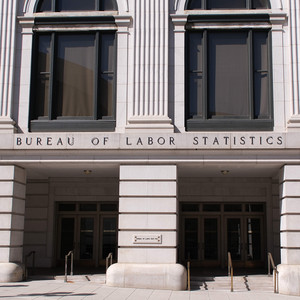
She ran the Bureau of Labor Statistics, or BLS, and Trump is accusing her, without evidence, of faking the numbers because there was less job growth than expected.
And this kind of distrust has me thinking about this one particular discussion at the American Economic Association annual meeting to a place earlier this year.
This is a very big deal.
Thousands of economists are in attendance.
Now, I took notes of this particular session and one of my notes says, people don't believe economists.
I decided to bring in a friend of the show who was also there.
My memory of it was it was pretty crowded.
Oh, yeah. It was a packed room.
The session was about economics and politics.
And Ben Castleman, longtime economics reporter at The New York Times, he wrote about it.
So he had a lot of detailed notes.
I know they didn't record the session.
I actually emailed them and I was like, can I get a copy of the recording?
And they said no. I'm pretty sure I have a recording, if you want to.
Okay, I just want everyone to know that Ben just opened his jacket.
Because either you have a wire or you have an iPhone in your jacket and you recorded the session.
Yeah, I'm pretty sure I recorded the session.
Turns out it was true.
He had. So you can hear a little bit of what went down.
And you'll hear Ben typing in the background sometimes.
We are joined by three terrific people with, I think it would be fair to say, diverse perspectives.
Picture one of those giant conference rooms in a hotel.
The session was led by Jason Furman, an economist at Harvard who worked for President Obama.
And there were three other big deal panelists on the stage.
First is Rich Berkhauser, who is a professor at UT Austin.
Two had also worked for different administrations, Republican and Democrat.
The fourth person was Oren Kass, who runs his own conservative think tank and has been influential in Trump's world.
And what struck me and Ben was the way that this panel kind of turned into a trial of the entire field of economics.
There was like moments of like genuine tension there because it did feel like the profession as a whole was sort of being called out.
Like what are you thinking of?
Well, I mean, I feel like it was Oren Kass kind of reading the Riot Act to the profession.
The absolute confidence in unanimity and downright condescension with which economists lectured to the rest of the country that we must embrace free trade with China.
He had this whole sort of litany of like things the field has gotten wrong.
— The deindustrialization of wide swaths of the country, the slowing growth.
— You didn't see the 2008 financial crisis coming.
You didn't see inflation coming.
You told us that free trade was going to work, and it didn't.
— Where I think people rightly look at what economists are recommending and say, why on earth should we expect that to be true?
— And in some sense, I feel like in that moment, He sort of stood for a lot of Americans, like, you guys keep getting it wrong.
Why should we listen to you?
Starting around the 1960s, the field of economics had a kind of spectacular rise, became super influential in policymaking.
There was this sense that economists pretty much know how the economy works, that they have a rational and data driven understanding of this very complex thing.
But over the past decade or so, there seems to have been a kind of backlash.
Right. It used to be economists sort of helped shape health care policy and climate policy and, of course, things like tax policy.
And they're sort of being pushed in some ways to the side in a lot of these policy discussions, and certainly with the Trump administration.
But you hear the same from the Biden administration, too.
That, like, distrust is starting to get in the way for economists?
I think it is limiting their influence in a real way, and the profession is sort of trying to grapple with that.
Hello and welcome to Planet Money.
I'm Amanda Aronchick.
Trust in experts is down in all kinds of professions.
Trust in government, in media, in medical science.
And lately, economists are feeling the burn acutely.
In decades past, they whispered in the ears of presidents.
Now, many politicians and voters are disenchanted.
Today on the show, how distrust is messing with economists' minds and interfering with their work.
And can they build up trust again?
This message comes from NPR sponsor, U .S. Bank.
With U .S. Bank Business Essentials, you get more than just a bank.
You get a dedicated partner that provides you a powerful combo of checking and card payment processing with quick access to the money you've earned, proving that there is nothing as powerful as the power of us.
Visit usbank .com today to learn more.
Member FDIC. Copyright 2025 US Bank.
If you want to compare how much people trust economists versus other experts, you actually can.
Like there's this one survey from a British market research company called YouGov that back in 2017 polled a couple of thousand people over there and asked, Of the following, whose opinions do you tend to trust when they talk about their fields of expertise?
Nurses did the best. 84 % of those surveyed trusted nurses.
Doctors and historians also did quite well.
And while economists did better than politicians, only 25 % said that they trusted economists.
Trust in weather forecasters was twice as high.
And when a group of economists repeated the survey in the U .S., they got similar results.
And there are some reasons why a lot of people think this happened.
For many decades, a kind of free market streak ran through the field, emphasizing above all free trade and deregulation and privatization, policies that, sure, worked for some people, but not for everyone.
But we wanted to know what economists themselves think happened.
So we asked four economists to come talk to us about what it's like to spend all this time collecting and analyzing and modeling data, writing up your findings, only to have people be like, meh, I don't really buy it.
We start with someone who's been pretty honest about what she got wrong.
So, Diane, we have spoken a number of times over the years.
do you mind reminding our listeners, like, who you are and what you do?
Diane Spong, chief economist at KPMG.
KPMG, one of the biggest accounting firms in the world.
Okay, and what do you, like, what is your job?
What is my job? My job is using a crystal ball and trying to see the future, which is, you know, a bit crazy.
That crystal ball part of her job, that is exactly the thing that Diane says has gotten in the way of people trusting economists.
economists. Don't get me wrong.
She thinks she can answer some questions about the future, about like long term shifts in the economy.
You know, what will the impact of an aging population be on health care or the workforce?
But most people don't ask us questions like that.
They usually ask us, what is the stock market doing tomorrow?
And as a labor economist, I have no idea what the stock market's going to do tomorrow.
And if I did, I would probably own my own island.
Anyway, I wanted to speak with Diane about a pivotal moment when a lot of people lost trust in economists, the bursting of the housing bubble and the resulting global financial crisis.
I missed it. And when you miss the really big things, it's heart -wrenching.
Do you think that trust in economists eroded because of the global financial crisis?
Absolutely. I mean, you know, first of all, we're the messengers.
But second of all, not only why didn't you predict it, but why didn't you stop it?
Back in 2007, In 2007, Diane was the chief economist at a financial services company in Chicago, and she was responsible for giving guidance on the future of the economy.
And the crisis was not something she saw in her crystal ball.
I was wrong. The housing market went bust. And it was because I kept thinking it should burst, and it didn't.
And I own that. Pretty much every economist, including Diane, can explain why they failed to read the tea leaves about that crisis.
But it didn't really matter.
The public felt betrayed.
Next thing you know, it wasn't just economic forecasting that people were skeptical about.
It was economic data, too.
Like when the crisis started subsiding in 2012, Diane remembers a big deal executive, not the president of the United States, going on television and openly criticizing the data produced by the Bureau of Labor Statistics.
This was in the wake of the financial crisis.
As the economy started to recover and gain momentum, former head of GE, I won't say names, actually said the data was being made up.
Diane is being polite.
This can be Googled and we don't mind saying it.
Jack Welch was so surprised by the numbers that he questioned whether the BLS statisticians were inflating the number of jobs for political reasons.
No matter how decent the people are, let's assume they're all perfect.
Their biases have to come through.
Firemen don't make subjective decisions.
They go put out the fire.
That's fine. And Diane's reaction was like, really?
That BLS data is very solid.
Those are some very fine statisticians.
They sit around and debate the most arcane technological issues and what's the best statistical technique.
And it's so boring, you have to drink to get through the dinners.
There's no conspiracy.
There's no, you know, that just isn't how it's done.
So Diane was totally sure that the Bielas numbers were as accurate as possible with no agenda, that Jack Welch was wrong.
But what do you do if people are not only losing trust in your guidance as an economist, But they're also starting to lose trust in the data you use.
Diane was not the only one who brought this up with us.
I'm Aaron Sojourner.
I'm a labor economist at the W .E.
Upton Institute for Employment Research. Have you been an economist all your life?
No. I was born a small child and then I was a labor economist. You know what?
Some stops along the way as a union organizer and professor at University of Minnesota.
As a labor economist, a lot of Erin's research is based on that same BLS data that Jack Welch called out back in 2012.
These are really important economic numbers, the change in unemployment rates, the number of new jobs, plus thousands of other stats.
And Erin agrees with Diane.
The statisticians at the BLS are widely known for their political neutrality.
If you ask the BLS, is the glass half full or half empty, they say it's four ounces of water in an eight ounce glass.
Like they will not spin.
They will not provide spin.
But even before today's news about President Trump firing the head of the BLS, Aaron was seeing a growing number of people accuse the BLS of spin.
First, it was people from the Trump camp accusing the BLS of cooking numbers to make Democrats look better.
Then Trump detractors joined in, saying that with Trump in charge, they can't trust government numbers either.
Like one guy wrote on social media, sorry, Aaron, this is the Trump regime.
And he went on to say, given how far off this was from expectations, I can no longer trust even the BLS numbers.
Up until recently, Aaron was was there responding, defending the numbers.
You know, look, you have to really pay attention to what's happening in each agency.
These numbers are produced by civil servants who are dedicated their careers to the reliability and accuracy of these things.
And it's not possible to, like, fudge it quietly.
Aaron told people if there's any kind of political meddling, those serious, spinless civil servants will blow the whistle, or maybe lots of whistles.
And they have not blown whistles.
But with today's news, Aaron is less sure that the statisticians at the BLS will be able to maintain the integrity of their data.
Remember, President Trump has routinely called the BLS data inaccurate or fake.
Today, when the BLS published a pretty big revision to the previous job numbers showing fewer jobs gained, Trump called it rigged.
But Aaron says revisions are totally normal.
Firing the head of the agency is a huge escalation.
The U .S. official statistics are like the gold standard globally.
And when leaders of other countries have politicized their economic data, it's really destroyed public trust in official statistics.
So it's kind of it's burning down something of great public value.
And it's a shame. Does this change your willingness?
to defend the numbers?
Yeah, it definitely softens my faith in the numbers.
All of us rely on these statistics, and to the extent that they are jeopardized or become less reliable, it might serve a political narrative, but it hurts people's ability to actually make informed decisions about their lives in their pocketbooks.
Distrust in economic data extends beyond just what the government publishes.
Another economist told us about decision makers and the public refusing to believe his data, numbers he painstakingly collected and interpreted himself.
Nick Bloom is a professor of economics at Stanford, and he's considered one of the country's leading authorities on the pluses and minuses of work from home.
Nick has done a ton of research on what works best, whether it's going back to an office full -time versus hybrid versus remote work.
He says the data shows, you know, it depends.
I compare work from home, honestly, to beer.
To beer? Yes. Like beer, work from home is great for the right person at the right time in the right amount.
And Nick has found that there are some jobs that really do need to be done in person.
Burger flipper. You clearly cannot do that working from home.
And there are many other jobs like that.
I teach and teaching is best in person and being a nurse, etc. So there's a set of jobs that are clearly better in person.
And that turns out to be half of all jobs.
There's another set of jobs, which is around the third, which it seems that hybrid is best for the typical person.
And then there's a third set of jobs where the evidence is that they're actually better remote.
And the kind of pinup for this is call centers.
Call centers. So noisy doing customer service by phone in an office.
Easier to do from home.
But Nick says that even with his years and years of experiments and research, when he brings data like this to some people, they're not always convinced, sometimes because they can't see beyond their own experience.
There are some CEOs, they tend to be men typically in their 60s.
They've just had an amazingly successful career and they've done it in the office and that's pretty much their view on how most others should operate.
And then sometimes, Nick says, people discount his conclusions because they have ulterior motives.
Like, take Amazon. Nick suspects that despite his thorough evaluation of the data, his writing widely about it, even consulting with big companies, Amazon didn't really seem to care about the data.
They insisted that many of their corporate workers return to office.
And maybe, Nick says, because they didn't actually want to keep some of their staff.
half. If you have a five -day return to office mandate, you can guess that maybe five, 10 % of your staff are going to quit on you.
And of course, those quits are free.
You don't have to pay severance pay, so it's a cheap way to reduce headcount.
Amazon has denied that that was the motivation behind their return to office policy.
But Nick says that even though Amazon usually has a data -driven management style, in this case, they ignored the data on work from home.
I mean, is it a failure to understand it?
It sounds sort of obstinate.
You know, it's hard to know.
I suspect what they say is not what they think.
But certainly what they say is I don't believe it.
I don't believe it.
I don't believe it.
Right. By the way, Amazon is among NPR's financial supporters and pays to distribute some of our content.
Now, each of the economists we spoke with had a different approach for dealing with the distrust that they'd been running into.
Nick, he says what he does can be broken down into three easy steps.
First, bring more data.
Second, bring more data.
Third, bring more data.
So for example, just the other week, I put out a summary of a survey from the US Census that had surveyed 150 ,000 American businesses.
So that was like a massive sample.
And I just summarized some of the key facts of what they found, because I think it's the best bet of shifting the debate.
My view is putting out strongly worded statements like this is the way or you're an idiot or it has to be, you know, that kind of dies and it doesn't really ever bring folks on the other side around.
You said you don't call people idiots is what you're saying.
Yeah, I try and engage.
I think listening is the first, you know, the first step.
And then the second step is taking on board their concerns, responding to them and then maybe putting opposition forward. So starting off aggressively just only puts people's backs off.
But while Nick is listening, then showing his work, data, data, data, Aaron Sojourner, whose data often comes from the BLS, which is now mired in this political chaos, he has a difficult dilemma because he's not even sure this data will remain trustworthy.
I don't know. I'm going to have to try to understand what's happening in the agency.
I think I certainly am less willing to defend it, but it depends what happens next.
Thanks. For Diane Swonk, with her crystal ball, she says all of the distrust she's encountered has really changed the way she does her work.
It's actually made her become more discerning with something economists use a lot.
Aggregate data, meaning when economists compile GDP or the unemployment data, taking lots of sources of information and boiling them down into one big number.
Dianne says that actually does prevent economists from seeing some of the nuance.
She particularly saw that after the pandemic, when economists announced that inflation was slowing.
A lot of economists, I think, really missed how price levels really matter.
Inflation, the pace of increase in prices, that's an economic construct.
That's something we think about.
But even as that pace comes down, the reality is the level of prices is still very high.
Like the monthly expense to buy a home today is 87 % higher than 2019.
Oof. Well, incomes are not.
So that's why people don't trust economists, because they're telling us that things are fine when they're not fine.
Economists have a habit of just saying, this is the numbers.
They're great. What's your problem?
I mean, you know. I'm right, and you're wrong.
Yes, the U .S. looked like the envy of the world in the economic aggregates right prior to the election.
But it didn't matter to people in the United States because they were still feeling the sting of high price levels.
Diane says that she's learned a lot from these moments where there's a mismatch between how economists see the world and how people are experiencing it.
Now, she says she doesn't rely as much on the aggregate macroeconomic data.
She also looks at more nuanced sources like how job growth is spread across different sectors, how often child care or elder care disrupts employment, how many companies are offering internships or entry -level jobs.
She looks at consumer sentiment by income.
Plus, she talks to more people.
You need to meet people where they are and what they're experiencing in the economy and really get into, to me, the micro side of the economy because that's where individual experiences matter.
And if you can relate to people on those levels, I think, and spend the time to understand that, I think that gives you more credibility.
ability. When we come back after the break, we're going to speak with one more economist who has devoted much of his career to figuring out how to rebuild trust. So we've been talking to economists about moments where they felt their hard -won economic findings were not believed, that they were not trusted, and how they're trying to fix it, change how they do their work, and communicate their findings.
To that end, I invited into our studios someone who's written an entire book on trust and how to regain it, Ben Ho, who teaches at Vassar College.
I'm a professor of economics and chair of economics and author of the book Why Trust Matters, an economist's guide to the ties that bind us.
For almost two decades, Ben has been researching techniques from behavioral economics, and from game theory to teach people how to effectively apologize for past mistakes.
There is definitely this feeling, I think, on campus that economists are somehow responsible for ruining the world.
Oh, my goodness. That's a big responsibility.
Yeah, I think it describes too much power to economists.
There was this movie a few years ago about how economists were responsible for the financial crisis because we just didn't want to tell people about how bad things were going to be.
He's talking about Inside Job from 2010.
It won the Oscar for Best Documentary that year.
Do you think that the economics discipline has a conflict of interest problem?
I'm not sure I know what you mean.
I took that personally.
It was actually personally focused on economists at business schools.
And I was teaching at a business school at the time.
And I felt very personally attacked.
I think there's a general feeling that, you know, capitalism is somehow at fault for all the ills of the world.
And insofar as economists have helped legitimize capitalism and have helped, you know, maintain that system, that somehow we are responsible.
So when it comes to making amends, the first step for Ben was, no, not getting defensive and saying you guys are big jerk faces or whatever, but instead to acknowledge that people have lost some trust in economists.
I think people often, you know, want to blame other people, you know, for bad things.
But I always wonder what could we be doing better to sort of make up for our shortcomings?
You think it's your fault?
I always think it's my fault.
That's my personality, right?
But I don't know, right?
I think I'm always trying to think about, you know, what can I do to make a situation better?
So when trust is gone, how do you build up trust again?
Yeah, this is a great question.
I think the main message of my research is you need to do costly signals that you're a trustworthy person.
Costly signals. Right.
Okay. So this is something that comes out of biology.
It's this idea that the animals often do costly things to sort of prove they are fit for breeding.
I think the classic example is peacocks, right?
So peacocks grow these really elaborate feathers.
It costs them a lot of energy to build.
It makes them susceptible to prey.
And they do this to prove they are strong to pee hens for mating.
Okay. And by the way, this is an accurate explanation of what peacocks do and why they do it?
As far as I know. I will acknowledge I'm an economist here.
Not a peacock expert.
Right. But that is the traditional story for why peacocks have those feathers.
OK. And so my work is trying to identify what kind of costly signals can we do to rebuild trust. So another example of a costly signal in the non -peacock human world might be like sending a handwritten note on flowery stationery versus sending an email.
Costly signals take time or money or risk.
There are things that are hard to fake and signal we are willing to go that extra mile.
Ben says that economists trying to win back trust can think of potential costly signals in three categories, past, present and future.
For the past, he says the economist who made a mistake needs to explain what they did wrong and take responsibility.
You know, so I did one experiment with Uber with how can Uber apologize if your car was late?
I did another study looking at medical malpractice and how can doctors repair relationships with patients after mistakes.
And can you give me an example of what you as an economist might do that's short of growing very fancy feathers?
Yeah, I think starting with thinking about the past and how can you be accountable for past mistakes, acknowledging the mistakes we made in the past, acknowledging that our models were oversimplified, acknowledging that our data collection was insufficient.
I think that is a good first step.
Ben says this reckoning has actually been happening in economics.
It's part of what's known as the replication crisis, where experts go back and they look at older research and see if the results can be replicated or reproduced.
We actually have an episode about this coming out very soon.
The idea is that by finding mistakes in the past and admitting to them, economists will learn better techniques for the future.
Okay, so that's step one.
I think the next step is basically the present, right?
So I think that in the present, we should be more transparent.
It's hard to be transparent.
I think a lot of the distrust for economists comes because people don't understand what economics is really doing these days.
They don't understand that we're a very data -driven science these days, that we run experiments and we look for natural experiments.
And I think increasing transparency is a really important part of trust building.
And it's hard to do.
It's hard because the work of economists includes a lot of nuances and complications that are not easily explained.
Ben does not have an easy fix for this, but he says that one way might be to communicate the ideas without all that jargon.
Right. That's often an accusation, right, that maybe the language is too impenetrable.
I think this philosopher John Dewey said that, you know, social scientists should learn from poets, right?
Poets communicate really complicated ideas in just a few words.
Social scientists should learn to do the same thing.
It's hard, though. To summarize, if an economist has gotten something wrong or missed something or failed to take something into account in the past, acknowledge and take responsibility for those past mistakes.
In the present, focus on being more transparent and clear.
The last thing is promising to do better in the future.
I think we saw this clearly in the experiment I ran with Uber, right, where, like, empty apologies didn't seem to work.
If I just said, oh, I'm sorry we were late, that really did nothing.
Right. But if you took an Uber ride and it was late and Uber sent you a note saying we promise to do better in the future, that actually did work in getting riders to increase their trust with Uber again.
And the reason why it worked is because it's actually costly to promise to do better in the future.
Because you do, in fact, have to do better in the future.
You can't just say that you will or people will punish your company.
Ben says this is so true for economists, too.
So, as an economist, he is making you a promise right now.
You know, in the future, we'll do better.
And that's my promise to you.
I'm going to hold you to that, Ben.
Just like Uber, I'm going to expect you to do better next time.
I'll do my best. Now, I really liked Ben Ho's idea about costly signals.
It's like broadcasting a message that says, I will do my best for you.
Look how hard I've already worked.
But it was a little hard to figure out how exactly to apply that to economists.
So I brought this up with the other Ben, Ben Castleman from The New York Times.
Do you have any suggestions for costly signals?
I do think that there is value in economists acknowledging the things that they have gotten wrong.
Not that the – not, oh, the profession needs to rethink this.
I see. Right. But to say this is what I did wrong, this is something that I have learned where my views have changed, and you do hear that from some economists, I think it helps their credibility when they do that.
Maybe they could also write it as a letter.
They could handwrite a letter to us each individually.
Individual letters to each American, sorry.
Sorry for what we as economists have gotten wrong.
is wrong. Is all of this distrust a sign that there is in fact something fundamentally wrong with the field of economics?
I'm never going to get an economist to speak to me again.
Just answer this tiny little question, Ben.
It'll be fine. Everybody won't mind.
Now, putting together this episode with all the apologizing, the soul searching, the revisiting of past mistakes, some of this is warranted and worthwhile.
But economics and data are also under attack right now.
And sometimes there is nothing to apologize for.
I think economics as a field is the most credible that it's ever been.
It is more data -driven.
It is more nuanced.
It is more willing to consider the ways in which the world is more complicated than a simple economic model suggests.
And there's a lot of research that I think is incredibly valuable to understanding the world.
I think, unfortunately, it's a moment where the profession has very little weight with policymakers.
It's taken—it took a long time for economists to build up credibility.
It has been a decade or more of them sort of losing credibility with much of the public and it's going to take time for them to build it back again.
So that once again, economics can be more influential in making policy.
supply chain. A quick reminder that Planet Money Plus supporters get early access to new episodes of Summer School.
So if you haven't signed up yet, now is a great time to join.
You also get sponsor -free listening and help us be more ambitious in our reporting.
Just go to plus .npr .org slash planet money.
You can find a link in our show notes.
Today's episode was produced by Sam yellow horse Kessler, and it was edited by Marianne McKeown with help from Jess Chang.
It was engineered by Robert Rodriguez and fact -checked by Sierra Juarez.
Alex Goldmark is our executive producer.
By the way, Ben Kesselman wrote an article about the AEA panel in the New York Times.
It is called Economists Are in the Wilderness.
Can They Find a Way Back to Influence?
I'm Amanda Aronchik.
This is NPR. Thanks for listening.
you