This BBC podcast is supported by ads outside the UK.
You can target your buyers by job title industry, company role seniority skills, company revenue, so you can stop wasting budget on the wrong audience.
It's why LinkedIn Ads generates the highest B2B return on ad spend of major ad networks.
Spend $250 on your first campaign on LinkedIn Ads and get $250 credit for the next one.
Just go to LinkedIn.com slash broadcast.
That's LinkedIn.com slash broadcast.
Terms and conditions apply.
Flexibility is great.
That's why there's yoga.
Flexibility for your insurance coverage is great too.
That's why there's United Healthcare Insurance Plans.
Underwritten by Golden Rule Insurance Company, United Healthcare Insurance Plans offer flexible, budget-friendly coverage for medical vision, dental and more.
One of these plans may be right for you if you're say, between jobs coming off, your parents' plan turning a side hustle into a full hustle or even missed open enrollment.
Want more flexibility?
Find out more about United Healthcare Insurance plans at UH1.com.
War, for many, can mean losing everything.
We were sleeping when the sound of firing rockets woke us.
We've been stuck on the road for seven hours.
In this country, we live only for suffering, exhaustion and hardship.
But what's the price of the Iran conflict for the rest of us?
This is World Business Report from the BBC World Service.
I'm Ed Butler, and today we're going to be heading to Lebanon, where fighting between Israel and Iranian-backed militiamen is just one of many theatres of war threatening to escalate in the Middle East.
Could this mean the end for Hezbollah?
And what is the longer-term threat for the world's oil markets?
Well, we'll hear from Lebanon shortly.
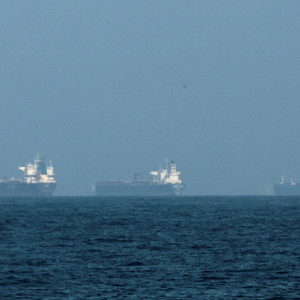
But first, President Trump has in the last couple of hours announced that the US Navy will, if necessary, escort tankers through the Strait of Hormuz.
I've been speaking about this and the rest of what he's been writing on Truth Social with our North American business correspondent, Michel Fleury.
In a post on Truth Social, President Trump said that he was going to offer political risk insurance and guarantees for energy tankers and other ships operating near Iran, essentially adding that the Navy would escort tankers through the Strait of Hormuz.
Why that matters is because this kind of narrow waterway handles about a quarter of the world's maritime oil trade, as well as huge amounts of liquefied natural gas.
And what has happened is that, since the fighting began, essentially that passageway has become blocked.
We've seen the price of oil shoot up.
And so Donald Trump is now reacting and saying if necessary, the US Navy will begin escorting tankers as soon as possible.
The promise also comes against a backdrop of the price of gas or petrol, as you would say which has gone up.
And this, of course, at a time when many Americans are far more concerned about affordability than what is going on in other parts of the world.
He's also said he's going to order federal provision of insurance guarantees for all maritime trade.
Do we know what that means?
Yeah, we're still trying to sort of figure out what exactly this idea of risk insurance and guarantees means.
But basically, if you operate a tanker, an energy tanker, insurance premiums, ever since the Iran war has begun, have shot up.
They've gone through the roof.
And so the cost for these companies is just becoming prohibitive.
And I think it's a way of addressing that.
And again, if you're wondering why, it's not necessarily just out of the goodness of his heart, but it's also because domestic politics play into this.
And that is that spike in petrol prices here in America, the single biggest one day spike since March of 2022 apparently, and it could go higher in the coming weeks.
That is concerning for a president that in November faces midterm elections and one of the key topics for voters is affordability.
Well, as Michel Fleury indicates there, the longer that shipping is constrained in this maritime hub, the key maritime hub, the more likely it is to lead to higher global prices of staples, things like corn and wheat.
That's least according to Sven Holsetter.
He's the CEO of Yara, the world's second largest fertilizer company.
The most important thing shipping route for fertilizer is going through the Strait of Hormuz.
So it's about 20 for LNG, but for urea, a key fertilizer, one third of the product is going through the Strait of Hormuz.
So this has huge impacts on the flow fertilizer and then indirectly also on food production.
If fertilizer is not available in the quantities that farmers need for some crops, you could see reductions of up to 50 in the first season.
So it would have very big consequences if this lasts over an extended period of time.
But also for fertilizer producers across the world.
We use natural gas to produce fertilizer and with increases in the production cost, that also has implications.
So it's a double hit for fertilizers.
A big issue then for the global food supply.
And with oil and gas prices, surging countries around the world are now looking to secure supplies from outside the Middle East, while rationing the supplies that they have.
Myanmar is one of those countries where, on a bid to preserve petrol, cars with licence plates starting with even numbers, they will only be permitted to drive on even numbered calendar days, leaving the odd numbered days for vehicles whose plates start with odd numbers.
Vicky Bowman is a former British diplomat and Myanmar expert.
It's driven in Myanmar by two things.
One is I don't think they keep much reserve stocks because, you know, they're short of money.
So they sort of live a bit day to day, granting foreign exchange to people to import diesel in.
And then secondly, I understand the Thais have stopped exporting to Myanmar because presumably they're conserving as well.
So that's had an impact.
So what I've heard is this order that has gone out, and then there's been some panic buying of people as soon as they heard this was coming through, which is pretty classic for Myanmar.
Well, the larger economies of South Korea and Taiwan have also been talking about the potential limits to their energy supplies in the last 24 hours or so.
President Trump's announcement though, has come after gas and oil prices have been surging and world stock markets have been tumbling as concerns have grown about how long the conflict with Iran is going to last.
Cormac McGarry is the director for maritime security at the consultancy firm Control Risks.
Hello, Cormac.
Your response then first, to this pledge by the president to escort oil tankers through the Straits of Hormuz.
Does that sound like a game changer for the shipping industry?
Thanks, Ed.
Look our control risks.
Core service we're providing for our maritime clients right now is actionable intelligence.
And right now, a statement like that is not actually actionable.
What will be needed by the maritime community is is much more detailed guidance.
It's one thing to say the US Navy will provide protection.
What a ship needs to know is what that looks like.
Are we going to be given a specific escort or are we expected to join a convoy?
I suspect if the US Navy is going to do this it will have to be the latter because normal traffic in the Strait of Hormuz there's simply not enough naval ships to escort every single ship.
Indeed.
And it's a pretty narrow strait, isn't it?
I mean, you're still going to be within a handful of miles of the Iranian coast.
Yes.
And what's key here is that on Saturday morning there was a VHF radio broadcast that went out to ships in the area, basically warning from Iran that the strait was closed.
What we don't know is whether Iran even has the forces remaining to actually affect that closure.
So that would be the number one thing on a ship owner's mind right now is if Iran will actually start attacking ships in the Strait.
Importantly, alongside the actual, immediate physical threat, your correspondent talked about insurance.
President Trump mentioned political risk insurance.
What's happened in the last 24 hours is that the maritime insurance industry has basically told ships that from the 5th of March,
War risk policies will start lapsing.
So that political risk insurance offer, if it does come to some kind of fruition and reality, that will be very reassuring for the industry.
But I do stress, there needs to be details on how that works for the industry to actually really return to sailing.
I guess we wait at least until tomorrow to find out if any detail will be forthcoming from the various government departments there.
Meanwhile, of course, the military is attempting to degrade Iranian military resources near to the Straits of Hormuz and near to other parts of the Persian Gulf.
I mean, at what point...
Is anyone going to know?
It's very hard, isn't it?
Because it's a question of how much appetite for any kind of risk do these private sector institutions have when effectively, the entire global economy could be held to ransom if the conflict and the straits remain blocked indefinitely?
One thing the maritime community is extraordinary for is a very high level of risk tolerance amongst many ship owners and operators.
So look, the traffic currently is down about 80% compared to normal.
That means that 20% of ships are actually still running that gauntlet.
So you're probably not going to have a total shutdown.
But indeed to what you're saying, the next 24 hours and that will kind of roll on is what's important to kind of get through the fog of war.
Right now we simply don't have enough information publicly available on the state of the Iranian forces and their capability, or even their intent, to actually shut down the strait.
We've heard from the U.S. military that they've potentially targeted 1,700 targets in Iran.
We simply don't know how much of that has been Iranian naval forces, for example.
So the fog of war just needs to lift a little bit more before the industry can really – go back to sailing.
Cool, Matt McGarry, thank you very much.
That's the Director for Maritime Security at the consultancy firm Control Risks.
Let's hear what the markets have made of this.
Jennifer Snyder is a financial advisor at Brighton Securities in Rochester, New York.
Jennifer, we've been watching oil prices surge, haven't we ever higher across the day, up to 87 a barrel at one point, I think, earlier in the day.
Did they like what they heard from the President?
Well, I think the biggest piece is how long things are going to last.
It's obviously positive what the president is sharing, because 20 percent of our production goes through the strait.
And if we can take some kind of action, that's positive.
And I think one of the big things is considering also Venezuela and, of course, Iran.
We have meaningfully disrupted terrorism.
So it's really about this short term pain for long term gain.
And if we are able to release more oil production in the long run, we add that to the global supply, which ultimately benefits the global economy.
But for now, the president is not going to be dipping into his long term strategic energy reserve, is he?
Yes, I think the unclarity is also what is shaking the markets to the point of both speakers that we just had on.
We just don't have clarity into the details of exactly how we execute this plan.
And it comes back to leaning into that trust and that this is going to be for the benefit of the global economy.
But we just have to wait and see.
And the biggest concern is the inflation.
And definitely in the US and across the globe, that has been our battle these last couple of years.
And this is going to be a huge effect should we have a prolonged conflict.
Yeah.
Meanwhile, Donald Trump is being rude about the British prime minister and is threatening to cut trade with Spain.
He was speaking perhaps off the cuff in a meeting with Friedrich Merz at the White House today.
But, you know, more threats of disruption to international trade.
How has the Dow Jones been reacting today in general terms?
Dow Jones is down a bit today.
I believe it was around 1%.
And that's obviously just measuring the 30 largest companies, most of which are tech.
And tech is fueled obviously by the underpin of oil and energy and how we're moving, transportation shipments and all of the things.
So it's truly that ripple effect.
And Trump's comments are just I caught bits of that today.
And it's just one of those not surprising, not shocking.
Just at the end of the day, hoping that we are.
We have the best intentions for all because we are a global economy.
Jennifer Snyder at Brighton Securities in Rochester, New York.
Thank you very much for your thoughts.
You're with World Business Report from the BBC World Service.
Now, all of this, of course, as Israel has been continuing to carry out its airstrikes today on the Lebanese capital, Beirut.
The Israeli military says it is targeting the armed group Hezbollah, which is allied to Iran.
Hundreds of residents in South Beirut have been fleeing the city.
And Israel has also warned thousands of people in at least 30 villages in the south of the country to leave their homes as well.
We've been stuck on the road for seven hours.
In this country, we live only for suffering, exhaustion and hardship.
We were sleeping when the sound of firing rockets woke us.
There were around six or seven of them.
We fled our village under the Schellingen War without taking anything with us.
They struck the building next to ours in Marj Harouf.
My son and I fled in one car while the rest of the family went in another.
Debris fell on us and damaged our car when airstrikes hit another building.
My son and I narrowly escaped certain death.
The voices.
There are some of those fleeing the fighting in southern Lebanon on Tuesday, while Israel says it's sending more troops into the region as part of what it calls a forward defence posture.
What Lebanese commentators like the economist and political reform activist Diana Menhem calls an invasion.
They've spent more than 20 hours on the streets.
Some of them couldn't get to their destinations because they ran out of gas.
We know that the Israelis are in the process of a ground invasion, so we can only expect the situation to escalate.
The Lebanese fear that they might never be able to return to those villages that they left from.
Yeah, I mean, you refer to the hundred villages in the south.
I mean, as you say, there's also districts of southern Lebanon that have been coming under bombardment, haven't they in the last day or two?
I've seen the pictures of plumes of smoke rising from the suburbs.
How are people in the city reacting to the crisis?
People are leaving the Beirut southern suburbs, but you must understand that this is the second time that people have to flee their homes in the past two years.
And therefore, some of them really have very limited resources.
The savings that they had, they had already used. in the previous war when they had to flee earlier.
We're talking also about a government that has very little capacity to respond.
I mean, the government has already opened certain schools for shelter.
They're trying to address the situation, but it's definitely much, much below the current needs.
Is there panic buying?
How are people responding just to get the essentials that they need?
It's definitely much less than the panic buying that you'd expect.
The Lebanese are sort of used to it.
But there were long queues at the petrol stations.
Shelves are not empty.
People are not queuing in a crazy way outside of supermarkets.
No.
You talk about the lack of capacity of the government of Prime Minister Nawaf Salam.
But I mean, he has, hasn't he, announced a ban on Hezbollah's military and security activities.
Does that feel like a major change, a major moment?
The decision of the Nawaf Salam government is a major decision.
This is massive.
We must remember also that a decision was taken on August 5 2025, where the government decided then to disarm Hezbollah and asked the Lebanese army to devise a strategy to implement this disarmament decision.
Process had been slow since then, partly driven by fear of internal clash between Hezbollah and the Lebanese armed forces.
But yesterday, the decision that was taken by the government is one step further.
It's extremely firm.
Basically, today, Hezbollah's military activities were banned, considered illegal.
Actually, just an hour ago, the Lebanese local news announced that Twelve armed Hezbollah members were detained by the Lebanese army.
This is unheard of.
This is news that most of the Lebanese would have never expected to hear in Lebanon.
As an economist pushing for economic as well as political reform, are you in favor of this separation between the government and Hezbollah?
Absolutely no state in the world would agree to having an armed militia operating outside its control.
Hezbollah has been involved in multiple assassinations in Lebanon and it's becoming increasingly clear that Hezbollah is responding to Iran much more than the Lebanese state.
Hezbollah is actually implementing an Iranian agenda in the country, and that has become a extremely clear, and therefore we expect the government of Lebanon to take such a decision.
We've been waiting for such a decision and we believe that it was taken, and we can only hope that the government will implement, because that's the real test.
Do you think this could be the beginning of the end for Hezbollah?
Absolutely.
Absolutely.
The thoughts of the Lebanese economic and political reform activist, Diana Menhem, speaking to me earlier.
Well, the conflict in Lebanon, as well as in Iran and the Gulf, has certainly focused economic minds on the latest risks to the global economy.
There have, of course, been many of these geopolitical risks in recent years, from the Covid pandemic to the war in Ukraine.
Some say that the markets have become a little blasé about accurately pricing in all of this danger.
Well, I've been seeking the assessment of Mohamed El-Erian.
He's a professor of finance at the University of Pennsylvania and a chief economic advisor at Allianz.
So this is another stagflationary shock to the global economy.
The good news is that the global economy has been incredibly robust, absorbing one shock after the other.
The bad news is twofold.
First in the process of proving its resilience.
It has run down its financial buffers and it has run down also its human resilience.
And then the second is what's true for the global economy as a whole is not true for every country.
So on the surface, it seems resilient.
But once you go below, there's reasons for concern.
OK, well, let's break that down.
Stagflation, by that you mean stagnation combined with inflation at the same time.
That is something that places like Japan have been familiar with in recent decades.
It's not the norm, but we are seeing increasing signs of it.
Are we not in places like the US and Europe?
We are.
So what we are seeing is a combination of higher inflationary pressures.
And that started before the initiation of the attacks on Iran.
And second, we're seeing economic activity starting to wane in certain parts.
So that stagflationary wind is the worst thing for policymakers, because it takes away the effectiveness of their policy tools.
And so bond yields, you've referred to this.
This is the price that governments are paying for their credit.
And those prices we have seen rising reasonably sharply, haven't we, in just the last day or two?
We have, and that has come as a surprise to many.
Because traditionally you would hope that those yields, the cost of borrowing, would come down as people seek safe havens in the advanced economies and as markets worry about growth.
But we've seen the opposite.
We've seen those two drivers completely offset by worries about higher inflation.
If we assume – it's a bold assumption, I accept that – but we assume that Donald Trump's talk of a three- or four-week conflict is the limit of what we're looking at, that something will occur to bring it to a halt within that frame.
What are the biggest concerns economically?
Do you see supply chain disruption, such as what we saw after the COVID pandemic, as being a risk to the global economy?
Or do you think it's containable within that kind of a timeframe?
I think it's mostly containable, but there are tipping points that offer significant risk.
First, this is going to remind companies that we're living in a world of more frequent and more violent shocks, and that supply management has to go much more to the just-in-case approach and not just in time.
So whatever happens, you will see a continued migration to more costly supply chains.
That's going to have somewhat of an inflationary impact.
Second, we have financial fragilities.
We could be talking today about what's happening in the private credit market.
We could be talking about the AI bubble.
So you don't want to add fuel to that.
And then thirdly is inflation.
Affordability is already a major economic, political, and social issue.
And even if this conflict is short in duration, it will add to these affordability pressures.
Professor Mohamed El-Aryan.
Well now, in a somewhat separate development, OpenAI has said today that it is rewriting parts of what it calls an opportunistic and sloppy deal it made with the US government over the use of its AI in classified military operations.
The CEO, Sam Altman, says new language will explicitly ban its technology from being used by the Department of Defence to spy operations on americans.
Let's go now to the bbc's north america technology correspondent, lily jamali.
She's outside the open ai hq in san francisco right now.
Hi lily um, first of all, you better explain that this, i suppose, is all in the context of a different argument, isn't it um?
The earlier one between the pentagon and the software firm anthropic?
Uh, remind us of all of this context.
Yeah, so this all came into public view last week when Anthropic, which is a rival to OpenAI, they make a chat.
GPT competitor called Claude.
They were negotiating with the U.S.
Department of Defense regarding how the Pentagon might use its AI tools in classified military contexts.
And they ended up having this negotiation spill into public view about the middle of next of last week.
Ultimately, Anthropic and the Pentagon were not able to reach a deal.
And on Friday, right after a deadline broke actually around the time of a deadline that the Pentagon had given for Anthropic to basically concede and comply with its demands President Donald Trump and Secretary of Defense Pete Hegseth both attacked Anthropic for not capitulating.
Right.
And so now OpenAI is also apparently circumscribing what the Pentagon can and cannot do with its software.
Is that right?
That's right.
And you know the red lines that Anthropic was insisting on had to do with things like they didn't want their AI tools used for mass domestic surveillance and they didn't want their tools used for any kind of military targeting that would be done without human intervention.
Just after this deadline, you know, on Friday, and you got these posts from both Secretary Hegseth and President Trump saying Just after that took place, we learn that Sam Altman, the boss at OpenAI, had reached an agreement with the Pentagon that he said were actually, you know, very similar to what Anthropic had wanted.
Now he's sort of you know, retreading some of that territory because there's just been such significant backlash, you know, a unprecedented number of uninstallations of chat GPT by consumers.
And so Sam Altman is now saying that they shouldn't have rushed to get this announcement out on Friday of a deal with the Pentagon.
He said, I think it just looked opportunistic and sloppy.
You mentioned that language and boy did it.
You know, it has really created a strong backlash against this company.
This is fascinating, isn't it?
Because it does represent a kind of arm wrestle between the two titans, I suppose, of American AI right now and the Department of Defense.
It's hard to imagine the Pentagon running all of its highly sophisticated military software without AI from one of these two guys.
That's right.
And, you know, Claude in particular is... considered by many to be best in class.
ChatGPT, you know, these guys are always competing for the top of the leaderboards.
And it does go back and forth.
But, you know, Claude is very widely respected.
Maybe a lot of listeners haven't necessarily heard of Anthropic.
But what we're hearing now from OpenAI is that They are adding terms to its contract that they announced on Friday, saying they want to ensure that it's not used, that Chad GPT and their tools are not used to surveil US persons and nationals in any way.
Lily Jamali, thank you very much indeed.
That's all we have time for in today's World Business Report.
Thank you very much for listening from me and the rest of the team.
Take care.