This BBC podcast is supported by ads outside the UK.
It's a lot.
So we're recapping all the main developments and making sense of them.
Listen to The Global Story on bbc.com or wherever you get your podcasts.
This summer, the world's tallest church, the remarkable Sagrada Familia, will mark 100 years since the death of its architect.
I'm Lluís Amiguet and in The Gaudí Code I'll be looking at why Anthony Gaudí's work appeals to so many people.
Listen now by searching for The Documentary, wherever you get your BBC podcasts.
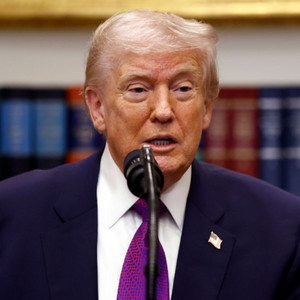
President Trump removes the legal basis for climate change regulations.
This action will eliminate over 13 trillion of regulatory costs and help bring car prices tumbling down dramatically.
It invites enormous damage to people and property all around the world.
It's World Business Report from the BBC World Service.
This is Andrew Peach on the way.
We'll hear what the White House calls the greatest deregulation in US history means for emissions and car prices.
Also today, a water crisis in South Africa and the row between the owners of Ben and Jerry's and the men who founded the company.
First, President Trump has long called climate change a hoax.
Now he's made that official, revoking a long-standing US government finding that greenhouse gas emissions endanger public health.
The White House says it's the biggest deregulation in US history.
It wants to remove federal limits on carbon dioxide output from cars, trucks, even power plants.
Lowering emission standards could in the end make vehicles cheaper.
Critics are vowing to challenge all this in court.
A couple of hours ago, President Trump announced what the Environmental Protection Agency, the EPA, has done.
Under the process just completed by the EPA, we are officially terminating the so-called endangerment, finding a disastrous Obama-era policy that severely damaged the American auto industry and massively drove up prices for American consumers.
Prices went up Incredibly for a worse product.
This action will eliminate over 13 trillion of regulatory costs and help bring car prices tumbling down dramatically.
This was the reaction from the former US Secretary of State, John Kerry, who was instrumental in getting the so-called endangerment finding into law in the first place.
There's a reason that we had an endangerment rule.
And the reason is that The pollution, which is creating the crisis of climate, is dangerous.
It's a killer.
And the fact is that this decision to just do away with it really takes Orwellian governance to a new height.
And it invites enormous damage to people and property all around the world.
And it's very clear that the administration is trading facts and trading science for denial and a willful negligence that is going to cost lives.
For more, I've just been speaking to our North America business correspondent, Michelle Flurry.
The Environmental Protection Agency has taken a big step and essentially it's scrapped its longstanding position on greenhouse gases and the idea that it endangers public health.
It's known as something called the endangerment finding, which dates back to the Obama administration.
And essentially, that idea underpins almost every federal climate regulation in the United States.
So by overturning it, this is essentially removing the underpinnings, the legal foundations for many of the modern day greenhouse gas emissions regulations.
The most obvious one, and the one that is immediately affected, is emission standards for cars and lorries.
Car makers no longer have to measure or meet federal greenhouse gas limits.
OK, so it's no surprise to hear President Trump saying this, even from a White House lectern, because he said this over and over again for years.
In terms of the practical difference it makes.
There are now no federal limits on carbon dioxide output.
But carbon manufacturers can't change their operations immediately.
Well, this is why the impact isn't straightforward.
As you suggest, carmakers plan their vehicle lineups a long time in advance.
And so just because the law has now suddenly changed doesn't mean you're going to see a lot less fuel efficient cars back on the roads.
And that's simply because carmakers are operating on a five, ten year time frame.
The other thing is also the markets they operate on.
If you're a carmaker that's selling in America but also selling the same vehicle in perhaps Europe or other parts of the world.
Those countries, those regions may have stricter standards.
So they may still stick to those standards, even though they aren't required to by law in the United States.
The other thing to remember about the United States is this is at the federal level, but individual states can still come up with their own rules.
And so in some ways, this is something that companies have been very worried about.
But is there any evidence that changing the emission standards would make cars cheaper?
Yeah, I mean, you know, America is in the middle of an affordability crisis.
It's something especially ahead of the midterm elections we will be hearing a lot more about, especially because, if you look at Donald Trump's approval ratings, the economy is one of the areas where he scores low on.
So it's notable that today he said this action would save American consumers trillions of dollars.
You know, there obviously isn't evidence for this, but he said it would lower the average cost of a new car by close to 3000.
Even if that turns out to be true, the flip side of that, according to people I've been sort of hearing from, is that well, if we're talking about less fuel efficient cars, they may end up having to buy more petrol over the long term.
So that might wash out some of the savings benefits.
But that affordability point is sort of key to some of the deregulatory instincts that you've seen, certainly from this administration, with this being described as perhaps the biggest move they've made to date.
Our North America business correspondent, Michelle Fleury, with me from New York.
Live now to Kerry Leahy, economist at Columbia University.
Kerry, what's the American auto industry going to make of this?
Well, it just adds to the confusion, as many of our listeners know.
Detroit has basically written off billions of dollars of investments and plants in e-cars because A people don't want them as much as they thought they did, partly because of worries about long-distance driving.
And now you're getting impetus from the Trump administration to even pull back further and perhaps save some money because they produce less fuel-efficient and cheaper vehicles.
So they're really caught up.
And then the next question is, What will a state like California do?
Will they try to override the federal rules?
And if I want to export my business, it may be tougher overseas.
And then finally, is Trump going to be president forever?
It may all switch again in 10 years.
And, as Michelle correctly put out and mentioned, these are firms that think in 5-, 10- and 15-year timeframes.
And they're probably kicking themselves because they got too far ahead of the EV curve, but they don't want to get too far behind it either.
So the possibility of legal challenges, different rules in different states, different regulatory environments, future change in presidents in the White House all would mitigate against them not doing very much really and this announcement today not having a huge impact beyond making some headlines.
That's right.
But I think the president is correct in that it will allow Detroit to offer some cheaper vehicles, so the prices of cars won't fall dramatically, but they may be less expensive.
And one of the reasons why EVs did so poorly was that there was sticker shock and it was very hard to buy an EV that wasn't much costlier, at least in the short run, to a normal gas guzzler.
While we're on cars, some disappointing news for Mercedes today.
Well, Mercedes has an additional problem we haven't mentioned yet in our chat.
They cost themselves well over a billion dollars in terms of the tariffs that were slapped on by the US.
So you have a firm that always has difficult labor negotiations, always worried about labor costs.
And they haven't yet written off any plans like they have in the U.S. regarding EVs.
And then they have tariffs on top of all that.
And they finally have a fairly slow moving European economy.
So they have a lot of problems, and some of their problems are more challenging than those here in the States.
Kerry, stay with me.
Let's go to South Africa next, where President Simo Ramaphosa says he'll step in to tackle the worsening water crisis.
Some communities have gone more than 20 days now without running water.
People in Johannesburg particularly have been protesting.
In his State of the Nation address, the president said, if necessary, the government would prosecute local water managers who haven't done their jobs properly.
There is no silver bullet to address this challenge, which has its roots in systemic failures and many years of neglecting infrastructure.
To ensure water security is in the long term.
We are building new dams, upgrading existing infrastructure.
We have committed 156 billion rand in public funds funding for water and sanitation infrastructure over the next three years.
And we are in the final stages of establishing a national water resource infrastructure agency.
The Water Services Amendment Act or bill will enable us to hold water service providers accountable for their performance and, if they don't perform, to be able to withdraw their licenses if they do not deliver.
Live to Mohamed Kassimji, geopolitical consultant at Global Compass, former senior South African diplomat.
Mohamed, thanks for being with us.
You're in the UK, but give us a sense of what's happening with water, particularly in Johannesburg, say
Yes, I think it's basically an unacceptable situation, but it speaks to the larger problem of local government and service delivery.
I think the Auditor General sort of pointed out the inefficiencies in local government, the corruption, the appointment of personnel that are not qualified in order to manage some of the systems.
So I think infrastructure failure in South Africa, such as water and previously electricity, which has now to a large extent been resolved, It speaks to the symptoms of not having systems in place, not having the correct management in place.
There are sufficient resources in the country, but it's the neglect of the pipes, neglect of how systems are applied, who's been appointed, that has resulted in these type of failures.
And the president has rightfully pointed that out in his State of the Nation address.
I think the concern for people in South Africa is how long they have to wait before problems are mitigated.
People have to wait in queues.
There's a lot of unnecessary suffering.
And South Africa has come through a long period of state capture as well.
And I think that has also played its role in terms of failure at local government and in terms of general service delivery.
Yes, in many respects, things are being turned around.
They are green shoes.
But unless local government is resolved, that's where basic delivery of services takes place.
South Africans are always going to feel that the country is not moving and serving them according to how they would like to be served.
Right.
And it may not be the case in South Africa, but for those of us elsewhere in the world, this feels like it's come a bit out of nowhere.
Are you really saying that the people in South Africa are having to queue up for water because no one's maintained the pipes?
Yeah, I think it's been going on.
It may be sporadic in different areas of South Africa.
Again, South Africa has an issue of what I call living in bubbles.
So you'll have areas that are wealthy that will be spared some of the suffering or some of the infrastructure deficits that are prevalent in many other parts of the country, which are very poor and high levels of inequality.
So it's not surprising that that what's been happening in local government, that we are going to see some of these types of deficits taking place, especially shortages of water.
But again, it's not because the country does not have the resources.
The country has the financial resources.
It has the people who can rectify the situation, but there seems to be a general neglect at a certain level and accountability at a certain level.
So it's good to see the president stepping in to say that we will now take action.
For me, the concern is South Africa needs to be much more proactive as opposed to reactive.
The water shortages in Johannesburg and people standing in the queues have been going on for weeks and for months.
And we now find that we are in this situation where all of a sudden it becomes an emergency.
So I think it's something that South Africa needs to find a way to deal with, so that things don't become an emergency situation and lead to unnecessary consequences, especially for the people of South Africa.
And President Ramaphosa was making a broader speech, the State of the Nation address.
Let's hear a bit more of it, talking about the South African economy.
While we have experienced four consecutive quarters of GDP growth, we know that it has to grow much higher and much faster to meet our social and economic challenges.
We have achieved two consecutive primary budget surpluses.
Our credit rating has improved.
Interest rates are coming down.
And inflation is at its lowest level in 20 years.
So the president's kind of marking his own homework there and giving himself a good economic bill of health.
Do you agree?
I do agree.
South Africa finds itself in a very positive space, both internationally in terms of hosting the G20 and was very successful as well as hosting it.
At the time where you can see green shoots taking place, where rating agencies obviously have upgraded South Africa, the stock market has risen to record levels.
Commodity prices are high, which benefits South Africa's exchange rate.
So I think South Africa is definitely showing signs of economic the engine is starting to come on board again.
And it's not surprising, because there's been a great willingness now to work with the private sector.
And South Africa is a highly sophisticated private sector.
I believe it's on the state side that there needs to be an improvement.
And I think, now that they are working together, you have what is known as Operation Bulandlela, which is working with the private sector to help with the logistics, help with the railways, help with the harbors.
And I think this will automatically lead to much more economic growth in the country.
But there's a long way still to go.
There's enormous challenges, a lot of socioeconomic challenges, high levels of poverty, high levels of inequality.
So I think you know, in terms of what's happening in South Africa now, it's definitely a very positive spin.
There's a lot of interest in investment from abroad, investment in renewable energy.
South Africa has critical minerals, rare earth minerals.
So definitely a positive space in which to move forward.
As well as the South African Revenue Service working quite effectively.
Thank you very much.
Mohamed Kassimji is from Global News.
If you can't keep up with all the Epstein news, you're not alone.
This week, the files have nearly but not quite brought down a British prime minister.
There have been allegations that Epstein was a spy.
And surprising countries have been drawn into the scandal, from Norway to Poland, to Israel, to France.
It's a lot.
So we're recapping all the main developments and making sense of them.
Listen to The Global Story on BBC.com or wherever you get your podcasts.
Available now on the documentary from the BBC World Service.
This summer, the world's tallest church, the remarkable Sagrada Familia, will mark 100 years since the death of its architect.
I'm Lluís Amiguet and in The Gaudí Code I'll be looking at why Anthony Gaudí's work appeals to so many people.
Listen now by searching for the documentary wherever you get your BBC podcasts.
Compass and this is World Business Report with Andrew Peach.
Now the Magnum ice cream company's first set of results since it became part of Unilever pretty disappointing, with operating profits falling from more than 750 million to less than 600 million.
As if that wasn't enough, there's this row between Magnum and Ben & Jerry's that won't go away.
More of that in a sec.
First, Kerry Leahy from Columbia University.
What's the story of Magnum and Unilever?
Well, the difficulty is that Unilever, for a wide variety of reasons, spun off Magnum, which basically has two kinds of ice cream.
One of them is Ben & Jerry's.
And because they reported such disappointing results for example, operating profits were down 20 compared to a year ago people are now worried that they're getting caught up in all of the fight with Magnum weight losing drugs.
And so you have all your activity in one area of a sugary dessert which may be increasingly unpopular with the buying public.
And so that one particular slice of the business could get hammered day after day or quarter after quarter.
And so, by splitting themselves off from the original conglomerate that was Unilever, may not have been the smartest thing to do, because they now have a sole product, which is now getting hammered by people wanting less ice cream than they did a year ago or five years ago.
So there's a challenge in the ice cream market and there's also bitterness between the former owners of Ben & Jerry's, Ben & Jerry, and the new owners, Unilever.
Today, Ben Cohen wrote on LinkedIn accusing them of abandoning the values-driven business model that Ben & Jerry's is known for.
Well, I've been talking to Anuradha Mittal, who still describes herself as the chair of the independent board of Ben & Jerry's.
Ben & Jerry's is a business which has demonstrated with its nearly 50 year history that the recipe or the magic sauce behind its success is its three part mission, which is its social mission, its product mission and the economic mission.
And when you take away any one of those, it does not work for Ben & Jerry's.
Right.
I mean, Ben & Jerry's is successful and has been successful for a long time since it was bought by Magnum.
Unilever executives have described it as the jewel in the crown.
It is this iconic brand that Unilever wanted desperately, and they agreed to this merger agreement, creating this very unique governance structure where an independent board is responsible for its social mission, for its brand integrity.
So Ben & Jerry's is an iconic business.
It's not just any brand.
It's not just any ice cream.
It is Ben & Jerry's because the magic is in its three-part mission.
And can you do that?
I mean, can you sell a brand to a company and then tell that company they can't do what they want with it?
Well, this is not about selling the brand and telling the company what to do with it.
This is about a mutually agreed-upon governance system structure that was created through the merger agreement.
So it is not as simple as you described it, that you've sold the company and now you're telling the others what to do with it.
This is about maintaining and following through on a commitment that was maintained through a merger agreement, which is not wishful thinking.
It is legal, it is there, and it can't be wished away.
I understand that's been the sort of position up until now.
But Ben Cohen, Ben of Ben & Jerry's now calling upon people to send a clear message to Magnum that it's time for them to sell the company, to sell Ben & Jerry's.
I wonder whether you agree with that.
Our position is that there is a governance structure which gives their responsibility for the social mission and brand integrity to an independent board.
We are in litigation, we are in conflict.
We have this dispute with magnum and the duna lever because they have been in breach of that merger agreement.
Just set out for me what the social part of the ben and jerry's brand is.
What does it mean?
You know, that's an excellent question.
You look at a company whose motto is love, peace and ice cream.
You look at the history of Ben & Jerry's, this company which took clear positions and called for peace during the Cold War.
This company which worked with others to run full-page ads during the Gulf War.
So this is not just a company that woke up and talks about peace.
This is a company which has stood for social justice, for refugee rights, for immigrant rights.
This is a company which does not talk about social justice when it's convenient.
That is Ben & Jerry's social mission.
That's certainly been integral to the brand since it was founded.
How do you know that when people buy Ben & Jerry's products that they're thinking about any of that?
Aren't they just thinking, I like the ice cream?
Well, you know, social mission of Ben & Jerry's is not a marketing strategy.
This company has always operated on its three-part mission without thinking about as a PR or a marketing campaign.
But we do know from any indicator that we look at, whether it is ranking of companies as how they're seen as being authentic, Ben & Jerry's has always been among the top three.
So our fans love the company.
They cherish our product, which is the super premium, amazing product.
But they also know our social mission is not a marketing campaign.
That's Anuradha Mital who still calls herself the chair of the independent board of Ben & Jerry's.
Just in the last couple of minutes, we've had this statement from Magnum.
They say, we believe wholeheartedly in the Ben & Jerry's model and remain fully committed to Ben & Jerry's three-part mission, product, economic and social.
Recent steps to update Ben & Jerry's corporate governance and reaffirm the responsibilities of the board and eligibility of its members are wholly aligned with the merger agreement and standard corporate governance.
We look forward to the development of a refreshed board with a majority of independent directors, led by an independent director.
Continue its important role of guiding the social mission and brand integrity alongside the chief executive.
The current litigation is regrettable and we prefer to engage in collaborative discussions, but we remain fully confident in our case.
More now with Kerry Leahy from Columbia University.
Let's talk about some data in the US.
First of all, talking about homes.
What have you got?
Well, we received a report that's closely followed on existing home sales.
These are homes that have already been built.
They have a little wear and tear on them.
It's not a new home sale.
It's something that's just been built.
And that fell very sharply in January.
Now one can glibly say that the 8 decline, which was twice what people were expecting, is more than just weather-related.
But clearly in a month like January, it's an economic and a weather report.
But perhaps more importantly, after the post-COVID surge, existing home sales have rarely moved above 4 million units.
It's a little below that right now.
And you're far, far 20%, 25% away from the pre-COVID peak.
So this is an industry that's under tremendous pressure and is only about 80 of the size it was in 2019.
And what other U.S. data are we looking out for in the next 24 hours?
Well, in a fliparoo, we got jobs on Wednesday when we normally get CPI.
We're getting CPI on Friday when we normally get jobs.
And the CPI report is expected to be pretty good.
But generally you've got a very mixed message, in that the overall inflation rate is fairly steady, but it's higher than what the Fed would like, meaning the CPI is closer to 3 than it is 2.
And one of the areas of great affordability and problems in the Marketplace is housing, and housing is one of the sources of upward pressure on inflation compared to many other sectors of the economy.
Kerry, thank you so much for being with me on the programme.
Kerry Leahy from Columbia University.
Now Irish artists could be about to get access to a weekly payment worth about 380 as part of a new government scheme aimed at supporting creative work.
Let's hear now from Ireland's Culture Minister, Patrick O'Donovan.
Everybody will be eligible to apply once they can demonstrate that they are affiliated to a recognised artistic group and they're domiciled in Ireland, and they have to be able to show that they have a previous experience in their genre.
It is going to cost a lot of money.
It's going to cost 35 million euro per annum which, in the context of our budget, based on our population, you know, with five and a half million people, is a considerable amount of money.
It's.
We know from the research that we've done that every euro that goes in when you're a factory comes out in terms of benefit to Ireland and in terms of local economy, in terms of input into the local community and things like that.
Applications for the first round open in May.
Eleanor O'Donovan is a Dublin-based visual artist who took part in a three-year pilot.
She's been talking to my colleague, Leanna Byrne.
I've found it amazing, to be honest.
It's been really transformative for my life, for my work as an artist and just for my well-being in general.
And how exactly did it help you?
Is it just knowing that you're going to have this income?
Because, as an artist, you're not sure where the money's always going to come?
Yeah, exactly.
So as part of the pilot scheme, we were paid €325 a week for three years.
So, as an artist who normally faces huge amounts of precarity in my work, that has just alleviated all of that for the last three years.
So just in terms of well-being, it's meant that I've sort of had more stability and security in terms of paying my rent, paying my bills, but also being able to plan for the future.
And then in terms of my work, it's been transformative in that I have had the time to be an artist full time for three years, which means that I've been able to devote way more time to my practice than I would have normally.
And previously, did you have to pick up other jobs?
The basic income pilot scheme has basically replaced the income that I got from a part time job.
So I would have worked about two days a week and then the rest of the time I was working in my studio.
The basic income replaces that previous part time work income.
And so I've been able to be an artist full time.
Where I would like to see improvements to the success scheme is in the scale and the scope.
So for me it's a bit disappointing that the success scheme only mirrors the size of the pilot, given we've seen what a huge success the pilot was.
That's Eleanor O'Donovan, who's a visual artist based in Dublin.
Our main story.
President Trump has repealed the basis for much of US climate legislation the scientific finding that carbon emissions endanger human health.
If you want to read more analysis of that development, you can read a piece by my colleague, Matt McGrath, the BBC's environment correspondent, by logging on to bbccom slash news and going to the business pages there.
Much more on that and today's other global business stories.
That's it, though, from World Business Report.
From me, Andrew Peach, and the team, thanks for being with us on the BBC World Service.