This BBC podcast is supported by ads outside the UK.
If journalism is the first draft of history, what happens if that draft is flawed?
In 1999, four Russian apartment buildings were bombed.
Hundreds killed, but even now we still don't know for sure who did it.
It's a mystery that sparked chilling theories.
I'm Helena Merriman and in a new BBC series I'm talking to the reporters who first covered this story.
What did they miss the first time?
The History Bureau, Putin and the apartment bombs.
Listen on BBC.com or wherever you get your podcasts.
Is the US still a reliable trading partner?
The middle powers must act together because if we're not at the table, we're on the menu.
Whether on our economy, whether on technology, Europe needs its own levers of power.
It's World Business Report from the BBC World Service.
I'm Rahul Tandon.
Global economic tensions over Greenland may be fading away, but is it time for some of the US's trading partners to explore new markets and demand swords?
For the most talked about item at Davos, President Macron's blue sunglasses.
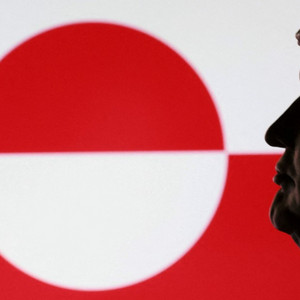
We're going to start the programme by talking about Greenland once again, because Donald Trump has said there's a framework for a future deal.
And as we speak, EU leaders have been meeting in Brussels to discuss the crisis.
But Greenland's Prime Minister, Jan Frederik Nielsen, seems very unsure as to the details of what are in this deal.
In terms of the deal there's been talking about, I don't know what's concrete in that deal either.
But I know that we have now a high-level working group working on a solution for both parties.
There has been a lot of talk, hasn't there, about the US gaining sovereignty over pockets of Greenland, and the country's prime minister was asked about that at the press conference by the Financial Times.
There's been some discussion about the US potentially trying to seek sovereignty over small pockets of Greenland, for example at Petufik.
Is that something that you guys would consider, or is this a case of not one inch of Greenlandic land?
As I said, we are ready to discuss a lot of things and we are ready to negotiate a better partnership and so on.
But sovereignty is a red line.
Our integrity and our borders, and international law is definitely a red line that we don't want anyone to cross.
And I don't think that is strange at all.
It's been quite 24 hours, hasn't it?
Well, for more on it.
I've been speaking to Nadja Nathal-Nielsen, who is Greenland's Minister of Business, Mineral Resources Energy, Justice and Gender Equality.
This is a good thing for us.
We have no opposition to this.
We also understand from media that now the work will commence in the high level working group that was already agreed upon last week between our four ministers and Marco Rubio and the vice president.
You have been at the centre of global attention for the past few weeks.
Do you think this is now definitely over, or are you worried that we may be back here again in a few weeks or months?
Well, I do absolutely feel that the temperature has been lowered in the current conflict and I hope we will return to more stable times and replace conflict with dialogue.
I'm really happy about that.
Being a Greenlander, you're always sort of used to being in the middle of geopolitical tensions, of course.
So I expect that in the future, at some point, there will be conflicts arising once again and we have to meet them.
So for us, the work will continue, positioning ourselves in the world and making sure that our visions are heard as well.
I was chatting to some young Greenlanders on the BBC World Service earlier this week and they used a word insulting that another country thinks they can just come in and buy another country.
Is that how many people think?
Is that how you think about what has unfolded in the last few weeks?
Well, absolutely.
We have said this many times over.
That is not only insulting, it's offending.
It's Also quite weird and bewildering to be talked about as a commodity, a piece of ice.
So that causes a lot of anger really in the people and also just confusion, because it came from an ally.
So I am really pleased that now we can return to a more, I think, respectful dialogue.
Can we talk about business?
One of the things that business needs is certainty.
And Greenland needs long term investment.
Do you worry that, because of what's happened, that that is going to put some people off from investing in Greenland?
I definitely had that worry a couple of days ago.
I think right now that has really changed for me, maybe yesterday and today.
Also, we don't see any signs really right now that investors have turned against us or the interests have failed.
So I think it was averted at the right time, but definitely, had this conflict going on, it would have affected us all negatively.
But I think for now, the crisis is over in that respect.
And hopefully, hope will be restored and we can work as we used to last week.
People talk so much about your minerals, particularly those critical minerals, but you need huge investment, don't you?
If you want to get them out of the ground, it's not easy.
Where do you see that money coming from?
While we've been working with the European Union, especially for the last couple of years, they have really stepped up and invested a lot of money and are about to do so also in the future.
We have hope for a lot of more American investments and maybe a bit of that is opening up as well.
But primarily we see engagement from Canada, the UK, the European Union and hopefully we've seen it from Australia as well, and hopefully also from the US.
So we have been working with like-minded partners to try to develop our mining industry.
And as you mentioned, it's very long term.
It's not a quick fix.
Donald Trump had talked about buying Greenland.
So there's a lot of money there.
Maybe he could use some of it to now invest in this sector.
Well, I always want to have respectful investments.
And I do hope this will carry on.
Of course, we're not interested in being sold.
But yes, we welcome outside investments.
And are working quite focused and strategic on doing that attracting outside investors to Greenland, not only to our mineral sector but also our hydro power potentials, our energy potential.
People say all publicity is good publicity.
I know it's been an extremely difficult couple of weeks for you and many other Greenlanders.
But is there a silver lining to this?
Could we see a boost in tourism?
People now much more aware of Greenland than they were before.
We said that last year and i think it was there was a positive gain this time around.
It's been more serious.
It's been more devastating for the people.
It caused a lot of worry and concern.
So i think this time around i'm not as thrilled about the publicity as i maybe could see some ideas about it last time around.
So i'm more mixed today than i was a year ago.
And when you talk to businesses in greenland, what sort of conversations have you had over the last few weeks with them?
Well, not a lot really.
I think people have just been waiting the situation out.
And I think, now that everything seems to be cooling down a bit, I imagine things will go back to normal.
But a couple of weeks ago.
Of course, my job was primarily to talk to possible investors, to brand our country, to engage in dialogue with other countries about bilateral and multilateral agreements.
So I will resume that work.
And hopefully now everybody will remember where we are and who we are.
So it stopped for a while.
Yeah, we have not that many.
So I've been focused my attentions elsewhere.
But of course, this comes right after New Year.
So it's not like we were all the way back to normal as well.
Greenland's business minister there.
Let's bring in a familiar voice on the programme for thoughts on what we've just heard and speak to Annika Green, Republican strategist, of course, and founding partner of Reach Global Strategies.
Is this story over now because it's caused huge economic turbulence in the global economy?
I think it's over for now.
I think that Trump is signaling he's ready to move on by doing what he often does, which is declaring victory and saying he got something out of it for America and keeping with his branding of, you know, make America great again, America first policy.
But I think a lot of people are scratching their heads.
Like, why was it handled this way?
Why did it have to go this way?
Yeah, stay with us because I want to bring in Jennifer Snyder as well.
Financial advisor at Brighton Securities.
And Jennifer, it's been quite a turbulent week on the markets.
Things settling down now?
Yes, it wasn't as intense as the April tariff independence and all that happened there.
So this deliberation, excuse me, but we regained everything that we lost from a couple of days ago.
I think it's kind of part of that classic Trump that he it's that art of the deal.
He throws everything out there that can shake everything up, retracts and then puts out what he wants.
And that may tend to lean in his favor because it was so it was so gregarious to begin with.
It's been one of those weeks where so much has happened that sometimes, on this programme, we think let's pause, take a deep breath and analyse what it now means.
And Anik have a listen to this, because we want to talk about relations between those two big economic heavyweights, the US and the EU.
There is an emergency EU summit taking place tonight.
Let's hear from some leaders there.
We do not accept to be blackmailed by any country and even less so by an ally.
The transatlantic relations have definitely taken a big blow over the last week.
We started the week with threats of military invasion and economic tariffs.
Now the situation is more acceptable, but we remain vigilant now.
Right.
So we heard from the Swedish prime minister there, Ulf Christensen, Kaja Kallis, EU's high representative for foreign affairs and, of course, President Emmanuel Macron.
And there's a real sense now here, I think, in Europe Annika, that Europe doesn't trust the US anymore.
And that could have huge economic implications.
It definitely could.
We've seen that European investors have been pulling out of the US stock market, but that hasn't had a huge effect yet.
I'm sure your other guests can speak to that better than I can.
But in terms of trusting the U.S., it's always interesting to think about what that means, right?
Because I think often, depending on who's in power, Like the trust, relationship ebbs and flows and often it's according to people's own impression of US politics.
Trump has been very flamboyant.
Obviously he's much more of a bully than any president we've had this century at least, maybe even 100 years.
But I don't know if our relationship has been affected in the long term, because I think ultimately people look to their own economic bottom line welfare.
That is a good point.
And Jennifer Anika as always on this programme, she is a true professional has set you up for the next question.
And even if Europeans pull out of the US market a little bit, there's plenty of other people who want to put money into it.
Yes, I agree.
The stock market has actually done quite well the past few years.
So, you know, one of the things, especially where I sit, it's going to ebb and flow, go up and down.
We don't know what's going to happen.
We just trust in the companies, corporations that want to turn the profits.
That's what drives them.
But we have seen that the emerging and international markets crushed last year and they are leading the indexes right now, as we speak.
And whatever is happening with Trump, it's trying to understand, like, what is this bigger picture?
What's trying to work inside that mind?
That's very difficult to even understand adversaries or allies.
And it seems there's this exposing of the world's structural dependence on the U.S.
And it's prompting countries to want to take measures to protect their sovereignty, economies and security.
That's not necessarily a bad thing.
No.
But Anika, the problem is – and I spoke to a European businessman earlier this week and he said it's easy for the leaders to say go somewhere else.
The US is the world's biggest market.
It's very, very difficult to replace and Americans spend money like no one else.
That's true.
The other thing is and you're seeing this coming out of the White House there is an attitude of well, where else are you going to go?
Right.
And that's that's a form of that's an attitude.
It's not very nice.
Right.
But that is part of Trump's brand of his, you know, his brand.
Art of the deal.
I'm the tough businessman.
And it is a little bit reputationally the way that they can do business in New York, right?
We're going to slit each other's throats during the day and then go out for a drink afterwards.
So I understand, you know, for Europeans, that's very off-putting.
And it certainly hasn't been a good look with Greenland.
But I think he wants to make bold moves even if you know ultimately that might harm his long-term interests.
I don't know that he spends a lot of time thinking about long-term interests beyond the problems he identifies in the near term, which his supporters appreciate.
They appreciate that a president is saying hey, it's a big problem geopolitically for Russia to have, you know, roughly half of the land and maritime exclusive economic zones north of the Arctic Circle in Greenland.
It's a problem for China being interested there, given its position, given the resources there.
But he could have been a lot nicer.
He could have been a lot nicer.
Shall we talk about somebody else who at the moment is in his firing line?
And I can listen to what Mark Carney, the Canadian premier, said at Davos.
The middle powers must act together because if we're not at the table, we're on the menu.
But I'd also say that great powers, great powers can afford for now to go it alone.
They have the market size, the military capacity and the leverage to dictate terms.
Middle powers do not.
And he's right there, isn't it?
The EU is one of the great trading blocks.
They can stand up to Donald Trump.
Those countries, like Canada, it's a lot more difficult, Annika.
It is difficult, although he has already made moves to back up what he's saying there.
On January 16th, they announced a new strategic partnership with China.
And in the lead of the press release, They said it is the world's second largest economy.
China presents enormous opportunities for Canada.
So it's a little bit of enemy of my enemies.
My friend, which you know, Mark Carney, is probably arguably in power because of Donald Trump.
Because Donald Trump talked about making Canada the 51st state and angered Canadians who felt very patriotic.
And we didn't ask for that.
It trended away from the conservatives who were leading Canada in the pre-election polls.
And then Mark Carney was elected.
Jennifer, do you think the markets might get a little bit nervous if we see lots of countries suddenly moving away from the US a little bit and doing deals with China and India and other countries?
That is the big question is what is the why behind all of this?
There's something that was working with the world order and how things were going.
And so we're shaking all of these things up and hearing these things and heard for Canada, with 75 of Canadian goods exports go directly to the US And then roughly 50 of Canada's imports come from US.
So there is this very codependent relationship that needs to happen.
And it's, well, what's the why behind it?
But to answer your question, will we look for other markets?
Well yes, and that's why US dollar will weaken and emerging and international markets will see a surge in.
Something to keep in mind.
Yep, something indeed.
The problem is, Annika... is if you try and threaten Donald Trump, he doesn't like you.
Have a listen to this.
Canada gets a lot of freebies from us, by the way.
They should be grateful also, but they're not.
I watched your prime minister yesterday.
He wasn't so grateful.
But they should be grateful to us.
Canada lives because of the United States.
Remember that, Mark, the next time you make your statements.
You talked about the art of the deal.
And Donald Trump knows how to use his power, doesn't he?
His economic power.
He does.
He's also benefiting.
And this is a discussion that we're going to see a lot more in the United States.
He's benefiting from precedents that have come from former presidential administrations.
The ruling through executive order really exploded under President Obama.
And then they didn't think about well, if we do this, what's going to happen when the next guy comes along?
Exactly what happened.
President Trump rolled a lot of them back.
And Congress has been allowing this to happen.
So institutionally, we need to look at this.
And there are repercussions for the rest of the world because we are the world's largest economy.
But this isn't something you want to talk about.
Europe's not OK with this.
Americans aren't OK with this either, including conservatives.
And so I think there's more to reform here.
And these were reforms that needed to happen regardless of who's in the White House.
Annika, it's always a pleasure having you on the programme.
If journalism is the first draft of history, what happens if that draft is flawed?
In 1999, four Russian apartment buildings were bombed, hundreds killed.
But even now, we still don't know for sure who did it.
It's a mystery that sparked chilling theories.
I'm Helena Merriman and in a new BBC series I'm talking to the reporters who first covered this story.
What did they miss the first time?
The History Bureau, Putin and the apartment bombs.
Listen on BBC.com or wherever you get your podcasts.
You're with World Business Report from the BBC World Service.
Now, there's lots of headlines in the US like this one.
President Trump has filed a lawsuit against JPMorgan Chase and Jamie Dimon personally over allegations of debanking of Trump-related bank accounts during the period of time that the president was out of office.
There we go, Jennifer.
That's quite a story, isn't it?
Donald Trump suing JPMorgan and Jamie Dimon for $5 billion?
Yeah, it's political, right?
It's claiming the bank cut him off for the political reasons.
And then we have the 10% credit card cap that is now part of the conversation.
I feel those two things are unrelated and we can't keep up with how many lawsuits Donald Trump is in.
Tell us a little bit more about the 10% credit card cap because that's important, isn't it?
Yeah, so what's the argument for Trump?
Why?
In turn, it can boost his image with voters, right?
So what's the benefit for him?
Those are some of the things I think of.
But it would reduce cost for borrowers and ease financial stress.
Great. caps the economic fairness.
Big banks profit from these high rates, and that should be limited.
But there is the downside, which you can totally see where Jamie Dimon is coming from.
That that could backfire.
It can cut access for people with bad credit.
The banks can lose money.
That's where they make their profit, slash the rewards, and it could be an economic disaster.
Yeah, it's a really interesting concept, the idea of lowering the interest rates that we all pay on those credit cards down to 10, often up around 29.
Also interesting to see if other parts of the world follow that as well.
Shall we talk a bit of entertainment now?
Big day, nominations for the Oscars this year were announced at lunchtime.
History was made because one film got more nominations than any other film ever.
For performance by an actress in a supporting role.
For achievement in makeup and hairstyling.
Achievement in music original score.
You've got the picture, haven't you?
The film Sinister got a lot of nominations.
16 altogether, not far behind.
One battle after another has 13 nominations.
What does this mean in terms of money at the box office?
Let's turn to KJ Matthews, entertainment journalist in LA.
She joins us now.
Busy day for you, KJ.
It is like our Super Bowl today.
I love it.
Well, if you get a nomination like Sinners and you know, our producer Hannah, is behind the glass here, hasn't seen it yet.
And suddenly she's like, I want to go and see it now.
A lot of people are like that's a good for the films bit more money in the in the bank.
Oh, absolutely.
It is.
It's just, you know, it's incredible for them.
It's a jackpot for most studios and streamers if they can get one of their films nominated.
Remember, studios and streamers spend millions anywhere from three million up to about 30 million per film just to win an Oscar.
So there's a lot of money that goes into the campaign, starting today up until when the Oscars are announced, the second week of March.
So, yes, this is very big business.
And it's not just that you know, it gives the studios and the streamers prestige, but it also gives them a box office bump.
You know, if you're a best picture, that can add millions to a film's box office extended runs and also fame.
After it's out of the theater.
The post theatrical revenue increased DVD streaming licensing sales.
And remember, if it's a small film, you've got people from all around the world who may have never heard of it, possibly might not even go to the theater if it is in their local neighborhood theater to see it.
But now they will be interested in seeing it.
And that means more money for the studios and streamers.
So, yes, it's big business.
And in the end, it will pay off if they can get that Oscar.
I was really interested when you said campaigns and they're spending so much money on their campaigns.
What are they spending that money on?
Are they whining and dining those who make the decisions?
Oh, yes.
You know what?
What we call them here in Hollywood is F.Y.C. for your consideration.
They are out there doing a lot of screenings, even though most of the people in Hollywood have seen.
Surely they've seen them.
But what they're doing is they will bring in actors that are not even associated with the film and have them do a QA with the entire cast, including the director, including the producer.
And you have access to speak with them.
After this QA all sorts of parties and glitzy events that are happening between now and the night of the Oscars.
So, yes, it's big business.
A lot of money is spent for that, right?
When you're having parties and events and you're hiring other actors to interview other actors.
So, yes, lots of money goes into it.
And not only that, they're also advertising in the trades here.
Deadline, Variety, The Hollywood Reporter, The Wrap.
They're doing all sorts of events with them, advertising in their magazines, online.
So this costs a lot of money if you want to stay in the front of everyone's mind when it comes to casting a vote in the particular category.
So it means a lot.
It does indeed.
Stay with us.
Jennifer Snyder with us as well.
Do you like to go and see the film that wins the Oscar, Jennifer?
I just want to go to the Oscars actually, and all of this right here, just to be in the back row there somewhere.
I heard Sinner's got the 16 nominations.
I don't know anything about it.
I'm not following movies as much as I should and involved in a few other things.
But yes, I probably will catch the film with 16 nominations.
Yeah, I always go to see the film that wins the Oscar, even if I've never heard of it or don't really like the look of it.
What's going to win the Oscar for best film this time?
Is it going to be 16?
Is it going to be one battle after another or something else?
Well, remember, Best Picture category has 10 slots.
So 10 films have been nominated.
Bugonia F1.
Frankenstein Hamnet Marty, Supreme.
One Battle After Another, The Secret Agent, Sentimental Value, Sinners and Train Dreams.
I'm thinking it's going to be between, of course, Sinners.
One battle after another.
But if I had to throw one more film into the mix, just one more film, I said it could possibly be Frankenstein.
Frankenstein got nine nominations, nine nominations.
Unfortunately, their director was not nominated for best director.
But it's a long shot, but it could happen.
Remember, we've seen long shots and upsets before. at the oscar so that would not be the first time but i still think it's going to be between one battle after another or sinners well the only one i've seen is hamlet which i liked a lot but it was it was fantastic and remember best actor category irish actress jesse buckley she's great nominee yes she's nominated remember she just won a golden globe uh for best actress uh an emotion picture for drama just two weeks two weeks ago so this is her her season i think Of course, and when we're talking about actors and actresses and films as well, you know, if you win one of those categories, your price, I'm sure, goes up for your next film.
As well.
Both of you now Jennifer still with us and KJ, have a listen to this, because we're going to go back to the World Economic Forum at Davos and talk about something that's got a lot of people making comments, including Donald Trump.
Emmanuel Macron, I watched him yesterday with those beautiful sunglasses.
Yeah, they were pretty stylish, weren't they?
Those blue aviators causing lots of discussion.
And that's good news for the company that makes them.
Here's the BBC's Carla Conti.
The blue aviators that created such a buzz at Davos were made by Maison Harry Julien, a century-old eyewear workshop in eastern France.
The brand is now owned by the Italian group iVision Tech, and the company produces only around a thousand of the model each year.
After President Macron was seen in the glasses.
The company says its website crashed and opticians began calling within hours as the men spiked for what had suddenly become, in the middle of a geopolitical summit, the most talked about accessory in the room.
It certainly was.
And, of course, it made me think of Tom Cruise and his aviators, because that gave them a huge boost, didn't it, KJ?
It sure did.
You know, anytime you see someone that's well-beloved, especially even a political figure like Macron, wearing something that's stylish, people are like oh, why is he wearing sunglasses?
And why is he wearing sunglasses indoors?
And then you realize it's a medical reason, but he's staying stylish and people love that.
So I'm not surprised the website is crashing.
People want to be like the rich and famous, even the political figures.
So, no, I'm not surprised at all.
Jennifer, look at this.
IVision Tech, which owns the French company Henri Julien that made the glasses, saw its shares rise 28 today.
That's not bad from Davos, is it?
He's just missing out because he didn't get a cut of that.
I mean, I love when something like this happens, because it was completely unintentional and makes him look that much cooler.
And especially in the backdrop of all these very serious political conversations and things that are going on.
This gentleman is standing out with the sunglasses.
And apparently there was like an eye condition.
It wasn't, again, intentional.
That's the best part of all of it.
Yeah well, what great news for that company.
That eye condition was not such good news for President Macron.
20 seconds for you, KJ.
Matthews, $775 for those sunglasses.
That's not a lot of money in L.A., is it?
Oh, yes, it's still a lot.
In 2026, 775 for sunglasses is still considered a lot, especially in this economy, I'm afraid to tell you.
There we go.
KJ, always a pleasure.
Jennifer, thanks for joining us as well.
That's it for World Business Report.
If journalism is the first draft of history, what happens if that draft is flawed?
In 1999, four Russian apartment buildings were bombed, hundreds killed.
But even now, we still don't know for sure who did it.
It's a mystery that sparked chilling theories.
I'm Helena Merriman and in a new BBC series I'm talking to the reporters who first covered this story.
What did they miss the first time?
The History Bureau, Putin and the apartment bombs.
Listen on bbc.com or wherever you get your podcasts.