Discussion keeps the world turning.
This is Roundtable.
You're listening to Roundtable with myself, He Young.
I'm joined by Steve Hatherly and Ding Hong in the studio.
Coming up, we all know your office desk is a low -key reflection of your workplace persona.
The trend of work desk ornaments, some call them emotional stabilizers, has quickly grown into a market here in China, driven by young consumers' need for stress relief and emotional support at work.
So what's your workstation saying about you?
And ski season's wrapping up, but many skiers are walking away with a surprising souvenir, a goggle tan.
Ever wondered why skiers get sunburned so easily, even in the cold snow?
Let's uncover the signs behind and how they can leave your skin sizzling.
Our podcast listeners can find us at Roundtable China on Apple Podcast.
Now let's switch gears.
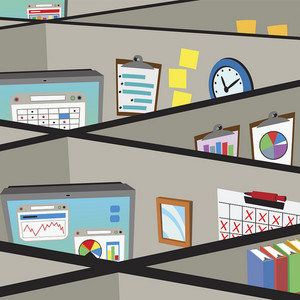
Ever noticed how your desk setup can totally shift your mood?
The right desk decor in the office can act as an emotional stabilizer, helping you stay grounded and focused.
With stress -busting plants and calming colors, these so -called stabilizers are selling like hotcakes.
So let's take a look at the most popular workplace desk ornaments or these stabilizers selling in China.
Such a dramatic term, isn't it?
Emotional stabilizer.
But isn't it great if you can just pay for it and have it on your desk and you're sorted?
I mean, yeah. If it can achieve that end.
Exactly. We'll get into that a little bit.
What are some of the things that people are buying in China now?
Well, we can take a look at some particular examples like desk ornaments like cabibara, which is a calming figure.
They are touted as the secret to emotional stability, and this has been shared by numerous young employees on their personal social media platforms.
Sorry, can I just butt in for one second just to offer the Chinese because everybody will know exactly what we're talking about, shui thun.
So these are the really, they're kind of like rodents, and they're bigger rats with a cuter outfit.
so like an actual animal yeah yeah but all figurines and you know like it's not the actual animal no no no it's that is quite the workplace I understand yeah yeah so figurines or you know having like stickers or anything of the the shape of the animal the image of the animal it makes people feel really
calm because this has become a trend in recent years in Chinese social media.
People are fascinated by this calming animal.
There's another one that I looked up earlier today, the green banana decoration.
Oh, that was a fascinating example to me because last year we saw this very high volume in terms of people searching for it on social media platforms or on e -commerce marketplaces like Taobao.
So it means green banana declaration with puns like 净止焦虑 or say no to anxiety because those water propagated bananas have puns like 净止焦虑 to represent no anxiety because those bananas, water propagated bananas are usually green.
And in Mandarin Chinese, green banana shares the same pronunciation as 焦虑 anxiety, right?
So say no to anxiety.
Say no to anxiety. I looked at some of the images and I wondered, are those real or are they not?
Because they were large groups of small green bananas that looked like they were growing on a small bamboo pole or tree.
And then I guess there was a water source.
So these are living banana trees, kind of, that were sitting on people's desks.
Yeah, I think so. Yeah, that's what the images I saw.
Yeah. I was wondering whether they're just like a plastic model thing or they're real bananas.
But they're so green, so I guess you don't really want to eat them.
Yeah, but there's another one that I love.
I enjoy the pun so much, but I'm not allowed to say this on air.
I'm just going to say, you know, apparently it's selling really well online.
A cat or a dog figurine.
Sure, whatever figurine.
and here comes the key part holding grass in its hand like we can't say the Chinese and nor nor can we say the English yeah so you're holding grass and if you're and just try to say it in Mandarin and you'll know what I mean and it's almost like a like a subtle like a subtle reminder that you know whatever
you're going through whatever's thrown at you in the office you can and just about it and then just kind of like a whatever but it's okay okay yeah yeah just let it out and it's okay see how i was looking at i think this china goes for the win here because i was looking at some western websites seeing if if offices
or office desks are decorated with any kind of fun punny things like that and i just found the standard you know desk plant snack jar colorful mouse pad, favorite book, cute stationery, maybe a coffee mug with, like, world's best boss or world's number one employee or something like that.
Some basic stuff. Nothing really fun.
No bananas on bamboo on the Western desk from what I could find.
Well, how did this become a market, you know, all this desk ornaments?
Yeah, so I think to start with, Understanding these nuances on the part of the young generation of workers can really allow commercial sellers to create items to cater to those emotional needs, items with more emotional resonance.
I guess the surge can be traced back to the period after the 2024 Spring Festival, So basically a year ago, when sales for fortune and emotional desk ornaments really skyrocketed and the popularity of these products among young consumers are really highlighting the need for a kind of emotional support
in your workplaces.
For example, according to T -Mail figures, the search volume for these products grew fivefold from 2024 to 2025.
The sales of such emotional stabilizers, the so -called stabilizers, grew 117 % year -on -year after the 2025 Chinese New Year.
After the New Year, when everybody goes back to the office.
Exactly, exactly. emotionally unstable they need those emotional stabilizers from a business point of view though this has really created new opportunities for small businesses for for merchants you know they see the demand from office workers for these fun quirky desk accessories and then they have done
a great job of supplying those and tapping into the market they've sold thousands and thousands of units in a very short period of time on Taobao.
Taobao is the, I think it's the biggest e -commerce marketplace here in China.
And there's lots of different examples of different styles of accessories that people love to buy.
Yes, indeed. And another example, which is another play of the pun, I really like this one, got to share with you.
So basically that sounds like just chill, chillax kind of thing.
And yeah, people need that, you know, because sometimes, the office work can be quite intense.
And why do you think that these workplace decorations have become so popular in recent years?
Why, oh why, go through the trouble, even if these items aren't really particularly expensive per se, but you still need to purchase them, spend money on them, and put them on your desk?
I think for many people, you go to the office early in the morning and you're there until sometimes early evening, right?
Which means you're at that specific location, your desk, for a lot of the hours of a day.
So, just like we wear clothes where we want to express our fashion side or one side of our personalities, a desk, your office desk, can be a space where you can express yourself too.
And when you put things like green bananas to represent no anxiety or a cat holding some grass, which apparently means like, yeah, whatever, then it's just kind of representing a little playful side of your personality.
So I think people spend a lot of hours there.
And it's just a way for them to create their own comfortable space to show who they are.
I guess there is a shift from purely decorative items towards functional ones, So which will require merchants to combine those emotional value with realistic functions.
I guess it's primarily about personal expression, like you need to you want to decorate your desk and in order to express your personality, your personal interests and your mood.
That's a more important note so as to create a space to reflect who you are beyond your professional image.
And also some people might want to personalize their workplaces with comforting or motivational items so as to help themselves reduce stress and create a so -called emotional safe haven.
And some people are probably looking at increased productivity because when you are under – I think that's the case for me personally.
When I am under less pressure, I tend to be more productive and more creative.
Yeah, that's really interesting though, isn't it?
Because there's an argument that suggests having these items on your desk leads to lower productivity.
I was searching around, and this is from the BBC.
Craig Knight is a psychologist and he is the founding director of a company that uses science to improve business performance and according to his company's research not being able to have for example a picture of your kids on your desk or something like that.
It might seem trivial, but not being allowed to express yourself or have things of interest on your own desk space, those can significantly impact company performance.
He's done a ton of research into workspace personalization, and he found that employees who put at least one picture of a family member or whomever or a plant in their cubicle are 15 % more productive than those who don't.
Also, employees who can personalize their own space, they are up to 25 % more productive than those who must work in a sterile space.
And when I say those who must work in a sterile space, not every company allows people to decorate the space the way they want it.
In fact, some companies, even in the West, they don't allow anything, any kind of decorations on their employees' desks.
That's so surprising.
What's that number you just said?
25 % more productive than those who work in a sterile space.
Right. Because, okay, in the past, we used to think that, you know, like we go to work, we go to a factory to work or office to work or whatever it is in China, then there's no personalizing of anything.
And it's through like Western movies to see, oh, even in like the, let's say the locker when people get changed, you know, let's say a doctor from the hospital to go home, get change and then you open the locker and there's like you know colorful decoration and there's always the family picture on the boss's
desk that kind of humanizes the boss in a way and I thought as a Chinese person I got those ideas from those movies but it's so surprising to hear that actually maybe that's not always the norm in the west and here in China so interesting to see young the younger generation well it seems like the the company's
not having any word with them and they're they're spilling it out they're going you know as far as they want with their decorations and it's really interesting that I saw and actually I did a little bit of surveying around and there were a couple of pretty quiet colleagues um okay I'll say no more about that um
and then but but we're actually talking like you know maybe uh when nobody's watching and then I was like hey I've noticed that there's this really angry person looking sticker that you put on your desk.
And you're really quiet in the office.
Why did you put that sticker there?
It's just it doesn't align with your personality, workplace persona.
And she's like, that's exactly why I'm placing it there.
I don't want to say no out loud, but I'm actually saying no to everyone.
So, yeah, it's personal expression.
It's saying it without actually the need to say it So it's really interesting to see how the younger generation are really, you know, getting creative with all of this But guys, what style of personalized workstation are you?
Steve and Ding Hung And I'm sorry, I haven't visited you in your office in a while I can't even remember what it looks like anymore Yeah, a great question And actually, I am yet to think about this question myself What does your desk look like right now?
Because for so many years, I have been working here for more than a decade, but for so many years, I have never seriously thought about intentionally decorating my own workplace desk, which might sound a little bit pathetic, judging from what we have been talking about today.
That being said, I always find other ways to reduce my personal work -related stress, like physical exercising, reading, sleeping, et cetera.
So yeah, maybe from today on, I will think about this question.
And seriously, asking my wife, helping me purchase some items from Taobao.
My desk is the same as your desk.
There's nothing there really decorative at all.
There's a plant to the right, but that sits on a shelf that is not geographically a part of my, it's not on the border of my desk.
But different from Ding -Hung, I will not be moving forward to decorate my space.
I feel like if I'm at my desk, I'm there to work.
And if I have a lot of things going on, that might serve as a distraction for me.
And this is why some of the companies in the West, they don't want their employees to decorate their desks at all.
I'm sure. I'm certain it's different from industry to industry.
But just for me personally, I don't feel like I need it.
I don't feel like I even want it.
If I want to look at a nice picture of my wife from time to time, well, I have my phone right there.
I can just kind of open up the screen and, oh, hello.
So anything else seems a little, I don't know, not necessary for my personality, but everybody's got a different personality.
Absolutely. And I like to decorate my space.
You do. There's a lot going on.
But I think part of it is, you know, like you use moisturizer after you wash your hands and it gets so dry in Beijing.
I like to spray on a little bit of fragrance sometimes to boost my energy, and I'm happy to share with my coworkers.
And if they complain to me that they don't like the scent, I even switch to something else.
That's how community -minded I am.
And also, I like to have things that remind me that I am loved and supported.
And I have this—it's actually a jukebox, but it's got this preserved rose just like in— Beauty and the Beast, but this is actually a it's merchandising of the Little Prince, the French novel.
Anyhow, I'm going way too much into the details.
Anyway, it's really pretty.
It's cute. It's for my best friend.
And I like to have these things there because sometimes when I'm working late or sometimes when I'm like having a really tough day, I'm reminded of all the nice things in life.
Emotional stabilizer.
So I can endure. You know what kind of person you're handling here.
Don't mess with me.
I totally get it. I get why people do this.
I get why. And some people will go even further.
I was looking on other websites.
Some people will put lamps in their desk space.
Some people will put mirrors, personalized keyboard covers.
I mean, people really take this quite seriously sometimes.
And like I said, I get it.
I totally get it. We are sitting there for a lot of the hours of the day.
And my final point about this topic is that maybe I'm getting a little cynical, but declaration are only declarations.
At the end of the day, bosses need to take more responsibility in helping reduce your pressure, your stress of your employees.
a good manager a good boss is supposed to be good at undertaking and digesting pressure on their own rather than transmitting these pressure and anxiety onto their onto their you know their employees being a veteran we're laughing because this is like our topic for the last couple of days oh really
really this is part two yeah from Ding Hong we're just welcoming different people into the studio to share because being a veteran in the workplace myself, I really want to emphasize the importance and significance of a pleasant work environment in terms of enhancing your passion, your productivity,
and creativity. Yeah, that I can second.
One last question for you guys.
Apparently, on the internet, there are people talking about the more decorated you are of your workstation, the more committed you might be to the job at least this person is not going to quit tomorrow but for those who sterilize their workstations they're ready to pack their bags the nomadic employee
ready to move office maybe they don't even come with a bag they can just you know stop it call it um a job and move on at five yeah um i i don't know if there's any connection between job loyalty and how your desk is decorated I guess that's a fair point you make you know if someone is willing to go
through the process of putting plants and pictures and all different pillows or what have you around their desk it means they're they're not going anywhere for a while but that does not mean that just because somebody doesn't do that means that they have one foot out the door.
Interesting. We all have a different read into the same situation.
And now let's move on to the last discussion today.
Well, since Beijing hosted the Winter Olympics, more and more people in China are hitting the slopes.
But, well, also, as the ski season draws to a close, many people, many skiers are apparently left with a peculiar souvenir and that's a goggle tan that's just funny I've heard of bikini tans is it called bikini lines or yeah yeah yeah so the goggle tan is the line around your forehead and then under it
just follows the line of the ski goggles yeah so why are skiers so susceptible to sunburn, even amidst the snow and cold.
Yeah, a lot of people think that skiers are susceptible to sunburns because of the high altitude.
And it's true that if you go up, then you are technically getting closer to the sun, but that is not the reason.
For example, if you go up, if you ascend 1 .6 kilometers, you're less than one millionth of a percent closer to the sun.
That is not even worth talking about.
That's not the reason why.
It has something to do with the air a little tiny bit, although it's not the main reason.
Again, I'll give that 1 .6 kilometer number.
If you go higher up that much, it means that the atmosphere is thinner, so there are fewer particles to block the ultraviolet radiation that causes sunburns, but that's not the main reason.
Here's the main reason why skiers and snowboarders tend to come away with bad sunburns.
It all has to do with the fresh powder snow that skiers and snowboarders love so much, especially on perfect blue sky days.
In fact, there are many ways that snow conditions will affect how much your skin will burn.
So here's why. Here's the reasoning behind it.
When you're out on the snow, a lot of the solar radiation your skin receives is reflected from the snow itself and that amount of radiation is called albedo and fresh powder can have an albedo of almost 95 percent so it's reflecting almost all of the sun's radiation that it hits that hits it it's also much
more reflective than older snow older snow becomes less shiny and fresh snow has a lot of surface area to reflect the sun's rays, but as snow gets older, the snow crystal becomes more round, and there are fewer surfaces to reflect the light.
So there you go. That's the main reason, is that basically the fresh powder snow becomes a mirror of sorts, reflecting the rays as they bounce off, but also you've still got the rays coming down straight at you, so you're getting hit from all directions, those skiers and snowboarders.
And does it matter where I am on the mountain or which direction i'm facing yeah actually the slope and the direction that the slope faces that's called aspect that influences the intensity of the sun on a surface so north facing slopes in the northern hemisphere they get less direct sun in the winter
because the sun is farther south in the sky so where you are on the mountain can make a difference as well i didn't know geography had anything to do here but it's worthwhile to know.
So what can skiers do to protect themselves?
Well I guess when we take all these things that Steve has mentioned into consideration there are a lot of things we can do for example because solar radiation is reflecting back up people out in in the snow should put sunscreen on the bottom of their noses around their ears and on their chains in addition to
those usually you know usually considered places yeah we think about sunscreen on our forehead and our cheeks and things but again those rays are coming up or that radiation is being reflected off the snow so putting nobody thinks to put sunscreen on the bottom of their nose, right?
But it's a good spot to cover yourself.
Yeah. And also, most sunscreen also needs to be resupplied every two hours, according to some veteran skiers or snowboarders enthusiasts, especially if you are likely to sweat it off, wipe it off, or wear it off while you are playing on the slopes.
However, judging from some existing surveys, very few people remember to do this.
So people put it on once in the morning, maybe when they go out or in the afternoon, and then they never put it back on.
But when you're skiing and snowboarding, you're exercising.
And when you're exercising, you're sweating.
And when you're sweating, that sunscreen will come off.
So it does need to be reapplied.
And like Ding Hung said, it's every couple of hours that you should do it.
Right, and there's also the wind burn issue.
Have you ever had wind burn before?
I don't think so, and I don't want to.
It's not fun at all.
It's similar to sunburn because they both cause redness and dryness and real discomfort from exposure to the elements.
And actually, you can get sunburn and wind burn at the same time.
Double whammy. It's really not fun.
Wind burn, though, tends to damage just the outer layer of your skin.
you're not gonna get long -term damage probably from from windburn but do your do yourself a favor on a windy day cover your as much of your skin as you can right what about wearing that helmet instead of just the goggle well that's not gonna help with sunburn i mean i guess it whole head helmet oh sure i
mean that's that'll that'll help as well i mean you can you can wear that walking down the main streets of beijing that'll help then too not just on the mountains And nobody will know it's me.
All right. And with that, we are signing off.
Thank you so much, Steve Hatherley and Ding Hung for joining today's discussion.
Thank you for listening.
You can always find us on Apple Podcasts at Roundtable China.
And if you feel like it, please send us a voice memo to roundtablepodcast .qq .com.
I'm He Young. We'll see you next time.