This BBC podcast is supported by ads outside the UK.
If journalism is the first draft of history, what happens if that draft is flawed?
In 1999, four Russian apartment buildings were bombed.
Hundreds killed, but even now we still don't know for sure who did it.
It's a mystery that sparked chilling theories.
I'm Helena Merriman and in a new BBC series I'm talking to the reporters who first covered this story.
What did they miss the first time?
The History Bureau, Putin and the apartment bombs.
Listen on BBC.com or wherever you get your podcasts.
We look at the latest results of some of the world's biggest tech companies.
I'm Lily Jamali in San Francisco where, in the last few hours, tech giant Apple has released its quarterly results.
It's World Business Report from the BBC World Service.
I'm Rahul Tandon.
We'll look at how the market reacts to Apple results, as Microsoft shares have plunged and gold prices have hit a record high this week.
What does that mean for Africa's largest gold producer, Ghana?
We're going to have a lot more on those stories, those results of some of the world's biggest companies in a few minutes' time.
But in the last half an hour we've had this news and it's a story that we've been looking at very closely on this programme what has been taking place in Venezuela, particularly when it comes to its oil sector?
And we've had some pretty important news that has come through in the last few minutes, few hours, guiding us over the last few weeks as we've looked closely at Venezuela, its economy, its industry.
It's been my colleague, Gideon Long, who spent several years covering Venezuela for the Financial Times and has been to the country many times.
Gideon, an important decision that has been taken by the country's Congress.
Tell us what that decision is firstly.
Yeah, so the country's, Venezuela's Congress Rahul, has approved new rules that should open up the oil sector to more private investment.
So to give you a little bit of context, until now, the oil industry was principally governed by a law which was passed in 2006, under then President Hugo Chavez, which tightened state control over the sector.
And it gave the state oil company PDVSA a majority control over oil projects.
And that's when a lot of the big American firms like ConocoPhillips, were effectively kicked out of Venezuela.
What they've approved today is a law that will allow private firms to operate oil fields.
It will give those companies, or give companies in joint ventures with PDVSA, more control over those projects.
So it should give them more direct access to proceeds from oil sales as well.
And this, of course, comes against the backdrop of US-Venezuelan negotiations, ever since Nicolas Maduro was removed from power, over what should be done with Venezuelan oil.
Gideon, we've talked about this before, haven't we?
The need for investment to go into the Venezuelan oil oil industry, because it has the biggest known reserves on this planet.
So this moment now, how significant do you think it is?
Well, I think it is significant.
And as you say, yes, it does have the biggest reserves in the world, 300 billion barrels of oil.
Put that into context, that's enough to provide the entire world with oil for about eight or nine years.
But it should be said, this is heavy crude oil.
It's relatively inaccessible in the Orinoco Belt in the east of the country.
And many of the US companies that used to operate in Venezuela, like ConocoPhillips, like Exxon, have said that it's a difficult tax.
And also the Venezuelan oil infrastructure has been so run down in recent decades that there's a lot of work to actually bring it up to scratch.
Donald Trump has been very clear about the need for Venezuela and for the US to be part of this to redevelop its oil industry.
So the fact that the Venezuelan Congress has passed this, how important is that in a message to Donald Trump, almost.
Well, in a way, it's extraordinary because this Congress is absolutely packed with people who used to support Hugo Chavez back in the day and supported Nicolas Maduro.
Which, to remind people, is very much to the left.
Absolutely, absolutely.
But now we see Delce Rodriguez, who was a staunch ally of Nicolas Maduro and is now the new president, supporting this bill.
Jorge Rodriguez is the head of Congress again another Maduro ally, also supporting this bill and calling for more foreign investment.
And you do wonder what kind of pressure they're under from the US.
And a final point from you Gideon, and we're going to hear a report from Venezuela on the programme tomorrow and look at this in more depth.
Passing this bill is one thing.
Getting the investment is another, isn't it?
Absolutely.
And I think it's become apparent in recent weeks that many of the, certainly the US oil companies and it sounds as though they've been telling the US president this they are rather reluctant to go back into Venezuela just because they realise what a big job it is to get the oil industry back onto its feet in Venezuela.
Well, Gideon is a very busy man because he's...
Brought us up to down Venezuela.
Now he's going to go behind the other side.
I think he has to make sure that this program runs very smoothly.
As always, Gideon, thank you very much for bringing us the latest on that.
Oil is often needed for lots of vehicles.
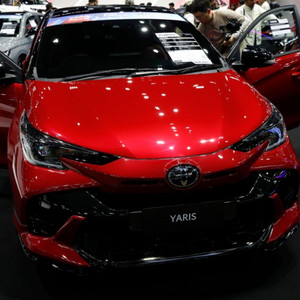
Gives us a nice link into our next story, which is the Japanese auto giant Toyota.
Says global sales had a new record last year despite trade tensions.
It's retained its title as the world's top automaker for a sixth consecutive year.
The company's sales, including subsidiaries, rose by 11.3 million vehicles.
Let's bring in a couple of voices on this story.
We're going to hear from Kerry Leahy in a moment.
But first, let's bring in Lauren Fix, automotive expert and analyst based in Buffalo in the US.
Lauren, thanks so much for joining us here on World Business Report.
Thank you for having me.
Toyota.
A lot of people will look at this and wonder.
They've done really well in the US.
They've seen their sales go up there, haven't they?
And yet there are tariffs in place, which many people thought would mean that wouldn't happen.
How has this happened?
Well, I think you have to look at how they planned their whole U.S. as far as attack.
I hate to use the word, but as far as their footprint here, they've got factories here in multiple states.
They've got lots of people that they give jobs to.
They've moved their home base to Texas.
They've continued to expand not just on their product line, but also to consolidate some of their powertrains, which was really smart.
And they're also exporting some of those vehicles to other countries.
So they're making sort of the US their second home base, because obviously they're a Japan-based company.
And other brands are starting to do that as well as they've seen Toyota's grand success.
Well, I think you've hit on a really important point there, one that we need to really delve into a little bit more deeply for our listeners here, because the tariffs are in place for products coming into the US.
So are we seeing more and more car companies now saying OK, if that's going to be the case, if we're a company based abroad, let's build more factories in the US to get round those tariffs.
Right.
And that's the smartest way to avoid the tariffs.
Most brands have already jumped in on that.
Volkswagen has a second.
They used to be the leader, but now they're not.
They have a plant in Chattanooga, but they still have Audis being built in Mexico.
And so they're paying a tariff, as those vehicles go back and forth across the border, for either drive lines or components.
Where other brands have really really first to market, to see okay, we have to do something about this like Honda, multiple plants within the US and multiple states, all non-union plants that have been putting out tons of product.
And they're planning to export also out of this country to bring it to other countries, because they've got a deal and they save money with the tariffs.
In cases of like Hyundai, Kia and Genesis, which are all under the Hyundai Corporation.
They're putting a huge footprint here in the US.
Stay with us.
I want to bring in Kerry Leahy into this, because we're going to get into the US trade deficit in a minute with you, Kerry.
But this is an important point an important point that Lauren raises here because we have these tariffs in place to protect the US car industry.
But if already a lot of those car companies from outside are building in the US, is there any point in that?
Well, yes and no.
I mean.
The whole story that we've been alluding to started in the 1980s with the transplants that were generated by Japan to answer the pressure from the Reagan administration.
But I think that is probably the goal that Trump is trying to get.
If you want a stronger manufacturing sector, You have to offer some kind of incentives and in their case not incentives but actually tariffs to try to slow down the amount of foreign competition.
But in the case of autos, that's already happened.
That's not where the action is.
The action is outside of automobiles and in manufacturing in general, and that just hasn't happened yet because it's going to take many years for firms to buy into that and make the changes that are needed to be made.
Lauren, Toyota itself, their success in the US where we've seen their sales go up.
Why is that the case?
Because this is a company that isn't really in the EV space that much, is it?
No, they've actually been very wise.
And Mr Toyota, which is spelled slightly different than Toyota, who is the president of the company, has always said we need to build what customers want.
And that was smart, rather than taking the pressures from the federal government or from global pressures saying you need to produce electric vehicles.
And the smartest thing they did was hey, we've got.
The Prius, which we used to laugh at, is now a very successful product, totally revamped a few years ago.
And on top of that we've got the plug-in version which was called the Prius Prime, which we're now just calling a plug-in version.
But they said, hey, we can make this.
But what our customers truly want is they want fuel efficiency and they want to be able to drive wherever they want.
In the United States, the way we're laid out our cities and towns versus how they are in Europe or in other countries is different.
And so you have to comply to what customers want.
Otherwise, much like some other brands who have made huge mistakes and went all EV and insisted that was the way, because of government pressures, they're finding themselves in a position that doesn't make sense.
And now they have to backtrack on that with billions of dollars in losses 20 billion for Ford, 8 billion just the past quarter for General Motors.
They had to write that off.
That's done.
They did indeed.
And Kerry, I wonder what this tells us about the EV market in the US.
The fact that Toyota is the world's biggest hybrid company is going from strength to strength.
Does that mean that the US still isn't ready yet to embrace EVs in the way that we're seeing in other parts of the world?
No, the customer is not that keen on adopting the technology without the full infrastructure of being able to make trips without having to plan overtly and have what is referred to in the business as anxiety about distance.
Until that is done and you have that kind of infrastructure, which is not the cars, it's where you power up the cars, and that just isn't there yet in many surprisingly urbanized areas.
And final thoughts from you on this, Lauren.
We know that Donald Trump is very keen to see and Kerry alluded to this beforehand.
You know Americans buy American products.
But the fact that Toyota and Lexus have seen their sales go up 73, you know, in the last reported year shows us that Americans will buy what gives them the best value.
It doesn't matter where it is, where the origins of the company are.
Well, I think if you ask consumers in the US, they know that it's a Japanese company, but they also know they're being built here in the US.
They want reliable vehicles with great resale value and low insurance rates, low maintenance costs.
And you get that with Toyota and as well as Honda products.
And you see what's selling the most?
It's Toyota.
And the reason they're succeeding so greatly is because they continue to increase their.
They offer trucks SUVs cars, and they offer hybrid or gas versions.
They never fell into the full all-electric, so they don't have to take the right off and they can continue to build exciting cars like their performance lines that customers are asking for.
Lauren, it's been a real pleasure having you here on World Business Report and sharing your thoughts with you.
Look forward to speaking to you once again on the programme.
Kerry, everybody looks very closely, don't they, at those figures which come in when we're talking about US trade.
What are the latest figures telling us?
Well, they're pretty much all over the map.
You had an enormous increase in imports and almost as big a decline in exports.
But that wasn't driven so much necessarily by Trumponomics but by the fact that in the drug business imports took 40 percent of the increase.
It was mainly in one sector.
And gold and other precious metals explained twice that of the decline in exports.
So there's a lot of noise going on in those numbers.
But the trade gap is still getting worse.
It's about a trillion dollars right now if you aggregate over a 12-month scale.
And it's still a very daunting process if you want to bring that down by either cutting imports or raising exports, or some of both.
OK, you said that you know somebody looks at these figures.
They are confusing the huge difference between October and November.
You've explained that to some extent.
But do you think this volatility is going to continue?
Oh, absolutely, because we're still waiting for the final shoe to fall on.
Have firms done all the buying in advance they can to avoid the tariffs and now have to decide to live with tariffs?
There's some changes in production and some changes in production or both.
So I still think you're going to see some some a lot of volatility.
But I think net, net.
I think most people are expecting the trade gap to worsen as you move into through the year, in part because the economy is doing relatively well.
Should we confuse people a little bit more?
Because Kerry, this could all change very rapidly with the Supreme Court judgment on tariffs, couldn't it?
Oh, absolutely.
And that could certainly happen.
And it's important to remember.
The reason why the president screams emergency all the time is because there is a statute that allows the president of the United States to pretty much do whatever he wants if he declares this particular situation, wherever it may be an emergency.
Kerry, stay with us because we talked about the results, didn't we, of Toyota.
Let us now talk.
Are you all right, Kerry?
Just a little bit under the weather.
Yeah, don't worry.
Well, thank you for sticking with us.
And we know there's been some pretty bad weather around you in the U.S. at this point in time.
But let's talk about the figures of one of the world's biggest tech companies, Apple.
Lily Jamali joins us, our tech correspondent from San Francisco.
Been a busy old week for you, Lily.
Shall we start with Apple?
We've had some up and down tech results.
We'll talk about Microsoft in a minute.
Apple, are they going to be happy?
Oh, yes.
I mean, I think investors are very happy with what they saw from Apple today.
The big headlines, the iPhone is selling very well.
It was its best quarter ever for the iPhone 17, sales up 16%.
There's a lot of demand from what we heard from Tim Cook, the CEO there, across geographies for this phone.
Obviously, you get that holiday bump in the quarter that ends in December, and that's certainly what happened here.
Very positive reception in China as well, which is a huge market for Apple.
And I think, you know, it's interesting to see the iPhone cycle has changed over the years.
You know, people used to change out their phone a lot more often than they do now.
It's a longer cycle.
People hold on to their phones longer, but they are buying the new phone, making for what Tim Cook called a remarkable, record-breaking quarter.
Yeah.
And when we have these results, we often have these calls, don't we?
With key figures from the companies.
And Tim Cook has been on a call as well.
He's called the iPhone 17 series by far the most popular.
And I was intrigued by those figures from China because there have been concerns about Apple sales in China, haven't they in the past?
Yes.
And then you look at the numbers.
Sales were up 38 for the quarter for again what is a really key market for Apple.
So the iPhone, you know, all is well there.
We also saw a lot of strength from services, which you know.
Think back to it.
A couple of years ago that wasn't something we talked about much with Apple, but I'd say around 2017 2018, that became a really, you know, big area for them, that they were going to be growing.
And they have done a good job there, I would say.
Certainly analysts and investors think so, setting a revenue record in services up 14 from the same period last year.
Lily, stay with us.
Let's bring Kerry Leahy back into this conversation, because we're going to look at another tech company who's not doing as well at least with its share price as Apple is in a moment.
But is it fair to compare Apple, do you think?
Kerry with other tech companies because, unlike the others, it's a bit more involved in hardware as well.
It has physical products, doesn't it?
I think you're quite right on that score.
They have a particular set of products.
They do a lot of manufacturing around the globe.
And they really aren't caught up quite so much in the AI frenzy.
So what's been going on in the marketplace for the last 16 18 months around AI isn't necessarily the story about how well Apple did today.
Lily, if you are somebody who's been investing in those big tech companies and you think it's going to keep going up and up and up, you had a bit of a shock if you had money in Microsoft.
Just tell our listeners what has happened to their share price.
Yeah, I mean actually it's been so fascinating because every quarter now we're really focused on AI spending.
So for a company like Apple, which has kind of sat that one out, it's not as important.
But for so many of the others, like Meta and Microsoft, it is a really big area of focus right now when reporters like myself cover their quarterly earnings report.
And that's no exception this time.
So they had higher than expected spending on data centers, higher than expected spending on other AI infrastructure.
And bless you, by the way. to whoever was just sneezing there.
And so I think that's a really important theme because it ties back to this question of whether we're in an AI bubble or these companies just spending beyond their means.
You know, we're now increasingly looking at what kind of debt these companies are taking on, which is, for a long time, not something that we looked at very closely among tech companies, because they just make money hand over fist most of the time.
So that, I think, is a really key theme.
And then there was also, you know, a slowing in growth in the cloud business at Microsoft, which is setting off a little bit of red flags.
Yeah.
Let's put some figures on that for our listeners.
Microsoft lost $357 billion in market cap during trading as the stock plunged the most since –
I mean, those are incredible figures, aren't they, Lily?
And it leads to the next question, which everyone's been asking.
Is the AI bubble about to burst or is this just specific to issues around Microsoft?
Yeah.
I mean, the AI bubble, we've been talking about it really since last fall.
Are we in a bubble?
And when you talk to people who you know scholars, who study finance and have been through these cycles before they say it's really hard to know that you're in one until it bursts.
Right.
I have talked to an array of people about this, from people that are up-and-comers trying to make their name in Silicon Valley to veterans who have seen these cycles before, who have lived through previous bubbles.
And, As we've talked about you and I before, one of the things that keeps coming up is this cycle of deals, where they're called circular deals or vendor financing, where there's just a lot of money being exchanged between these major players, between Microsoft and Oracle and OpenAI which, of course, is a private company that's probably going to go public this year.
And I could go on and on and on.
And I think the fact that that can obscure the accounting and make it hard to understand what the demand for AI really is.
That's why we're talking about the AI bubble these six months later, because it's a festering question that so many people have.
Lily, as always, thanks for joining us on the program.
Kerry, final thoughts from you on this.
We focus a lot, don't we, when there's suddenly bumps in the tech companies, because they're such drivers of wealth for that US stock exchange.
But we should expect that.
I mean, stock markets just don't always go up.
We will see things coming down as well.
Oh, absolutely.
And if you make comparisons to the dot-com bubble of 2000, the difference now is, even though these companies are borrowing a lot, they are making a lot of money, where in the case of many of the dot-coms, they weren't making any money and didn't expect to ever make any money.
So it really sounded even more ridiculous than today.
But, once again, the important thing to remember is you never know you're in a bubble until you're out of it.
And in the last dot-com exposure.
We went up and down to about eight different peaks before the market finally went under.
So nobody wants to be the first guy to pull out because they may pull out a little prematurely.
And so I just don't think all the juice has actually been sucked out of the AI story, at least not for the next couple of months.
Okay, well, let us see what happens there.
If journalism is the first draft of history, what happens if that draft is flawed?
In 1999, four Russian apartment buildings were bombed, hundreds killed.
But even now, we still don't know for sure who did it.
It's a mystery that sparked chilling theories.
I'm Helena Merriman and in a new BBC series I'm talking to the reporters who first covered this story.
What did they miss the first time?
The History Bureau, Putin and the apartment bombs.
Listen on BBC.com or wherever you get your podcasts.
Gold's surge beyond the 5293 per ounce mark reflects a world gripped by uncertainty, driving investors towards safe haven assets.
We are going to talk about gold once again as we are in another week where it has hit.
Record highs, even though the price has slightly dipped today.
So why have the prices been soaring?
Because they are up over 70% in the last year for gold.
Here's our business editor, Simon Jack.
The recent boom in the price of gold really is unprecedented.
Now gold tends to rise in times of crisis, as it's seen as a safe haven because, unlike things like dollars pounds, euros or yen, you can't make or print any more of it.
The supply is fixed.
It can only be mined slowly.
So are we in a crisis and what's causing it?
Here's the economist Simon French.
The main driver is certainly US political leadership and uncertainty whether the dollar will be used as something of an economic and political and security weapon against other countries.
And at times like that in history in the early 1980s, in 2010 2011, investors have gone for a safe haven of gold and they've gone again, just at a much faster rate.
And that is good news for businesses like Hatton Garden Metals in London, which buys and sells gold.
We've never seen the queues around the block for people waiting to cash in on the gold price.
It is unprecedented times.
It's busy.
It's exciting.
And these prices are unbelievable.
There we go, busy old place there.
And it's not only in London.
In Shanghai.
Residents there have been lining up to cash their gold in to take advantage of these soaring prices.
I never imagined the price of gold would rise so dramatically, so there's this opportunity here.
I just felt some jewellery that I don't wear often also has no use.
Since gold prices are already so high anyway, it's the perfect time to sell.
Certainly is with those gold prices at one point this week going over 5500, which is an incredible increase.
But how is it benefiting the finances of some countries?
Let us talk to Dr Theo Achyampong, who is a Ghanaian economist and technical advisor at the Ministry of Finance.
He's currently in Aberdeen in Scotland.
Thanks for joining us Doctor, on the programme, because Ghana is the largest producer of gold in in Africa, isn't it?
So give us a sense of what difference this is making to their economy, to their exports.
Yeah, absolutely.
Pleasure to join you.
So actually, when you look at the official numbers, good export receipts have more than doubled from about 103 billion in 2024 to 21 billion in 2025 alone.
And this really reflects that strong upward trend, both in absolute terms and then also if you look at it as a share of exports.
So as a share of exports, gold in Ghana's statistics has gone up from about 54 in the end of 2024 now to 68 at the end of 2025.
OK.
And we heard from our business editor before, Simon Jack, talking about how it's difficult to suddenly increase the supply of gold.
So for a country like Ghana, when the price goes up, is it easy to mine a lot more?
Does that take time?
Yeah.
So you do have a bit of the supply elasticity related issues.
However, in the case of Ghana, you've actually got the supply coming from both the large scale and the small scale mining sector.
In fact, the small scale mining sector accounts for close to about 60 percent of the sector output.
And you get a quicker response from that sector in terms of production increment.
And that's certainly what we've seen.
Yeah, that's the wider picture.
Is this beginning to benefit the life of Ghanaians, do you think, economically?
Absolutely.
So if you look at a number of the statistics that the central bank has been churning out, the sector roughly is about 8 of GDP.
If you look at gold, it has become one of the biggest macroeconomic stabilizers for the country.
So we're seeing it in terms of the impact on the export earnings and on the balance of payments, but importantly also supporting the central bank to build up reserves.
So again, the country's import cover has gone up from about four months to about six months of import cover.
And then you are likely also not even likely you've seen that significantly had an impact on the local currency, which has moved from 17 CDs to a dollar now to just around 11 CDs to a dollar.
Wow.
Doctor, thanks so much for joining us here on the programme.
Lovely to have some good news, I think, to end the programme.
Gold really benefiting that economy.
Kerry, thanks for joining us on the programme, even though you've had a few sneezes during the course of it.
If journalism is the first draft of history, what happens if that draft is flawed?
In 1999, four Russian apartment buildings were bombed, hundreds killed.
But even now, we still don't know for sure who did it.
It's a mystery that sparked chilling theories.
I'm Helena Merriman and in a new BBC series I'm talking to the reporters who first covered this story.
What did they miss the first time?
The History Bureau, Putin and the apartment bombs.
Listen on BBC.com or wherever you get your podcasts.