The perfect word is transformative.
I'll say fraught.
I would use the term uncertain.
Convergence.
Enabling countries to find pathways to lower cost, lower carbon, more energy sovereign systems.
So that's the first.
From the Philippines.
We would like to show to our audience what this AI can bring, the good and the bad.
Especially the good things.
They cannot lead the semiconductor or AI competitiveness without China.
It's very important that there's a statement expressing support for multilateralism and opposition to unilateralism and, in particular, the weaponization of trade issues in a more casual way.
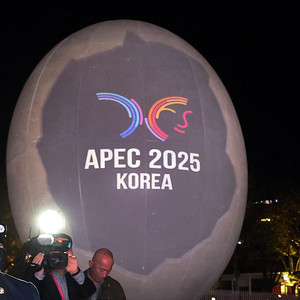
And this year, all eyes are on Gyeongju, South Korea, where leaders will gather under the theme Building a Sustainable Tomorrow Connect, Innovate Prosper.
Before the summit, I'm sitting down with voices from across the region, including journalists and analysts, to unpack what's at stake.
And they are Mela Lesmores, a TV reporter from PTV News, the Philippines.
Warwick Powell, an adjunct professor of the Queensland University of Technology, Australia.
He's also an active figure on X and Substack.
Ben Norton, the editor of the Geopolitical Economy Report, is from the United States.
And Dr. Sanjay Kumar, a journalist at the Korea Herald, South Korea.
A warm welcome to you all.
Let me begin with Sanjay.
Before we get into the key themes, could you please give us a quick introduction to Gwangju, the city hosting this year's summit?
Well, Gyeongju has been the capital of the Silla dynasty and it is a very historical city in Korea and you can consider the city as a living museum of Korea.
With different United, like UN World Heritage sites also, such as Bulguksa, Sakuram.
You know it has different things and different decades, different centuries and millennia of history to offer.
Right.
I think, to my knowledge, it's over like 2,000 years old, the city?
Yes, yes, yes.
Right.
Well, zooming into this year's event, this question goes to you all.
If you could use one word...
To describe your overall feeling or expectation for this year's summit, what would it be?
And shall we start with the lady?
Mela, please.
So the perfect word for me is transformative.
Right.
And Warwick, what would you say?
Well, I tend to have a glass half empty view of all of this at the moment, so I'll say fraught.
And in large part, I think, the institution is struggling under the weight of circumstances outside of its control and it is going to find it very difficult to arrive at a cohesive position that is reflective of its you know far more constructive and effective history.
So fraught is my word for the day.
Okay.
Sounds are not so positive then.
But to Ben.
Yeah well, kind of like Warwick, I'm a little uncertain, which is why I would use the term uncertain to describe the summit this year largely because we've seen from the US administration this trade war that Washington has been waging against many countries in APEC.
And there are a lot of concerns about whether or not the US will actually come to some kind of trade agreement, not only with China, but also with the host, South Korea.
So there's a lot of uncertainty and it's not entirely clear what will happen, largely because it's difficult to come to a multilateral agreement when there's one party that is, a very powerful party that refuses to negotiate.
That's very true.
And Sanjay, you're in the hosting country.
Would it be more positive for you?
Yes, as well.
Ben has correctly pointed out that the world is going through uncertainties, but I think Gyanju is going to be a converging point.
So from my side, I would consider the word convergence.
That would Address the challenges and at least, if not directly address, at least there would be some conversations, dialogues.
So convergence would be my word.
Like we said, this year's theme is a sustainable tomorrow.
So what does a sustainable tomorrow really mean in India? today's Asia-Pacific context.
Is it more about like climate action or green transition or rebuilding trust and inclusion then?
Sanjay.
From a South Korean perspective and as a personal perspective.
I think in this part of the world, what is more important is regional stability and the uncertainties caused by the tariff wars recently.
And this is going to bring a lot of competition, intense competitions between the big players.
I mean when I say big players, it is going to be the leaders, such as US and China, and the middle economies and middle powers such as South Korea and the emerging ASEAN and the role of the other countries in APEC.
So, for this sustainability, I think these all APEC members have to come up with a very uniform voice.
Right, indeed.
And what about at Warwick?
Look, I'll focus on some practical things.
I think firstly, we need to address the ongoing energy augmentation that is taking place globally, and particularly in relation to the needs and opportunities of developing countries within the Asia Pacific region.
That means enabling countries to find pathways to lower cost, lower carbon, more energy, sovereign systems.
And so that's the first thing.
The second thing, which I think is often overlooked but really, in an ideal world, would feature more prominently, is the sustainability of the pacific island nations themselves, as they have articulated on many occasions that their greatest concern is an existential one, which is related to rising sea levels and climate change, and they have strong views that the developed world and, in particular, the historic polluters of the world are simply not carrying enough of the burden of making the transition possible and to protecting the long-run security of these nations.
Unfortunately, their voices are often quite small, but it is forums like this that, I think, need to take those concerns into account.
And to Ben.
Yeah, well, we should remember that APEC has economic cooperation in the name.
And I think this is always an important topic, but especially this year with so much uncertainty surrounding trade.
So it could be a platform this year, the summit to find ways for countries to cooperate together in a way that goes around these US unilateral tariffs right.
So for instance, I think about it largely from the perspective of Latin American countries.
I lived in Latin America for many years.
And you know, it's not just China and Southeast Asia, but we also have the participation of very important economies in Latin America, including Mexico and Chile and Peru.
And let's not forget that last year, Peru and President Xi visited Peru and they inaugurated this very important port, the ports of Chiang Kai, which is a symbolic demonstration of how Latin America is deepening its economic integration with Asia, and especially with China as the largest trading partner of South America.
So, given all of the uncertainty around US trade war, this summit could also be an opportunity for these countries to come together and say OK, if the US does not want to cooperate with us economically, if it does not want to give a, because part of a negotiation process is not only taking, but also giving, giving and taking.
And the U.S. has these very one-sided demands.
Well, APEC could be a platform this year for countries in Asia and Latin America to come together and try to find alternatives to dependency on trade with the US.
That's a big issue at the APEC.
Then Mela.
From a reporter's perspective, what topics do you think will most likely dominate this year's media coverage then?
Is it like a Were?
The other guests just mentioned green growth or AI governance or trade or other digital connectivity, things like that.
Yes, I think it will focus on digital connectivity, AI.
And, of course, coming from the Philippines, I think the discussions will also continue, will be focused on calamities and issues about corruption that can also be discussed and as well as peace and order.
Then what kind of opportunities do you think Mela, this year's summit will bring for your newsroom and perhaps new reporting angles or collaborations or content partnerships?
Well, since this year's theme Building a Sustainable Tomorrow, I think it will highlight inclusivity and progress, even if it will inspire deeper reflection on regional cooperation and open doors for greater technological collaboration across the Asia Pacific.
And I think specifically this year, as the focus is on AI and the audience are also into AI.
I think we can bring up more new angle on what AI can bring to us and the our audience can learn something new about this from ebay.
Then what about our colleague in south korea?
Here in korea, the president xi and trump is going to meet Separately or not is the major concern, as well as, like the entire media landscape, is eagerly waiting.
Everybody is eyeing on that meeting because that would be a game changer, or at least it would impact many of the South Korean companies, and it will radiate immense influence throughout the world.
So here everybody is eyeing on a possible Trump-Xi meeting.
And on the company side, there is a APEC CEO Summit.
That is also in the picture and it is in the center.
People are also looking very forward because all these AI strategies, AI transformations are going to be led finally by the governments and the private sector.
And this APEC in Gyeongju is offering these meetings.
So that is why everybody is eyeing on these two aspects.
The Chat Lounge.
The Chat Lounge unpacks views and opinions on hot issues in a more casual way.
What about in Australia, Warwick?
Australia was one of the main proponents of APEC in the early days and it has been a beneficiary of the economic cohesion and coordination that APEC has enabled over the decades.
Australia is a country that is heavily dependent upon stable trade within the region, and I think it will hope that one of the key outcomes of APEC is the continuation of a strong focus on open and fair trade across Australia.
The Pacific Australia is a signatory to a number of multilateral trading agreements and continues to benefit substantially from the open global trading regime under the auspices of the World Trade Organization.
I think it's important, if we're talking about economic collaboration, that the pressures being placed on global trade and regional trade by America's aggressive and unilateral tariffs are pushed back against.
And we also need to look to how.
So APEC provides a focal point, for the vexed issue of artificial intelligence governance, for example, is addressed particularly in the context not only of the military and security dimensions, but also in terms of how the technology ultimately can be harnessed to support the development of developing nations across the region, rather than reinforce structural inequities that continue to dominate the world.
And from a US perspective, I think Could be a slightly different interpretation on this, right, Ben?
Yeah well, in general, what we've seen in the Donald Trump administration is a move toward more overt unilateralism.
Unfortunately, in the history of the US government, Trump is by no means the first president to resort to unilateralism.
The Trump administration has demonstrated a complete opposition to many multilateral institutions and fora.
So there's a lot of skepticism about meetings like the summit in APEC.
And this is the whole idea of MAGA, Make America Great Again, right?
Trump says that he should only act on behalf of the US and ignore the rest of the world in this very unilateral way that hurts the interests of other countries.
So unfortunately that violates the very spirit of AIPAC, which again is about economic cooperation.
So, unfortunately, I don't think in Washington there is much interest.
The debate is actually about whether or not Trump will even attend.
And a lot of people think Trump will not even attend this summit.
And I think the question that I have that I think could be an interesting development that comes out of this summit, is if the other participants can find a way to cooperate and deepen their own economic integration in trade.
I also am reminded of the fact that Most of the countries participating in the APEC summit also are members of the RCEP, the Regional Comprehensive Economic Partnership, which is a larger free trade agreement including china japan, south korea and and the asean countries.
So i think this could be another opportunity for these countries to come together and resolve some of their geopolitical differences and work together to deepen their trade, Because it's clear that in Washington, there's no longer an interest in multilateral cooperation.
But as a major player in this region, I don't think the United States can be sidelined, right?
Well, I agree with you.
But if it decides not to participate, I mean the US will have some representative who will participate, but probably in a very obstinate way.
We've seen this trend happen again and again.
You know, Trump has already withdrawn the United States from Congress, the World Health Organization, from the UN Human Rights Council, from other UN bodies.
And there's a clear opposition to to fairly engage in multilateral fora.
So it's not that other countries are trying to sideline the US.
It's that the US does not really want to participate, which could be an opportunity for the other countries to try to find a way to cooperate.
Yeah, actually APEC has been in You can say some difficult situation for quite a few years already, but let's hope that this year things could change.
Ben, based on your observation and reporting experience, what would you say could be the biggest obstacle to deeper connection among APEC economies today?
Well, I am kind of repeating myself, but unfortunately the biggest obstacle is the unilateralism coming out of Washington.
And especially, again, this isn't new with Trump, but he's taken it to a whole new level.
And it's really, it's part of MAGA's own ideology is that multilateral organizations go against the interests of the United States.
I don't agree with that as an American, but that's the way they see it.
But so I'm not just repeating myself.
I think another obstacle that exists is, of course, the are the tensions between Japan and China and, to a lesser extent, South Korea.
And, I think ironically, the more that US threatening tariffs, not only on China.
Of course, these tariffs constantly fluctuate.
He recently threatened tariffs once again of over 100 percent.
So, but Trump has also threatened these tariffs on Japan and South Korea, which have historically been US allies.
So I think that's been a wake up call in Tokyo and Seoul, reminding officials in Japan and South Korea that they should also find ways to deepen their own economic integration with China, which is one of their most important trading partners, so they don't have all of their eggs in the US basket because Yes, the US is a large country.
It's a large economy.
But, you know, China and Japan and Australia and Indonesia and Mexico are also very large economies.
And if the US, again, insists on this unilateralism, Well, it's not the end of the world.
There are alternatives, and especially the fastest growing economies in the world are in Asia, and many of them will be participating at the summit.
So I think this is an opportunity for them to think more about strategic autonomy.
Then Sanjay, do you feel it the same way, or would it generate some Awkward moment, you know, for the host country?
I agree with the perspectives on this tariff war, which is which has been caused by the so-called, or you can say, unjustified manner in which the tariffs have been imposed.
But you know this is also causing some supply chain realignments to among the different economies, including US and excluding US.
Both.
And China also had been aligning itself when it comes to all these war-related things.
And Korea also had to take some stance many times.
But from east asian region perspective china japan, korea they believe in you know uh, directly or indirectly, we can say they believe in this confucian harmony, i mean harmonious East Asia is really important from South Korea perspective.
And the way Russia, North Korea, China alignment was seen being strengthened.
That also had some implications on the US-ROK relations, because US-ROK relations are ironclad.
They are in alliance.
But whether these things are going to impact the supply chain realignments and the future innovations, which is going to be driven by the semiconductor chip wars and the AI innovations.
So how these countries US China, South Korea, Japan and those who are led by these countries somehow for example, there are developing countries in ASEAN.
There are developing countries in Latin America.
So how these things are going to be aligned through APEC remains a question to be answered by the leaders.
So that is why accountability would be also in focus this time in epic.
And you know, in south korea we are still hopeful and we are very positive that president trump and president xi is going to come.
Whether they are going to meet and talk separately, that's a different story, but we are still very positive that they are going to come, and many leaders of ASEAN also to come and discuss on various agendas.
So this is how we are seeing here.
Not sure if I can call it the mysterious confidence or positivity from the host country.
But in Australia, Warwick, do we have a consensus here?
Well, I mean, I think everybody enters into these forums with a sense of hope that through dialogue, that some common ground can be found.
There are many issues on the table that need to be addressed.
And in fact, I think that there is potential for quite a lot of common ground to be found.
The fly in the ointment is actually the divisions that are being forced upon the region through the imposition of a global geopolitical contest emanating out of Washington and its displacement anxiety.
The world has changed over the last 10 to 15 years, and Washington, or the United States broadly speaking, has been decentred.
That's not to say that it's not an important country and an important economy, contributing in many ways to welfare across the globe.
But it is to say that it is no longer the single apex, predator or primate in the global economic system.
And that necessarily requires a modification in outlook and in behavior.
We haven't seen either of those at this point in time, but we have seen quite a lot of doubling down from this current administration.
Hopefully, the dynamics of a collective meeting where many leaders come together, together with possibly a sideline meeting between Presidents Trump and Xi, will create a more conducive atmosphere and a mood for collective problem solving.
And if we can get to there, then I think we can still achieve some constructive outcomes.
That's what we all hope for.
But Mela, your take here.
Well, I agree with them.
But coming from the Philippines, I think the biggest obstacle is the geopolitical tensions.
But there are also a digital and technological divide and climate change problems.
But I think the APEC summit is a best avenue to discuss these things.
Then let's move on to some of the details of this year's major topic.
Like you all mentioned, AI governance.
In August, the ministers reached some joint statement which was hailed as a milestone, and it outlines The collective commitment of APEC economies to advance responsible digital transformation and trusted AI development in support of the region's prosperity and sustainable growth, especially for, I think, for those less developed economies here.
And it highlights action in three key areas facilitating digital and AI innovation to address socioeconomic challenges.
Enhancing digital connectivity for all.
And creating a safe, secure and reliable digital and AI ecosystem.
Then i think it's a question to every every problem could this ai statement pave the way or can be implemented for future coordination on cross-border tech standards or ethical frameworks?
I think it's a big question.
Ben?
Yeah, I think any step we could have to trying to come to some kind of international agreement on AI as a positive step forward and on these new technologies, because They are so new and there is so little international cooperation on this issue.
China has played a very important role in pushing for cooperation on artificial intelligence.
In fact, the premier Li Qiang.
In the speech that he gave at the United Nations General Assembly this year, he talked about the importance of cooperation on AI.
And China has launched a program to try to bring together cooperation on AI.
I should point out that China also has played a very important role in supporting open source technology, which is very, very important for many developing countries that don't have access to the kinds of hundreds of billions of dollars that are being invested every year in capital expenditure by US technology companies.
In the US, you know, this AI drive is really, it's become a big bubble.
This has been the chat lounge.
When we come back, find out in an era of shifting alliances and rising protectionism, can APEC still connect a divided world?
Stay with us.
I cannot marry you while your mother requires me to.
A captivating audiobook by Edith Eaton, read by Man Ling.
Because the green leaf still clings to the bough.
Experience the lively yet complex lives in Chinese American communities at the turn of the 20th century, as Edith Eaton's delicate prose weaves together themes of tradition change, love and identity.
Forget all that belongs to the joy of life.
Follow the journey of Mrs Spring Fragrance and witness the struggles and fights of those living on a rapidly changing exotic land while holding on to their cultural traditions.
Or, more importantly, hardly believe that his daughter was seriously opposed to becoming the wife of such a good-looking, prosperous young merchant as Wang Ling.
Join Books and Beyond for Mrs. Spring Fragrance.
Let the stories come to life in your imagination.
Subscribe to Books and Beyond for free on your favorite podcast platforms or log on to radiocgtncom for more.
Welcome back to the chat lounge.
We're having a preview of the APEC economic leaders meeting to be held in Gyeongju, South Korea.
That's true.
But without a key player here, which is the United States, because it's seeking like, a decoupling from China, especially in terms of technology.
How do you think this can be achieved?
It would be a very difficult task to accomplish, right?
Ben?
I think what Warwick said, he hit the nail on the head.
We're in a world that's changing in many ways.
Right.
Of course, the U.S. is still an important country, but the world does not revolve around the U.S.
The US is the one that's choosing not to participate in a fair way in these kind of multilateral fora.
I mean that's a symbol of this kind of increasingly multipolar world, which is good for many developing countries because it means they have different options.
They can trade with the U.S.
They can trade with China.
They can trade with Japan.
I mean, they have more options.
And in terms of technology, they can cooperate with.
Chinese AI companies that are releasing their models open source, or maybe they can try to come to an agreement with a US company.
I mean, I will add one other detail here, which is that Jensen Huang, the CEO of Nvidia, did announce that he's going to attend the APEX Summit.
And he in the US has been a relative voice of reason, trying to push back against the China hawks in Washington who are calling for more and more aggressive policies against China.
And that's largely because NVIDIA wants access to the Chinese market.
NVIDIA has been hurt by tariffs, but also by the export restrictions applied by Trump and Biden and other US presidents.
So I mean this is an example of how a figure like Huang, from the largest company by market cap in the world NVIDIA, I mean he could potentially play a role in trying to reduce the tensions and mediate between the US and China.
But again, when you look at what's happening politically in Washington, it's very difficult to accomplish that.
Not just in Washington.
I think in another major economy in the region, Australia.
Given, you know, the latest, I can say increasing tension, right, between Australia and China.
How realistic do you think such cooperation collaboration like Ben just mentioned between Australia and China can be carried out?
As expected and you're from a university of technology.
Can innovation and AI really drive shared prosperity or would it widen, you know, the wealth gap in the region?
Well, it can cut both ways, and the real question that the region needs to ask itself is precisely that.
Does it want artificial intelligence and associated technologies to be available widely so that people and communities and enterprises and organisations, regardless of where they come from, can access and use it, and to use it in a way free from potential coercion and censorship risk.
In other words, having technologies shut off on them.
Or do they want to continue operating in a technology environment in which large commercial technology companies ultimately call the shots and pull the strings?
The United States Vice President earlier this year was in Europe and he made some very clear statements concerning American attitudes towards the development of artificial intelligence and the role of the United States' own big technology companies within that.
The view from Washington is clearly one that sees artificial intelligence as an extension or as a new chapter in American foreign policy domination of other countries.
It does that by seeking to push hardware and software into other countries, whereby their data is at risk.
And at the same time, the United States is able to ultimately control and penalize countries.
They've been doing this ever since they worked out how they could intervene in the SWIFT network with its servers in Virginia.
And they've been doing it ever since.
There's been a fantastic book written by a couple of American academics called Underground Empire, which covers this in fantastic detail.
It shows that the United States has exploited its ownership and control over software, hardware and information communications infrastructure to ultimately control the flow of information and the flow of funds around the world.
So these are the risks that the region actually faces.
If the region was interested in autonomous and sovereign economic development, it would seek to develop capabilities in systems that enable autonomous and sovereign artificial intelligence, but in a way that operates in accordance with agreed standards, to enable interoperability and also to ensure that artificial intelligence and the risks associated with it are managed in a consistent manner.
They're the choices that the region faces.
I doubt that this forum will reach a conclusion.
And from media's perspective, Mela, how do you think the media can facilitate in this regard?
Yes, for me, since we're talking about AI, it is important for them to get to report about the latest development that the APEC number companies will be discussing in the APEC summit.
Like, for example, in the Philippines.
There are people using AI to scam people, to do bad things and other crimes.
So I think if in that APEC summit, we could discuss about things how to use AI in a better way and to create more impactful solutions to our problems it would be best to report it immediately to the public and to share it with people and for them to also apply it in their daily lives.
Sanjay, your take there?
South Korea's got very advanced AI technologies right.
Yes yes, and that is why you know, apex ai initiative under the leadership of korea is very important in this aspect because korea is a country in this region who really closely cooperate with us china, Singapore and Japan in the AI ecosystem.
That is why future AI strategies would be led by these countries.
There is no doubt about it.
But as I mentioned in the beginning, convergence has to be there.
You know, from South Korean perspective, South Korea has to maintain healthy relationship.
And since they are in alliance, they have their stakes high in the US economy as well and US partnership as well.
But on the other side they cannot lead the semiconductor or AI competitiveness without China because of various reasons, because South Korean companies exports also to China a lot and they are dependent for all these critical minerals and all the new technologies and new raw materials.
I mean, critical raw materials.
But what is important here is that, as I mentioned about the CEO Summit here in Epic, it should be noted that many representatives from AI companies such as, like Nvidia, even OpenAI and Samsung These leaders are going to be there in APEC and I'm sure that there would be many meetings on the sidelines.
We should not see it as a conclusive summit, but we should see it as a starting point for future-driven AI ecosystem.
Yeah, true.
But from...
You know, journalists' perspective, do you foresee any challenges in covering those issues, Stan?
For journalists, you know, AI is a very new thing.
Although, you know, the digital media has been very actively working in the last two decades.
And, you know...
Coming from a newspaper.
Print media is still relevant, but not influential as it used to be two decades ago.
What is challenging for journalists, including digital media journalists, is that how to cope up with this AI transformation.
Are we going to have some AI journalism trainings or how AI governance is going to be there in the media?
So these are like very big questions.
That makes us uncertain because, you know, so far there is no commonly agreed global governance on media.
So if in this epic, if that kind of narratives, If it can be started or it can be initiated, I think that would be very helpful to many journalists across the world.
I'm not sure if journalists around the world would like a global governance system.
You know on them because Yes, yes.
Let me clarify.
I'm not saying that it has to be like globally governed.
I'm saying that you know when reaching the sources.
I mean you know when you are in Korea.
There are some websites which are, you know, not accessible, and when this AI will be practically implemented in future, it will create more hurdles to access information and all those journalists.
We will be having troubles in algorithm aspects too.
So I'm not just talking from a political perspective, but it has real problem solving aspects like how journalists around the world are going to access information of different countries of the world.
So that is my perspective.
Warwick.
I understand you've got something else to catch up on, but what kind of milestone or symbolic moment would you most like to witness during the summit?
Well, usually the most significant symbolic outcome is a consensus communique.
We'll see whether that happens.
I guess it depends on what the expectations are and and how the differences that I think currently working their way across the region.
And again, as I mentioned, these are issues that actually aren't brought onto APEC by APEC's own doing.
This is an operating environment in which this particular multilateral group finds itself, and I think that that's going to be incredibly challenging.
Look if there is to be some light at the end of the tunnel, and I certainly hope there is.
I'd like to see a number of concrete statements, even if they are symbolic.
One is an affirmation of the importance of the rule of law at a global level.
Not the international rules based international order, but the rule of law.
This, I think, is an important statement.
Secondly, and related to that, given that we're dealing with economic questions, I think we need an affirmation of the importance of the World Trade Organization as the pinnacle or global framework for trade.
That's not to say that the WTO isn't without a lot of problems and challenges, but I think it's important that these countries, supposedly formed around a common commitment to cross-regional economic collaboration, are able to affirm their commitment to multilateral trade institutions.
Thirdly, I'd like to see a common commitment around the development of renewable energy opportunities for the region at large.
I think this is an important step in the right direction, particularly for developing countries.
Fourthly, because of the extent of trade that exists between these countries, one of the critical issues is going to be the decarbonisation of global shipping itself.
And I think it would be Nice, though I think it will be very difficult for there to be some common ground to be achieved around a pathway towards that particular outcome.
And last but not least and I've just come back to my opening remarks, and it concerns the Pacific Islands it would be, I think, constructive for those islands to see the other countries of the region make commitments that contribute to the long-term survival and the development of those islands and their economies.
That should not be a cause of division, but only time will tell.
Right, a quite detailed outline.
I think they can refer to your suggestions.
And if you could ask one question directly to the chair of this year's summit, what would it be?
Gee, I'm not very good at asking questions.
That's probably why I'm sitting on this side of the table and not on your side.
Look, I'd like to sort of understand how North Korea, as chair of APEC, views the current challenges that are being pushed upon the region and its longstanding commitment actually to multilateral institutions as ways of dealing with regional challenges and opportunities, and how it is that they think that the region as a whole can respond constructively to pushing back on the attempts to, I guess, radically overturn multilateralism that we're witnessing from Washington.
Gee, that's a big one.
What would they do about it?
Right, that's a tough one.
All right, thanks a lot, Warwick.
Really appreciate your time and good to talk to you all.
The Chat Lounge unpacks views and opinions on hot issues in a more casual way.
Right.
Then the rest of us, we go back to the previous question.
Ben, I understand you are living in Beijing right now.
Are you going to South Korea for this event?
No, I'm not able to.
Unfortunately.
Then what challenges would you say it would be for you to report on this event?
Well, personally, it's just a very busy schedule.
I'm not able to go to South Korea for the event.
But fortunately, I think it should be pretty easy to report on, given that usually with these kinds of summits like last year I reported on the summit usually there's lots of information publicly available.
You know, international media outlets do a good job, the organizers of the summit do a good job, but just personally, i'm not able to to go to south korea.
Okay mel, i think you haven't touched upon this, right?
Yes well, about the challenges, i think that um, that's what ben has said.
Uh, We are releasing information about summit event.
We cannot go there personally, but I think it would be best if there are also more press conferences about the event.
Of course, I would like to see that there are also more information, more videos, more materials about the event, apart from what are the usual things they are releasing.
And I think it would be best if there are also live streaming of the events so that we can watch and we can hear what they are about to say about the different topics that will be discussed in the APEX Summit.
Right.
Then, for you yourself or your organization, what message do you intend to convey through reporting this event then, Mela?
Yes.
So we would like to, of course, since it's about AI, we would like to report about the challenges and, of course, the solutions that can be discussed during the summit.
I think, because here in the Philippines I can be seen as a.
Sometimes it's a bad thing, but of course in other nations it could be a great thing because it's bringing out the best anthropologies that there can be.
So we would like to, from the Philippines, we would like to show to our audiences what these AI can bring the good and the bad, so that people can have more gas for what's happening around the world and what these innovations can bring to the people, especially the good things, because it could truly help us to have more comfortable life.
Right.
To Ben.
I think Sanjay mentioned previously he sees this event as a connecting point.
Maybe, but from the media's perspective, would you call it a turning point, as some observers call this year's event?
If so, what kind of a turning point regarding agenda cooperation model or Asia Pacific identity?
Well, I mean, again, it kind of depends on what happens at the summit.
It's very difficult to predict because of the uncertainty.
Yeah.
But I think What we've seen in the world we talked about this earlier is that the world has been shifting in a profound way.
And we've especially seen more and more integration of Southeast Asia.
This is very important.
Of course, ASEAN has become one of the most important groups in the world and ASEAN has provided a kind of model for other regions of the world to resolve their disputes.
Obviously, there are countries within ASEAN that have disputes with each other, but they've created the ASEAN way and provided a method that other countries can learn from.
And in terms of the APEC summit, I think other countries in APEC can learn from ASEAN and find a way to cooperate despite their agreements.
And in terms of the media, I think the same is true.
I hope to see more cooperation and more collaboration among journalists from many different countries.
And also I'll say you know, I know a lot of colleagues from Mexico and Chile and Peru.
These are Latin American countries and I know some of them will also be participating in the APEC Summit.
So I hope this could be a platform for collaboration, not only economically.
You know again, The EC and APEC is economic cooperation.
I hope it can also be a platform for international media cooperation.
Yes, that's true.
And Mela, what kind of collaboration do you think the Philippines would seek? at this year's event?
Well, I think the Philippines will learn a lot from this APEX Summit because, as I said earlier, we have a long way to go when it comes to AI, though generally it's still new.
But I think we can also well as a journalist.
I agree with Ben that international media collaboration is a good thing.
And I think we can learn from other countries in terms of reporting about this.
And, when it comes to the government, I think we can learn more things from our other APEC member countries about how can we utilize AI for the advancement and for innovation and not only for, like I said, the bad things that it could bring to us.
Then to each of you what kind of milestone or symbolic moment would you most like to see during this year's summit?
Maybe we begin with Sanjay.
Yes.
For me, I would love to see President Xi and President Trump meeting, and many other leaders also joining and discussing on the burning issues.
Apart from this meeting, I would like to see some tangible achievements in the form of geoeconomic security, because this region I mean all the countries in the ASEAN as well as East Asia region has to somehow find a bridge to access not the US economy, but also the other countries in the Latin American continent, like Mexico, Chile and Peru.
So, you know, there needs to be a bridge.
And the CEO Summit, the theme is Bridge Business Beyond.
So you know, beyond is a very significant aspect here, because instead of only looking towards US and China, the other countries, the ASEAN members as well as the Latin American members, they should somehow create mechanisms in technology, in economy, to leverage each other.
So that I would like to see apart from this summit between the top leaders.
Ben?
Yeah, I think it's very important that there's a statement expressing support for multilateralism and opposition to unilateralism and, in particular, the weaponization of trade.
If we want economic cooperation, we have to recognize that trade should not be weaponized and used as a geopolitical tool, which is something that Trump has been very willing to do.
So some kind of statement expressing opposition to this kind of unilateral weaponization of trade and support for multilateralism, I think would be very important.
Even if it's only symbolic, I think that would be an important step.
Another important step would be some kind of cooperation on artificial intelligence, especially if there can be some kind of agreement made so that Developing countries without as many resources could have access to more AI technology so they're not entirely dependent on the technology produced by more wealthy countries.
I think that would be an important step forward.
And on the issue of climate change, I mean this is really an existential issue, especially for island countries and archipelago countries in the Pacific region.
So some kind of agreement to work together on climate change, I think, would be very important.
Unfortunately again, the issue that we always face in all of these issues is that, when there is a powerful country, engaging in unilateralism makes it very difficult to come together.
If there's a small country that is obstinate and refuses to engage in multilateral cooperation, well then it's not a big deal.
But when it's a big country like the US, it makes it very difficult.
But if they can find a way to settle their differences and agree that they should deepen, deepen trade in a way that's not politicized, work together in climate change and work together in AI, I think that would be a very productive meeting.
And Mela, please.
Oh well, I agree with them, but as a journalist, I just add that I would consider it a milestone if the top leaders or APEC member, the presidents, will face the media after the APEC summit to personally answer the questions from the media.
I think it has never happened before, but it would be best if they would personally update the people on what they discussed and what are the achievements from this forum.
So I don't know if that would be a wishful thinking, but I think it would be a milestone if the top leaders or presidents will come together and face the media to share about the updates on this event.
Yeah, I think at least we can have a statement, right?
After their meeting.
But uh, in terms of whether they can face media directly, it's a question and you all said we want a concrete results.
Uh, that's true, but there's a big question mark there.
How fruitful.
It all depends on the enforcement because, you know, APEC is non-binding.
So, Ben, how relevant do you think such meetings or APEC meetings, including the summit, is now given, you know? the current geopolitical situation?
Well, I think even the fact that the agreements are not binding, that's not necessarily the most important point.
Given the geopolitical tensions, it actually could make the meeting even more relevant and even more important if it can be a platform to try to resolve some of these differences and and bring down a lot of the conflict and instead be a platform for true multilateralism and true cooperation.
In that sense, it would be very effective.
I also should point out that even legally binding agreements unfortunately are not really often followed by some countries, because it's difficult to enforce the binding mechanism.
As an example, the US has withdrawn under Trump from the Paris Agreement, the international climate agreement, and that is illegally binding agreement.
But what it is, what are gonna be the consequences?
Unfortunately, there are no consequences for the US.
So the the fact that the agreements at the APEC summit are not binding, I I think, is not necessarily the biggest factor.
Good to hear.
And the last question to you all, if you could Ask one question to the APEC 2025 chair.
What would it be?
Shall we begin with Mela?
Well, that's a good question.
So if I would be given a chance, I would ask the APEC chair how this APEC summit will benefit the Filipino people.
Right.
I think that suits every economy.
Sanjay?
Yes, my question is a little difficult one because, you know, in this APEC economies we have developing countries too, and we have developed countries too.
So how APEC wants to bridge these gaps in in future ai, future innovation and the tariff tariffs that we are talking about.
So what would be the suggestive bridge for developing and developed countries?
That would be my question to the epic chair.
Okay, last one at least ben, please.
Yeah, my question would be how does, how do countries come together in support of multilateralism when there is one big country that refuses to engage in multilateralism and insists on putting itself first before everyone and insists on unilateralism?
I think this is not just an issue for AIPAC.
This is an issue for all international organizations.
It's an issue for the United Nations.
It's an issue for the WTO.
The list goes on and on.
We're seeing this major crisis in the world, where one of the most powerful countries on earth, the US, refuses to engage in true multilateralism.
So I think APEC could be a very important platform to try to come together and find ways to defend true multilateralism.
That would be my question.
How can the other countries do that?
Right, and that's also a sustainable question for not only today, but tomorrow.
That brings us to the end of this edition of the Chat Lounge.
Many thanks to Ben Norton, the editor of the Geopolitical Economy Report.
Dr. Sanjay Kumar, a journalist at the Korea Herald, South Korea.
Mela Les Morris, TV reporter from PTV News, the Philippines.
And Warwick Powell, adjunct professor, Queensland University of Technology.
Drop us a line anytime at radio at cgtn.com.
We'd love to know what you think.
I'm Tian Yun.
See you next time.
A military commander is not he who fights a hundred battles and wins every one of them.
The best military strategy does not lead to the desiccation of the enemy's capital city.
Decoding the Art of War will help you understand why there's no art in war and how Sun Tzu stayed undefeatable using the science of war, with fun stories and insightful breakdown of famous battles.
Find Decoding the Art of War wherever you listen.