From New York Times, I'm Michael Barbaro.
This is The Daily.
Today marks the sixth day of an unusual government shutdown in which Democrats have withheld funding to a single federal agency, the Department of Homeland Security, in order to force President Trump to change how thousands of its agents enforce immigration laws.
Today.
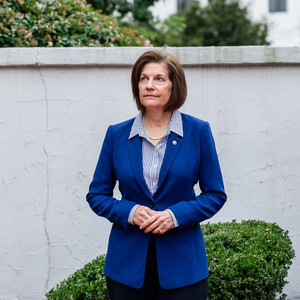
My conversation with an unlikely leader of the Democratic strategy, Senator Catherine Cortez Masto of Nevada.
It's Thursday, February 19th.
Senator.
Hello.
How are you?
Good morning.
It's Michael Barbaro.
Michael, I recognize the voice.
How are you?
Oh, that's flattering.
Thank you for making time for us.
Well, thank you.
I appreciate the opportunity to talk with you.
And by the way, thank you for the great reporting you do.
Seriously, it's important.
Yeah.
You are, as we speak, in Nevada.
Correct.
Not in Washington, D.C., because Congress is on a somewhat ill-timed recess.
That's right.
And I said ill-timed because we're in the middle of a partial government shutdown.
And I want to talk about your role in that.
We tend Senator, to think of the lawmakers who become the face of a government shutdown, or one of the faces of it, as a particular kind of lawmaker, a firebrand, a rabble-rouser pick your adjective.
You are pretty distinctly not a that.
Does that seem fair?
I would agree that I'm a moderate.
To me, the moderates are people who are working to get things done, right?
Who work in a bipartisan way, who think that good government is important, that we still have to work together to do our jobs.
We still have to deliver for the American public, whether it's in our state where we live or across the country.
And I think...
Most people, at least when I'm in my state, they expect that.
They expect you to not only work on their behalf, but work in a bipartisan way.
But...
They also know that there are times and I think it's okay to be out there and pick that fight and say no, this is a battle I'm going to be very vocal about.
This is one I'm going to stand up and say, this can't occur.
And you see that.
I've done that, and you will see that for many moderates across the country doing the same thing.
The last time there was a government shutdown, you opposed it.
I think you voted against it something like 15 times.
And so I don't tend to think of you as a shutdown person.
I see what you're saying.
Yeah.
So let me just say this.
For me, there's nothing wrong with calling out an administration.
I don't care what party you are.
That's hurting our community.
That is challenging our very norms, particularly around, in this case, law and order.
They need to be challenged and they need to be called out.
Well, that's what we want to talk about how you got to this point where you decided to support withholding funding from the Department of Homeland Security.
And I think it stands out that you have joined this effort because of your background in law enforcement.
You're a former attorney general in the state.
You have a very strong set of relationships with law enforcement, which I'm sure we're going to be talking about in this conversation.
DHS, the Department of Homeland Security, is a major law enforcement agency and you have decided that funding should be withheld from it over the way it has approached immigration enforcement.
And I want to talk about how, given your background—
You got to that point.
So tell us that story.
Where does it begin over the past year or so?
So let me just say back in September when we were talking about the first shutdown.
Over health care.
Over health care.
That's right.
I knew going into that argument we weren't going to win it.
You knew that you were not going to win it.
You could play it out.
You could see that the Republicans were not going to support an extension of the ACA tax credits, because here's why.
Most Republicans never even voted for the ACA, so they weren't going to go out there and vote for an ACA tax credit.
So I knew it wasn't going to happen.
Right.
You didn't see an outcome where the core issue of health care costs was going to be addressed.
But here's the thing, Michael.
Here's the thing I do know.
That, because this fight was taken on, many people across the country understood that we need to do a better job of health care.
So to me, this is a perfect example of where Democrats come in.
We are fighting for health care.
We're fighting for affordability and access.
Republicans don't care.
Republicans do not care about that.
You're saying that, even though you didn't support that last shutdown, you ended up seeing the value of it in sending a message.
So let me get to this next shutdown, which you are supporting.
Tell me how you decided and, kind of, when you decided that there was a problem with immigration enforcement as it was being practiced by the Department of Homeland Security, and Because this all started, of course, with President Trump's second term a little over a year ago.
And I wonder if you could just take me on the journey you went through.
So let me give you some background most people don't know.
Most of my career has been in law enforcement.
Quite honestly, when Homeland Security was created, I was working in the U.S.
Attorney's Office in Washington, D.C. as a federal prosecutor.
And my husband was a Secret Service agent.
Wow.
So you're both in law enforcement.
That's right.
And I continued that work, became attorney general here in the state of Nevada, did that for eight years, worked with law enforcement, with prosecutors my entire career and understand the benefits and what we are trying to achieve when we keep our community safe around community policing.
If you're an effective law enforcement agency, you're going to get in the community and build that public trust.
That's what it's about.
You want to go after the violent criminals.
You want to hold them accountable.
But you also want to protect individuals' constitutional rights, because it's about keeping your community safe.
Now comes along this administration and they have all of this money the Republicans have given them in their tax bill.
Right, the one big beautiful bill, as he calls it, yep.
The one big beautiful bill.
Republicans give them about 170 billion altogether and that's 75 billion going to ICE, which the normal annual budget for ICE is anywhere about 8 to 10 billion.
There's no strings attached, no strings attached.
And what we are seeing now is because they have all this money and because they had this quota from Stephen Miller to do 3000 immigration, deportations and detainments a day, they started onboarding whoever they could to work at ICE.
And not only were they onboarding them very quickly, they lowered their standards for hiring them.
And they decreased the training that most law enforcement go through, as they're looking to do community policing right.
De-escalation standards, use of force standards, none of that.
So you become unsettled just from recognizing that there's a sudden hiring binge and that the standards are changing and that the training in your mind is insufficient.
This is back many months ago.
So that's your first set of concerns.
How do those evolve over time?
So then, as we are seeing in communities, this administration unfortunately wasn't about public safety.
Even though Donald Trump was talking about going after violent criminals.
Which listen?
I think we all, everybody in the community, I don't care where you live, you want violent criminals out of your communities.
You want your community safe.
You want to know that when you call 911 and you have concerns, police officers are going to respond.
They're going to keep you safe, respect your rights, but go after those violent criminals.
What we were seeing, however, is just the opposite.
Now they're sending in to our communities numbers of agents that normally were not assigned in those communities, this deportation force of excessive force.
And they are coming into communities and they are just roving patrols, which we've never seen before.
Roving patrols.
They are knocking on doors.
They are not even knocking half the time.
They're going in and without a judicial warrant.
They're pulling people out of their cars.
They are following people I know this because this happened in Las Vegas following people with masks home from church.
Following people home from church in your state?
Home from church in my state.
And I talk to law enforcement all the time.
I also know that during this period of time they actually went after some of my local law enforcement police officers, went after their families and threatened those officers.
Wait, I just want to slow down and understand this.
You found evidence that immigration enforcement agents were pursuing the families of local law enforcement.
Correct.
Correct.
Was it because of their immigration status?
It was because of their immigration status that they had been in Nevada for a long period of time.
They were not violent criminals, but they had been working, paying taxes, raising their family, and they were going after these individuals.
And they were threatening the careers of these law enforcement officers.
What did that tell you?
That tells me they're out of control.
That tells me there is another reason why they're coming into our communities.
It wasn't about going after the most, the violent criminals.
It was much more heinous.
And it was not at the level that we saw in Chicago or Minneapolis, but it is happening.
And what you're describing, this is all happening before Minneapolis.
That's correct.
And then we see what plays out in Minneapolis when they send that police force in.
A national police force that this administration wants to create to just come in and brutalize communities and scare people under the guise of some sort of immigration enforcement.
A national police force that's brutalizing.
I mean, those are some very loaded phrases.
I just want to make sure I'm understanding them.
Yeah, no, please, because I think it is absolutely correct.
They are going after peaceful protesters.
They're killing peaceful protesters who are outraged that they're coming into their communities and actually not even going after violent criminals.
And they're violating individuals' rights.
They are detaining and deporting U.S. citizens.
They are using their administrative warrants to go into people's private properties.
They have violated the First Amendment, the Second Amendment, the Fourth Amendment, the Fifth Amendment, the Tenth Amendment of our Constitution.
That's what this administration is doing.
So yes, it demands action.
And so in your mind, given your background in law enforcement, this is not how law enforcement is supposed to be operating.
And In mid-January you do something about it and you introduce a piece of legislation about ICE that would divert much of this money that we're talking about that came from the one big beautiful bill that was designated for things like ICE and divert it to local law enforcement.
They have too much money, that $75 billion in ICE, too much.
So let's take it away.
Let's divert it to local law enforcement and state law enforcement, who are trained to work in our communities, who know how to manage a protest or even pull somebody over in the car without violating their constitutional rights.
It's the same.
I hear it and see it in my community.
Same conversation that you saw from the police chief in Minneapolis saying the same thing.
It's just common sense.
We had him on the show.
Because I also know, working and talking to my local police chiefs and sheriffs, that not only are they understaffed, but when this deportation force comes into the communities, they are then overwhelmed.
And part of this is, if we are really working to keep our community safe, let's trust those agencies that are trained to do it.
Right.
And take the money away from these ICE agents who clearly not only are not trained, they don't care to be trained and they don't care that they're violating and harming individuals and or killing them.
And Republicans don't embrace this proposal you have.
And you and your colleagues decide that something else has to be done given that.
And what you all come up with is to use your power of the purse, your role as the minority in the Senate, to hold up funding for DHS in a spending bill, unless you get a series of reforms within DHS.
And I want to quickly summarize those reforms that you all ask for.
You ask for there to be warrants when these agents come to make arrests or to go to a house or a business.
You ask that agents' IDs be visible.
You ask that they no longer wear masks.
And I wonder why you all decide that those are the reforms that if you don't get, you will hold up DHS funding.
How you arrive at that negotiation tactic, essentially?
Yeah, I can tell you very clearly from my background in working with law enforcement.
Those are common sense practices that our local law enforcement engage in every day to keep our community safe.
That's why.
And so a lot of the policies and protocols that we had developed in the Democratic ask were just common sense policies that our local law enforcement and state officers were already doing.
That you now want federal immigration agents to use as well.
That's correct.
Why shouldn't they?
So late last week, having not gotten any of these requests granted to you by the administration by DHS, you and your Democratic colleagues in the Senate, you cast a vote to block funding to the agency.
And you know this well because you talked about the previous shutdown over health care.
Shutdowns involve a lot of pain, a lot of unintended pain.
Workers don't get paid, but a lot of them have to work anyway.
So services become strained.
In the case of DHS, that means services like airport security, TSA, cybersecurity, FEMA, Coast Guard.
And you all have made a decision that you know will probably cause some of that unintended pain.
And I want to know why you think it's worth it to do this.
If we do not stand up against this lawlessness that we see this administration engaging in in our communities, then what is left for us?
If you carry out to the logical conclusion that this administration has created their own police force, that they're made up of individuals who don't follow normal protocols that police follow to keep our communities safe, and they're doing just the opposite.
And they're sending them out under the guise of immigration enforcement.
What's next for them?
And the concern is the next is they're going to bring them out around our election process.
They're going to try to claim the election is.
That's what you fear is next.
Absolutely.
It's the logical conclusion that you see happening.
This administration is using this police force to do its bidding.
Listen, I never thought that I would see the day where immigration agents that I worked with in the past at a federal level would be engaging in the brutality that they're doing now.
Well, Senator, we're going to take a break.
And when we come back.
I want to engage with the challenges that Democrats, including you, may face in explaining what this shutdown is and what it isn't to the public.
We'll be right Senator, I want to turn now to a fundamental challenge for you and your party when it comes to this shutdown of DHS.
You've made clear that you see this as a question of what good law enforcement is and what it isn't, and that right now, immigration enforcement operations represent bad law enforcement to you.
But to some meaningful percentage of voters this could end up looking like something else, which is potentially Democrats being weak on immigration.
How do you respond to that?
Well, I think traditionally I have seen that.
Democrats are weak on immigration.
Under the last administration, we have seen that.
Full stop.
I mean, you're conceding that.
Yeah.
Yeah.
Well, absolutely, because this has been my challenge.
I know as somebody who has worked in this space, we can do both.
We can secure our borders.
We can address the human trafficking, the drug trafficking, weapons trafficking that's happening at the border.
I know because as attorney general, I worked on it.
I'm not a border state, but I'm close enough that I worked with the Mexican AGs on these very issues.
We can work to secure it, fund it and, at the same time, have an immigration process that treats people with respect, who want to come to this country, who have been playing by the rules, who have actually contributed to our communities and paying taxes and raising their families.
We can do both.
But I have seen Democrats shy away from that.
They don't talk about the balance between the two.
And I watch as the last administration under Biden was too afraid to talk about securing the border.
So it's just, to me, this is common sense.
This is where most of, at least in Nevada, and I see most of the country, this is how they think.
Americans aren't stupid.
They can see both sides of it and want both sides of it.
But...
By defunding the agency that oversees immigration enforcement, including at the border?
How do you avoid the perception that you are making that work which, as you just acknowledged, Democrats are not known for being effective enough at?
How do you avoid making that work harder or and less effective?
So what my ask is, and what I've been talking about with my colleagues and this is where Democrats need to be aligned is that we are not saying completely defund ICE.
What we are saying is fund them to the level they traditionally were, so that we are securing our borders.
And we are also working in our communities with local law enforcement to go after the violent criminals under the immigration jurisdiction that they have.
That they've traditionally done.
So this isn't a defunding ICE or CBP.
It's just let's give them the funding they need to actually operate under the traditional jurisdiction to help keep our communities safe and work with local law enforcement.
Right.
In a sense, you're saying don't overfund them.
But in making the argument you're making, You're drawing an interesting distinction.
You're suggesting that many voters want and expect a certain conduct from immigration enforcement agents and that they want enforcement to be focused on criminals.
We've talked to plenty of people on this show, and from what you said, you're a listener.
Voters who want interior enforcement based on the fact that they believe illegally crossing the border into the US itself is a crime.
And so, in making the distinctions that you are, are you, in a certain sense, potentially creating an incentive the incentive that Democrats have been criticized for creating— which is you can come to the United States, you can come illegally and you can stay.
And isn't that what President Trump won his election in part based on?
No, here, let me just put a finer point on this.
I do think there is a role for Congress when it comes to our immigration laws, right?
Yes, we have to have a process for people to come here.
Yes, we want to make sure they move through that process.
Congress has failed to do its job and update the laws.
And that's what we should be doing.
But let me just say, Michael, people play politics with this all the time.
And it is an issue to me that is so frustrating.
People, Republicans, Democrats, it's all politics to them.
It is not about how we move our country forward with individuals who want to work hard, be a part of our community and have shown that and raise their families.
I am a U.S. senator because my grandfather came from Chihuahua, Mexico.
And then he served in the U.S.
Army and became a U.S. citizen.
Now, why should my story be any different than any other person who comes to this country and wants the same opportunities for their kids and their grandchildren?
That's what this is about.
But when the Trump administration and Stephen Miller decide that all immigrants are horrific and they're rapists and they're killers and we don't want any immigrant here, that is wrong.
And it goes against our laws in this country and who we are.
And to me, this is a failing on Congress.
This is a failing on my Republican colleagues, who refuse to come to the table and work with us to address this and instead would rather play politics with this to win elections.
How confident are you that the position you're articulating here is where most Americans are?
And I ask that because I have some inside information from my colleagues in the newsroom and the Washington Bureau who saw a memo that you circulated to some of your colleagues in the Democratic caucus of the Senate.
Making the case that there is a right way to talk about this.
That involves both criticizing immigration enforcement as it currently exists, while also establishing some firm understandings about what is wrong with illegal immigration and where enforcement needs to be very tough.
Yeah, you're right.
I have been working as part of what we call the mod squad moderate senators to ensure that the states that we come from, which are swing states like Nevada, where there is a diverse group of people living there including, in terms of party affiliation Democrats Republicans nonpartisans, in equal numbers
These are the individuals that are going to make the difference in whether or not Democrats are going to be in control of the Senate.
That's how we win the Senate back.
And if we are going to appeal to them and talk to them and listen to them, we have to understand what they care about.
And the polling that you're referring to is a polling of just those swing states and who those voters are.
And you're absolutely right.
They want safe communities.
But they also are demanding what they are seeing with ICE.
They don't like the overexcessive abuse of ICE.
They want ICE to focus on the violent criminals.
And they want to know that people are working to help keep their communities safe from those violent criminals.
The worst of the worst.
Okay, so they want an effective—this polling shows that voters want an effective ICE that follows the rules—.
But that does its job, particularly when it comes to detaining, deporting criminal immigrants who are here illegally.
That's right.
And that's what I say is.
Our conversation with them is yes, we've got to get them back to the time where we do this, where we allow the system to work, to go after and find individuals that are the worst of the worst, the most violent.
We also hold people accountable to following our immigration laws.
That is the traditional role of ICE and CBP.
And that's what many people want and understand.
They do not want what they're seeing playing out in front of their very eyes on TV or even in their communities.
And quite honestly, that's why they're coming out and protesting.
That's why they're using their voices.
That's why you see them out there.
And they shouldn't be killed for it.
I want to go back to the last shutdown as a point of reference.
Leaders of your party.
Like Senator Tuck Schumer, they believe that ultimately, that shutdown which you didn't support but it sounds like you gained some valuable lessons from that that was a political victory in the way that it elevated the issue of rising healthcare costs and put it on Republicans.
But even as a victory politically, it did not result in policy changes.
If this shutdown of DHS becomes something like that, a messaging win without policy changes that you're asking for, would you be satisfied with that?
Yes, because here's why.
You would be.
Because here's why.
At the end of the day, this is about an administration who is out of control.
And if they are not willing to even compromise or work with us on addressing what the American public sees with this ICE agency.
They're not willing to come to work with us to rein them in.
There's a problem with that administration.
And the only way, at the end of the day, for us to get more accountability over this administration is to take control of Congress, is to win in these elections, whether it is in the House or the Senate.
We have more oversight role.
We have more accountability.
We can call them in.
We can demand change.
We have more control over the appropriations.
Right now, what we are seeing in this country is the Republicans in control have abdicated their role in Congress to this administration and doing whatever the bidding of this administration, whatever it wants to do.
So even if you don't win these reforms, you may win the argument.
And winning the argument might then mean winning the election.
And then you can, in your mind, change the way this administration operates when it comes to immigration enforcement.
And that's how the process works.
That's who we are as Americans.
That's what this is about.
That's what this country is.
And that's worth fighting for.
Whether we win the policy debate or we win the messaging war, the end of the day it's do we win as a country?
Do we win when we say no more to this administration sending these thugs into our communities?
And we can do that as a country when we elect and make change.
Let's say for a moment that you do end up getting what you want at some point from the administration.
You do end up with some understanding that the masks might come off these agents, that they're going to be using warrants and they're going to be identifying themselves, you know, with badges, as they go about their work.
Even if you get all that, with agencies like ICE and with Border Patrol, given the way they have operated and given the rhetoric from the president, given the conduct that you have described as heinous you've called some of these folks thugs even if you get these reforms, will these be agencies and agents that you can have faith in?
Or is the problem here a lot bigger than Than tactics and conduct.
That's a fair question.
And I think the problem here is a lot bigger, right?
Of course, not only do we want these reforms, but we want to be able to ensure we can enforce the administration to follow these reforms.
And we have seen in the past a lack of trust from this administration.
They say one thing and do another.
So it is a valid point.
And it is something that not just members of Congress but, I think, the American public are grappling with and why they are demanding change in the elected leaders.
And they're demanding and calling out what they are seeing.
I think this administration thrives on chaos and uncertainty.
And constantly moving the goalposts.
That's how this president has succeeded in the past.
That's how he will continue to operate.
But it's not how you govern.
And it's not what the American people want.
Senator, how does this shutdown come to an end?
Or does it not come to an end until after the midterms if the administration isn't really going to negotiate?
Yeah, I don't know the pathway.
I can't.
I don't know, Michael.
I can only say at this moment in this time, the changes that we are demanding, it has to occur.
We cannot see another community being brutalized by these lawless ICE agents and CBP under this administration.
We just cannot.
Well, Senator, thank you very much for your time.
We really appreciate it.
Thank you, Michael.
On Wednesday afternoon, Democratic leaders in Congress chastised both President Trump and congressional Republicans for failing to act with urgency to end the shutdown of the Department of Homeland Security.
Donald Trump spent the weekend on the golf course with Ron DeSantis.
And so we've not seen any high-level effort coming from the president or from the House or Senate.
Republican leaders, We have no idea where they're at, in the midst of a crisis of their own making.
During a news conference, House Democratic Leader Hakeem Jeffries said that his party's proposal for ending the shutdown was in the hands of the White House, but that he was still waiting for their response.
ICE needs to be reformed in a dramatic, bold, meaningful, and transformational manner.
And if that doesn't happen, the DHS funding bill will not move forward.
We'll be right back.
Here's what else you need to know today.
California officials said that eight of the nine skiers missing since an avalanche on Tuesday have died.
The avalanche now ranks as one of the deadliest in the state's modern history.
The skiers were part of a group of 15, including four guides, on a three-day backcountry expedition near Lake Tahoe.
Six of those who were caught in the avalanche were rescued after they used a combination of emergency beacons and their iPhones to share their location.
The avalanche occurred after nearly three feet of snow had accumulated in the area over a short period.
Today's episode was produced by Mary Wilson and Eric Krupke.
It was edited by Rachel Quester and Chris Haxel, contains music by Alishaba Etube and Marion Lozano, and was engineered by Chris Wood.
Special thanks to Phil Corbett and Nick Pittman.
That's it for The Daily.
I'm Michael Bavaro.
See you tomorrow.