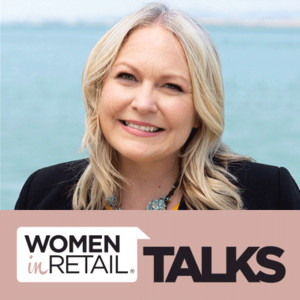
Hello and welcome to Women in Retail Talks, the podcast where C-suite executive women in the retail space share their stories of professional growth leadership development, personal journeys and more.
I'm Marie Albages, Senior Editor of Women in Retail, a membership-based community of executive women at leading retailers and brands.
Today I'm joined by Cora Buell, the Chief Revenue Officer of ThredUp.
She'll share what it's like working at the unique resale company, what significant milestones the company has had over their long-term growth and what challenges she's facing, particularly as a woman in her position.
So Cora, thank you so much for joining me.
Hi, thank you for having me.
I'm so excited to be here.
I am too.
I was just saying before we started recording how big of a fan I am of ThredUp.
I think a huge part of my closet is startups, so I'm really interested in this conversation.
So we're going to go ahead and jump right into questions.
I want to hear a little bit about you're the chief revenue officer in this really unique retail model.
And maybe for anyone who lives under a rock and hasn't heard of ThredUp, maybe tell us a little bit about what the company is, And you know it's obviously unlike a lot of different retailers.
But I want to know what drew you to this unique company in the first place.
Yes.
So I agree.
ThredUp does definitely have a unique operating model.
And part of it starts with how we get our inventory.
So you may know about our clean out kits.
And what that means is that we have individual sellers submit their items in a bag that comes to our distribution center.
And we don't know what we're going to get in it.
Sometimes there's unique skews that we've not seen before.
Sometimes we've seen items in the past that have come through, but we don't know exactly what's going to be sent in.
And so the really unique thing that we like to talk about is the key competitive advantage that we have as a company that processes resale.
And it differentiates us, particularly how we can sell at scale.
And so it includes distribution centers.
It includes having proprietary software and technology and data science expertise that we've really built over the last 15 years.
And so it's a really hard enterprise to get into if you haven't put in the effort and work behind building a company to the scale that we have.
And we leverage that on an everyday basis to continue to innovate.
And we increase that value of our company through resale experiences, through supporting industry players like our RAS business, which is our resale as a service business And, quite frankly, we're really just inspiring the world to think secondhand first.
And we do that through our own individual sellers, but also through any retailer that wants to participate, particularly in women's clothes, at having a resale shop.
And I definitely want to get to kind of the innovation and the expansion that you touched on with the resale as a service and all of that.
But First, you know, I'm looking at your resume and I see you know Macy's, I see Sephora, I see kind of more.
You know traditional retailers.
So why ThredUp?
I mean, you joined in 2019, if I'm correct.
So tell me you know the thought process behind going from a traditional retailer to going to something like ThredUp?
Yeah, no, that's a really great question.
I love retail.
First of all, I spent my entire career in the retail industry.
And when I started to think about how I wanted to spend my time, I really wanted to look at something that gave me a lot of inspiration.
And so back in 2019, I was just starting to consider a change.
I'd been at Sephora for five years and my daughter Haley was 14.
And she was about to go into high school and the clock was ticking, quite frankly.
And I had four years left before she was about to leave for college.
And I really wanted to make sure that the time I spent at work meant something more to me than just a job.
And so I had always been a thrifter.
I grew up in a family that really shopped at thrift stores our entire childhood.
And as I got older, I grew to love the idea of giving clothing a second life.
And so it was about a year before I even joined ThredUP that I had made the commitment to only shop secondhand clothing.
And so it was sort of this colliding of opportunity, where someone from the ThredUP team called me and asked if I would consider a role that they were developing.
It was a VP of finance role, and it was really in preparation to take the company public.
And that was a really exciting thing for me.
I believed in the mission.
I believed in what ThredUP was doing.
And it also gave me an opportunity to balance my work and life and really do something that meant a lot to me, with deep purpose.
How was that pivot for you?
How did you kind of prepare for that new life?
Yeah.
So what's interesting is that the companies that you mentioned, that I've worked at in the past, were larger.
They had bigger teams.
My responsibility spanned over multiple countries.
And so thinking about how to pivot.
One thing that I got a really good question during the interview process, which was how are you so convinced that you're going to be able to do this for a small company?
And I actually get that question a lot from other women who are considering similar changes.
And I think it really has to come down to how do you think about the things that you've built in your toolkit to build up all these experiences, and how are you able to then apply them to a smaller company with less resources?
So I walked out of having a team of over 30 people across multiple countries into a team of two.
And so it is a very dramatic difference.
And so part of what I really liked about the idea was that with a smaller company, you can do things much faster.
And I was able to see how an idea that you have this week could be on our website next week.
And it was so fast and so inspiring.
That was really one of the key things that I was looking for when I was considering a new role.
I really wanted to go somewhere where I could move quickly.
That's awesome.
So I want to talk a little bit about the changes that we've seen throughout ThredUP's life.
You joined in 2019.
And then, you know, we've seen this kind of disruption of thredUP in the fast fashion space.
I mean, you mentioned, you know, you guys started with the clean out kits.
That's how I learned about you all.
And so you were this you know marketplace for buyers and sellers, and now you've expanded to have this really successful resale as a service program.
It's, you know, powering resale programs for more than 40 brands.
I mean, you've got J.Crew, Tommy Hilfiger, Gap, H&M, Kate's Bay, Thompson.
I mean, there's, you know, a whole bunch of you go on your website.
So walk me through kind of the steps that you guys took to get there.
What were the really significant milestones for ThredUp?
Yeah, so ThredUp.
The company was founded in 2009.
And, as you mentioned, our clean out kits were introduced and it was really the easiest way for people to edit their closet and feel good about giving their clothes a second life.
So it's not just about convenience.
It's also about circularity and about peace of mind, knowing where your items are going.
And so this really began to unlock this massive amount of supply.
And that was really the start.
Right.
And so when you think about that, we started to open distribution centers.
We needed to be able to house the inventory in a place that we could process it efficiently.
And right now we have three us distribution centers and one in Europe, and I'll and I'll talk about Europe in a minute.
Um, but that was really early days.
And then in 2018, we launched our resale as a service business, as you've mentioned.
And what's great about this is that it actually leverages our infrastructure that we have today that runs our marketplace.
But what's great is we now offer that to other retailers who may not have had the luxury of 10 years of building this infrastructure or the ability to update their website to be able to accommodate resale of their own products.
And so this service is really a way to unlock a ton of clients across an apparel ecosystem.
And it's really exciting because it means that any retailer can have a resale service or resale shop.
And some of the things that we've also started to expand into is not just clothing retailers.
We also have a partnership with the Container Store, for example, where they hand out clean out kits in 97 of their retail locations, which is very exciting because now it allows people to think about when they're going to remodel their closet.
Maybe they need to make some room for their clothing and put that into a clean out kit.
So it's trying to offer the service anywhere and everywhere a shopper goes.
So walk me through the process.
If I'm a retailer and I want to, you know, get a resale service going.
I mean, we've had our members have asked us, like you know, do you guys have any experience with?
You know, companies like ThredUp, and we're trying to get a resale service down.
So you know, just to help them.
You know our members who are part of retailers understand, you know, give me the high level of when a retailer is inquiring about this.
What's the process.
Yeah, so we actually have some dedicated employees in our new ventures team which are really focused on helping onboard new interested retailers.
And there's many different ways that a retailer can participate.
They can either start, you know, a little bit slower with just a clean out kit, where they offer a clean out kit that's branded with their brand and thread up and it allows their buyers of their particular brand to fill their clean out kit with anything, not just that brand.
Send it into us.
And there's a collaboration where the payout on those items in the bag are converted into credits on the brand's website.
And usually there's sometimes a kicker.
It might be.
For example, if your payout was 100 and you were working with a particular brand who has a booster, they might boost it to 120 to spend on their site.
So there's all kinds of incentives that the brand gets in that offering as well.
The other way that you can participate is in having a shop on your website.
So you can go to a particular brand.
For example, you can go to katespade.com.
And if you go to that landing page, there's also a space for you to click into their resale shop.
And then what comes up is all of the Kate Spade resale items that we have currently in our inventory in our distribution center.
And so it's really powered by ThredUp and it allows people who may be wanting to get into a particular brand but want to try it out first in a secondhand category or maybe the price point is better when it's secondhand, but they really love that brand.
They can still shop and get what they need, but it's very concentrated on that website, just for them.
So is the goal in 2024 and beyond for ThredUP?
Is it to just continue adding to your roster of retailers that you work with to provide this service?
Is there, you know, what else can we expect?
Yeah, so there's a lot.
There's a lot of opportunity.
We are going to continue the partnerships that we have with our resales as service.
We will welcome additional participation in that category.
We really want to focus on clean-out kits.
You know, in order to have something to sell on our site, we need to have the inventory come in.
So we're always looking for new ways to acquire inventory.
But we're also testing new things.
And so one of the things that we've recently announced is this drop service opportunity, which is where, if we don't over index on a particular category, perhaps another company could enter the market with their service.
And so one of those that we just recently partnered with was Rebag.
And so what that allows is for them to list their items on our site, and then it gets shipped directly to the customer from the third party.
So give me the big picture here.
I mean, you've listed all of these things that are essentially a way to stop consumers from buying new and contributing to everything that is harmful about consumerism in terms of the environment.
So big picture, what is ThredUp's mission here?
Yeah, so ThredUp's mission is to inspire the world to think secondhand first.
And so as part of that journey, we went public in 2021.
By listing as a public company, it starts to allow us to have a higher presence with shoppers and really make a bigger impact.
And so, when you think about that, we really balance this concept of mission and purpose with profitability and success.
And so those two things, the more that we can be successful, the more good we can do in this world.
And so It really is all about inspiring people in a marketplace where it may not have been as popular with consumers in the past.
And so we're trying to really move forward with inspiring people to think secondhand first.
Yeah, I mean the reports that you guys and other companies put out about the trend of resale and becoming more and more popular.
I mean, the numbers they're predicting are incredible in terms of who is thinking about, you know, purchasing secondhand.
It's only going to go up, presumably.
Do you have kind of a numbers goal in mind?
You know, where do you see this kind of lifestyle change going 5, 10, 20 years from now?
Yeah.
So not only do we envision the, the US, thinking secondhand.
First you notice that we said the world, and part of that is the expansion into Europe.
And so, after we went public, we actually acquired a company based in Europe that has eight countries of service.
And so we are actually looking to inspire more than just the total available market in the US and really think about the world.
And so I don't necessarily have a number that I would share, but I would just say that, as you look at the amount of clothing that is being produced on an annual basis, it's not just about making sure that those items have a second life, but it's also about looking at those companies that are overproducing and really challenging that idea that.
Do we really need to produce this much?
And so the unique offer with ThredUP is that you don't have to buy new to have a great brand at a great price and rely on a business that can provide that to you.
And we hope that over time that will impact some of this overproduction that's going on in this world.
So many innovations on kind of the business side of things.
I want to pivot a little bit and ask you about the culture at ThredUp.
I know that the company initially experimented with a four-day work week.
How did that go?
And is it still the case today?
Yes.
So we definitely are passionate about our work-life balance and how the company's role has a role in bringing that best self to work.
And so we still have a four-day workweek.
And the way it sort of evolved is that we learned a lot about how people were working.
And during COVID, we really discovered a more efficient way to spend our time.
And part of it was that we just really took a first principles approach to rethink how the workweek was designed at ThredUP.
And it was really to help show employees the action that we care about them.
We care about their work, life balance and their happiness.
And one of the things that's been great.
We've been doing this for about four years and we've seen some really great results from it in terms of employee sentiment retention and hiring.
We have a really high retention rate in general at ThredUp because it's just a really cool place to work and has a great mission.
But our retention rate is above 95%, which is a very high number in corporate retail.
And so one of those things that we found is that 93 of our employees agree that the four-day workweek has made a positive impact on their overall productivity.
And part of that is really about having flexibility to get things done and balance the things that you have at home.
And so I would say it's really working.
I have to also say that people always ask me this question and say but really, are you really only working four days and how does that really work?
And I would say there are always exceptions, right?
Sometimes you have to work on the weekend because you have a big project coming up or you just want to spend some time thinking about a strategy.
And so at the end of the day, you know, ThredUP is an output driven culture.
We have very lofty goals.
And everyone's expected to do what it takes to get the job done.
However, we really protect those Fridays.
If we are going to do something on those Fridays, it's usually month-end close, for example.
It could be that we want to do something special for our employees.
We do a quarterly on-site that we usually do on a Friday.
But it's not a five-day work week and it allows us the flexibility to move things around as we need.
Yeah, I was going to ask, what does that look like in practicality?
I mean, you know, do you have people working?
You know that flexible schedule of kind of the Monday through Thursday.
Are they kind of taking off, you know, here and there as needed?
And, you know, as a leader, how does that reflect in your own working style?
Yeah, so we are in the office, in the corporate office.
We are in Monday through Wednesday, Thursday
And on Tuesdays, we call it a maker day.
And that's where it's really dedicated to some deep thought working on projects.
It's a meeting free day for the most part.
And so the four days, we are very much engaged.
Very long.
You know longer days, I would say you know from.
As a leader.
I tend to spend my three days in the office, really maximizing my time meeting with people, being around others and collaborating, because I think that's a really important part about having a hybrid work environment is that you do need work time, but you also need that in-person collaboration and communication.
And so as a leader, I do that.
But then on Fridays, what I usually do is, depending on what it is that I'm working on, I might spend the morning working on something that's been burning on my mind all week and I hadn't had time to get to it.
I might actually go get my nails done in the afternoon.
I might schedule my doctor's appointments on Fridays.
And so what it allows me to do is that flexibility.
There's usually no meetings on Fridays.
And so it's more about having that ability to navigate my life and insert things where I need to.
And so, for example, I likely will not schedule any kind of personal event Monday through Thursday, so that I can really stay concentrated on that work week.
And I'm sure that the people that you lead, your staff, your team, sees that on your calendar and then feels like it is okay then to do it themselves and say okay well, you know, my supervisor, my leader, is showing that she is going to embrace this flexible, you know, working style.
And therefore I am also encouraged to do that.
And I'm sure that that leads to I'm guessing just more, you know higher morale and more balance on your team.
Definitely.
Yeah, I you know I'm a mom and I've my career has consisted of having a daughter, who I also wanted to be there for throughout my career journey, and so it's really thinking about how you can have both and being flexible when you need to, and then really digging in and getting that job done.
Because like I said, we still have a job to do and we still work really hard to get those outcomes.
It's just how you do it and the flexibility that you give people so that they want to come to work.
They want to work on those hard projects.
They feel refreshed each time they approach those projects, because they've been able to balance their life in the way that they need best for themselves.
The Maker Day is really interesting.
That stood out to me. how do you enforce that?
I guess both for your employees and for you to kind of sit down and dedicate the time each week.
I know I have a really hard time with blocking my calendar and saying I'm not going to answer emails.
I'm not going to do the like daily nitty gritty, but I need to like sit down and really work through this project or this idea or this concept.
How do you Find the discipline for both yourself and making sure that your team is following that.
Yeah, it takes practice.
And it's not always perfect.
Some people block their calendar.
They ask, do not schedule without prior conversation.
We are pretty good about that.
The respect for Tuesdays is very high at the company because we value this Maker Day.
We value the opportunity to do this.
And what I would say is that each person has to really hold themselves accountable to it and really work towards that.
It's not easy, I would say.
Nothing's that easy, but it is something that, if your entire company is behind and supportive of, and because we know how valuable it is for our people to have time to think and work through hard problems, we have to give them that time.
And again, like seeing that reflected in the leadership encourages you know someone in the mid tier to do the same thing.
So I really like that.
We haven't really talked about what you do, you know, as the chief revenue officer.
And I'd love to know a little bit about you.
Know how you found yourself in this role that I believe had never existed before at ThredUp?
So this role was, I'm guessing, created for you.
What was that?
What was that like?
Yeah, that's correct.
So I would just start with saying that one of the most exciting things about working at ThredUp is the ability to influence outcomes.
And the reason that that's important is that our values encourage people to get involved in things that aren't always in their job description.
And so the chief revenue officer role is new.
But the way that we think about and drive revenue.
It's something that I had been playing in my previous role, which is I was the SVP of finance and there was a lot of overlap.
And so the way that it works at ThredUp is that there's been so many people who have evolved during their tenure into roles that they hadn't ever envisioned that they would have previously.
And it's really a reflection of how we think differently when it comes to like getting the job done.
And so this was a new role, as you said, and it was a collaboration between myself, our CEO, our chief people officer and our board.
And really we identified that we could do even greater good if we reorganized our team members and grouped all of the revenue driving activities under one leader.
And then that leader needed to be laser focused on driving sales.
And so That's one of my huge passions about the business.
And so, as the revenue team started to form, we really started to think about what is our mission and how do we want to continue to drive sustainable revenue growth.
And so we work cross-functionally.
We maximize revenue through all these different ways, data-driven strategies.
We're responsible for pricing, promotions, marketing investments.
And we are really targeted at acquiring and retaining our customers with our unique value proposition, which we've talked about.
I'm very passionate about our goal to drive a best-in-class loyalty program.
And we are also always looking for expansion of additive revenue streams so that we can really support our overall mission.
That's a lot of responsibilities under one leader.
So I admire what you're doing, also admire the fact that I think you know there's very few women CRO positions.
I was reading a study from a little old, 2021 that showed that only about 8 of CRO roles overall are held by women, which you know.
You can see it, you know in the landscape, but you know that's a really low number.
So I was wondering kind of any challenges that you've had specifically as a woman in the role?
Yeah, actually, I had to go look up that stat myself.
And I would actually start with saying you know talking about being a woman in any executive role in the C-suite.
I looked up a few things.
And one of the things that I would add to that is that there are 69 fewer women executives in leadership teams in the US workforce than, And that women represent, like 58 of the workforce, you know as of 2022, but only 35 of them hold senior positions.
And so the overarching stat that I came across was that actually, companies with women executives are 30 more to outperform other companies.
What we like to hear.
Right?
Yeah.
I believe we need to work towards more of an equal balance.
And so I'm very passionate about that.
I want to also mention though that, with those stats in mind, I do not feel like I have faced a gender challenge in my role at ThredUP.
And that's partly because we're very focused on making sure that there's equality for both men and women at ThredUP.
And a couple of things to note.
Our board is comprised of 50 women, including our chairperson, who's been our leader for over 10 years.
I'm also the executive sponsor of the Women's ERG and I actually feel honored for being a woman on the executive team.
And I've really been able to use my position and experience to really pay it forward as much as possible.
And so knowing the experience can be very positive and very supportive.
It's one of those things that I also want to continue to do to pay it forward.
It's why I'm doing this podcast.
It's why I joined Women in Retail in the first place.
It's something that is very real for many women.
And I am aware of it.
And I've just been fortunate enough to find myself in places where I haven't felt a disadvantage, but definitely aware and want to make sure that other women know that it is possible.
Yeah.
And I mean-
Here at Women in Retail, we'd love to hear that.
So thank you for sharing those encouraging stats as well.
So I'm aware that we're almost out of time.
And what you said kind of leads me to my final question, which is, if we're trying to get more women in these executive spaces, what advice do you have for that next generation?
Yeah.
This is a good one.
I think you should surround yourself with people who fight for you in rooms you're not in.
I know we've heard that before, but it's a really important message.
I think you should build connections that form well before you need to call in a favor.
And I also tell a lot of women to remind themselves that you don't need to be 1000 qualified for that next role, but you can do it through relentless effort to learn, do your best and grow from experience.
And so that's what I try to tell other people who ask me for advice.
And I try to do this for other women.
Yeah, I wrote down.
You know, find people who fight for you in rooms that you're not in, because it sounds like that's exactly what you're doing by coming on this podcast and sharing everything.
So I want to wrap it up there and thank you Cora, for coming on and really being authentic in this conversation.
I really appreciated it.
Like I said, I am a huge startup fan and I'm so glad that I know a little bit more about it now.
And I wish you all the best for the year to come.
Thank you so much.
I'm so glad to have been here.
Thanks for listening.
For more information on this podcast, please go to womeninretail.com slash podcasts for show notes.
Women in Retail Talks is available on Apple Podcasts, Google Podcasts, Stitcher, and Spotify.
Make sure to subscribe on our podcast channel page as well.
If you've enjoyed this episode, please take a few moments to rate and review our show.
Lastly, if you're a female retail leader interested in joining our community at Women in Retail Leadership Circle, visit womeninretailcom.
Slash apply.
Thanks and until next time, this has been Women in Retail Talks.