In northern Myanmar, armed soldiers are raiding criminal scam centres.
Literally thousands of people spilling out onto the streets.
There's a lot of emotions going on and a lot of people unsure of what is going to happen.
The military say they're fighting crime, or are they a part of it?
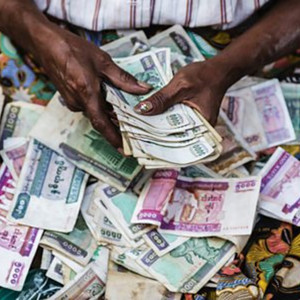
It's looking to control a larger share of the proceeds of the scams.
It's actually about the money.
This is World Business Report from the BBC World Service.
I'm Ed Butler, and today we're examining the latest dramatic situation in southern Myanmar, where a notorious criminal scam centre is coming under attack, seemingly from the very military that was profiting from its crimes.
Also, we're hearing why tourism could be a big casualty of the latest row between China and Japan.
So then, let's start with what is happening as we speak close to Thailand's northern border with Myanmar.
Yeah, that is the sound of the situation right now on the streets of Shwekoku as a new town there in Myanmar, which has become notorious in recent years as the epicentre for the so-called scam industry.
Thousands of people... can be seen pulling suitcases, standing on the streets.
They've evacuated buildings that we understand are being cleared by the Myanmar military right now.
There seems to be a sense of panic.
As many as 200000 people allegedly work in scam centres across Southeast Asia, often under threat of torture, targeting citizens around the world with fake cryptocurrency schemes.
The businesses are largely run by Chinese criminal groups and are said to be making tens of billions of dollars every year.
This Australian aid worker, Judah Tanner, who works with scam survivors in the region, has confirmed to us that a military operation is underway in Shwekoku, led by the Myanmar military.
This is the latest he gave us a short time ago.
This has definitely caught Thailand and everybody by surprise.
We heard earlier this afternoon from some of the foreign nationals that were inside the scam buildings that the Chinese bosses and managers of these companies have been protected.
They've been moved to safe areas outside of Shwe Koko.
That has led to some systematic clearing of the buildings.
We have just now received videos of the last few hours, of literally thousands of people spilling out onto the streets with their bags suitcases, luggage being brought out from their hotel rooms, the scam centres throughout Swe Koko.
Several hours ago, we were informed that there was an estimated 3000 people presumed to want to return to Thailand in order to go home.
That number has very quickly grown to 5000 and of course from now it could get much larger before tomorrow morning
At this time, we hear that the borders will be open tomorrow for a very large number of those victims.
There is some suspicion that this is a coordinated effort.
We've heard some chatter that there is going to be bombings that will start inshore cocoa as a result.
So I think it is something that we're going to have to pay attention to, both whether the Myanmar military do come into the region and start destroying the buildings, and what might happen with the civilians that are left behind, whether they will be able to return back to their home country.
And, of course, When you're looking at thousands of people coming out onto the streets in front of their apartments and hotel buildings, unaware of where they're supposed to go.
That's a huge coordinated effort that's required in order to both safely protect and house these individuals, but also finding ways forward.
So I think over the next few hours we're going to see the numbers perhaps grow quite a lot, larger than 5000.
Australian aid worker Judah Tanner in northern Thailand.
Well, it sounds like a desperate situation for some very vulnerable people.
But the context of this, of course, is a wider effort by the Myanmar military against some of these scam centres.
Three weeks ago, another building known as KK Park was also bombed by the Myanmar military.
Well, that was the blast.
And since then, several hundred more migrant workers have found their way from KK Park into Thailand.
They're seeking repatriation from what they say is forced labour.
The Myanmar military says that it is cracking down on the scam operations.
It's suppressing online fraud and cross-border cybercrime.
But Jason Tower, a senior expert at the Global Initiative Against Transnational Organised Crime, reckons that this is just propaganda.
The military pressure is in fact a shakedown, he says, to extort money.
One thing that we should really point out is that the Myanmar military and the border guard force of the Myanmar military are the main actors involved here.
They're the main perpetrators along with aligned militias.
Now, these scams are incredibly lucrative, right?
So you're hearing some sources on the ground say that part of the Myanmar military's push here to become more directly involved in controlling these territories is actually about the money that it's looking to basically control a larger share of the proceeds of the scams.
It wants more direct involvement.
So now it's coming in really to take a larger share.
And we have again heard some sources on the ground indicating that there were some negotiations around revenue sharing that failed between the Myanmar military and the border guard force.
Regional expert Jason Tao.
Well, joining us now is Erin West.
She's a founder and president of Operation Shamrock, which is a campaign group.
She's a former deputy district attorney in California.
Hi, Erin.
Let's just remind ourselves how these scam operations actually operate.
They are spread across parts of Myanmar also Cambodia and Laos, and the Philippines, perhaps other regions.
They're doing what exactly?
How do they work, these scams?
Thank you so much for having me.
Yeah, these scams are really crushing a lot of the globe in a financial way.
The way they operate is they send out a text trying to draw you in.
And over time, they build a relationship with you.
This is how the main crime called pig butchering works.
They build this relationship and they lead you to believe that there is an amazing opportunity to invest in cryptocurrency.
And as you put your money into this cryptocurrency platform, you see amazing gains.
And at the end of the day, it all turns out to be false.
And you've lost all of your money.
Yeah.
Claiming, is it $10 billion in the US last year alone, according to the US State Department?
I mean, big numbers.
This is a hugely lucrative business.
Absolutely, yes.
And I think that what we need to... acknowledge about that is it's 10 billion reported.
And we know people, the enemy has chosen a crime that's embarrassing and humiliating to report.
So the reality is that number is much higher than that at least 50 billion from the US alone last year alone.
We understand that, don't we?
That thousands of foreign nationals are basically being forced into this work themselves.
It's kind of complicated.
We've got the scammers themselves are often victims.
Absolutely.
This is one of the few times in my life actually the only time in my life where I've seen a situation where victims are scamming victims.
And really the only winners here are the organized crime syndicates that are making incredible amounts of money.
Tell me about the Starlink, the role of Starlink in the process.
This is Elon Musk's satellite communications network.
Now, they were kind of in the spotlight last month, weren't they?
They claim to have disabled some Starlink kits in the vicinity of KK Park, which was the first of those two scam centres I described.
Yeah, I'd say on that a little too late.
We were asking for Thai telecommunications to turn off access to KK Park. three years ago.
And by the time they did that, Starlink was up and running.
But actually the major problem here is that these scammers have access to other forms of telecommunication but locals in schools and hospitals don't.
So the blanket turnoff by Starlink was actually detrimental to Myanmar locals and not so detrimental to the scammers.
It's business as usual for them.
Right.
And this seems to be the wider message, doesn't it?
Because there are huge numbers of these centres.
There are dozens, hundreds perhaps of them just along a small area of this Miyawadi region in northwestern Thailand.
South southern Myanmar.
The moves are afoot, though, are they not?
And it's not just by the Myanmar military.
Well, we've seen what's going on there with these raids.
But The Chinese government, the US government, the British government, Hong Kong, South Korea.
There are a lot of countries now stepping in to try and close things down.
And in the case of the US, to move against a Cambodian conglomerate recently.
Yeah, I think we've definitely seen some positive momentum in people acknowledging people and nations acknowledging that we've got a major international crisis here.
The level of violence that's being committed against these human traffic workers is extreme.
The amount of money being transferred out is extreme.
And so I'm grateful to see nations stepping up to call this out and to start holding people accountable.
But the fact is, these are small steps into a major problem.
When I drove through Cambodia, it is crazy. major compounds everywhere.
It is a nation made up of scamp compounds at this point.
So you're saying a lot more needs to be done.
What precisely would you like to see?
What I would like to see is I would like to see all of those countries that you just mentioned getting together and including other nations of the world, and saying we're not going to tolerate this anymore and really imposing major economic sanctions sanctions for those countries that are allowing this to happen.
Okay, thank you very much.
That's Erin there talking to, talking us through, I think, some of the extraordinary developments going on right now in southern Myanmar, northern Thailand, Erin West.
Thank you for your time.
Peter Jankowskis is with us.
And Peter, we're going to talk about the markets generally.
But first, let's look at this one story.
The US healthcare company Johnson & Johnson is buying the cancer specialist Halder Therapeutics for more than $3 billion.
This is part of a wider move, isn't it?
In many sectors, it seems right now for mergers and acquisitions.
It's rather taking its grip on on the US markets at the moment.
And some people are a little puzzled by that.
I mean, others just think it's business as usual.
We're in an M&A boom.
Well, I think some of it reflects the fact that the prior administration was fairly aggressive with some novel interpretations of antitrust law very hostile to mergers generally.
So in some sense, what we're seeing now is firms catching up to a degree with an administration that is a little more friendly to mergers.
They are more friendly.
But I suppose the question is when we've had many people warning, if you like, against a bit too much froth in the market.
If you're buying a listed company at a certain price and the share price is set to fall because the markets generally are overvalued, I mean clearly there isn't that sense of concern amongst those involved in this MA stuff.
Well, I think some of it is.
In general, while the market as an average is very overvalued, a lot of that is concentrated in some of the big tech names.
If you look outside of that space, there are good values available in the marketplace.
And that's really where a lot of these mergers are taking place.
Okay.
Tell me then about US stocks generally.
We've seen a bit of a slowdown, things edging slower of late.
Yes, indeed.
Since about Thursday, stocks have been under pressure.
Today, the S&P 500 was down about nine-tenths of a percent.
Many economically sensitive sectors were leading that.
A couple of concerns that are out there.
First, of course, is the value of AI companies.
NVIDIA, the big chip-making company in AI, is going to be reporting earnings on Wednesday, so people are a little nervous ahead of that.
And then, of course, with the government shutdown here in the US, the markets have been doing without a lot of the economic data that they normally see.
And some of those reports are starting to be produced now.
So there's a little bit of concern of how those reports might impact the decisions of the US Federal Reserve when it meets later this month.
And speaking of the shutdown, a bit of a relief, US Airlines starting to resume normal operations.
A relief, I guess, for those looking forward to their Thanksgiving holiday.
Indeed, I think they did finish a deal soon enough that the air travel industry will be able to recover and get people moving.
That big travel move really starts this weekend.
So it's a pretty tight window, but it looks like it's going to come together.
Peter Jankowskis, thanks very much indeed.
You're with World Business Report from the BBC World Service.
Now shares in Japanese tourism-related companies have fallen sharply in Tokyo after China has urged its citizens not to visit the country.
This is all part of a deepening dispute between Japan and China over Taiwan.
More than 7 million Chinese have normally visit Japan each year, accounting for about a third of all tourist spending annually.
But Beijing has warned Japan of severe military consequences after the new Japanese Prime Minister, Sanae Takeuchi, said any Chinese attack on Taiwan could see Tokyo intervene militarily.
China is threatening real retaliation, it seems.
Chinese TV has warned people not to go to Japan.
Recently, Japanese leaders have openly made blatantly provocative remarks concerning Taiwan, which has seriously worsened the atmosphere for exchanges between Chinese and Japanese people and posed significant risks to the personal safety and lives of Japanese citizens in Japan.
The Ministry of Culture and Tourism of China solemnly reminds Chinese tourists to avoid travelling to Japan in the near future.
The words of Chinese state TV.
Well, Taiwan's President Lai Ching-te has now entered the dispute, telling China not to be a regional troublemaker, in its words.
Japan's Chief Cabinet Secretary Minoru Kihara has also spoken out against the warning.
I believe that this announcement, which seems to curtail the exchange of people between the two countries, including study abroad and tourism, is incompatible with the broad direction of promoting a strategic, mutually beneficial relationship, confirmed by the leaders, and building a constructive and stable relationship.
So that's the politics.
What does this mean for business?
Neil Newman is a head of strategy at Asterisk Advisory Japan.
It's a financial consulting company which is based in the country.
Hi, Neil.
So what's going on here exactly?
They're threatening to cut off all tourists.
I mean, I guess if Beijing tells Chinese tourists not to travel to Japan, an awful lot of them won't be going?
This happens periodically, and I don't think –
Prime Minister Takeuchi is breaking with tradition of a Japanese politician saying something that upsets the neighbors.
When this has happened in the past, there's been a big war of words.
But at the end of the day, the impact has been very limited.
And we had a situation.
In 2017, similarly, China was upset, and rightly so.
There was a book published in Japan denying the Nanking massacre.
It actually happened.
And again, there was calls to boycott actually one of the hotel chains.
But at the end of the day, it didn't really make an awful lot of difference on the tourism.
So there is definitely a disconnect between politicians' war of words, the spat regionally and the movement of tourists.
I would get more worried about this if it does escalate, because of course, if we start to see a boycott of Japanese goods or a deterioration, and maybe even pulling out the rare earth metal supply from China to Japan as a choke point, then we would have something to worry about.
But it seems there are moves now to try and smooth this over, calm it down.
And to be honest, I mean, it's not really a surprise that Prime Minister Takeuchi has said something along these lines.
This was one of the reservations originally with her becoming head of the LDP that you know she is a China hawk.
I mean, talk about the wider retaliation if and when it could happen.
As you say, the issue of Taiwan has been something that China has been pushing very hard to kind of ring fence and keep the regional neighbours away from talking about.
Japan is now positioning itself as potentially a military ally in a.
Yeah, there could be wider sanctions.
I mean just talk about Japan's potential exposure here in general economic terms to China, what China could do to Japan.
Well, certainly I think if we do see a boycott on Japanese goods locally, then that would certainly hurt a lot of exporters down into China, luxury goods and what have you.
Tourists coming up to Japan are well known to be very keen on buying things like over-the-counter pharmaceuticals and taking out a lot of the Japanese-y type QT tourism stuff.
So you have companies that obviously specifically provide that.
But overall I think just the deterioration in trade between two countries at the moment is the last thing anybody wants the Chinese, or the Japanese for that matter, in which case this point here And the reaction from the stock market, I think, was a big overreaction.
And this certainly is a big overreaction to headlines at the moment just in the Japanese equity market.
We're going through the earnings season, and it tends to get a bit sensitive this time of year.
So the reaction in the market, I think, was overblown.
But the potential for this to get worse is definitely there.
But as I say, there seems to be the move at the moment to try and smooth this over.
There's an envoy going to China to cool it down.
I don't think Takechi will retract her words or back down.
If anything, if China continues to sort of try to escalate this, I think it could deteriorate.
Very briefly, I mean, where is Japan?
It's had a tough few months with the tariffs and the way that they've affected particularly Japanese car makers right and other things.
I mean, how –
How optimistic are you that Japan is in a position to start bouncing back from these various geopolitical blows it's faced?
For Japan.
With respect to the tariffs, the important thing there was to really know what the playing field looked like.
And then corporates can then work their plans around that.
And it's very clear now where they sit with the US.
And part of this might have been playing to the American audience.
So I'm actually fairly confident that Japan corporations will actually work their way around this.
But now, you know, the China issue has been thrown into the mix.
So this is obviously going to upset investors who probably have a very volatile time in the market.
Neil Newman, thank you very much indeed.
The Amazon rainforest could face a renewed surge of deforestation as efforts appear to be growing to get a long-standing ban overturned.
This ban, which prohibits the sale of soya grown on land cleared after 2008, is widely credited with curbing deforestation of the Amazon rainforest.
It's seen as a global environmental success story.
Powerful farming interests, though in Brazil backed by a group of politicians, are pushing to lift the restrictions.
So Wanderlei Ataides is president of the Soya Farmers Association of Pará State, one of Brazil's main soya producing areas.
Our state has a lot of room to grow, and the soy moratorium is working against this development.
How does this help the environment?
I can't plant soybeans, but I can use the same land to plant corn, rice, cotton, other crops.
Why can't we plant soybeans?
Well, to discuss this further, I've been speaking to Maurício Voivodick.
He's the executive director at WWF in Brazil.
So the Soy Moratorium, as we call it, is an initiative that has been signed 20 years ago and has been very effective on preventing the soy expansion to destroy the Amazon forest.
The way it's done is that companies or producers This is from areas that have been cleared after 2008 yeah,
Right.
Of course critics of the ban say that it's unfair and it's kind of a cartel, because it allows a small group of the most powerful companies those who already have cleared land, perhaps to dominate Brazil's soya trade.
What we need to understand Ed, is that it's a small amount of producers in the Amazon who actually does the trade conversion of forests.
It's less than 5%, okay?
So it's a small group of producers that still do deforestation.
And actually, most of this deforestation is illegal.
So it's done without legal license and without any kind of consideration on environment.
This small group, unfortunately, has a strong political power in our Congress.
And this is the group, through this political power, who is putting pressure on the end of the soil moratorium, which is a shame, because actually the soil moratorium is good not only for the companies but for the Brazilian agriculture in general, because we avoid that stamp on the Brazilian soil that it is a driver of deforestation in the Amazon.
And that is a benefit for all soy producers in the Amazon, in Brazil in general.
Brazil is benefiting right now, isn't it, from a huge boom in soy exports, specifically to China.
I mean you can see the huge economic incentives for all of Brazil right now to see some kind of change in the rules.
Well, actually the soy expansion is happening in Brazil, regardless the need of destroying more forest.
Soy expansion is happening even during the soy moratorium, even in the Amazon, but not over forest but instead over degraded land that is fully available.
There's about 40 million hectares of degraded land in which the soy would expand its fields.
So it's not really a driver, an incentive that is pushing all of this.
As I said, it's this minority of producers that they want to keep benefiting and making profit out of the destruction of the Amazon.
That's the problem.
Maurício Voivodek, he's executive director at WWF in Brazil.
Just time to tell you about one more story.
A long-running financial dispute between the footballer Kylian Mbappé and his former club, Paris Saint-Germain, is being considered by a French court this week.
The striker is claiming $300 million from PSG in unpaid wages and for alleged mistreatment.
PSG are asking for 278 million from Mbappé himself because of a failed transfer to a Saudi Arabian club.
That's just about it for today's edition of World business report from me and the rest of the team.
Thank you all very much for listening.
Take care.