I'm Ayesha Roscoe and this is the Sunday Story, where we go beyond the news to bring you one big story.
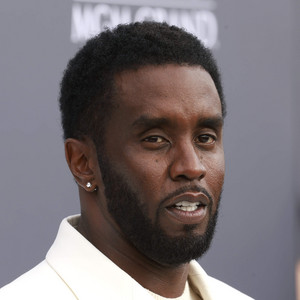
This is Sean Combs, aka P.
Diddy. You might also know him as Puff Daddy, Love or Puffy.
And back in 2023 when he was performing this medal at the VMAs, he was at the height of his fame and power.
He received a Global Icon Award at the ceremony and around the same time mayor Eric Adams awarded Combs a gold key to New York City.
Twelve months later, Combs was in jail and facing criminal charges for sex trafficking and racketeering conspiracy.
The hip hop artist Shawn Combs, better known as Puff Daddy or P -Diddy, was arrested late...
Shawn Diddy Combs was arrested late Monday night in New York and indicted on federal charges of sex trafficking and racketeering.
This is just the latest...
Tomorrow Combs' trial will begin in New York City.
Today on the show NPR music reporter Isabella Gomez Sarmiento joins us to talk about the the rise and fall of one of hip -hop's biggest stars.
A warning, this episode contains discussion of sexual assault, violence, and drug use.
Stay with us. CEOs, Bill Gates, Steve Ballmer and Satya Nadella share the stories, dreams and drive that fueled the digital revolution and explain why it may be at its most exciting point yet.
For these and more conversations with other thought leaders, search Tools and Weapons wherever you listen to podcasts.
You may have heard that President Trump has issued an executive order seeking to block all federal funding to NPR.
This is the latest in a series of threats to media organizations across the country.
Whatever changes that brings, NPR's commitment to reporting the facts won't change.
Join the movement to defend public media.
Visit donate .npr .org.
This message comes from Osea.
Ocean Wave Cleanser from Osea is a cleansing oil formulated with onderia seaweed.
Available at oseamalibu .com or alta .com.
Get 10 % off your first order with code ocean at ocimalibu .com.
We're back with a Sunday story and joining me to talk about Sean Combs and his upcoming trial is NPR's Isabella Gomez Sarmiento.
Isabella, welcome. Hi, Ayesha.
So, this is a huge moment for hip hop, for pop culture more broadly because Sean Combs, Puffy, Diddy had a really indelible mark on hip -hop and on pop culture.
And now he's facing serious criminal charges.
Bring me up to speed on what he's being accused of.
Yeah, I mean, right off the bat, we have to sort of set the record straight, which is that for nearly two years now, we've been hearing all of these civil lawsuits and really serious sexual abuse allegations against Sean Combs.
But that's separate from the criminal charges he's facing during this trial.
Although there is definitely a lot of overlap in the allegations.
The big picture here is basically that the government is accusing Combs of using his power across the music, fashion, entertainment, and media industries to run a criminal organization that not only facilitated but concealed sex crimes dating back more than a decade.
Obviously, you think of hip -hop, there are a lot of hip -hop artists that go get arrested for drugs, violence, you know, something like that.
This is sex crimes, what are we talking about?
Yeah, the first charge is for sex trafficking.
So the prosecution is alleging that Combs would lure women into his orbit, often, you know, under the pretense of a romantic relationship.
And then he would coerce them into commercial sex acts.
So it's not just allegations of interpersonal sexual violence, but it's threatening or forcing someone into commercial sex acts that distinguishes this as trafficking.
I spoke with Aya Gruber.
She's a former defense attorney and a criminal law professor at the University of Southern California.
And she said, in the past, we've often understood trafficking to mean like, an exploiter has forced someone to have sex with others for money.
But that definition has kind of changed in recent years.
With these high profile cases, like Harvey Weinstein and the NXIVM cult case, Courts are willing to define commercial sex as an exchange of sex not just for money but for anything of value.
So it could be promises to help your career in entertainment, it could be moving up in the hierarchy, in the cult.
So it can be various things.
And that's a really important distinction to make because the big picture that the government is painting here is that Combs would exert his power and his influence to promise his alleged victims money, sure, but also career opportunities.
And then he would hold that over them.
So he would use intimidation and threats and often violence to allegedly get them to do what he wanted.
Another thing that Combs is being charged with is transporting to engage in prostitution.
He faces two counts of that.
And criminal law professor Aya Gruber says, those charges are also broader than we might think.
It's bringing somebody across state lines either to engage in commercial sex or any act that would be against federal law.
So that could include things like trafficking, things like rape.
So that encompasses more than just prostitution.
So I would assume that it wasn't Combs acting alone and making all of this happen.
Yeah, the charge that really ties all of this together is one for racketeering conspiracy.
So it alleges that all of these crimes are able to happen because Combs used his businesses to direct his employees to do things like solicit victims, solicit illicit substances, clean up and conceal alleged criminal activity, including through forced labor, bribery, arson, kidnapping, and obstruction of justice.
Now, Combs has pleaded not guilty to all of the charges we've just discussed.
But is Combs the only one on trial?
Because conspiracy, you think that involves more people.
Yeah, he's the only defendant publicly on the case.
That doesn't mean there aren't other employees or associates of his that are being prosecuted.
It just means, you know, on the public record, Combs is really the only person on trial for these crimes.
So how did all of this come crashing down for Combs?
To answer that, we need to back up a little bit so earlier we heard that audio from the September 23 VMA's performance and you know that ceremony where he got the key to the city of New York but just two months after that in November of 2023 his ex -partner the singer Cassie Ventura filed a civil lawsuit against Combs for rape trafficking and physical assault and basically that lawsuit stated that Ventura met Combs when she was 19, and he was 37.
And soon after that, she signed a record deal with his label, Bad Boy Entertainment, and then she says that he completely took over control of her life, both personal and professional.
She alleges that Combs forced her to take illicit substances, that he forced her to participate in sex with male sex workers while Combs masturbated and filmed the encounters, and that he frequently beat her very violently.
The lawsuit stated that the beatings were often witnessed by Combs staff and employees.
Combs has denied all of the allegations, but that lawsuit really sent shock waves through pop culture because Combs and Ventura were in an on -again, off -again relationship for more than a decade.
They were like, a very public -facing power couple.
Within a day of Ventura filing that lawsuit, she and Combs settled out of court for an undisclosed amount and after Ventura came forward, it kind of opened the doors, like more and more women and men began to file similar civil lawsuits against Combs.
Then in March 2024, the Department of Homeland Security conducted raids on two of Combs' properties.
And two months later, CNN released this really shocking hotel surveillance footage that shows Combs very violently assaulting Ventura.
The recording took place in Los Angeles in 2016.
And after that video went public, Combs posted this on social media.
My behavior on that video is inexcusable.
I take full responsibility for my actions in that video.
I'm disgusted. I was disgusted then when I did it.
I'm disgusted now. Then in September of 2024, Combs gets arrested in New York City for these criminal charges that we were talking about earlier, sex trafficking, racketeering conspiracy, and transporting to engage in prostitution.
Okay. So, and going back to those raids, I mean, you know, it was huge news.
everybody's talking about it.
Authorities confiscated weapons, electronics, and then, of course, everybody's talking about the thousand bottles of baby oil, and then there's talk of these alleged freak -offs.
Can you explain what those are, because part of this has become this idea that this was some Hollywood thing, everybody's involved, celebrities everywhere, but what are the actual accusations coming out of the alleged freak -offs?
Yeah, the freak -offs went a little bit viral online and there's been a lot of speculation around them.
But they are part of these alleged commercial sex acts, so when we're talking about sex trafficking and transporting to engage in prostitution, the government is describing the freak -offs as part of that.
The indictment says that, quote, they were elaborate and produced sex performances that Combs arranged, directed, masturbated during, and often electronically recorded.
Basically, the prosecution is alleging that Combs and his associates would transport commercial sex workers across state lines and internationally to participate in the freak -offs, and that they often lasted multiple days.
Participants were allegedly given controlled substances to, quote, keep the victims obedient and compliant.
And the prosecution is also alleging that Combs coerced alleged victims to participate in the freak -offs in a number of ways.
So, physical violence was certainly a big part of it.
I spoke with Caroline Gunthert, she's a civil law attorney specializing in sexual violence cases.
And she said that under the law, the definition of coercion is actually quite expansive.
Coercion could be financial coercion.
It could be threats of bodily harm.
It could be threats to reputation.
The law really defines it quite broadly, which is really important.
So even like threatening to leak something that would embarrass or professionally harm someone, that could potentially be considered coercion here.
And these freak -offs were allegedly so physically taxing that the indictment says combs and the participants were often given IV fluids afterwards to recover.
The indictment obviously refers to these freak -offs, but it sounds like the allegations you're describing are quite serious even if they have this name that makes it more just sound salacious.
And it does sound like this is very involved and complicated.
Yeah I mean there is the potential that there are other people who will be prosecuted but the core part of the government's case is that this was allegedly an entire empire working to execute what combs wanted and that goes you know from finding the alleged victims to booking the hotels to cleaning up after the freak -offs and allegedly using kidnapping, bribery and arson to make things go combs way and protect his public image.
The thing that does complicate this a little bit is that the indictment says some of his employees were victims of his threats and violence themselves.
So criminal law professor Aya Gruber said this is kind of key to the racketeering charge because it might make it easier for employees who have facilitated and concealed crimes to be willing to testify against Combs.
It's always been designed as an aid in the government to prosecute people that, you know, they think other people wouldn't testify against. But another sort of clever part of the prosecution plan here is to paint the underlings as victims, right, because somebody could think, well, you know, this is a person who likes to be close to power, who gets a lot of money for doing bad things for Diddy, and this is sort of a bad actor here.
So Gruber says that like, the defense could argue some of Kum's employees are untrustworthy, trustworthy, they're snitches, they went off and committed these crimes on their own, but that by alleging that some of them were coerced into doing these things, it becomes a lot easier for the prosecution to paint a picture of Combs as the head of this very large criminal organization working in his favor.
So he's facing these charges alone, and Combs has been held in jail since his arrest in September, right?
Yeah, that's right.
He's been denied bail multiple times.
The judges presiding over the case felt that he was at risk of leaving the country or of harming or intimidating potential witnesses.
And that surveillance video of him assaulting Cassie Ventura has come back up a lot leading up to the trial.
The prosecution pointed to it as evidence that Combs can be violent and should await trial in custody.
There's a very vivid description of the video and the indictment, though Ventura is not named.
And the prosecution alleges that Combs and his people paid off hotel staff for the footage.
So, the defense has tried very hard to get that video thrown out as evidence for the trial, but did not succeed.
And I should mention that more counts have been added since Combs was first indicted.
NPR reached out to Combs attorneys for comment multiple times leading up to this trial, and they did not get back to us, but they've repeatedly denied the allegations against him in the past. And again, he's pleaded not guilty, they've said all of these sexual encounters were consensual.
... when we come back, we'll get into Diddy's legacy and why social media is leading some people to question whether he's being set up.
We know how often an allegation of wrongdoing has coincided with the desire to tear down someone who's achieved great power.
Stay with us. These days, there's a lot of news.
It can be hard to keep up with what it means for you, your family, and your community.
Consider this from NPR as a podcast that helps you make sense of the news.
Six days a week we bring you a deep dive on a story and provide the context, backstory, and analysis you need to understand our rapidly changing world.
Listen to the Consider This Podcast from NPR.
Imagine if you will a show from NPR that's not like NPR.
A show that focuses not on the important but the stupid, which features stories about people smuggling animals in their pants and competent criminals and ridiculous science studies, and call it Wait Wait Don't Tell me because the good names were taken.
Listen to NPR's Wait, Wait, Don't Tell Me.
Yes, that is what it is called wherever you get your podcast. When Malcolm Gladwell presented NPR's Thru Line podcast with a Peabody Award, he praised it for its historical and moral clarity.
On Thru Line, we take you back in time to the origins of what's in the news, like presidential power, aging, and evangelicalism.
Time travel with us every week on The Through Line Podcast from NPR.
We're back with Isabella Gomez Sarmiento talking about Sean Combs, the criminal charges and how he got to this point.
So, you know, I grew up huge fan of, at that time it was puffed daddy, then it was Puffy, you know, Sean Combs.
Like I read all the hip hop magazines.
He was on the covers.
I knew his whole history.
He has been from, you know, Uptown days, Uptown record labels to start in Bad Boy has been a huge part of hip -hop and pop culture.
How did he get so powerful?
Yeah, I mean, like you mentioned, it's a really remarkable story.
He starts out as an intern at Uptown Records in the 1990s, and he rises through the ranks very, very quickly.
Uptown founder Andre Harrell was in his corner.
Combs gets promoted to talent director at Uptown, which is a big role for someone of his age.
Then in 1993, he gets fired from Uptown, but it doesn't stop him.
Instead, he launches his own label, Bad Boy Records, and he very quickly becomes a key player behind the scenes.
He spearheads the careers of people like the Notorious B .I .G., Mary J.
Blige, and eventually Usher, and then at the same time, he starts releasing his own music, so he becomes this big chart -topping artist in his own right, and he makes hip hop, not just culturally significant, but you know, he proves that it's a really profitable and lucrative business, and he's the head of the curve, not just when it comes to music.
He also expands into all kinds of business ventures.
He starts a fashion line.
He creates these really lucrative partnerships with Ciroc, Vodka, and De Leon Tequila.
He ventures into reality TV with the show Making the Band.
He starts revolt media.
So I mean, he has this big arc throughout the 90s and 2000s where he's like a key player in pop culture.
He throws the annual white parties that frame him as like a modern day Gatsby.
They're these huge events where everyone wears all white in the Hamptons and in Beverly Hills.
And to get invited to those back then was considered like a status symbol of the upper echelons of celebrity.
But now looking back, those parties have kind of taken on a taint because several civil lawsuits alleged that they were the site of sexual assault and commercial sex acts.
But for a few decades, it was like everything Diddy touched turned to gold.
He kept recording music.
He became a media mogul.
He was like untouchable.
I mean, there are generations of people who grew up looking up to Diddy or looking up to Combs.
Enjoying his music, if they didn't look up to him, he was just a part of the culture, especially the hip hop culture.
How is all of that playing out now?
What's the reaction?
Yeah, I mean, it's very complicated.
My colleague, Sidney Madden, and I talked to A .D.
Carson, who's a professor of hip -hop at the University of Virginia, and here's how he described it.
In a lot of ways, Diddy and folks like him are, like, the realization of the American dream.
They're avatars of what folks understand to be like Black excellence or Black achievement.
So, watching him get taken down, watching him get accused of all of these very serious crimes, it's a very complicated thing.
Ariya Nettles is a professor of digital journalism at Florida A &M University, and she says there might be a defensive reaction to the allegations against Combs because of stereotypes about black men in this country.
Historically, we do know that there have been times where black men had been unfairly accused of things and that the stereotype of the black man, especially, you know, from slavery and after had been of kind of an over -sexualized brute.
And so, the hurt from that, I think, has never really been kind of fixed.
And there's some added layers to this.
Because when it comes to hip -hop specifically, There's such a long history of it being scapegoated and pathologized as promoting violence and promoting drugs and all of these terrible things.
So Nettles and Carson both told me that they understand why it might be difficult for Diddy fans to parse these allegations out.
But also they emphasize that it's important to keep in mind that some of these alleged victims are Black women who are vulnerable to both racism and sexism.
So, both Nettles and Carson said it's just really important to center their voices in all of this.
Yeah, I mean, unfortunately, you know, Combs is not the first hip -hop artist to be accused of violence against women or even sexual crimes against women.
The scale of what's being talked about with Combs, and then the level of stardom that he has is what sets this apart.
um, the only thing that I can see, kind of similar thing that happened in the past is R. Kelly, um, who's not a rapper, who's a singer, huge in pop culture, I mean, he's written so many hit songs for everybody, um, and himself, and he was charged with racketeering and sex trafficking after many years of rumors about, um, you know, sexual abuse on his -his account, and R. Kelly was found guilty of both.
But it doesn't seem like that sparked a lot of soul searching in hip -hop or R &B.
Do you think that this Combs case might be different?
Yeah, I mean, it's interesting you bring that up because there are a lot of allegations against Combs that are very similar to the R.
Kelly case. And like you mentioned, R.
Kelly was found guilty.
He's serving 30 years in prison.
But just like that didn't necessarily spark a larger wave of accountability, a lot of the attention on this trial has been focused pretty much entirely on combs.
The question about whether this is gonna be like a Me Too moment within hip -hop is a really interesting and nuanced one.
NPR's podcast Louder Than a Riot reported extensively on hip -hop and the Me Too movement.
They spoke with activist and organizer Tarana Burke who coined the term Me Too more than two decades ago, in her work with young survivors of sexual assault, mostly young women of color, and when they asked if she thought hip hop was part of the 2017 Me Too Reckoning, she said no. The rapper Lado also spoke with Louder Than a Riot, and she said that for a real Me Too movement to happen in hip hop, the men have to come forward, and that's just not necessarily what we're seeing right now.
We need the men. We need them to speak out and call these a**s out when they do some lame a**.
Yeah, that might be your partner, y 'all might be from the same hood, y 'all might got a mixtape together or a feature whatever but we need them to speak up for us.
When it comes to Sean Combs there are men who've come forward as alleged victims but we're not really seeing powerful men admit that these things happened or admit that they were aware of the abuse and they should have spoken up or done something to stop it.
What we are seeing is women who were in those spaces come forward. So for example the singer Don Richard, who has worked with Combs for years filed her own civil lawsuit of abuse against Combs but in the suit Richard also alleges that she witnessed Combs assault Cassie Ventura on many occasions, including in rooms full of very, very powerful people, and yet nobody spoke up about it.
So this really just goes to illustrate that there's a culture of fear and silence that really surrounded Combs for decades, and it's what allowed him to maintain control of his public image.
With all the context that you've given us, what will you be thinking about and looking out for as this trial unfolds?
Yeah. I mean, I think the main thing is that we're going to finally get to hear from these alleged victims, you know, many of whose identities we don't know.
And we're going to get to hear in their own words what they say happened to them.
There's going to be a lot of disturbing testimony and likely a lot of disturbing footage.
It will be a moment of reckoning, you know, how we as a society think about systems of power and how that power often gets abused.
So, you know, if this is going to spark a larger moment or a larger movement, it's gonna require grappling with accountability on many more levels and not just treating this like one bad apple.
Isabella, thank you so much for being here today and for all of your work on helping us understand this story.
Thank you for having me, Aisha.
That was NPR Music reporter, Isabella Gomez Sarmiento.
This episode of the Sunday Story was produced by Andrew Mambo and was edited by Jenny Schmidt.
The mix engineer was Gilly Moon.
Fact checking by Will Chase.
The Sunday Story team includes Justine Yan and Liana Simstrom.
Our executive producer is Irene Noguchi.
We always love hearing from you, so feel free to reach out to us at the sundaystory at npr .org.
I'm Myeshia Roscoe, up first is back in your feed tomorrow with all the news you need to start your week.
Until then, have a great rest of your weekend.
Support for NPR and the following message come from Betterment, the automated investing and savings app.
CEO, Sarah Levy, shares how Betterment utilizes tech tools powered by human advice.
Betterment is here to help customers build wealth their way.
And we provide powerful technology and complete human support where technology can deliver ease of use and affordability.
And the people behind that technology can provide advice and guidance.
Learn more at betterment .com, investing involves risk, performance not guaranteed.
Are you like me? Do you love picking the best and worst looks on the red carpet?
Well, for the first time ever, The Met is dedicating their annual gala to the history of Black fashion.
So from where I'm sitting, the looks could be really good or not.
I mean, will someone wear a do -rag when they shouldn't?
Let's get into the backstory of Black fashion and rate the best and worst looks together, this week on the It's Been a Minute podcast from NPR.
Tariffs, recessions, how Colombian drug cartels gave us blueberries all year long.
That's the kind of thing the Planet Money podcast explains.
I'm Sarah González and on Planet Money we help you understand the economy and how things all around you came to be the way they are.
Para que se pas. So you know.
Listen to the Planet Money podcast from NPR.