I'm Aisha Roscoe, and this is The Sunday Story, where we go beyond the news to bring you one big story.
This year marks five years since George Floyd was killed by Minneapolis police officer Derek Chauvin, an event that shook the country and sparked a wave of protests against police brutality in Black communities.
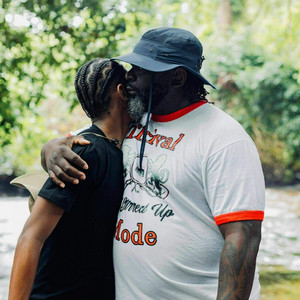
To reflect on what's changed and what hasn't, I sat down with Ryan Ross and his son Gavin.
Ryan is the CEO of the Urban Leadership Foundation of Colorado, which works to empower Black leaders through training in everything from public speaking and entrepreneurship to conflict resolution and negotiation.
At the time of our conversation, Gavin was a high school sophomore.
Like so many Black families, they've had the talk.
What's the talk? The talk is a painful conversation black parents have to have with their children about the burdens of navigating encounters with law enforcement as a black person in America.
It aims to prepare black children, especially black boys, for a world where authority figures may perceive them as a threat because of their race.
You know, we have had this conversation many times and every time I hear him express his feelings, I am enraged because this is what I was trying to protect him from.
That's coming up after the break.
Stay with us. by matching you with a certified career coach who understands your goals and challenges.
This isn't just advice.
It's a personalized, results -driven approach to uncover hidden strengths, overcome obstacles, and accelerate your career growth.
Visit strawberry .me slash npr to claim your $50 credit.
This message comes from BetterHelp.
Workplace stress can be difficult to manage, and a holiday can help, but it isn't a long -term solution.
Therapy can help you navigate whatever challenges the workday or any day might bring.
Take the steps to care for yourself and relieve stress with BetterHelp, the largest online therapy provider in the world.
Visit BetterHelp .com slash NPR for 10 % off your first month.
This message comes from NPR sponsor IKEA.
With IKEA, you'll find everything the student in your life needs to get ready for college, Whether they're moving into a dorm room or an off -campus apartment, IKEA has you covered with what they need to make it feel more like home.
Choose from thousands of pickup locations if you're headed toward campus, or find affordable delivery options that take the stress out of getting set up.
It's so convenient, you may think about going back to college yourself.
Shop now and enjoy convenience with a click.
This message comes from Progressive Insurance.
Do you ever think about switching insurance companies to see if you could save some cash?
Progressive makes it easy to see if you could save when you bundle your home and auto policies.
Try it at Progressive .com, Progressive Casualty Insurance Company and affiliates.
Potential savings will vary, not available in all states.
Welcome back to The Sunday Story, I'm Aisha Roscoe, and today a personal conversation about the talk and the worries that come with being a Black parent in America.
I'm joined by Ryan Ross, the CEO of the Urban Leadership Foundation of Colorado, and his teenage son, Gavin.
Welcome to the program.
Hello. Thank you so much for having us.
Hello. So, Ryan, I want to start with you.
Like when Gavin was born 15 years ago, what was running through your mind about being his father?
Like what kind of future were you hoping for for him?
I think that fatherhood is the greatest gift that a man can receive.
And so I had a flood of emotions, you know, just making sure I didn't mess him up, making sure that I figured out how to make sure I was good with God and provided a godly life for him.
I wanted him to be safe.
I wanted him to be successful.
I wanted to give him the things that I didn't have, wanted to make sure that his life, you know, growing up was going to be different than mine and not have to experience some of the things I experienced growing up.
So it was just a flood of emotions, right?
But But ultimately, it just, you know, he just made me want to be better.
And when you say you wanted him to grow up in a different way from you, what did that mean to you?
What does that look like?
Well, I grew up rough, right?
I grew up, you know, you know, lots of poverty.
I had a pretty abusive stepfather.
And then also just kind of navigating just being a young Black man, you know, trying to make sure I got home, trying to make sure I didn't get in trouble.
There's just a lot to focus on outside of just going to school and studying.
And so I just wanted to create an atmosphere where my son just had to, you know, where he could just be a kid, not worrying about having to understand adult problems at a young age and so things like that.
I know you said it made you want to be better.
Did you have a fear about living up to your expectations or were you more, I guess, were your fears more internal or were they more external?
It was both. Right.
Like internally, it was measuring up to be the kind of man that I knew I could be, that I wanted to be and the kind of man that he could be proud of every day.
Externally, you know, it's the world, man.
It's it's it's a challenging place for young black men to navigate and, you know, wanting to protect him and try to keep him from some of the ugliness of our society.
You know, something that I thought about all the time and recognized that the truth was I wasn't going to be able to do that.
So what was I going to do?
Right. What kinds of choices was I going to make to try to mitigate some of the experiences that I knew undoubtedly he was going to have?
I mean, talking about that outside world.
Right. That brings us to something that's a lot harder to talk about.
Gavin, you've grown up in a time when the country has been trying to grapple with systemic racism, especially in policing.
I want to ask you, what do you think of when you think about the police?
What goes through your mind?
well in elementary school kindergarten learning about the police i was taught that they were part of our law system they were put in place to protect us serve us and just make sure everyone follows the rules you know now as i've grown older i've started to see that the very people I looked to to protect me started to discriminate against and harm the community I hold most dear.
Was there a specific moment that it started to switch for you?
Was it something that happened to you or something that you saw on TV or you witnessed?
Well, I remember Tamir Rice.
i believe he was around 12 years old and he was playing with a toy gun and he was shot by cleveland police officers and that was the year my sister was born and it kind of just put into perspective like you know this is scary you know i'm a young boy myself and uh now i have to you know take on the responsibility of being a big brother it made me scared Gavin, Tamir Rice was killed in 2014.
That would have made you six years old.
Ryan, how do you feel about what you just heard Gavin say?
You know, we have had this conversation many times, and every time I hear him express his feelings, I am enraged because this is what I was trying to protect him from.
Six years old, being afraid of the police, six years old, having to think critically about your behaviors, what you wear.
Do you wear a hoodie?
Do you not wear a hoodie?
What neighborhood do you go in?
Right? It's sad, but it's the reality.
And that leads me to my feelings about the police.
And it's complicated, right?
Because I have good friends who've made the choice to become police officers, And that's great.
I'm happy for them.
But the police, to me, is like the beginning of a Charles Dickens novel, right?
The best of times and the worst of times, especially for Black men, because when you get pulled over by the police or you engage with the police, you feel like, first of all, you get that feeling in your stomach. You get that lump in your throat, like you're nervous, right?
Because you don't know what's going to happen.
You don't know if you're going to have a good situation or you're going to have a traumatic situation that's literally going to change the trajectory of your life or kill you.
And so I struggle with how I feel about police officers in general.
Have you been stopped a lot?
Have you had a lot of encounters with the police?
So not lately, thank goodness.
But when I was younger, I was afforded an opportunity to receive a scholarship to go to a private Catholic school about, by car, 45 minutes away from my house, by bus, three hours, right?
I'd have to get up in the morning at 5, 5 .15 in the morning to get to school on time at 820 and went out there for a better education, went out there to play sports.
And it was a predominantly white school, a Catholic school.
And, you know, play football games, you know, obviously games are at seven, they're over around nine or 10.
The bus stopped running after a certain time of the evening.
And so in order to get home, you got to get a ride.
And one evening, a friend of ours gave us a ride home, was a white girl.
Police officer drives past us, flips a U -turn, turns on the lights, pulls her over.
Right. And she rolls down the window.
You don't hear, hey, ma 'am, do you know why I pulled you over?
Hey, are you having a good evening?
First thing you hear is, what are you doing?
Why are you OK? And she's looking at them weird like, well, yeah, I'm fine.
Are you safe? Why are these men in the car with you?
We end up being pulled out of the car, sitting on the side of the road.
And the police officer actually made her call her parents to let her know who was in her car, right?
And her parents, of course, were like, yeah, those are her guys.
I'm assuming that besides you, the other boys in the car were also Black.
Yep, all Black boys from my neighborhood, right?
You know, if one of us would have decided to advocate for our rights to say that something something wasn't fair.
Gavin may not be alive and I may not be having this conversation with you.
Gavin, you're going to be taking your test to get a driver's license soon and you could have your own set of wills.
What have you and your dad talked about as far as what to do if you're pulled over?
Well, a few simple rules, right?
Once you're pulled over, make sure that you You follow every instruction to the T.
You make sure you are clear.
You make sure there's no sudden movements.
And also, we just do things to prepare.
So for example, you make sure your license and registration are in the vehicle and in a place that cannot be mistaken for anything.
thing. And the main important thing that he told me was that my job is just to make it home and do whatever it takes to do that because that is what's most important.
Brian, you know, I have an 11 -year -old son, my baby.
He's growing up to be a Black man in this world.
I have a hard time even taking all this in.
I know it. I've lived it.
This is not new to me, but I hate when I think about it with my son, with my baby.
It makes me so mad because he doesn't deserve that.
He's sweet. He's kind.
How does it feel to you to have to talk about this with your baby?
It kills me, but I know it has to be done, right?
I think about Emmett Till all the time, right?
Full of charisma, full of personality, and boom.
Some people have taken his life and have beaten him.
You know, we have to have these critical and courageous and tough conversations with our kids because they have to be prepared because we're not always gonna be with them.
Just to be sure, right?
Like we have to teach our kids to put themselves in the best situations to be safe while not becoming bubble people, right?
But wanna make sure that they have the skills and ability to always make it home.
You get pulled over, I need you to know your rights, but I don't need you to teach the police officer.
I need you to just do whatever you need to do.
Get home, let me know, and then we're going to take care of it for there.
So Ryan, in this moment, a lot of the focus isn't just on policing anymore.
There's been this huge pushback against diversity, equity, and inclusion efforts.
We're seeing the country grow more and more polarized around race instead of less polarized.
And in some places, even books about Black history are being pulled from the shelves.
You know, I've been paying attention to this psychologist and professor at UT Austin named Dr. Ryan Sutton.
He says this kind of environment can really harm the mental health of Black people.
He explains that when policies silence conversations about systemic problems, it sends the message that people affected by those systems are to blame for their struggles.
And so then over time, people can internalize that and start wondering what's wrong with me instead of recognizing that there are bigger forces at play.
Ryan, do you see this playing out in your work?
Because you're dealing with diversity.
You're trying to champion people of color and helping them to succeed.
How is this playing out in your work right now?
You know, it is live, man.
Like, when I look at some people in our community, right, people are internalizing this and thinking that is their fault, right?
Maybe I shouldn't have drove down that street.
Maybe I shouldn't go to that neighborhood.
No, this is a free country.
You can go wherever the heck you want to go, and you should be able to do that.
You can't let oppressive structures and oppressive systems and ignorant people change your psyche.
And we cannot allow that same playbook, those same antics, to come back into this generation and poison it again.
Well, where do the both of you get that reassurance at this moment of who you are as Black men?
How do you see that affirmation of yourself and your worth as human beings and as human beings who are Black men?
Well, I can go ahead and start for that one.
I feel like throughout most of my life, actually, no, I can say wholeheartedly my entire life, my father, he's been there for me.
And every single day he instills these affirmations in me.
And they really helped me.
Without those affirmations, things might have been a lot different.
Ryan, talk to me about these affirmations.
How did you come up with them?
well you know it's just speaking life and speaking love into my son and to my daughter that that's where it came from right I wanted to just instill things into them that just helped them keep going throughout the day and be you know and just allow them to stand on business in terms of who they are right Ross's lead never follow right just reiterating to them that hey man we're We're leaders.
We don't follow people.
We can be ourselves unapologetically.
You don't have to give in to peer pressure.
Right. They are there to be participants in their learning, not just people who sit in the classroom.
Every day when I drop them off to school, you know, we have a saying.
I'll say, hey, Gavin, do your best. And have fun.
All day long. Focus strong.
You can do. Anything I put my mind to.
you. That's Ryan Ross and his son, Gavin Ross.
Thank you both so much for being so open and speaking with us today.
Thank you for having us.
This episode of the Sunday Story was produced by Andrew Soronek, editing by Jenny Schmidt.
Special thanks to Andrew Craig and Melissa Gray, who produced the original interview for Week in Edition.
Mastering for this episode was done by Robert Rodriguez the Sunday Story team includes Andrew Mambo and Justine Yan and our supervising senior producer Liana Simstrom Irene Noguchi is our executive producer I'm Aisha Roscoe Up First is back tomorrow with all the news you need to start your week until then have a great rest of your weekend This message comes from NPR sponsor, 1Password. Protect your digital life with 1Password. If you're tired of family members constantly texting you for the passwords to streaming services, 1Password lets you securely share or remove access to logins.
Access from any device, anytime.
1Password lets you securely switch between iPhone, Android, Mac, and PC with convenient features like autofill for quick sign -ins.
Right now, get a free two -week trial for you and your family at 1password .com slash NPR.
This message comes from Warby Parker.
Prescription eyewear that's expertly crafted and unexpectedly affordable.
Glasses designed in -house from premium materials starting at just $95, including prescription lenses.
Stop by a Warby Parker store near you.
This message comes from Mint Mobile.
Mint Mobile took what's wrong with wireless and made it right.
They offer premium wireless plans for less, and all plans include high -speed data, unlimited talk and text, and nationwide coverage.
See for yourself at mintmobile .com slash switch.