You're listening to Roundtable.
I'm Niu He Ling, joined by Steve and Fei Fei.
Coming up soon.
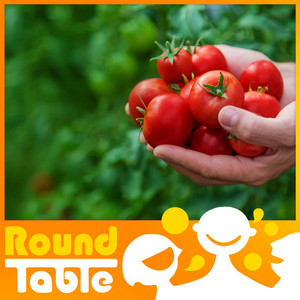
You slice into a tomato that looks flawless.
Glossy skin, bright red flesh.
And then comes the letdown.
No sweetness, no acidity.
Just water and fiber.
The small disappointment has become so common that many people assume it's just how tomatoes are now.
What if, I tell you, someone in China here is trying to tackle that issue?
Want to know how?
Don't go away.
We've all been there.
You buy a tomato that looks like a polished jewel, but it tastes like a wet sponge.
It's the great culinary betrayal of our time.
But this isn't just a kitchen table complaint.
It's a high-stakes story of genetic trade-offs, global seed wars and a multibillion-dollar rescue mission.
As we sit here in 2026, China is leading a biotech charge to hack into tomato's DNA and restore its soul.
And it's not only with tomatoes.
So let's peel the skin on why flavor vanished, how technology is bringing it back and why a tasty tomato is potentially a matter of food security.
To start the conversation, Do tomatoes really taste not the same now?
Have you heard of a cardboard tomato?
Cardboard tomato?
Yeah, they call it that because that's what it tastes like.
So let's start with where the flavor comes.
The soul, I believe, as you referred to it.
So the flavor in a tomato comes from the sugar-acid ratio ratio.
Modern supermarket tomatoes.
You go and get one today.
They have different varieties there, but they've seen a 20 to 25 drop in this balance.
So when sugar drops, the fruit tastes bland.
And when the acidity is too low it loses that.
You know, a good tomato will have that kind of tanginess to it.
But when the acidity is too low, that acidity is gone.
And then the tanginess is gone as well.
Also, flavor.
Flavor is 80% smell.
And scientists have identified specific what are called volatile organic compounds or VOCs.
That provide vine ripened scents.
And because breeders focused more on durability in the past than they did on flavor or scents, the genes responsible for these types of smells, these aromas, they were kind of silenced.
Or they were bred out.
They were gotten rid of because the priority for the growers was durability versus the other things.
So I was not hallucinating.
They're not as tasty as when I was a kid.
And also, they are also getting hard.
You know, I remember in my grandma's garden, tomatoes are very soft.
Yep.
When they're fully ripe, they're supposed to be very soft and tender.
Yeah.
Juicy.
Exactly.
But your grandma's garden didn't have any supply chain issues.
The supply chain was Feifei walking to the garden and then walking back.
When I said durability before...
This is an important issue for growers and for the sellers, because durability means a longer shelf life for the tomatoes and it also means the ability to travel well without any damage, and it's the most important trait for the industrial tomato supply chain and that focus on durability.
It both directly and negatively impacts the flavor in in many different ways.
One is because of the tough skin.
It's that hardness or thickness that you're talking about.
So breeders these days they select for tomatoes with a thicker, harder or tougher skin, And the reason they do that is because it won't bruise, it won't crack, it won't split during harvesting or packing or cross-country shopping or shipping.
Excuse me,
And then the handling in the stores, too.
There's a lot of hands that go on to those tomatoes before they're on the shelves.
I looked it up.
I don't know if this is true in China.
But they say for American supermarkets.
Anyway, the tomato that you buy in the supermarket is usually about two to three weeks old since it's been picked.
So imagine all the hands and all the –
Yeah, all the procedures it's had to go through to get to where you finally pick it up and put it in your cart.
And different people would have different preference when it comes to picking a potato.
Someone would like those that are not as hard.
Someone would like the harder one, which means they would also...
Not to the extent of squeezing it, but definitely press on it.
Well, I talked about the outside, about the skin, right?
But the breeders are doing this to the insides of the tomatoes as well.
They're making them extremely firm.
They're almost like a rubber ball.
And they do that so that they can withstand being packed in a huge bin or stacked on top of each other and stacked really, really high.
Because if you think about tomatoes sitting on top of tomatoes sitting on top of tomatoes, well those bottom layers of tomatoes are going to get crushed right if they have thin skin and are really soft and juicy on the inside.
So that's a big issue as well.
And again, the whole deal here is that if the breeders want to achieve those tomatoes with tough skin and a more rubbery interior flesh, there's a flavor trade-off.
Yes, and though we complain about the fact that we think tomatoes are not as tasty as 30 years ago, we do have to admit they look nice.
The color and the skin it looks perfect.
It's getting prettier yeah, but because you know, currently most of our shopping, at least in cities, happens in supermarkets and, according to meet these supermarket standards, most of vegetables and fruits, the fresh produce we buy in these supermarkets.
They need a standardized testing methods.
That means is called distinctiveness, uniformity and stability, which is basically when tracks plant from breeding to seed and they sort of use this sort of system to evaluate these new plant varieties before they can register and sold it on one hand, ensure that every variety that we bought and we buy at supermarket is truly new, consistent and reliable.
But then, on the other hand, that means only a handful of varieties can pass through these procedures and getting onto the shelf and into the dinner tables.
This is not only happening to tomatoes.
I suddenly remember that when I had a brief experience living in Brussels, I heard people complain about the regulations issued by the European Union and the most quote unquote, ridiculous by local people.
One is that they demand the cucumbers and bananas to be perfectly straight.
There is a curve degree that Bananas have to meet.
They have to meet under a certain curve degree.
They cannot be so curved.
For storage purposes.
Exactly.
That was the reason behind it.
But people were joking about it because it sounds ridiculous.
You cannot demand bananas and cucumbers to be perfectly straight.
Until you figure out scientifically, you can.
So, with that regulation, like Steve said, it is for the purpose of shelf storage, of allowing easier transportation.
Yet it is something that people are doing and by doing so, As Fei-Fei mentioned, it eliminates the number of varieties of the specific kind of fruit or vegetable, which would be a problem, wouldn't it?
Genetically speaking?
It's a problem in terms of flavor.
But this is what the growers do because this is what the supermarkets want.
They want something that's reliable.
I don't know if you've noticed I'm sure you have but when you go into the supermarket, every tomato basically looks different, the same.
Yeah, every banana basically looks the same, every cucumber basically looks the same.
There's a uniformity to it and the supermarkets like it because it's reliable, they know what they're getting and they don't have to worry about it.
But there's something called the uniformity trap, and basically what that means is is that if you're breeding all the tomatoes to be the same, that means they're going to grow under the same conditions all the time, right?
Well, what if a virus comes where that breed of tomato is weak?
Vulnerable to vulnerable to its weak against your that's going to wipe out everything.
And then there's no backup plan.
There's no backup strain of tomatoes that can be planted or suddenly to deal with that problem.
That's one of the biggest issues, and that's why they call it a trap, the uniformity trap.
And this is not only happening with tomatoes or vegetables.
For example, I think some scientists looking into rice varieties that over past years the number of varieties plummeted from 46000 to 1000.
And that means the gene for the rice are shrinking.
And, when it comes to rice, is basically the food of, the staple food of billions of people around the world.
And we can imagine if, as Steve mentioned, a disease happened, a certain pests just suddenly got spread.
Or a climate extreme weather has happened and it can easily wipe out, you know, tons and tons of productions from rice and that posed a serious question to our food security.
And so that's why, I think, in current years, a lot of scientists experts organizations, so on and so forth, have been calling for this diversity in the genetic pools of our food banks.
Definitely, china is a major agricultural country, which is why, every year, we would issue major policy papers regarding, of course, the development of rural areas, the technology that can be applied for agricultural use.
And but most or one of the most important issue would be food security.
We'd look into food security.
We look into the volume.
We look into the varieties.
And of course, we look into food the gene pools.
So not only technological wise, but also policy wise things are happening to solve the issue, the issue that is more important than just the tomatoes are not tasting as good.
I think one of the issues too is with human beings.
Because we have, I don't know how we came to be this way.
Maybe it's just because when we go to the supermarket, we see these perfectly shiny tomatoes and apples and what have you?
And if there's anything wrong, even if the shape is a little off, our spoiled selves say I don't want that.
It's not perfect.
Something is happening with this piece of fruit or vegetable.
Yeah, something's wrong with this.
It's mutated somehow.
But yeah, again, I've been thinking about this for a long time, actually.
And I don't know who's to blame.
Do we blame the supermarkets for not offering all different types of fruits there's nothing wrong with a misshapen tomato or misshapen apple or what have you.
It still tastes the same, it's of the same quality.
Or do we blame ourselves for not being accepting enough of those imperfections?
I don't know, but this has been on my mind for a very long time.
I can tell you that.
Or, I don't know, I'm always very confident when it comes to the development of technology.
I often assume that we don't have to blame anyone.
We can again, with the development of technology, perhaps find a way to find the perfect point to balance both factors.
Previously.
It's not impossible to preserve the sweetness of the fruit while also making sure that one harvest would give you enough volume of that fruit.
But that challenge or that dilemma at that time is being dealt with.
And now we're looking at new technologies and things that can probably keep us the kind of pretty fruit that we're looking at in supermarkets but also give us better flavor.
And this is the problem that they just solved.
The Chinese Academy of Agricultural Sciences recently solved this problem of yield versus flavor.
What can we do to balance the two.
And here's the science of what they did.
So they identified two specific genes.
One is called CDPK27 and the other one is CDPK26.
And what these two are, these two genes are.
These are the brakes, if you will, inside the tomato that stops sugar from accumulating.
So the scientists were able to identify these two specific genes and, And then by using CRISPR.
CRISPR is like a cookbook editing tool, if you will.
It's like changing the recipe, just like a little less salt or a little more salt.
Well, by using this CRISPR tool, they were able to edit those two genes, CDPK27 and 26, the breaks on the sugar production.
They were able to turn on the sugar production and they increased the sugar content by 30 to 35 percent, without making the fruit smaller or without making it more prone to rotting.
And this is a game changer because it means we can finally have a supermarket tough tomato that actually tastes the way that we like it to taste.
Yeah.
And that reminds me of where I grew up in northeastern part of the region of China.
We have our own breed of varieties of tomatoes, which are super delicious, super sweet, very juicy.
But their problem is they are just not easy to ship.
They're easily prone to damage. any little bumpy road in their way, they will get damaged.
And that is the reason that kind of tomatoes have only stayed in that particular region for the past few decades.
And with similar gene editing technologies, not specifically what Steve just introduced about the breaks on the sugar content in the tomatoes, but something else a different kind of gene editing technology has been doing to the northeastern varieties of tomatoes so that they keep that juicy, sweet flavor but can also endure long-distance shipping, meaning they can also be put onto the supermarket shelves.
So I think, coming back to a point that we are trying to make earlier, is that In the past, the technology has been helping us on the point of equality, meaning easier access to different varieties of vegetables and fresh produce to as many people as possible in the world.
We've done that on some certain extent, maybe not globally everywhere in the world, but most parts of the world are enjoying, you know, easier access to a variety, very diverse varieties of food.
But then we come back and we look back onto our food shelves and we realize, you know, things can taste a little bit better than before.
And this is where, you know, technology is coming in to help. again, as well.
Helping.
Editing the gene of the fruit so that it can endure high or long distant trip is one thing, but some places, for example in Xinjiang that we visited earlier last year, is that you can also transform these fresh produce into processed canned fruit.
So, for example, tomato sauce is one thing that Xinjiang is producing, because the quality is simply just really good.
They do not want to get rid of it just because it's hard to ship.
So they find different ways to deal with it.
And when it comes to Xizang, it's another story.
That is, they are inventing or creating or developing new variety of, And one thing we saw is that the new variety, specifically designed for high plateau area, is the kind of variety that they can grow in the area with less oxygen in the air, with relatively harsher environment.
And it is happening and people, local people would be able to enjoy fresh produce. grown locally.
And I think one place I visit was, again, in Xizang, they got the team from Shouguang.
Yeah, because it is a vegetable hub of China.
Yes, Shouguang is really good at raising vegetable and fruits and also even developing it.
Yeah.
And also Shouguang, since we're talking about tomatoes today.
Shouguang is also the biggest producer of fresh tomatoes here in China.
I would assume they're the biggest producer of a lot of different fruits and vegetables in the country and even in the world, I would argue on some extent.
So I think I've read a story online about how, when it comes to tomatoes, Shouguang farmers have used to be relying on imported tomato varieties in the past.
And that sort of put them on a vulnerable place when it comes to sort of something happening along the supply chain or any changes happening on the international market.
That means they need to pay more to buy seeds and to grow these different tomatoes.
And then the government of Shouguang then starting to invest a total of 300 million yuan actually in funding of supporting to develop new seeds, mostly domestic Chinese varieties of tomatoes and other vegetables as well.
300 million yuan investment in tomatoes.
Cool.
And other vegetables.
Yeah, it sounds ridiculous, doesn't it?
But it's not ridiculous at all.
It's money well spent, because not only are these farmers producing commercially viable tomatoes and other vegetables, but the research is continuing to happen as well.
And that's where the money goes into the R&D. side of things.
And also, I bet, a lot of consumers here in China if they're shopping online, for example in He Ma or other supermarkets, they've noticed that in recent years we've started to see a certain tomato called the strawberry tomato.
I didn't know what that was.
I looked it up this morning.
It's not what I thought it was, which was half strawberry, half tomato.
It's a tomato that's shaped like a strawberry.
If there's anybody out there who is as dumb as I am.
But it's supposedly.
It's sort of a breed that's been developed in Shaoguang and it sort of combined the quality of tomato varieties in northeastern where I'm from, northeastern part of China sweet, very juicy.
And then it also helps to sort of helping to elevate a certain trace in that tomato.
For example, when it comes to disease resistance, to durability onto the shelves of the supermarkets and also on yields because the yields of northeastern breed of tomatoes are also very low.
So it's unable to meet a large demand on the market.
And now these kind of strawberry tomatoes are expanding to all over China.
My hometown's growing it.
Villages in even Gansu and Shanxi, northwestern part of it are growing it and even, I think, in part of Yunnan are growing it as well.
So that's why we're seeing a lot of strawberry tomatoes on the shelf.
Yes.
And those are the technological side of the story.
There's also the policy side of the story, that is, on top of the large scale produce of different species and different varieties of only one species, we are also encouraging farmers, encouraging people to grow some local varieties.
It can be the case that we are preserving the small amount, maybe major amount, of genetic pool so that you have different varieties even they cannot be produced in a mass large scale in, or I don't know, take part a certain share of the market.
It is still very precious.
And that is why policy is also supporting that part of the agricultural sector.
And one thing that is beyond taste is that why we need so much variety is because in today's world, we're looking at a lot of potential risks and challenges.
We're looking at drastic climate in certain areas and certain places in time.
And also there's the energy concern. which would all pose a threat to agricultural world.
Yeah.
I mean after today, I'm never going to look at a tomato the same, because I learned so much about it.
And I want to take 10 seconds to say thank you to the scientists who keep coming up with these solutions that us spoiled adults constantly demand.
First they fix the problem of delivery, keeping the tomatoes Always on the shelf so we can Yeah, and in a beautiful state, so that we're satisfied.
But then we say, well, it's in perfect condition, but it's not very sweet.
So the scientists say, all right, then let me try to fix that problem for you.
And all the while...
We don't even say thank you.
No, we say thank you.
Roundtable says thank you.
You're not spoiled kids in the room.
No, I'm still a spoiled kid, but at least I'll say thank you once.
And also scientists.
Please notice that extreme cold in north and relentless rain in the south create crop gaps.
So when supply dropped by 30%, prices would go up by 80%.
So scientists, that is your next problem to solve if we are looking at extreme weather.
Please make sure that the produce amount is still there so we do not face that really high price.
And again, Roundtable says thank you.
And that brings us to the end of today's show.
We'd love to hear your thoughts on today's topics.
Leave us a comment wherever you listen to your podcast, or send us an email to roundtablepodcast at qqcom.
I'm Niu Honglin with Steve and Fei Fei.
Thank you for listening.
Bye-bye.