If you had to name the most essential tool in your kitchen, what would it be?
As much as I love a great bench scraper or a wooden spoon, nothing beats a high quality knife, and Zwilling makes some of the best.
Zwilling has been producing premium quality German knives since 1731.
That's nearly 300 years of craftsmanship.
Take their best-selling Zwilling Pro line.
Each knife is forged from a single piece of high carbon stainless steel, has a classic three-rivet full-tang handle and is ice-hardened for superior durability, flexibility and edge retention.
They're also hand-finished by master knife smiths in Solingen Germany, and the ergonomic design makes Zwilling knives comfortable to use for extended periods in the kitchen.
Meal prep can actually be enjoyable with the right knife.
So if you're looking to upgrade your kitchen toolbox, consider Zwilling.
Head to zwilling.com and shop today.
That's Z-W-I-L-L-I-N-G dot com.
Hey, Lulu Miller here.
I am the host of Terrestrials, a show all about animals and nature from Radiolab.
If you've ever wanted to hear a story about an octopus breaking out of an aquarium, or a squirrel that can regrow its brain, or the wild stories unfolding inside a tree stump well, we've got an episode for you.
And did I mention?
We sometimes break out into song.
Join us, Terrestrials, over on the Radiolab for Kids feed.
Listen wherever you get podcasts.
Today's story takes us deep into the forest to track down a secretive network of buyers and sellers that operates out of the backs of trailers and vans all over the Pacific Northwest.
No, we're not talking about marijuana.
We're talking about edible wild mushrooms like chanterelles, porcinis, morels, and matsutakes.
This story is brought to us by reporter Sarah Vytek.
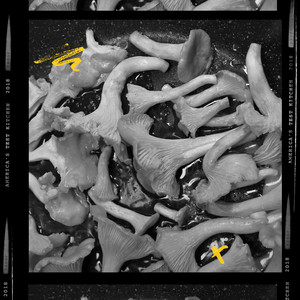
This all started for me in 2016, when I got into foraging chanterelles, which are these beautiful yellow, golden mushrooms.
They grow in the leaf litter and they kind of camouflage in with the leaves.
They're really tasty and fun to cook with. but they're kind of hard to forage.
When I go foraging, I have to go out into the forest and I go off trail.
I have to bushwhack in these super brambly, overgrown forest slopes.
And of course, it's the Pacific Northwest, so it's always raining.
But every now and then, I find a mushroom.
And when you find one, it's just like this completely magical moment.
It's magical because they're hard to get.
But Also mushrooms like chanterelles only grow in the wild.
They can't be cultivated or farmed or grown in your closet or whatever.
So it's like finding a treasure.
It feels super rare.
And then last fall, I was in Costco and I saw that they were selling chanterelles.
And that really got my wheels turning.
Who is picking and buying wild mushrooms in bulk?
Where are they coming from?
And when I started digging in, what I found was much larger and more complex than I imagined.
Today on Proof from America's Test Kitchen, a story about a global industry built on hand-picking mushrooms off the ground, power struggles between foragers and the government, and the complex self-organizing systems that spring up in the forest, much like the wild mushrooms themselves.
I'm Jack Bishop.
Grab your foraging equipment and get ready for a wild mushroom adventure.
Hey proof listeners, it's Jack Bishop.
You know that here at America's Test Kitchen, we're all about giving home bakers the tools they need to bake like pros.
And I'm not just talking about stand mixers or baking sheets.
I'm talking about the ingredient central to so many of our favorite baked goods, butter.
Plugra is a European-style butter with 82% butterfat.
That means less water and more butterfat, which translates into tender pie dough, flaky pastries and luscious buttercreams.
Plugra butter is also slow-churned, which gives it a creamier texture that blends effortlessly into your dough.
And Plugra butter was developed by chefs for chefs, meaning home bakers like us get professional quality results in our own kitchens.
Whether you're rolling out pie dough for that holiday party or baking up pastries on a Saturday morning, consider Plugra Premium European Style Butter.
Reporter Sarah Vytack has the story.
Before we talk about the wild mushroom industry, I want to talk about the food.
The reason why people care about wild mushrooms is because they're delicious.
An example of that is at Higgins, Oregon's first farm-to-table restaurant.
The menu is inspired by all the produce around the Pacific Northwest.
I'm kind of obsessed with mushrooms.
I go foraging all the time.
Patrick Strong is the chef de cuisine at Higgins and fellow forager.
That's my family.
I'm always out.
They're like, really, you need more mushrooms?
I found a bunch of porcini on Monday and made a pate en cru with them.
You want to see it?
Pat takes me to the fridge and pulls out what looks like a loaf of bread that's been cut into slices.
Each slice is beautiful.
But instead of bread, the inside looks like a slick slab of granite made of meat and mushrooms and vegetables.
So this is braised beef set in aspic with wild porcinis and carrots.
And then it's baked in a buttery pastry shell, basically.
It's a very traditional French technique, but...
Higgins was founded back when the farm-to-table movement was just beginning or, in the case of wild mushrooms, forest-to-table.
Greg Higgins, the James Beard award-winning chef, has been using wild forage mushrooms since the early 90s.
And when I met him at the restaurant, Greg just so happened to be wearing a ball cap with little mushrooms embroidered on it.
I've been wearing it for a while.
It's got a truffle and chant and a few other little goodies on there.
In case that didn't give it away, Greg is a real mushroom nerd.
He knows the seasonal cycle of wild mushrooms like the back of his hand.
So in the late summer you start looking for chanterelles on the coast and then gradually the harvest moves inland and you follow it.
The fall harvest is the biggest harvest, and then the cycle starts again in spring with the morels and stuff.
Of course, not all the mushrooms that they use in the restaurant are picked by the chefs themselves.
But I was struck by the fact that Greg was so attuned to the environment across the entire Pacific Northwest.
He knew that two states away, there had been forest fires last year.
And that primed the condition for morels, which often pop up in burn zones.
This wasn't a particularly great year here in Oregon for morels, but now the harvest is in.
Like Idaho Montana.
It's not unheard of these days for chefs to know the seasonality of their ingredients.
But what's so interesting about wild mushrooms in particular is that you don't have a choice.
You need to adapt to what the mushrooms are doing.
One mushroom supplier I talked to compared it to the industry for wild caught seafood.
And like seafood, the mushroom industry feels super elusive.
It's hard to track down data about the wild mushroom trade.
It's hard to even know how big this industry is in the United States.
The most recent stats I could find were from the 1990s and early 2000s.
Back then, it was a multi-million dollar industry in the US.
And I heard from many sources that it's only grown since then.
One estimate I found from 2013 was that the wild mushroom industry was worth 40 million in Oregon alone.
But the most recent nationwide stats I could find were from years before that.
Having a hard time getting information would become a theme throughout my reporting.
Details, intel, exact numbers always felt obscured and hard to pin down.
Like the industry was underground.
And I wasn't the only one who felt that way.
There's so many highly sensitive, secretive kind of undercover elements to it.
This is Dr. Michael Hathaway, an anthropologist at Simon Fraser University in Vancouver.
His specialty is understanding the mushroom trade for Matsutakes, a particular species of mushroom.
He says one thing that makes it hard to track is that many of the transactions are done in cash.
I asked an economist and I think I could make this statement that it's probably the most volatile commodity in the world.
The price it fetches rises and falls more within like 24 hours or season to season, way more than like gasoline or gold.
Dr Hathaway also noted that when mushroom season is in full swing, there's likely more trade being done in terms of cash value than in the global coffee market, which I just found remarkable.
We just think, oh, coffee, everybody drinks coffee, coffee is so expensive.
And like we understand that the global coffee market's huge and important, but if you ask the average person on the street in the States about the global wild mushroom market, they'd be like what even is that?
It'd be hard for them to name a few mushrooms even.
When we talk about the wild mushroom industry in the Pacific Northwest, we're really talking about four heavy hitters.
Morels, Porcinis, Chanterelles, and Matsutake.
Like Dr Hathaway said, prices change a lot based on location timing, grade and how the year has been for mushrooms.
But a good ballpark price when I checked recently was about $20 to $40 a pound.
To understand why these mushrooms are so pricey, I have to reiterate this simple fact.
It's very, very hard, if not impossible, to grow wild mushrooms anywhere other than the forest.
Some of these mushrooms' cousins, like button mushrooms and shiitakes, grow on dead and decaying matter, so it's easier to cultivate them in a lab or farm.
But the wild mushrooms we're talking about are mycorrhizal, meaning they're growing in concert with living trees.
They grow intermixed with the pine tree host or the oak tree host or the rhododendron host and we can't force those relationships to happen.
Make an analogy of some captive animals historically would like never mate in captivity.
You know, they're like, nah, not doing that.
And Mike Matsutake is like, nah, I'm not going to make relations with pine tree if you make me.
And to make matters even more complicated, newer research has shown that there isn't usually a single host tree, but that the mushrooms are usually growing underground, connecting to multiple trees of multiple different species.
The mushroom helps the trees communicate and share resources between each other.
The complex underground network has been referred to as the wood wide web.
In order to get some of these mushrooms to grow in a lab, it seems like you'd have to recreate an entire forest for them to grow on top of.
Dr. Hathaway says there've been many attempts to cultivate wild mushrooms.
In the past 10 years, Chinese scientists have figured out how to cultivate morels, but everyone I talked to told me that they didn't taste as good as the wild morels.
Meanwhile, Japan is trying to craft the code on Matsutakes.
We got to go visit some of these super high-tech labs in Tokyo to see this.
Companies like Mitsubishi and all the others have invested tens of millions of dollars into these labs.
But for now those mushrooms are mostly harvested in the forest, which only makes it feel more improbable that anyone would be able to supply a grocery store-level volume of wild mushrooms.
But one guy I interviewed gave me the start of an answer.
I have grown up in the wild mushroom business.
I started working alongside my dad when I was a child.
This is Linus Norgren.
He runs a mushroom company called Peak Forest Fruit in Portland, Oregon, with his dad.
And he says being a mushroom kid was rough.
Well, I mean, it was hell.
I mean, God.
Yeah, it was absolutely hell because, you know, we were already kind of stood out like a sore thumb.
They stood out because Linus's dad was kind of an eccentric guy, but mostly it was the mushrooms.
Back then, a lot of people were still afraid that they were poisonous.
Being the mushroom people you know at school in a rural town in America is.
You know that's not very comfortable, especially if you're like an awkward teenager.
You know.
But Linus always loved foraging and he eventually grew out of being embarrassed and joined the family business.
Today the Norgrens supply mushrooms around Portland, including to Higgins, the farm-to-table restaurant that I visited.
Being a mushroom distributor is a fluid business.
Sometimes Linus goes out and forages mushrooms himself to sell to restaurants or produce companies, but sometimes they buy from other pickers.
At one point, they ran a buying station in the middle of the forest.
People would come in, clean their mushrooms, and sell them to us.
And we would buy... thousands of pounds of mushrooms, kind of like hillbilly Wall Street, you know?
And the business had been through other iterations as well.
When Linus was still young, they would deliver mushrooms by plane all over the U.S.
That ceased to exist after 9-11.
We actually had mushrooms up in the air that day, and we don't know where they wound up.
And they just lost track of our cargo.
So we got burned.
We had lost a lot of money, I think, that day.
Even in less stressful times, mushrooms are a fickle investment.
Their value is based on their weight, a lot of which is water.
They're basically big sponges.
So the longer you hold them, the more water evaporates and the less they're worth.
My dad would just you know.
He has to predict where the weather is going to go, what the season is going to do.
And so he would just seize an opportunity and buy thousands of pounds of mushrooms while they're still dry in a good state.
But then that money is gone and he has to wait until he gets a return.
And that's the nature of the business.
All this anxiety leads to information being kept close to the chest.
Linus says mushroom suppliers are worried about other people coming in and competing for their clients.
Like, how do grocery stores get suppliers?
Do you know?
It's always changing, and these things are also kept secret.
You know, people aren't going to tell you, I supply so-and-so.
I deal with other distributors and other people in the industry and they're not going to tell me who they're selling to.
I was really surprised by that response.
Because Linus isn't an outside researcher or a journalist who's coming in and trying to get information.
He works in the industry, and he's worked in the industry his entire life.
So I wanted to know, is there something else going on that's leading to all this secrecy?
After the break, Sarah embeds with some foragers.
Jessica Badalana, staff editor at King Arthur Baking Company.
And I'm David Tamarkin, King Arthur's editorial director.
And this is Things Bakers Know a new podcast from King Arthur where we explore every corner of the baking world.
Every episode of Things Bakers Know dives deep into a different baked good, its history and lore trends, takes and opinions, a lot of opinions and plenty of tips and tricks.
Plus, we'll always leave time to answer your home baking questions.
Along the way, we break bread with the best bakers, historians, and restauranteurs in America.
And we always get their expert advice.
So join us at King Arthur as we celebrate the wide world of baking on Things Bakers Know.
Out now wherever you listen.
Subscribe now so you won't miss an episode.
Head to kingarthurbaking.com slash podcast to learn more.
That's kingarthurbaking.com slash podcast.
And until then, please people, remember to follow the recipe.
And now, back to our story.
To try to understand more about picking mushrooms in bulk, I got in touch with this guy.
My name is, like, complicated.
How to pronounce my name, because it's French and I have to figure out how to pronounce it for English people.
I'm Olivier Matin.
I'm a commercial mushroom picker and also a documentary filmmaker.
Olivier is a French-Canadian who lives in Washington state.
He's a commercial mushroom picker, which means he picks large volumes of mushrooms enough that he needs a commercial permit.
And several years ago, he made a documentary about the industry.
It's basically a laundry list of reasons why pickers would be distrusting of anyone.
I met up with Olivier out near John Day, Oregon.
It's about a five-hour drive from Portland, and it was very, very remote.
We're here at the Malheur National Forest because there was a big forest fire here last year.
We're here to pick burn morels.
So we might have to walk through some wet areas and it's really dusty and dirty in there.
We're going to be walking in ash, dust and ashes.
We walk through the remnants of last year's forest fire.
The trees are burned and blackened.
And there are big holes in the ground from where trees have fallen over and their roots have come out.
When you hunt mushrooms for a while, you get a really good sense of where they like to grow.
Some of the clues are big, like the direction the slope is facing or what species of trees are nearby.
But many of the clues are more subtle.
When it's this humid, it's really good normally.
And you see the mix of needles on the ground.
There's a good cover of like all the dead needles that fell after the fire.
And some clues are impossible to put your finger on at all.
You just start to have this weird sixth sense about it.
There's one mushroom there.
We found our first one within only a few minutes of starting out.
You see here, those are old cut stem.
So somebody already came here and harvested this.
This was a big one.
This one too.
This one.
And left these smaller ones, and now those are getting bigger.
And we get nervous, and then I'll leave these three.
Olivier carries a five-gallon bucket with holes that he drops the mushrooms into.
And he wears a backpack with a stack of big rectangular baskets that he'll empty the bucket into each time it fills up.
It doesn't look particularly comfortable, but Olivier is a total pro.
Even though we're walking on a hill made of ash and there are fallen trees to navigate.
Olivier says if I weren't here he would be going way faster.
The normal gait would be like, I would be walking like this all day, you know.
Olivier takes off at an absolute speed walk with big striding steps.
And then you go like this.
He picks a mushroom lightning fast, almost without stopping.
The Bern Morial harvest is a little different from the other mushroom harvests because it's in a completely new location every year.
It's dependent on where the forest fires happen.
Buyers just set up in parking lots in town.
So at the beginning of the season, both the buyers and the pickers rely on each other, because the buyers need the pickers to be there to find the burns and find the mushrooms, and then the pickers need buyers to buy their mushrooms.
Throughout the season, the community sort of decides where to go together and the buyers and pickers naturally self-assemble to spread out over several burns in several states.
In this way, the mushroom trade mirrors the forest itself.
Buyers and pickers form a network like mycelium, constantly exchanging resources and information, shifting fluidly between roles and locations as conditions change.
Yeah, this was my dream job.
You're out hiking in the forest.
You know, it's beautiful.
You're traveling around.
It's just an adventure.
But then he started noticing things that were not quite so beautiful.
The reason why I found Olivier in the first place is because he made a documentary about the issues he was seeing in the industry called Up on the Mountain.
It follows the three major demographics of pickers.
Southeast Asian refugees, Latino immigrants, and rural Americans.
This business now.
You don't have to have a rich uncle that sets you up with enough money to start your own business.
You can just grab a basket and go out in the woods and make some money.
But the flip side of working in an all-cash industry made up mostly of independent immigrants is that the workers don't have much power.
It's easy for them to get taken advantage of or pushed around because they can't speak up or push back.
The film follows pickers for the season, and we see a number of disturbing incidents.
We see local law enforcement confiscating mushrooms without a warrant, ICE doing raids amongst mushroom pickers and even a white picker trying to intimidate Latino pickers by pretending to be a ranger.
But the wildest moment in the film was something that I had actually heard stories about from other pickers.
In the film, Olivier gets footage of a sheriff in Idaho who had entered private property without a warrant and confiscated mushrooms from one immigrant buyer.
And then he goes to a white buyer and sells him the confiscated mushrooms.
Actually, the sheriff came and knocked on his door at midnight.
And he was freaked out because this was before the commercial season had opened.
And he was already buying mushrooms, so he was buying illegally, just like the other pirate got confiscated.
He was totally paranoid.
It makes sense that many pickers don't have trust in the establishment.
And Olivier says they've had issues with journalists, too.
In the 80s and 90s, most of the stories in the newspapers and the media were about the violence happening between pickers during mushroom season gun violence, territorial behavior.
Olivier tells me that one of his friends was featured in a Japanese magazine in the early 90s in a story about mushroom foragers.
They wanted to take a picture of him, and then they had heard that a lot of pickers were carrying guns and David was not carrying a gun.
And so they gave him a gun for the photo.
You know, they make him pose with the gun.
So that's one reason why it's hard for journalists to talk to mushroom pickers.
But core to Olivier's film really seems to be the complex relationship between pickers and the U.S.
Forest Service.
The agency regulates all the mushroom picking that happens on Forest Service land.
After several seasons of being a picker, Olivier started to notice a pattern.
The Forest Service would always make strange rules for commercial pickers that didn't make sense to him.
They'd limit where they could pick, or when they could pick, or how much they could pick.
For example, one season the limit on how much a permit holder could pick was around 300 gallons.
It's ridiculous like a good picker can pick that in like two weeks and the season can last two, three months sometimes.
You know.
It might seem like this rule would be to prevent over-harvesting.
But to Olivier, this didn't make sense.
What we think of as the mushroom is really just the fruit of the organism.
So picking the mushroom is like picking apples off a tree.
Plus, there's extensive research that harvesting mushrooms doesn't affect how many mushrooms are available in future years.
Olivier tried to get a hold of someone from the Forest Service to understand their reasoning for doing permits this way.
And it was like talking to a wall, you know.
I just want to know, what did you base your regulations on?
Why is it this date that it starts?
It's so frustrating.
When Olivier started filming for his documentary in 2017, the same thing happened again.
This time, the Forest Service sold permits for mushroom hunting and logging in the same area.
And then the Forest Service closed the roads and gave access only to the loggers.
In his documentary, the foragers are forced to either go home empty-handed or to forage in areas that aren't designated for commercial picking, which would make that foraging illegal.
This is why I made the film, because it's so frustrating, because every year we have to hide to do our work.
And we know that the Forest Service doesn't care about the mushrooms, you know.
Last spring, the Forest Service in Idaho didn't issue any commercial permits at all, despite the fact that there were a lot of big burns that happened in Idaho last year, which means people were out there picking and buying morels illegally anyway, which then leads to more secrecy and more risk for the pickers.
I reached out to the Forest Service myself to try to figure out why they placed such strict limits on mushroom picking.
They told me they have to balance a lot of factors besides just mushrooms.
In Idaho.
They said they prioritized public safety and access to the forest, which meant repairing roads and removing hazard trees, not harvesting mushrooms.
So it's always a balancing act?
That is Dr. Susan Alexander.
She is retired now, but she used to work as a research economist for the Forest Service at the Pacific Northwest Research Station and later as a program manager who supervised scientists in multiple locations across three states.
So it's a balancing act between what people want and need, what the environment can handle and what the regulations basically say is or is not allowed.
It's a tension, it's all the time.
I went to meet Dr Alexander at her home in Oregon where she owns and manages a large tract of her own forest land.
When she worked at the Forest Service, Dr. Alexander's work focused on non-timber forest products.
So basically anything that isn't timber that is collected from the forest.
Truffles, berries, greens, ferns, moss.
I mean, the list just goes on and on.
And, of course, mushrooms.
In the 1990s, these non-timber forest products, as they're called, started to get more attention.
The timber market was starting to change, in part because a lot of the big trees had been logged and in part because conservation efforts began to slow down logging.
With that came federal funding to do surveying of all kinds of things, from snails to mushrooms.
Suddenly, Dr Alexander and all of her colleagues had the chance to ask a lot of research questions that had never been asked before.
What do we have?
How much is there?
Is it sustainable?
What's the impact on it if it gets harvested?
And so that's where a lot of this came from.
This ushered in a sort of golden age of research on the economics of mushrooms.
Dr Alexander looked at everything from price trends to the amount of mushrooms that were being harvested, to the value of logging an area versus the value of picking mushrooms in an area.
Today, Dr Alexander's work is still the basis for how the Forest Service decides on its mushroom picking policies.
But the districts still don't have a lot of resources to devote to this.
So sometimes they respond, she says, by just shutting programs down or restricting access.
For example, the Forest Service sets up designated campsites around the Northwest for commercial mushroom pickers.
But even those are highly regulated.
It has one access road in, right?
There's not an access road out.
There's only one way in, one way out.
They did that very intentionally to put all the commercial people together.
So they keep an eye on them.
And they will camp out there at that entry road and check people, which makes people feel really watched.
But for all its problems, the Forest Service is still a huge part of the mushroom economy.
And there's no better place to see the scope of this than visiting one of these campsites for commercial pickers, also known as Mushroom Camp.
It's a hot and dry day in May.
I'm driving to a mushroom camp in Sisters, Oregon, about three hours south of Portland.
When I arrive, all the foragers are out picking mushrooms.
But around 4 p.m., the marketplace in the middle of the forest begins.
People congregate around a carport with a buying station inside.
Some wait to sell their mushrooms, some are just chatting and catching up.
I can tell that this is a different level of mushroom foraging than what I'm used to.
A lot of camps have structures that feel semi-permanent.
RVs, carports, or shacks made out of wood frames and tarps.
Some of them have elaborate setups for drying mushrooms.
The pickers aren't just here for the day.
They're pros.
Some of them will even camp out here for the entire spring mushroom season, which lasts at least two or three months, sometimes longer.
In many ways, being in mushroom camp feels like its own alternate universe, a society more or less off the grid that exists deep in the woods.
My name is Ani Hotong.
Sammy, little Sammy.
I heard someone call you little Sammy and I didn't know.
Yeah, small guy.
Sammy and Annie Poto have been running a buying station at Sisters Mushroom Camp for over 20 years and they're here from May until at least July.
They have their own mushroom circuit for the year, the same way many of the pickers and buyers do.
They go from place to place buying for a couple months in each, and then they spend a couple months at their more permanent home.
As we talked, Anipodo sat cleaning several large bins of portinis with a knife.
So it's okay, I talk and work.
It's fine?
Yeah, yeah.
Sammy and Anipodo are both from Laos.
And Sammy is sort of like Anipodo's apprentice.
They work together as a team, picking mushrooms and buying.
But Anipodo is the boss.
But she's my boss, but I talk a lot.
I better work out, she can yell at me.
In order to become a buyer, you have to have a lot of experience.
You need to know how to identify all sorts of mushrooms.
You also need to know how to grade mushrooms, which determines the price.
Every type of mushroom has its own method of being graded.
And grading some types is harder to learn than others.
When someone comes to sell their mushrooms.
Annie Poto goes to the front of a big tent they have set up for buying.
A baker comes up with about a half a crate of porcinis.
Annie Poto puts on her glasses.
Yeah, my eyes look good.
She cuts a mushroom in half.
That's part of the standard procedure for grading porcinis because they need to check for worms.
You see these?
Annie Poto points out to me the sign of a single worm in the mushroom.
Even one hole cannot take it, because She quickly grades the rest of the mushrooms and sorts them into different baskets.
And just like Dr. Hathaway told me, the price fluctuates a lot.
Up and down.
It depends on how the mushroom, if the mushroom a lot, the price drop.
If no mushroom, the price up.
Every day, they wait for a call or text from their boss.
The big boss, as Sammy calls him.
A man from a company in Canada.
See, right now, we don't know the price yet until maybe five o'clock.
So we have to listen on the phone all the time, or text.
Inipoto weighs the baskets and does the math.
She gets the cash and pays the picker $130.
That is for a full day of picking.
And it's pretty good for this early in the season.
Some other pickers will only recoup the cost of gas.
At the end of the night, Sammy and Anipoto will have baskets of mushrooms stacked high in the back of the carport.
It is orders of magnitude more mushrooms than I have ever picked.
Then they'll take all these mushrooms and put them in a big chilled trailer.
A few times a week, the trailer will get driven out to a truck.
The truck will collect mushrooms from several buying stations in the Pacific Northwest and will take all of those mushrooms to the big boss in Canada.
And then all of their mushrooms will get sorted and shipped to grocery stores or sent around the world.
This is just for one company.
Other companies are doing the same thing with their own trucks and networks of buyers and pickers.
When I saw chanterelles neatly packaged in little styrofoam containers at Costco more than a year ago, they immediately struck me as out of place.
But what I didn't realize was that, like a mushroom peeping out of the forest leaf litter, these little styrofoam containers were just the tip of a massive underground organism that went much, much deeper than I expected.
When I started to dig, I found that buried away, there was an entire multi-million dollar network of pickers buyers distributors, drivers and processors.
It moves largely unnoticed and unquantified.
Baked into that underground darkness is a flip side.
Workers are easily disenfranchised, especially coming up against the federal government and other powerful forces.
But as much as authorities try to control the industry, the mushrooms themselves aren't scalable or predictable.
And as a result, the industry is beautiful in its ability to flex and respond and self-organize.
It's really like its own resilient ecosystem.
Who knew so much could be contained in a single box of mushrooms?
Thanks to Sarah Vytack for foraging today's story.
If you like Proof, be sure to subscribe wherever you listen so you can get new episodes as soon as they drop.
And while you're there, why not leave us a rating or write us a review?
It really helps other people find the show.
This episode was hosted by me, Jack Bishop, and the podcast is made by the following cast of characters
I'm Yumi Araki, the managing producer.
I'm Emily Siner, the story editor.
I'm executive producer Caitlin Kelleher.
I'm senior producer Alex Curran-Cardarelli.
I'm associate producer Angelica Quintanilla.
I'm associate producer Louise Curran-Kensler.
And I'm Kyla Forman-Andrade, the TV and podcast intern.
Audio services are provided by Ultraviolet Audio with scoring, mixing and sound design by Matt Boynton.
Brian Campbell of Signal Sounds composed our theme music, additional music by Kyle Forrester and Jordan Pearson and Margolis.
Is our director of post-production.
And our director of production is... Diane Knox.
Fact-checking and additional research by... Sarah D. Collins.
Special thanks to Ian Garoni, Kayla Sulak, Erica Higgins, Jenny Hochschult, and Pamela Cannaday.
Nina Gianelli.
Is the senior vice president of television, video, and podcasts.
Dan Souza.
Is the chief content officer.
And Dan Surratt.
Proof is a production of America's Test Kitchen.
This podcast is part of the Airwave Media Podcast Network.
Visit airwavemedia.com to listen and subscribe to their other fine shows.
An Airwave Media Podcast.