Support for NPR and the following message comes from the Robert Wood Johnson Foundation.
RWJF is a national philanthropy working toward a future where health is no longer a privilege but a right.
Learn more at rwjf.org.
Hey, it's Linda Holmes.
October 1st is historic.
The first day in over half a century that NPR and stations operate without federal support.
It may feel uncertain, but here's what is certain.
Public media indoors.
Independent, resilient, people-powered.
Whatever the moment, you'll still find us here telling stories that matter.
Okay, stop me if you've heard this one.
A charismatic entertainer becomes a mega-action movie star, hopping from franchise to franchise, building a middle-of-the-road brand that appeals across every conceivable demographic.
But eventually, being an extremely popular entertainer is not enough.
The new goal?
To be taken seriously as an actor.
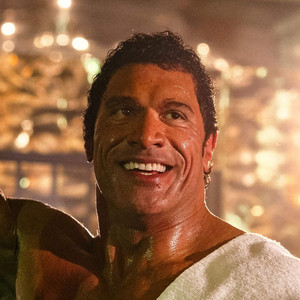
Enter Dwayne the Rock Johnson and his capital-A acting turn in The Smashing Machine.
The wrestling drama pulls out all the classic moves in the awards season playbook biopic struggles with addiction, facial prosthetics.
We can smell what The Rock is cooking, but is it a hearty enough meal?
I'm Aisha Harris, and today we're talking about The Smashing Machine on Pop Culture.
Happy Hour from NPR.
Joining me today is the host of NPR's It's Been a Minute, Brittany Luce.
Welcome back, Brittany.
Thank you.
Good to be here.
Also with us is one of the hosts of NPR's Code Switch podcast, Gene Denby.
Welcome back to you two.
What's good with you, Aisha?
Great to have you.
And rounding out the panel is freelance music and culture journalist, Rihanna Cruz.
Welcome back to you too, Rihanna.
Happy to be here.
Yes, yes.
Happy to have all of you.
I feel like this is going to be a very fun...
Very interesting conversation because this is a very not fun, but interesting movie.
So in The Smashing Machine, Dwayne Johnson plays the real life Mark Kerr, a UFC champion who's known as one of the early pioneers of mixed martial arts in the United States.
Now, as Mark reels from his first major loss in the ring, he's forced to confront an addiction to painkillers.
His single-minded focus on training for the next big fight also threatens his relationship with his devoted but exasperated girlfriend Dawn, who's played by Emily Blunt.
Big accent work going on here, I'm just going to say.
The Smashing Machine is the solo directorial debut of Benny Safdie, who usually collaborates with his brother, Josh.
And it's in theaters now.
Rihanna, I'm going to start off with you.
Just give me your initial thoughts about this movie.
I do want to say that I enjoy movies where The Rock is capital A acting.
Like, I love Southland Tales.
I think he's great in that.
I love Pain and Gain.
I think he's great in that as well.
I saw The Smashing Machine as a return movie. to the rock, capital A, acting, as you referred to it.
I don't really like Jungle Cruise, Jumanji.
I think that's neither here nor there.
But I was excited.
And I liked...
It question mark with an asterisk.
You know, I like sports movies writ large and I like a fighting movie generally.
This movie is very by the numbers, but I like those numbers.
So I'm not too upset by it.
Really, my only thing was that I had trouble figuring out the why.
You know, why this story?
Why now?
Why these people?
What is the purpose?
Yeah.
You know, that was really my main gripe with it.
But again, by the numbers fighting movie, didn't really mind it.
Yes.
Okay.
I'm so glad you brought that up because I had very similar feelings of like, who is this for?
I think we know who it's for.
The Academy.
Yes, yes, yes.
Jean, jump in here.
Tell us how you feel about it.
I'm so glad Rihanna said that because I was like, but why this dude?
Apparently he was a good fighter, but not like an all-time great.
You know what I mean?
He had struggled with substance abuse, but it actually seemed like he kicked it pretty quickly.
Louisa Weiss portrayed in the movie, right?
Like all of the sort of big sort of hinge moments in the plot happened like in the first 30, 40 minutes.
He is a person who is in recovery.
And he is a person who's already lost the big fight.
Like, what is happening now?
Like, you know what I mean?
I told my friend I was going to see the screening of The Smashing Machine.
And she was like, oh, you mean the new Dwayne Johnson movie?
And I was like, Dwayne Johnson?
What do you call a Mr. T movie?
The Lawrence Terrell movie?
Like, what are we doing right now?
Like, you know what I mean?
The Rock has been very open about his, like, ambition, right?
Like, even if you're like oh, The Rock is doing a pretty good job in this movie, it's hard not to see it through the lens of like.
This is a very specific career choice that he is making.
I'm sorry, Dwayne Johnson is making a very specific choice in this movie.
Brittany, let us know.
How do we feel about this?
I was mixed on the movie.
There were elements of it that I liked.
Like I thought that Dwayne Johnson gave a very competent performance playing a real life figure, obviously like when you're playing a real person, especially when that real person is still alive.
He threaded the needle pretty well in playing this guy and actually kind of nailing his manner.
I feel like benny safty is somebody who has a lot of like heart and enthusiasm and that came through.
I understood the objective of the character but i understand, like the deeper reason why he did anything that he did like.
Why did he wrestle?
Other than physical pain?
It seemed like maybe something else going on that he was kind of wrestling with.
But we don't find out what that is.
We are not let in on a deeper motivation for why he does anything, why he's so good.
So I didn't know anything about UFC.
I don't like watching people get punched in the face.
Other stuff, I'm like, hey, whatever.
A punch in the face, I can't deal with it.
I hadn't heard of Mark Kerr.
I didn't know who he was.
Movie's done.
I went and looked them up and I was like, oh, okay.
If there was a real life person that you could talk to to kind of get deeper insights into the character, why wasn't some of that deeper stuff there?
One last thing.
I saw it in IMAX in Manhattan, like at Lincoln Square.
I felt like it was kind of intense.
I had this feeling of like, okay, I really can't escape the brutality that's happening on screen.
I was breathing in The Rock's sweat in a way that didn't necessarily augment the film experience for me.
Yeah.
I mean, it does seem like an interesting choice to make this movie, The Smashing Machine, IMAX.
I don't think it necessarily necessitates that.
No.
The same question that we're all kind of dancing around is like what is the point of this movie?
And the most like crass and cynical version of this is like it's a vanity project, it's for the rock, but you also have to look at it.
I think from like i sense that benny safty, who is, of course, a lover of especially 70s cinema, and if you look at everything from uncut gems to good like That could have been made in the 70s with like James Caan.
It's a very insular character study in a way.
And when I looked at the production notes, the word transform or transformation or transformative is used no less than eight times in the production notes for this.
Are they referring to the prosthesis that The Rock is wearing?
The prosthesis, but also like the physical.
I'm like I don't know how much The Rock has always been.
He's a big guy!
Yeah, he's always gigantic.
These are the words you use when you are trying to get awards.
But I also think like I was kind of mixed on it as well, but I actually came out liking it more than I thought I would.
I don't actually think The Rock is transforming all that much in this movie.
I think it's actually very suited to who he seems like he would be like in real life.
I actually feel as though this could have been a movie about Dwayne The Rock Johnson.
More so than it could be.
He has this way of talking to Don, the Emily Blunt character, where he's clearly trying to be as nice as possible.
And I don't want you to think that I'm a bad person, but also I'm kind of resent you and I'm kind of condescending.
And there's a way I can see the rock being like that in real life, of like having.
He has this like personality trait where he's like.
I need to please everyone.
But also if you annoy me, I'm going to dig it a little bit.
And yeah, I think that's why this movie worked for me as much as it did, even though I did still come away being like I don't know if we needed this movie.
The other thing I find funny is that at the end of this movie there's like a postscript on the screen.
Oh, that ground my gears, man.
The postscript I'm paraphrasing here, but it says something along the lines of like today, fighters earn millions of money doing this thing.
And everyone knows their name.
Everybody knows their name.
And I was like, that's not true.
And I wondered, is this supposed to be ironic?
Because every time you think this movie is going to zig, it zags.
And every time you think, as you said, this is going to be an addiction story.
Actually, no, it's more about like a recovery story.
And I found that both frustrating, but also I appreciated that it didn't feel like your typical sports biopic.
And I literally had this in my notes, like, this movie zigs where it's supposed to zag.
But the thing is that the places where it zigs, it doesn't really go anywhere, right?
No, the film doesn't use those moments of surprise to, like, propel it to anything.
It kind of does the same thing, like, over and over again.
And I didn't think the movie was bad.
I was engrossed when I was watching it.
The other thing is that the character's hair is curlier than The Rock's hair.
The Rock is... a man of African-American descent.
So I was like, is this man black?
Like, is there a detail here we're missing about this?
So I found out later the man is Puerto Rican.
I'm not saying you have to explain it, but like The Rock, like he's raceless in his public persona.
And a lot of the film roles that he takes also make his race kind of irrelevant.
But then in a movie about a real...
He is, but he's not.
Because if you think about he had his that TV show that was like loosely based on his life.
Young Rock.
He does acknowledge his roots in that way.
But I also understand what you're saying, Brittany.
But there's a racial ambiguity that he has profited from immensely.
But then there's the story about this guy who I don't know how much being Puerto Rican meant to Mark Kerr.
I have no clue.
But I find it hard to believe that he would be surrounded by white people throughout the entire movie.
Does this matter to the story?
If this was left out, does that mean anything?
I'm not saying he needed to have a breakdown about his identity or discuss it with his girlfriend, even.
Yeah.
I also am wondering like being a Latino man who's regarded as the smashing machine, who's basically like never lost a fight.
The fact that that was completely unexplored and completely untouched.
Who even is this guy?
Like, I don't even feel like I really know that much about him by the end.
I didn't know he was Puerto Rican.
That's news to me that there was a Puerto Rican UFC fighter doing the thing.
I feel like I should see this dude on Puerto Rican Day Parade floats.
You know what I mean?
That's bro.
One thing that did kind of stick out to me that is kind of a big thing for The Rock to have surmounted to play this role is that I think you might be around the same age as the guy this movie is about, but we're going like 25, 30 years back in time.
And so like, in a way, like he is too old for the part, but I felt like that was maybe an intentional choice.
Part of what is, I think we're supposed to connect with is the rock scene.
It's like the rockness of it all.
Yeah.
It is interesting how insular this entire movie feels.
We have this relationship between Mark and Dawn.
Emily Blunt is doing her best, and I appreciate her trying to do her best.
That's the best way to put it.
But it also just winds up being the most— Long-suffering girlfriend.
I was gonna say it reminds me of, like Heidi Gardner's character from SNL, the like every girlfriend in a boxing movie.
And it's just this girl that's like just gets upset and is like I didn't want you to fight today.
You know stuff like that and again, like you can both kind of understand why Mark would find her irritating, but at the same time it's like she's just trying to love you man, and you are too busy chugging your protein drinks and doing whatever, and When she doesn't do it right, he's very like.
You know, I use two bananas instead of.
It was something very digging.
But also we have Mark and the other Mark, Mark Coleman, who's both his training buddy, slash trainer sort of.
But then also they compete against each other.
He's played by Ryan Bader.
He was so good.
He's a real fighter.
Yeah, he's a real fighter.
And I was actually very impressed by him.
That was an interesting storyline.
But again, it just comes down to...
What is this movie trying to do?
And I think that maybe I'm reaching here, but it does feel as though Benny Safdie is trying to subvert the sports movie.
I mean, this could also just be trying to burnish this guy's reputation, because he's still alive and he has input or has signed off on this movie.
The soundtrack, I have to say, is quite great.
I agree.
That was one of the things that I loved about it.
I thought the needle drops were excellent.
Yeah.
The Jungle Land needle drop really floored me.
Early on, there's Lil Suzy, the Latin freestyle, take me in your arms.
Lil Suzy, oh my God.
Yes.
It makes sense that he's Puerto Rican because hearing that, I was like, oh, okay.
Freestyle was such a specific Puerto Rican East Coast moment in the early 90s.
And generational, too.
Before I knew that the dude was Puerto Rican, I was like, What an interesting song choice there.
I had that thought as well.
As he's like doing drugs and then Take Me In Your Arms, is playing, I was like okay, this is kind of rad.
I love the music on here.
I also have to say the score.
What also feels like a little bit of subverting of what you usually expect with these movies is the score.
Oftentimes, when they're fighting in the ring, is You're hearing like a jazz score, kind of likening it to something that's a little bit more fluid and dancey and sensual in a way.
The contrast there worked for me.
And that score was by Nala Senefro, who's this Caribbean-Belgian experimental jazz musician.
And so that's why I kind of feel as though it seems like Benny Safdie is really trying to do something different here.
And even just the fact that it's shot on film and then it's also shot on what he calls VHS.
A lot of these directors this year.
I don't know if they're taking a page from Ryan Coogler, but they're explaining this division, or let me explain to you what you need to see.
And I'm like, okay, film is back, baby.
Yes, let's do it.
That's what's up.
One of the things I really dug about the movie though, is like the sort of grubbiness of this like early sort of primordial MMA space.
Like, if you think of, like I don't know, a League of Their Own very different movie, but like a movie in which, like about this sort of upstart sort of scrappy league, inhabited entirely by people who just are really diehard about this thing.
I think there's something about this movie that was kind of endearing on that level.
It was like, okay, that sort of comes across in this Mark Kerr character.
He's just, like, someone who seems to, like, be really earnest about, like, I like to do this.
It's orgasmic, as he says at one point.
Yeah, it's orgasmic, right?
I agree with you.
Like this movie does do a good job of sort of like getting at that.
Even if we don't fully understand Mark Kerr's motivations, his specific motivations, you can see how that culture sort of like encourages people to go to be just obsessive about it, like with any sort of sport that is not going to get you highly paid, like you have to be obsessed with it, or else why are you doing it?
Yeah, it does kind of get at that, i think i really like when the rock gets serious.
Like i bring up michael bay's pain and gain ah, such a good.
You know where he's playing a meathead, but he's doing it really well.
And in Southland Tales, the Richard Kelly movie, you know he's kind of doing like a sort of off the wall paranoid.
It's pretty good and it's serious.
And he's really like putting his whole foot into serious acting there.
I think a name that we talked about before we started recording is Dave Bautista, right?
A fellow wrestler.
Yeah. who does a lot of serious roles.
Rock song, knock at the cabin, was like, I can do this.
Even sort of John Cena sort of doing this thing, where he's like he's like very self-deprecating and sort of like, you know, like willing to be the butt of a joke.
The Rock.
It feels like there's a sort of humanity that The Rock, his image, has precluded him from like inhabiting on screen.
That I think a bunch of his other fellow wrestlers have done before.
This is my belief is that The Rock's tether is Dave Bautista.
And the thing about Dave Bautista is that like they both have a similar thing as with John Cena, but Dave Bautista is like really kind of the artiste of all three of them.
They all have.
Like I wouldn't say it could be an obstacle or a feature, depending on what kind of roles you're thinking of, of their physicality.
I imagine that like it can be maybe difficult to play a guy, you know what I mean?
Yeah.
If you are like 6'5, 300 pounds of solid muscle.
I am curious to see how The Rock will continue to advance his more serious actorly roles after this film.
I am curious to see how he could approach playing someone who is not a UFC fighter and not a wrestler, not a professional football player.
I find Dave Bautista like riveting on screen.
He has something very soulful about him.
There is something that he's able to access, and maybe it's because he doesn't have persona outside of himself.
In the same way, The Rock has a persona outside of himself.
And so it makes Dave Bautista to me more accessible on screen as a guy who could be another guy.
Whereas I have to contend with him being The Rock before I even get to him being Dwayne Johnson, the actor, before I can then even get to the character.
So I'm curious.
I do wonder if part of that stems from the fact that the way he sort of approaches career, which is that he's never really sought to be the star Dave Bautista.
He's the side character.
He's okay, it seems, with playing smaller roles.
And The Rock has never really been that.
It's a rock movie.
No matter what, it's going to be a rock movie.
I'm still waiting on a Hobbs and Shaw sequel.
I'm happy he's doing this, but give me more Hobbs and Shaw.
I'm just saying.
And I follow wrestling.
I follow what the highest profile wrestlers are doing.
You know, Cody Rhodes was in Naked Gun.
But I'm excited to see what The Rock has cooking in the future is what I will say.
Well said, well said.
Well, tell us what you think about The Smashing Machine.
You can find us on Facebook at facebook.com slash pchh and on Letterboxd at letterboxd.com slash nprpopculture.
We'll leave a link for that in our episode description.
Up next, what's making us happy this week.
Support for NPR and the following message comes from the Robert Wood Johnson Foundation.
RWJF is a national philanthropy working toward a future where health is no longer a privilege but a right.
Learn more at rwjf.org.
Hey there, before we get back to the show, if Pop Culture Happy Hour has ever helped you explain Barbenheimer, survive a Marvel phase or pretend you understood Severance.
Do us a favor and leave a five-star review.
Channel your inner culture critic and let us know why you love the show.
Thanks so much.
And now it's time for our favorite segment of this week and every week, what's making us happy.
Rihanna, let us know what is making you happy this week.
The movie that is making me happy this week is Dead of Winter, starring Emma Thompson and Judy Greer.
It's perfect for Friday afternoon.
You know, you're like, huh, I have nothing to do today.
Let me see a movie.
You pull up AMCA list.
You walk into the theater.
It's all old ladies.
You know you're going to get a good flick when you walk into the theater and everybody's like yapping and it's a bunch of old people.
Love that.
It's a great genre thriller.
Emma Thompson essentially plays a fisher woman.
Sold.
It's set in Minnesota.
So you get like rip off Fargo accents from everybody in it.
And essentially, Emma Thompson sees kidnapping happen.
She sees a girl get taken and she makes it her mission to free this girl.
It's a pretty good flick.
Pretty solid.
I have been thinking about it.
All week.
And I feel like it's underseen.
So that's what's making me happy this week.
Nice.
So that's Dead of Winter and it's in theaters now.
Thanks so much, Rihanna.
I am also sold.
That sounds great.
So thank you for that.
Gene, what is making you happy this week?
So over the last four years, I guess like post-pandemic, I've become a bit of a degenerate.
And I didn't realize the extent of my degeneracy around this one particular video game called Football Manager.
And if you don't know what Football Manager is.
No, I have no clue.
Imagine playing a game that is about soccer, but it's only that 75 of the game is answering emails and filling out spreadsheets.
What?
And the game actually keeps like a ticker of how long you're playing.
I think I'm on like 6,000 hours or something like that.
I'm like, wait, how is this possible?
Like I'll often have it like playing in the background as I'm doing other stuff all the time.
What?
There's a million different ways to immerse yourself in this completely pretend world of playing spreadsheet soccer.
If you are a Sims girlie or one of those people, this is the closest sports game to that.
Okay.
I was a Sims girlie.
Thank you, Gene.
Football manager.
All right, Brittany, what is making you happy this week?
Oh my gosh.
I love dance music.
I love to hear a soulful vocal over a really thumping beat.
And so I was overjoyed when Rochelle Jordan released her most recent album through dance.
Yes, you understand.
Oh my gosh.
Really breathy, but precise and beautiful vocals over really groovy, but still like beats that hit.
There is a song called Crave.
That was one of my songs of the summer.
I was bumping it every single day.
It's just about like, I don't know, craving the feeling of being close to the one that you love.
Having a nice, cozy, sexy album like this, I just feel like it's a perfect pairing.
So it's Rochelle Jordan, Through the Wall.
It's so good.
So, so, so good.
Awesome.
Thank you so much, Brittany.
Well, I'm going to keep us in the music and music territory.
And my girl, my favorite.
I mean, look, I am a lifelong lamb.
And Mariah Carey is back.
She is back, baby.
I am so happy.
Her new album is called Here For It All.
It's her first new studio album in seven years.
I'm here.
I'm here for it.
I am here for it all.
It is Mariah being sassy.
She's being petty.
It also like it finally seems like she's acknowledging and accepting that her voice is not what it once was.
And so it's not over manipulated or overproduced.
She sounds very good.
And I love that she is embracing that aspect of her voice now.
And I think though, the final song on the album, which is the title song to me, might stand up as one of her best ballads of all time.
And that is where I think you see the most of her using her voice in all these different ways.
And when you get to the chorus towards the end of the first half of the song, because this is an epic song, it just works.
Let's hear a little bit up here for it all.
And I can swear the sun will never shine.
Well, I won't let you break when you fall.
Yeah baby, I'm here for real.
Oh, yes.
I love it.
I'm just so happy.
Wow.
That's diminished voice, Mariah Carey, doing all that.
Isn't that bananas?
Isn't that telling you where she started?
I know.
Still great.
Still great.
She hasn't made a bad album.
So here for it all, Mariah Carey.
That's what's making me happy this week.
And if you want links for what we recommended, plus more recommendations, sign up for our newsletter at nprorg slash pop culture newsletter.
Rihanna Cruz, Brittany Luce, Gene Demby, thanks so much for being here.
This was such a fun, fun conversation.
This was so fun.
Appreciate you.
Thank you.
I had a blast.
Thank you.
This episode was produced by Liz Metzger, Janae Morris and Mike Katzeff and edited by our showrunner, Jessica Reedy.
Hello, Come In provides our theme music and thank you for listening to Pop Culture.
Happy Hour from NPR.
I'm Aisha Harris.
We'll see you all next week.
Support for NPR and the following message comes from the Robert Wood Johnson Foundation.
RWJF is a national philanthropy working toward a future where health is no longer a privilege but a right.
Learn more at rwjf.org.