It's the Book Club for Kids.
It's the Book Club for Kids.
It's the Book Club for Kids.
It's the Book Club for Kids podcast.
Hi, I'm Kitty Felde.
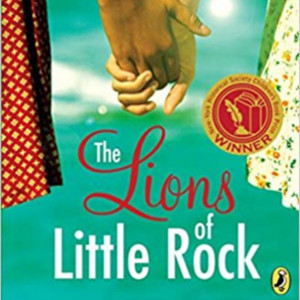
Our book this time is The Lions of Little Rock.
We turn back the clock to 1958 in Arkansas, the year after the Little Rock Nine, the year when the city shut down the public high school.
It is segregation time, which means that blacks and whites cannot be combated together.
They have to be separated from each other.
Our readers are from Jefferson Academy in Washington DC and they speak frankly about the lack of diversity at their middle school, nearly 60 years later.
Our celebrity reader is a man who knows more than most about education.
President Obama's Cabinet Secretary for Education, John King.
Governor Faubus was on television, giving some sort of talk about Southern pride and communists.
And okay, I tried to pay attention, but it didn't really make much sense.
I was more worried about who my teachers would be this year.
We'll also hear from writer Kristen Levine, who says Arkansas wasn't the only place battling over desegregating schools.
I didn't realize that this had happened in Virginia as well, where the schools were closed for six months.
So that was just fascinating to me to realize that this was not only part of someone else's history, but sort of part of my own history as well.
But let's start with the book.
Why don't you guys introduce yourselves?
My name is Demi and I am 12 years old and I'm going to the seventh grade and I'm from Jefferson Academy.
Hi, my name is Mijay, and I'm 11 years old.
I'm going to the seventh grade, and I go to Jefferson Academy.
In Washington, D.C.
The book is about a white girl named Marley who cannot have a best friend that is black named Liv.
And her mother does not want her to have that best friend because she's black.
But they still talk to each other in school and, like, play and stuff.
But she cannot go to her house because of her mother.
What's the larger story of what's going on historically?
What's been going on in Arkansas in 1958?
It is segregation time, which means that blacks and whites cannot be combated together.
They have to be separated from each other.
How come?
Because that was the time when it was segregation, and they had to.
They couldn't disobey the rules.
And black people if they couldn't drink or eat or do the same things that white people could do, and that is why Marley cannot be friends with Liz.
The mom didn't want her to be friends with Liz because she was black, but that doesn't make sense.
Just because she's black doesn't mean you don't have to be friends with her.
And it's not the mom's friend, it's her daughter's friend.
So it really is not up to her, unless she goes to school with her and is her friend.
In this book.
It's kind of sad because now these days it's black people can be friends with white people and even like best friends.
Now this book takes place the year after The Little Rock Nine.
Have you guys learned anything about The Little Rock Nine in history class or social studies or anything?
No, nothing at all.
So you guys didn't know anything about this?
The year before this book took place, there were nine African-American kids who were sent to Central High School as the first people to integrate that high school.
And the National Guard was sent in to protect the kids because the governor didn't want that to happen.
And so this book takes place like the year after when they closed the schools as again, the governor's attempt to keep it from being integrated.
But it sounds like to you guys, the heart of the story is about a friendship more than about the politics or not.
No, i think it's more about segregations and whites and blacks being separated, and i think it's not fair that they should be separated from each other.
Back then, i think they should should have been friends and combined like we are today.
Well, let's hear a little bit from the book and learn about the main character, Marley and her family, and hear what life was like in the 1950s.
Our celebrity reader is John King, the former U.S.
Secretary of Education.
He was commissioner of education for the entire state of New York and taught social studies in high schools in Boston and Puerto Rico before he came to Washington DC.
Let's hear a little bit from the book and learn about the main character, Marley and her family, and what life was like in the 1950s.
Our celebrity reader is John King, the U.S.
Secretary of Education.
He was the Commissioner of Education for the whole state of New York and taught social studies at high schools in Boston and Puerto Rico before he came to Washington DC.
Ever since the Soviets sent up that Sputnik satellite last year, I've been studying really hard.
Maybe someday I'll study mathematics at college and become a rocket scientist.
Only thing is, when our teacher told us last year that our country needs more of us to study math, I think she meant more boys.
I watched all those talks on TV about the satellite really closely and I didn't see any experts who were women.
That evening, We were watching our brand new 1958 RCA 21-inch mahogany television console.
It was so large, we had to move an armchair into the garage to make space for it in the living room.
With rabbit ears on top, it got three whole channels.
Governor Faubus was on television, giving some sort of talk about Southern pride and communists.
Okay, I tried to pay attention, but it didn't really make much sense.
I was more worried about who my teachers would be this year.
People sometimes think I'm stupid because I'm so quiet, but I'm not stupid.
I'm scared.
Scared my voice will get all squeaky and people will laugh.
Worried I'll look dumb if I say the wrong thing.
Concerned about being a show-off if I get the answer right.
Convinced that if I start talking, people will notice me and I won't like the attention.
Turn off the TV, Marley, Daddy said suddenly.
I jumped up to do as he asked.
I could tell by his tone that something was wrong.
I can't believe the governor would rather close the schools than have you go with a couple of Negroes, Daddy said to Judy.
That's not what he said, Mother snapped.
It's about states' rights, preserving our way of life and respecting Southern traditions, not to mention maintaining the peace.
There you have it, girls.
Daddy's voice was pleasant, but there was a bite to it.
Judy frowned.
But what will I do all day?
You can get a head start on the fall cleaning, said Mother.
Maybe wash the windows.
Judy made a face.
Or you can help Betty Jean with the laundry.
It's up to you.
I'll bring home a reading list and a math book to keep you busy after that.
Betty Jean was our new maid.
We'd never had one before.
But with Mother going back to work, we needed someone to do the laundry and the cooking.
What about Marley?
Does she have school?
Judy asked.
That was just what I wanted to know.
Yes, said Daddy.
Only the high schools are closed.
No one is trying to send Negroes to the junior highs.
Not yet, said Mother.
Daddy ignored her.
Lucky you, I said to Judy as I walked into the bathroom to brush my teeth.
I was starting at Westside Junior High, and I wasn't too excited about it.
Yeah, Judy whispered.
Lucky me.
As I brushed my teeth, I wondered how I'd feel if a colored girl were sent to my school.
Sally said you'd get lice if you sat too close to one of them.
But Sally also said if you lit a candle in a bathroom and turned around three times, you'd see a ghost in the mirror.
I tried it once when I was seven and there was no ghost, just a lot of melted wax on the countertop.
I didn't believe much of what Sally said after that.
There had been a colored girl in one of Judy's classes last year at Central High School, the best high school in all of Arkansas.
For the first time, nine Negroes had enrolled.
Minnie Jean Brown, Elizabeth Eckford, Ernest Green, Thelma Mothershed, Melba Petillo, Terrence Roberts, Gloria Ray Jefferson, Thomas and Carlotta Walls.
That was a mouthful, so people just started calling them the Little Rock Nine.
The integration had gone so badly that President Eisenhower sent in soldiers to help keep the peace.
I remember Daddy talking about being polite to the Negroes and Mother biting her lip.
I'd been so busy watching both of them, I'd never thought to ask Judy how she'd felt about it.
All I knew for sure was that she hadn't gotten lice.
Judy fell asleep quickly, but I kept tossing and turning.
Usually the lions roaring lulled me to sleep, but they were silent tonight, as quiet as the halls of Central would be tomorrow.
I got up and went into the kitchen for a glass of milk.
Mother and Daddy were talking in the living room.
Almost sounds like you're an integrationist, I heard Mother say.
I don't think it's such a big deal if Judy's at school with a few.
You want our girls associating with Negroes, asked Mother.
Race mixing.
That's what it'll lead to, said Mother.
I stood in front of the open fridge in my nightgown, clutching the bottle of milk, and shivered.
Race mixing was a scary thing.
At least people always talked about it like it was polio or something.
The thing was, the races didn't really mix in Little Rock.
Not in the bathrooms of department stores, nor in the water of the swimming pools.
In fact, I don't think we'd ever had a colored person in our house until Betty Jean showed up ironing last week.
There wouldn't have been any trouble last year if the governor hadn't.
Richard, watch what you are saying.
I'm not saying anything I don't mean.
Do you want people to call us communists, mother ass?
The milk bottle slipped from my hand and crashed to the floor.
So much for eavesdropping.
Tell me about the friendship between these two girls.
The two girls are Marley and Liz.
Marley, she's white.
Liz, she's black.
And I think Liz changed Marley a little bit because it said that Marley, she did not speak in class.
She was shy to speak in class and stuff.
And when she became friends with Liz it made her become out of her shy reaction, made her speak in class and participate more.
When she became Liz's best friend, she started raising her hand more, and she was more outspoken.
She started talking more and not being so afraid.
So tell me about Liz.
We know she brings out stuff in Marley, but what's Liz's character like?
She's like an outspoken person.
She's not old and shy and doesn't talk a lot and she raises her hand in class and she's just out there.
She's like a nice, very kind person.
How many white kids go to your school?
Three yeah, i think it's like three or four.
But we don't really talk to them because they're they like they don't really talk to us.
So if we want to talk to them, they don't say anything.
But we try to be friends with other people and not just be, not just talk to the people that we normally talk to.
So this was all about integrating schools and that's kind of the reason I'm asking you guys.
If there's only three or four white kids at your school?
How integrated is Jefferson Academy and how come?
Is it because people live in the neighborhood?
What's going on?
It's not really that integrated because it's mainly black people at this school and some of the white people.
They go to white schools or schools downtown or farther down from the school.
And so some of the white people that go to this school they live in the neighborhood or they live like, right around the corner from Jefferson.
Well, why don't they send their kids to Jefferson?
Maybe because their school they don't want them to go to a school with like more black people instead of more white people.
I agree with me Jay, and I think that They don't want.
I think they are scared and nervous, well anxious to send their students to Jefferson because maybe they think that their students are going to get bullied, or maybe they think they're not going to be able to have friends or be like other kids than the black kids do.
So if I were looking at this school in Arkansas, this middle school in Arkansas, that was segregated by law And here we are today where it's sort of self-separation.
I mean, how much has changed?
I think a lot has changed from the books time to our time.
And now, because back in... But about schools, I mean, specifically about schools and education.
Does it bother you that this school is mostly African American?
No.
No, because...
Now that Dr Martin Luther King gave his speech, it really doesn't matter to us and it's not really up to us to tell whether white people can come to our school or if we can go to their school.
Because if they have a problem with it then it really doesn't matter, because black people and white people can be friends or cannot be friends, but they don't really have to.
It doesn't really matter about the color of our skin or if we want to be friends with white people, or if black people want to be friends with white people, or white people just don't want to be friends with us.
So we can choose not to be friends?
Is what you're saying, rather than the law telling us we can't be friends.
Yes.
And that doesn't bother you?
No.
No, it does not bother me.
It does not faze me because, as long as I know that I am safe at Jefferson Academy, it does not faze me.
And, I mean, I choose to be friends with white people.
If they say hi to me, then I say hi to them.
If they, like, ignore me, then I ignore them.
It don't really fees me.
Would you guys have been brave enough to be the first black kids to go to an all-white school?
Yeah, I think I would be brave enough because, I mean, I like being friends with people.
Even if they weren't being nice to you?
I mean, I would have.
I would not care about them.
I would have just stayed on the books and get my education and stuff.
Like if I don't have friends, that do not faze me.
I'm just worrying about learning.
And getting good grades because friends like my mom said.
She said if you have friends then that's kind of stopping you from getting your good education and getting you a good job and making good money.
And she said you need to learn to pick your friends.
Choose your friends wisely because not everybody is your friend.
And some of your friends will know that if you're trying to learn, then they will not stop you from learning.
But other friends will.
If you call them your friend, they can stop you from your learning by saying hey hey, you want to do this and stuff and you're trying to learn, and they say I don't care, then that's not your friend.
Let's hear from our writer, Kristen Levine.
So, Kristen, you're not from Arkansas.
Where did this story come from?
When I went to elementary school in the early 1980s, the mainly white neighborhood school I went to was paired with a mainly black school across town.
And I remember asking my mother why this was happening.
Why did I have to ride the bus to school?
And her response made such an impression on me because she said Kristen, this is such a great opportunity for you to go to school with people that don't look exactly like you or maybe haven't had exactly the same experiences of you.
I think you're gonna love it.
And she ended up being absolutely right that when I think back on my education like that is what I remember the diversity of the schools I got to go to and all the sorts of different people I got to meet.
So there was that part that I've always kind of been interested in integration because I lived it.
The other part is is that I'm very lazy And my mom is from Little Rock, was born there, lived there until she was about nine.
And my grandfather went to Central High School and went to Westside Junior High, the junior high in the book.
So I had this sort of fantasy that this book would be super easy to write, with my mom having lived in Little Rock.
And she could just tell me all this stuff.
And it didn't turn out quite like I expected.
She didn't remember as much as I thought she would, so I kept asking her questions like Mom, what did you wear to school when you were in seventh grade?
And she would think really hard and say, well, I think I wore clothes.
And I was like, okay, Mom, that's not a super useful detail for a writer.
But she did remember two really important things.
One was that she lived near the zoo and listened to the lions roar at night.
So that was where that detail came from.
And the other thing was the book starts on the top of this high dive at this swimming pool.
And that was all completely true.
My mom remembered getting to the edge of the diving board one summer, being too afraid to jump off and then having to come back down.
So she ended up being helpful after all.
Marlee is an unusual main character in that she doesn't like to talk.
Now, where'd that come from?
I actually wrote... the first entire draft of the book with Marley having no trouble talking at all.
And it was terrible.
It was really not very good.
And my editor.
She kept writing back to me and kept saying you know, I like the subject matter, I like the time period, but I'm just not in love with Marley's voice.
And I started getting really frustrated.
And I didn't say this to Stacey, but I said to myself, well, fine, Stacy.
If you don't like Marley's voice, well, then maybe she won't have a voice at all.
So, and then I was like, oh, wait, maybe that's actually a good idea.
Maybe Marley should both literally have to learn to speak up and you know, talk in school and both figuratively learn to stand up for what she believes in.
And how much research did you have to do?
I did a ton of research for this book.
It started with my mother and myself going down to Little Rock to do a bunch of interviews and to visit different places.
Because I just love to always go to the place you're writing about.
And I interviewed this woman named Cynthia East.
And she was the one that first told me about the lost year when all the schools were closed.
Until that point, I had really been thinking that I would write about the Little Rock Nine, because that was all I really knew about.
So it was really lucky that I ran into her.
The other thing that was really surprising to me, you know, I'm from Virginia.
I grew up here.
I didn't realize that this had happened in Virginia as well, where the schools were closed for six months.
So that was just fascinating to me to realize that this was not only part of someone else's history, but sort of part of my own history as well.
And it was surprising that, despite having grown up here and gone to the schools for my entire school career here, that that had never been mentioned in the schools.
So I think that made me feel that the book filled a niche that was not being filled by other things.
So what is your very favorite book?
I agree with me, Jay.
Roll of Thunder, Hear My Cry.
Why?
Because...
When you read the book it teaches you a lot about segregation and I just like the characters on it and how the characters reacted to Little Man.
I also like the book Inside, Out, and Back Again.
It was about a little girl named Ha who lived in Vietnam.
She was the only Vietnamese girl at her school and everybody else teased her about her religion.
So she started making fun of their religion, and they didn't like that.
We'll have a list of favorite books at our website, bookclubforkids.org.
That's where you can also find out how you can be on the show.
And parents, teachers and librarians can sign up for our free newsletter with announcements about the show and tips about how to turn reluctant readers into lifelong book lovers.
All of that at bookclubforkids.org.
Thanks this week to Jonathan Jensen, who composed and performed our music.
And thanks to our readers this week, Demi and Meejay from Jefferson Academy in Washington, D.C.
And of course, thanks to Brittany Locker, who organized the group, and our author, Kristen Levine.
And don't forget, leave us a review and a rating on iTunes.
We love hearing from you, and it really helps us promote the show.
I'm Kitty Felde.
Thanks again for listening.
Oh, and we will leave you with the last word from Secretary John King, who read the lines of Little Rock aloud with his own middle schooler.
So your 12-year-old isn't too cool to be reading with her father at this point?
No, she was actually excited to do it.
I mean I did tell her that was for an interview and so that maybe added a little extra fun panache to the activity.
But she was excited to read it together.
And I think it was fun both to talk about the historical period, but also the characters.
The main character is a middle school student.
My daughter's in middle school and thinking about lots of the same things that the Marley character is thinking about.
So she could relate to lots of things in