You've learned so much from your loved ones.
Now, it's your turn to learn for them.
If you notice changes in your loved ones, such as trouble with familiar tasks or confusion with time or place, that's not normal aging.
It could be Alzheimer's.
Some things come with age.
Some don't. Learning the signs of Alzheimer's can help with early detection, which can lead to better care and support for your loved one.
Learn the warning signs at tensigns .org, brought to you by the Alzheimer's Association and the Ad Council.
From The New York Times, this is The Interview.
I'm Lulu Garcia Navarro.
There is no doubt that President Donald Trump has had an electrifying effect on NATO.
The North Atlantic Treaty Organization was founded after World War II primarily to act as a kind of bulwark against the then Soviet Union.
Union. Its 32 member nations, which include most of Europe, Canada, Turkey, and the U .S., are bound by this Pledge of Common Defense.
The Alliance's most famous provision, known as Article 5, states that an attack on one member country would require the response of all.
In practice, though, the United States is NATO's most important member.
It provides the troops, intelligence, logistics and nuclear arsenal that make the alliance work.
President Trump has excoriated NATO as a financial drain on the U .S. and has several times even threatened to withdraw from it.
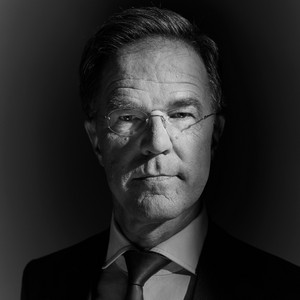
Mark Rutte is the man who's been tasked with keeping Trump happy while setting up NATO for this new, more dangerous era where Russia has expansionist ambitions, the U .S. is seen as more unreliable and Europe is woefully underprepared to fight its own battles.
He became NATO Secretary General late last year, after 14 years as Prime Minister of the Netherlands, where his longevity as a right of central leader earned him the nickname Teflon Mark.
I met Ruta earlier this week at NATO headquarters in Brussels after a pivotal summit where member states pledged to drastically increase their defense spending.
But the biggest headlines out of the summit were actually about Ruta's relationship with Trump.
Before the meeting, Trump publicized a highly complimentary text message Ruta sent him about the U .S. bombing of Iran's nuclear facilities.
And then during the summit, Ruta joked that Trump had acted as a daddy to misbehaving Middle Eastern nations, a nickname the president clearly loved.
His fundraising committee even started selling daddy T -shirts.
For some observers, it was evidence that Ruta is willing to do whatever it takes to keep Trump happy and the NATO alliance healthy, even as the U .S. is reportedly considering moving thousands of troops out of Europe and has just announced stopping even more weapons shipments to Ukraine.
Here's my conversation with NATO Secretary General Mark Rutte.
All right, I think they're going to mic you up over there.
I have a bit of a cold.
It's almost done. I cannot get you sick.
If you do get me sick, I'll be sure to mention it.
You will let me know.
OK, so we'll get started now.
Secretary General, thank you so much for joining the interview.
I really appreciate your time.
Really appreciate being here.
Thank you for the invitation.
I'm going to start with a big but basic question, and I want it to be in the form of an elevator pitch, if you will.
Why should NATO matter to Americans now?
What do Americans get out of this treaty today?
It shouldn't matter.
And if I was in the elevator, I would say, if you want to defend the U .S., you have to make sure that three things are secure.
You need a secure Arctic because it is opening up and the Chinese and the Russians are sailing there.
You need a secure Atlantic because it is your sea, it is crucial.
social and you need to secure Europe because Russia is here and Russia is reconstituting itself at an incredible pace and not to attack Norway but to attack ultimately the US.
So if the Arctic, if the Atlantic Ocean, if Europe is not secure, US has a big problem.
I'm assuming that's how you sold it to President Trump who has conspicuously not been a very big fan of NATO and essentially views Europe, as he has mentioned in the past, as a bunch of freeloaders.
He sees it as European nations basically funding their welfare states, giving free health care, giving pensions at the expense of American defense.
You think that view is fair?
The second half of the view is fair.
But the first half I would not buy into because I think that, and I'm pretty much confident of the fact that the American president, Trump, very much realized, and his whole team, based on my conversations when I was in Washington in March, when I was in April, when I had conversations last week in The Hague, that for the U .S. to stay strong and safe, there is this embeddedness with European security.
And of course, working together to keep the inner Pacific safe.
But I do agree with the second half, because there is this enormous irritance since Eisenhower with American presidents and I think they're completely right that Europeans were not paying enough and that you are paying an average 3 .5 percent of your GDP on defense that Europeans were well struggling to get to two percent so there he has a big point and luckily last week in The Hague we solved that.
Before we get into that substance I'd like to talk a little bit about the style because your interactions with president trump in the aftermath of that meeting have been called and i'm quoting here fawning and orchestrated grovel i saw someone refer to nato now as the north atlantic trump organization it's been a week of a lot of criticism how do you see it well let's face what is happening there were seven or eight countries in europe not a two this was the four so now it's five percent a new benchmark do we really think that we would have been able last week in the hague to agree to that five
percent if trump would not have been re -elected as president of the united states so i think when somebody deserves praise that praise should be given and president trump deserves all the praise because without his leadership without him being re -elected from the united states the two percent this year and the five percent in 2035.
We would never, ever, ever have been able to achieve agreement on this.
I want to get to what exactly these numbers are and what they mean.
But there are these two camps after this summit.
You know, one said that you did what you did to sort of pacify President Trump's ego and have a successful summit, which you did.
And the other says that while our president likes flattery, he ultimately sees it as weakness and it only appeases him for so long.
I'm sure I'm sure you've seen all this commentary afterwards.
I was 14 years prime minister of the Netherlands, so I know about criticism, but I don't care.
In the end, I need to do my job.
I have to keep the whole of NATO together.
And the biggest ally is the United States.
That biggest ally has paid since Eisenhower more than the Europeans.
And now for the first time in 65 years, we will equalize between what the US is paying and what the Europeans are paying.
And without Trump, that would not have happened.
Did you mind the text message that you sent him being made public by him?
Not at all. because what was in the text message is exactly as I see it one that he did an excellent job on Iran with the bombing of the nuclear facility and as I said in that text message you are now flying into another big success which is a NATO summit which will commit to five percent defense spending and this is transformational all right we are meeting after this NATO summit and the big success is that the member nations except for Spain agreed to increase their defense spending to 5 % of their GDP by 2035.
Can you briefly talk me through why 5 % is the right number?
Yeah, and by the way, all 32 agreed.
There's one issue with Spain and that is Spain is saying, okay, we agree, but we think we can reach all those capabilities with a lower investment.
That is absolutely impossible.
So history will prove them wrong, but that's an agreement to disagree.
But then to your question, We have an enormous geopolitical challenge on our hands and that is first of all Russia which is reconstituting itself at a pace and a speed which is unparalleled in recent history.
They are now producing three times as much ammunition in three months as the whole of NATO is doing in a year.
And don't forget Russia is only the size of the economy of Texas, 2 trillion and the whole of NATO is 50 trillion.
So this is unsustainable.
But the Russians are working together with the North Koreans, with the Chinese and Iranians, the mullahs in Ukraine in fighting this war, unprovoked war of aggression against Ukraine.
So here in the Pacific, your Atlantic is getting more and more interconnected.
We know that China has its eye on Taiwan.
Given this whole geopolitical setup, there is no way we can defend ourselves if we would stick to this old 2%.
So, when it comes to core defense spending, we have to move up to 3 .5%.
And then, of course, there is all the defense -related spending because a bridge needs to hold a tank if it crosses the bridge.
We need to develop the defense industrial base.
We need to spend money on cyber, on hybrid.
We need to prepare our societies at large, so beyond the military.
And that's the extra 1 .5 % leading into the 5%.
So, yes, this is an enormous amount of spending.
But if we don't, we have to learn Russian.
That's the short summary.
I'm sure you saw comments by Russia's foreign minister Sergei Lavrov that this new target will cause the end of NATO because it will basically bankrupt NATO members.
Essentially, he's saying NATO is involved in a costly arms race.
You know, I know Sergei Lavrov very well.
He has been foreign minister, I think, since the birth of Jesus Christ of Russia.
And I've never taken him seriously.
So when you really talk about fake news, listen to Sergei Lavrov.
Lovrov. So you're not worried about an arms race then between Europe and Russia?
No not at all we have to make sure that the deterrence is there and the fact that Lovrov makes that comment again I would not take too much interest in those comments but it is clearly evidence that the deterrence is working and that is crucial because Russia is on the war economy is on the war footing in every sense the size of their military what they're investing in in their tanks in their air defense systems in their artillery in their ammunition it is amazing german chancellor frederick mertz said money alone won't solve our problems so we've talked about the spending what are the problems
that you see with actually making that spending effective he is totally right because the deterrence is yes the spending but the deterrence is only real if we have the people and the industrial output to make sure that the people can make use of their weaponry, we need to really defend ourselves.
So, these are the two issues we really have to work on.
To get the right number of people in the military is something at a national level, and countries can take decisions, yes conscription, no conscription.
Spending more on salaries for your military...
You think that Europe's gonna have to do conscription?
No, no, that's up to the individual countries to decide.
side. Some countries will do.
Finland already has conscription.
Others will not do it.
But it will mean in generally paying good salaries for our men and women in uniform.
What I'm particularly worried about is the defense industrial output.
And this is a problem across the alliance.
Because we simply lack the defense industrial base to produce the weapons we need to produce to make sure that we can deter the russians or the north koreans or whoever to attack us and this is we are we're working on very quickly now and every day i was this morning in toulouse visiting airbus and they want to be a plan maker in france of course the airplane maker in france it is partly french but also british spanish and german owned and they are putting in the extra production lines the extra shifts to make sure that they can deliver at scale not increasing the price but making sure that the skill
of the production is there that they can deliver what the rest of the alliance needs which is what exactly?
it's in their case airplanes it is air transport it is helicopters it is drones but we need everything take for example the Patriot anti -missile systems the US is producing at this moment it takes you sometimes 10 years before a new Patriot system will be delivered and the joke then is will it be delivered in the morning or in the afternoon why does it matter?
yeah, in the afternoon, the F -35 will arrive.
So when it comes to spending, the U .S. is in good shape.
And the Europeans and the Canadians have to step up.
When it comes to the defense industrial production, we are all in the same boat.
The capacity and capability will be key to keep our deterrence at the level it has to be.
So Friedrich Merz, to your question, was totally right.
Are you worried that perhaps European nations at this point are investing in the war that's taking place now, not the war that will come in the future I mean we've seen already in Ukraine the use of drones the use of a lot of more nimble technology that is not based around you know heavy weapons etc I'm not worried about this but you're totally right that the war of the past is not a war we all fight against the Russians or whoever will attack us in the future and that is why this war of aggression against Ukraine is also teaching us something exactly as you said it is about drone technology,
it is applying artificial intelligence.
There are so many developments now which we have to figure in the way we think about warfare and developing our defense industrial base.
We have now this joint center in Poland, JTEC, where we capture all the lessons from the battlefield in Ukraine.
And what we learned from this is a few things.
One, ammunition is still the base for everything.
This has not changed over the last 500 years.
If you do not have enough 155 ammunition, We cannot fight the 152 ammunition from the Russians.
And so this has to be there.
And we are totally lacking at this moment the production capacity.
The UK is now building six new ammunition factories.
I was happy to hear a couple of weeks ago that they will do this.
Then, of course, you have the big ticket items still.
The F -35s and the European equivalents, the tanks, etc. And there is a huge opportunity here for our innovative industries.
And there's a huge opportunity here for our small and medium -sized enterprises.
And that is why I really believe that with this extra defense spent, we also will see a defense dividend coming to our economies from Spain, the Netherlands, France, U .S., all over NATO territory.
To put this into context, obviously, the United States is the biggest partner in NATO.
By far. By far, in terms of its capacity, what it does for NATO, what it spends, etc. And there was this big New Yorker piece that came out recently, and it described a training exercise in Estonia, which is a member state, to test their readiness for a possible Russian invasion.
And of course, Estonia would be on the front line of that.
The piece noted that Estonia basically has no air force.
It has no navy. And in the exercise, the team playing the invading army had a capabilities overmatch, quote unquote, more heavy armor, more long range fire.
Basically, it did not go well for Estonia.
Was that exercise a wake -up call for you?
No, but what the New Yorker described there is right.
But it's not a wake -up call because, of course, we have all the plans in place that if Estonia will be attacked and the Russians know this, that our reaction will be devastating.
And I cannot go into all the details, of course, because Putin, I know, is watching these programs. But, of course, we have to make sure that we not only have those plans, but we also have the people and the military gear to back it up.
And this is exactly why we need to spend more.
But it's not that the Estonians are left to themselves.
It will be the full force of NATO, which is 800 F -35s here in Europe with all the NATO, Navy and landmass capabilities, including the full backup of the United States, which will come to the rescue.
Putin knows this. This is why he will not attack Estonia today.
But he might in five or seven years if he would not make all these extra investments.
There's a key sentence in what you just said, which is with the full backup of the United States, which would come to our defense.
I mean, this is clearly what so much of the concern and discussion has been about, because President Trump has never fully committed to coming up to Europe's defense if indeed something like that should happen.
Are you confident at this moment, if Estonia was invaded, that the United States would come to Estonia's aid?
100 % I have no doubt at all and it was very clear in the closing press conference in the Hague on this but also everything I've discussed over the last six months with the new US administration there's absolutely no shiver of a doubt not at all that the US is completely committed to NATO is completely committed to article 5 there is one big irritant and that is the fact that Europeans since Eisenhower have not paid their fair share and of course the good news of last week is And that was the transformational outcome of the NATO summit that finally, for the first time in recent history, European allies
will pay the same as the U .S. is paying.
That is the irritant that President Trump talks about publicly, but there is an underlying issue as well, which is that President Trump does not like to get into foreign entanglements.
He has a very transactional view of the world in which if it's good for him or good for America, then he will do it.
so again comes back to this idea are you certain that the only irritant was that they weren't paying enough or is there a fundamental disconnect between the way that our American president views the world and its commitments to these international organizations I don't believe so and the reasons we already touched upon it briefly earlier in the interview is that President Trump put in place an excellent foreign policy team including Marco Rubio and Pete Hexett Matt Whitaker the ambassador here here at NATO, and there is broad spread agreement that when it comes to the defense of NATO territory,
the U .S. is part and parcel.
That means that it's not only about defending Europe, it's about the United States, for the reasons I mentioned earlier, that the U .S. is not secure if the Atlantic, Europe, and the Arctic is not secure.
There's a second reason, and that has to do with in the Pacific.
There's an increasing realization that if China, and that risk is very real, because Because why is China building up its military as it is building up at the moment at this pace?
Not only to have its parades in Beijing.
There must be some real world reason why they do this.
And, of course, this is Taiwan.
We all know this. And let's really be not naive about this.
If Xi Jinping would attack Taiwan, he will first make sure that he makes a call to his very junior partner in all of this, Vladimir Vladimirovich Putin, residing in Moscow, and telling him, him, hey, I'm going to do this and I need you to keep them busy in Europe by attacking NATO territory.
That is most likely the way this will progress and to deter them to do this, we need to do two things.
One is NATO collectively being so strong that the Russians will never do this.
And secondly, working together with the Indo -Pacific, something President Trump is very much promoting because we have this close interconnectedness working together on defense industry, innovation between NATO and the Indo -Pacific.
I mean, it's interesting that you talk about President Trump's foreign policy team and their understanding and commitment to NATO security, because the U .S. has had, I believe, up to 100 ,000 troops stationed across Europe as part of their NATO commitments, including about 20 ,000 that President Biden deployed following Russia's invasion of Ukraine.
But the Trump administration is now saying that it is going to redeploy some of those to other parts of the world.
Have you been told what that drawdown will look like?
There is no talk at this moment of a drawdown.
What we know is that Europeans have to spend more.
That's what we are doing.
When it comes to the troop numbers, we have all agreed there should be no capability gaps in Europe.
Whatever needs to happen in the future to pivot more towards Asia has to be done in a way that indeed those capability gaps are not there.
That there are no surprises.
This is exactly the way I'm discussing this with the American administration.
Of course, there are three things at play here.
There is the actual troop numbers in Europe, as you mentioned, 100 ,000 or 80 ,000, depending on which number we use.
There's, of course, the backup from the United States if an attack would take place here, but also the critical enablers.
And what we are doing in NATO now, the burden shift taking place from the U .S. more to the European allies.
So already that burden shift is taking place, opening up the possibility for the U .S. to pivot more towards other theaters.
research. French President Macron said it would be nice to know what the timeline is for reductions, which says to me that America's greatest European allies do not have a sense of when this is happening and what the number will look like.
Do you have a sense of when this is happening and what the number will look like?
Well, I have a sense of the fact that we all agree that NATO is integral.
And let's not forget, the only time Article 5 was ever triggered was a day after 9 -11, when now Lord Robertson, the then Secretary General, declared an Article 5 situation because of the attack.
Secretary General, what I'm asking here is, you say that the commitment is ironclad.
Yes. And yet, what we are seeing, while a war is raging with a resurgent military Russia on Europe's doorstep, is the United States pulling back from Europe.
The United States is not pulling back.
I really have to correct you.
The United States is not pulling away from Europe.
What the United States expects the Europeans to do is to take care of their own defense at a larger scale than we do currently, which is only logical.
Let me assure you that all the plans we have, basically coming from the defense planning process and NATO leading to the capability targets, part of those plans is that Europeans gradually, and this is a shift, Take more of the burden for the defense of this part of NATO territory from the U .S. so that the U .S. can therefore pivot more towards Asia, towards the Indo -Pacific, as the U .S. should also with our European interests, because we know that China and North Korea are very much involved in this war effort in Ukraine.
So this is all interconnected.
On Ukraine, I mean, one place where NATO and the U .S. seem to diverge is on the question of Putin's actual appetite for peace talks.
talks. Both Trump and Secretary of State Marco Rubio made comments recently, I mean very recently, suggesting that they believe talks are still on the table.
A senior NATO official, on the other hand, said that, quote, we continue to doubt that Russia has any interest in meaningful negotiations.
Where do you stand on this?
With the risk that I'm again praising President Trump, but I will do it again, he is the one who broke the deadlock with Putin.
When he became president in January, he started these discussions with Putin and he was the only one who was able to do this because going forward this had to happen a dire dialogue between the American president and the president of the Russian Federation then of course this is a step by step process we had now two rounds of peace talks in Istanbul where the Ukrainians sent a very senior team took it very seriously and unfortunately the Russians sent this historian not to be taken so seriously So we have to take it from here.
And that means that in the meantime, we have to make sure that Ukraine has what it needs to stay in the fight.
The good news is that the Europeans have now cobbled together 35 billions again in military aid this year to deliver to Ukraine, which is more than last year.
Well, the Europeans have had to do that because the United States has stepped back from doing that.
But isn't that logical that the United States has asked the Europeans, could you please, over time, take more of the burden when it comes to the concrete support to Ukraine?
I think that is totally logical and totally fair.
So the Europeans are doing that.
And that means that this year, the total support is higher than last year.
But again, one thing is take over more of the burden.
Another thing is actually we're going to pretty much pull the plug.
Who told you this? No, no, but I mean, there is a real difference of opinion on what exactly America's commitment to Ukraine is.
The American administration completely takes the view and the point and shares this with Europeans that this war in Ukraine is crucial also for the defense of NATO territory going forward and that we have to make sure that Ukraine is in the strongest possible position to stop the Russians from taking more territory And that when it comes to a ceasefire or even better, a peace deal, that Ukraine, with some help, will be able to prevent Putin from ever attacking Ukraine again in the future.
But when it comes to the actual money spent, I think it's only fair that the Europeans take a bigger share of the burden.
Do you think if there is peace talks and some sort of resolution, that that resolution will mean that Ukraine has to cede significant territory?
Well, you know, I've decided never to comment on what peace talks might exactly look like, because I want to bring the situation to a point where these peace talks can start.
And then I know one thing, that it is the Ukrainian president and his administration deciding on what concessions they might yes or no want to do.
It's up to them, because this is a sovereign country, they have been attacked, and that means it's really in the hands of President Zelensky to take those decisions.
After the break, Secretary General Rutter on how he sees America's commitment to the alliance.
I find it a bit unfair that we are constantly questioning the U .S., are you still with us?
And if you are still with us, are you really with us?
Or might you maybe leave us one day?
I'm Judson Jones. I'm a reporter and meteorologist at The New York Times.
For about two decades, I've been covering extreme weather, which is getting worse because of climate change.
And it's becoming more important to get timely and accurate weather information.
That's why we send these customized newsletters, letting you know up to three days in advance about extreme weather that could impact you or a place you care about.
At The Times, you can be confident that everything we publish is based off the most accurate scientific and vetted information available to us because we want you to be able to make real -time decisions about how to go about your life.
This is the kind of work that makes subscribing to The New York Times so valuable, and it's how you can support fact -based, independent journalism So if you'd like to subscribe, go to NYTimes .com slash subscribe.
You know, we've been talking about the many challenges of NATO, the many issues that NATO is facing.
You stepped in as secretary general last fall at a time when President Trump was absolutely blasting NATO over and over again.
And I'm wondering why you chose to take this on.
Did you have any reservations about the job?
No, to be honest, no. I was first asked by President Biden in January 23, but I had to tell him if I would say yes to the job offer that would lead to new elections in my country.
And the Netherlands has a very slow electoral process and then a very slow government formation process.
So I thought I could not do that.
I just committed to a fourth term.
Unfortunately, that team didn't last so long.
So in the summer of 23, we had to announce new elections.
I decided to step back from national politics after being prime minister for 14 years.
And then I thought again about a job offer.
but the reason I did it is because I thought with 14 years of national experience given what is happening Ukraine what is happening with Russia the fact that the Russians and the North Koreans and all of this working together I thought okay if they think I can do this I can take on this role who am I to say no and I must say since the first of October I'm here and of course it is a very serious job but at the same time I can tell you I love every minute of it because there are incredibly good people here.
And the issues are staggering.
When I was preparing for this interview, obviously, I read a lot about you.
And one of the things that really struck me was that while you were prime minister of the Netherlands, you advocated for withholding pandemic funds from countries that weren't adhering to EU democratic values.
What you were saying was countries that aren't acting in a democratic fashion shouldn't perhaps be the beneficiary of money coming from the EU.
Which was a wild, broadly held view in Europe.
But it made me wonder, do you think countries that aren't credible democracies should be part of NATO?
Well, I'm now leading this alliance of 32 countries, and that means that I have only one job, and that's making sure that the whole alliance stays together, that we stay on one page.
And that means that the last thing I'm going to do is discuss national politics.
Part of the idea of NATO is is about allies who share a commitment to democratic values.
I mean, it was created for that.
And now you have, as part of this alliance, what some would call a democratically backsliding United States.
You have Hungary, which calls itself an illiberal democracy.
And you have Turkey under President Erdogan, which has been called an electoral autocracy.
I mean, can this alliance hold when the very values at its heart are no longer commonly held in the way that perhaps they once had been.
Well, I'm not sure.
I would completely subscribe to all the assumptions in your question, but that is a debate.
As democracies, we can have. That is why we are indeed an alliance of democracies.
And I can tell you that in NATO, you will have many debates and issues between countries.
There are debates on values and everything.
That's exactly why this alliance is so alive and so strong because we sometimes have these tough issues.
we fight them out and then we come together and agree and at this moment i can only tell you that this alliance of 32 countries is stronger and more united than ever in recent history and america plays a big role here and the new administration but also of course the threat uh from the russians but i cannot in my role debate the pluses and minuses of what's happening in each of the 32 to allies.
I will never do that because my role is and job is to make sure the alliance stays together as strong as possible.
Right, but Viktor Orban's close relationship with Putin is very well documented.
So it's not just about debates and competing viewpoints.
This is about the very soul of the alliance and what it's meant to do.
I understand. And that means that sometimes internally without the press there, and that is not very democratic, but that's the only way to do it, that sometimes internally and in a discreet way you have have your discussions and your debates, but never out in the open.
That's impossible. And by the way, what you said about the U .S. and backsliding, I would not agree with this.
I think the U .S. is still one of the strongest democracies on earth.
Secretary of Defense Pete Hegseth recently refused to rule out military intervention in Greenland, possibly a takeover.
I mean, you've said before directly to President Trump that you don't want to drag NATO into this.
But Greenland is governed by Denmark, a member of So what do you do when one NATO country is talking about attacking the territory of another or taking over the territory of another?
Sorry for the boring answer again, but when it comes to these issues between NATO allies, I can never comment about them in public.
That has not been done for 76 years.
No, the Secretary General is only there since 74 years.
NATO is there for 76 years.
It's this overarching question about what is the alliance really about?
If these 32 members are still united by a common vision of what it's supposed to achieve.
And they are. And we are.
So it doesn't concern you that Trump has also talked about annexing Canada, for example, also a NATO member.
When I'm not commenting about discussions between individual allies, of course, I will not comment on that.
No, I can't. That's not my role.
Just to step back, I think a lot of what is being discussed around NATO in the United States and really in Europe, from what I've heard, is uncertainty around America's role in the alliance.
And the reason there's this uncertainty is because of the things that we've discussed, you know, Trump's America is mercurial on its international obligations.
Things like the Greenland and Canada issues make people worry about America's expansionist ambitions, possibly.
and so as an alliance that so relies on the intelligence the manpower the weapons the logistics the nuclear umbrella can there be a NATO without the US if it ever came to that but it won't come to that it won't and let me give you another picture so this is one picture let me give you another one eight countries at two percent this year would never have happened without Trump the whole of NATO committing to this five percent would not have happened without Without President Trump there, I mean, all the things are there because of President Trump and his team.
So this is also a way to look at it.
So I think this is very much in foreign relations, foreign policy, investing American president, understanding the power the U .S. has.
Of course, his style can be a bit harsh.
Yes, but without that style and him being sometimes harsh, I'm not sure that we would have the outcome at the NATO summit last week we had.
that. Listening to you talk, I am hearing you articulate the feeling that you clearly strongly have that Trump is handling America's role in the world very well, and that you don't have any concerns about his relationship with NATO.
What do you think the president's critics don't understand about him and the way he views America's role in the world?
You know, I'm a transatlanticist. I was born in a family which felt deeply indebted to the United States, together with Canada and Poland, liberating my part of Europe, the Netherlands.
And I've always been raised with the absolute realization that without a transatlantic relationship, which keeps the US strong, which keeps Europe strong, we might have been communist in this part of Europe at this moment.
And part of the Soviet Union instead of a part of the free world.
world. And President Trump, in my view, is totally committed to that tradition.
Very irritated, indeed, about the somewhat free rider thing here in Europe.
And that has now been corrected.
And I find it a bit unfair that we are constantly questioning the US, are you still with us?
And if you are still with us, are you really with us?
Or might you maybe leave us one day?
To be fair, that's based on the president's own statements.
This is not supposition, but please go on.
Yeah, but when you, for example, what he said about Article 5, Article 5 is ambiguous in itself because we will never want to make Putin or Xi Jinping or whoever might ever try something against us wiser than he or she is at the moment.
And look at this closing press conference in the Hague.
I mean, it couldn't be clearer than this.
Put on the television when President Macron is visiting the White House, when Prime Minister Starmer was visiting the White House, When Prime Minister Meloni was visiting the White House, listen to President Trump's comments.
You cannot have a clearer commitment to NATO than what he said on those occasions.
So you think NATO will last another 50 years with America at its heart?
Absolutely. Absolutely.
I have no doubt. America being the leader in the world and also within NATO.
But it's the Europeans taking their fair share in terms of the burden.
And that's only good.
And that makes that NATO is stronger and fairer and more lethal.
Exactly. as we should be.
Secretary General Mark Rutte, thank you so much for your time.
Thank you so much for this interview.
Thank you. That's NATO Secretary General Mark Rutte.
This conversation was produced by Seth Kelly.
It was edited by Annabelle Bacon.
Mixing by Sonia Herrero.
Original music by Marian Lozano. Photography by David Vintner.
Our senior booker is Priya Mathew and Wyatt Orm is our producer.
Our executive producer is Alison Benedict.
Video of this interview was produced by Brook Minters, Felice Leone and Paola Neudorf.
Cinematography by Devin Ujail, Tom Escarmel and Oliver Imfeld.
Audio by Luis Tronc.
It was edited by Eddie Costas and Amy Marino. Special thanks to Stephen Erlinger, Rory Walsh, Renan Borelli, And we have a new YouTube channel where you can watch this interview and many others.
You can subscribe at youtube .com slash at symbol the interview podcast. Next week, David talks with artistic power couple Mandy Patinkin and Katherine Grody, along with their son Gideon, about finding viral fame online in their 70s and what they've learned from 45 years of marriage.
When you can't even watch the person you chose to live your life with eat, it so repulses you.
You can't watch them eat.
You don't want to hear them speak.
You're just looking for the exit constantly.
I just learned, let it go.
I'm Lulu Garcia Navarro, and this is The Interview from The New York Times.