Have you been diagnosed with head or neck cancer?
At Kansas City Proton Institute.
We're delivering the future of cancer care with state-of-the-art proton therapy right here in KC.
Proton therapy means increased precision, reducing side effects like dry mouth, difficulty swallowing and the loss of taste, as compared to conventional radiation.
If you've been diagnosed, don't wait.
Get your second opinion today and see KC's largest, most experienced proton therapy team.
Visit kcpi.com, Kansas City Proton Institute, where you see the best in KC.
If journalism is the first draft of history, what happens if that draft is flawed?
In 1999, four Russian apartment buildings were bombed, hundreds killed.
But even now, we still don't know for sure who did it.
It's a mystery that sparked chilling theories.
I'm Helena Merriman and in a new BBC series I'm talking to the reporters who first covered this story.
What did they miss the first time?
The History Bureau, Putin and the apartment bombs.
Listen on bbc.com or wherever you get your podcasts.
On January 5th, just a couple of weeks ago, Jerdis Winther Baxter passed away at 101 years old.
She was the last survivor of the 1925 diphtheria epidemic that struck Nome, Alaska.
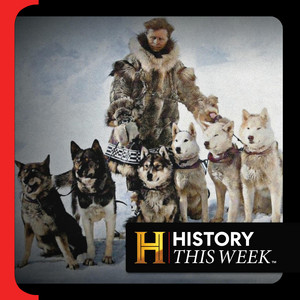
A couple years ago, we covered the heroic story of the serum run and the dog sled team that brought this life-saving vaccine to the people of Nome, including an 11-month-old Baxter.
Today, that run is celebrated with the annual Iditarod Trail Sled Dog Race.
And now, we are bringing you that episode again.
We will be back with new episodes very soon, so stay tuned and enjoy this classic story.
History This Week, January 27th, 1925.
I'm Sally Helm.
The temperature is hovering around minus 50 degrees.
So cold that sharp ice crystals form as you breathe.
It feels like a bee sting to the nose.
So cold that exposing your bare flesh to the air would feel like a burn, like a hot iron pressed against your skin.
In fact, that skin might actually start steaming, as the water vapor that's always flowing through your body was pulled out by the cold.
Leave your hand in the air too long and pretty soon, well say goodbye to that hand lost to frostbite.
Things are different at minus 50 degrees.
If you have to be outside, exposed to the elements, there is simply no room for error.
In the railway station in Nenana, Alaska, Wild Bill Shannon is waiting for a train.
He is well acquainted with the harshness of the environment.
He wears thick gloves and a knee-length bearskin coat.
And he watches the tracks, anxious, waiting for a very important delivery.
Ninana is located roughly in the center of Alaska.
674 miles by trail to the west is the town of Nome.
And there are terrifying reports coming out of Nome about children dying.
The town has been struck by an outbreak of diphtheria, a disease that leaves its victims gasping for air.
It's especially dangerous if you're young.
If this epidemic goes unchecked, all of the children in Nome could die.
A life-saving serum does exist, but Nome doesn't have enough.
And so that is why Wild Bill Shannon is waiting at the end of the train line in Ninana.
A package of that serum is about to arrive and he is going to help carry it out to the coast to Nome.
Finally, Shannon hears the chugging of the train.
Before it's even fully come to a stop, the conductor jumps off and runs over, holding the 20-pound package of serum.
It's wrapped in fur to keep it from freezing.
Shannon takes the package and then walks it over to his sled and his dogs.
The only reliable way to get this serum across the frozen Alaskan wilderness is by dog sled.
And Shannon will not be doing it alone.
There are other mushers standing ready to pass the serum off in a relay, while Bill Shannon has to complete the first leg with his dogs, including his lead dog Blackie.
He'll pass the serum off to other mushers and their dogs, Pogo and Balto.
The serum must reach the children as soon as possible.
The stakes are life and death.
So, Wild Bill Shannon steps onto his sled behind his team and launches into the darkness.
Today, the gnome serum run.
How did the survival of thousands come to depend on a dog sled relay?
And how did mushers and dogs alike risk their lives in a desperate attempt to save others?
Nome, Alaska, a former mining town on the edge of the Bering Sea.
During the gold rush years at the turn of the century, Nome was home to about 15,000 people.
But by the 1920s, empty storefronts dot the main road, and only 10% of that population remains.
It's tight-knit and isolated.
In 1925, there's no way to get there except by dog team or ship.
In the winter, of course, the ocean is frozen, and so really the only way to get to Nome is by dog team.
Pam Flowers is based and a dog musher herself.
As a kid growing up in Michigan, she dreamed of icy adventures with her pet dog.
She'd been inspired by a radio program called Sergeant Preston of the Yukon.
It starred a Canadian Mountie and his trusty dog, King.
She never forgot it.
How did you realize you wanted to be a dog musher?
Well, I was 35 years old and I was at a big change in my life.
Yes, there was a man involved.
About a year prior, Flowers had gotten out of a long-term relationship and taken some time to figure out her next step.
She headed up to Alaska to fulfill her childhood dream.
She went to live on a sled dog farm.
I pulled into this driveway and there were about 250 sled dogs.
So I thought I'd just died, gone to heaven right there.
She learned about mushing and caring for sled dogs, skills she used to complete the Iditarod, a dog sled race and one of the world's great tests of endurance.
She also ventured to the magnetic North Pole and she completed a 2500-mile solo trip across the Arctic, from the very top of Alaska eastward across the Canadian tundra.
That was the longest solo dog sled trip by a woman in recorded history, and it changed my life.
What is it like to be with just you and the consciousnesses of eight dogs in the wilderness like that?
The thing about being in the Arctic, you know, I would stand there and just look around.
And I would think about all the power it took to freeze the Arctic Ocean, that it froze the land, that there's snow everywhere.
And I would look at that and think, so much power it took to do that.
And it would fill me with power.
And after I'm out there a few days, I think I can do anything.
If Pam were in the wilderness near Nome in the winter of 1925, she'd have felt that power.
That year, like every year, the land and water surrounding the town had frozen.
Until the thaw, Nome was essentially on its own.
On Christmas Eve, local doctor Curtis Welch sees a young patient named Margaret Solvay-Ida.
The seven-year-old is pale and feverish.
Dr. Welch at first suspects tonsillitis.
He says Margaret should rest.
And the little girl died.
They could not help her.
Soon, more children fall ill in Nome and in a nearby Native community.
And Dr. Welch realizes the worst.
These young patients have diphtheria, which means more people are going to get sick. and soon.
It's very contagious.
It's transmitted by particles in the air and it gets into your respiratory system and it forms in the back of your throat like a film sort of, and it slowly suffocates the person to death.
By the end of January, five more children have died.
Dr Welch is the only doctor for Miles and he knows that the disease can only be stopped by a serum containing a specific antitoxin.
But his serum supply is low, barely enough for six patients.
It's also past its expiration date.
To avoid further tragedy, Gnome will need a large batch of fresh serum.
He goes to the authorities in town and tells them we've got an epidemic.
Somehow we have to get diphtheria serum here.
Hey, everyone.
This is your producer, Ben.
And, as you probably know, each week on History.
This Week we talk about moments when people stepped into the unknown, crossing borders, exploring new worlds and learning to communicate across cultures.
And honestly, that spirit is what learning a new language is all about.
So this year, what if you made yourself the main character in that story?
Maybe you're reconnecting with your roots, leveling up your career or gearing up for big 2026 travel plans.
Rosetta Stone makes it easier than ever to start, and actually stick with it.
For over 30 years, Rosetta Stone has been the trusted leader in language learning.
Their immersive intuitive method teaches you the same way people have learned languages throughout history by hearing, speaking and thinking in the language itself.
No English translations.
You start with simple words, build to phrases and before long you're forming full sentences designed so the learning really lasts.
Lessons are easy to fit into your day, whether you've got five minutes or an hour.
And with True Accent you get real time feedback on pronunciation, like having a personal language coach helping you sound natural and confident.
And with a lifetime membership, you get all 25 languages forever.
Learn Spanish now, Italian next year at no extra cost.
So don't wait.
Unlock your language learning potential now.
History This Week listeners can grab Rosetta Stone's lifetime membership for 50% off.
That's unlimited access to 25 language courses for life.
Visit rosettastone.com slash history this week to get started and claim your 50% off today.
Go to rosettastone.com slash history this week and start learning today.
Hey, this is Richard Deitch, the host of the Sports Media Podcast.
If you're interested in what's happening with all the places where you consume sports, the Sports Media Podcast has you covered.
I've been turning down interviews all week.
Coda Copy reached out, Oprah, George Stephanopoulos.
So I said, no, I was booked on the Deitch Podcast before the Taylor Swift phenomenon.
I must live up to my responsibility.
Listen wherever you get your podcasts.
Dr. Welch forms an emergency public health council.
Its first act is to place Nome under quarantine.
Residents are advised to stay inside and away from social gatherings.
And people are beginning to panic.
Dr Welch wires two urgent telegrams one to the US Public Health Service in Washington DC and one to towns throughout Alaska who might have a stock of serum on hand.
I am in urgent need of one million units of diphtheria antitoxin.
Stop.
Not because there are a million people in Nome, but that's how much serum he needs to stop an outbreak in this town of about 1500.
And a Dr Beeson down in Anchorage looked in his storage facility there where he kept his medications and discovered he had 300000 units of diphtheria serum.
It wasn't enough, but it was something.
But it is also hundreds of miles away to the south from Anchorage to Nome would be roughly the length of an overland trip from Chicago to Washington DC.
It's easy enough to get that serum part of the way.
Everybody agrees that they're going to have to put it on a train and it's going to have to go north out of Anchorage.
But the question is, when you get it up north, what do you do then?
The problem is, the train line doesn't go all the way up to Nome.
And Dr. Welch's counsel is divided over how to organize the rest of the trip.
One side wants the train to stop at a town north of Anchorage called Nunana.
Then use dog teams to ferry the serum from there.
The other was that they would continue to Fairbanks, where there were a couple of planes.
Fly the serum to Nome.
Alaska Congressional Delegate Dan Sutherland pushes for this idea.
The epidemic has begun to make headlines in the rest of the country, and Sutherland sees this as a chance to promote Alaska's aviation achievements.
But some council members are like, that is never going to work.
Dogs are a way better option.
Because they could depend on the dogs not to freeze up and fall. had to make a decision.
He just had to make a call.
Bone chooses dogs.
Here's the plan to cover the 674 miles of treacherous wilderness between the end of the train line in Nenana and the suffering townspeople in Nome.
Someone would set out from Nenana and head west across Alaska, and somebody would start out from Nome and they would bump into one another at a little village called Nulato.
And the Nome person would take the serum and head back to Nome.
This brings us back to Wild Bill Shannon, who signs on to do the first leg of the trip.
He was a prospector, he was a trapper and he was known for just you know, give me the problem and I'll go solve it.
Shannon has experience driving a dog team in tough conditions to deliver the mail.
But remember, he's setting out under unusually harsh circumstances.
It's around negative 50, a blisteringly cold night, even by Alaskan standards.
And horse teams have left the trail riddled with large holes.
He was very worried about his dog stepping in holes that were made by the horse's feet.
And so after a while, he considered it such a hazard, he moved down onto the river.
A frozen river can take him part of the way.
But driving on river ice is incredibly dangerous.
He has to constantly watch for places where the surface is thin or even missing.
And it's even colder than driving on land.
He would get off the sled and run beside the sled, trying to get warm.
And he would get so exhausted, he would have to get back on the sled.
He'd swing his arms like a windmill, one arm at a time, trying to fling blood out into his fingers.
I just imagine that you've been colder than some of our listeners have ever been in their lives.
What is it like to be that cold?
The hardest thing for a human is to keep their hands warm and it's just plain hurts.
And what I always did when I got really cold was I would just pull my fingers back and make fists inside my mitts and just squeezed my hands like I was squeezing a rubber ball and sort of jumping up and down a little bit on the sled just making myself generate heat.
Despite the dangers, Wild Bill Shannon's route is relatively straightforward if you compare it to the treacherous journey in and out of Nome.
But there is a man who is up for the job.
His name is Leonard Seppala.
He's considered by many to be the greatest dog musher who ever lived.
He's got one of the greatest lead dogs, Togo.
I'm pleased to say it was a very small man.
He was five feet four.
I'm only five feet, so I really like that.
Seppala had grown up in Norway and moved to Alaska as a young man.
His girlfriend back in Oslo had died and he came to the territory looking to move on from his grief and maybe make some money panning for gold.
Instead, he discovers dog mushing. and he has a knack for it.
By 1925, he has won the last three All-Alaska sweepstakes, which is a major race.
He's a local celebrity.
He loved attention.
He was a very gregarious fellow, very active in the community, and he would go down the sidewalk doing handsprings.
By 1925, Seppala had also found his greatest mushing partner, a dog named Togo.
But the two had not always been inseparable.
At first, Seppala had completely dismissed the young dog.
He didn't look fast, and he was too small to haul heavy freight.
Nobody paid any attention to him.
He was just allowed to run free over the tundra.
He became a very independent little guy and developed a mischievous streak.
Togo was in the habit of running out ahead of Leonard Seppala's dog team and hiding out.
And when the team would go by, he'd jump out and bite the lead dogs on the ear.
He was a juvenile delinquent.
He wanted to cause trouble, and he did.
Once, when Togo was still a puppy, Seppala left him in the kennel while the team went out on an errand.
But Togo had other plans.
Somewhere around like midnight he backs up, takes a flying leap and he jumps over the fence that surrounds the kennel.
But he doesn't quite make it.
And he gets his back foot hung up in the fence.
Someone comes to cut him loose.
And then Togo takes off after Seppala.
When he finds the team, Seppala is not happy to see him.
He tends to Togo's injured paw and stashes him in the sled basket.
Togo hates that.
He created such a ruckus.
Leonard says, okay, Togo, I've had it with the screaming and yelling.
I'm going to put you in the back of the team, right in front of the sled, and you're going to run for a while.
Seppala hooks Togo in with the team, not expecting much.
But before Seppala's eyes, Togo transforms from a delinquent puppy into a disciplined sled dog.
They can't believe it.
This eight-month-old dog is doing great.
So they take a break and he moves them up into the team, moves them a little bit further, a little bit further, until Togo, on his first day in team, is now in lead beside Leonard's other lead dog called Ruski.
Wow.
Tell me, what's so amazing about him being a lead dog on the first day?
What does it take to be a lead dog?
So you have to be willing to stay out in front of all the other dogs and you have to listen to what the musher says.
It has nothing to do with dominance or strength.
It has everything to do with having the self-confidence to follow what your musher is telling you to do.
Leonard finally realized that he had a dog who was intelligent, who had stamina, who had speed, who had endurance and would follow commands.
And most of us who have been dog mushers will have one dog like that in our whole life.
And for Leonard Seppala, that one dog was Togo, while Bill Shannon had left Nenana Seppala and Togo leave Nome heading to meet Shannon.
People line the streets to see him off on his journey.
His community is relying on him, including his wife and his young daughter.
He only goes like 33 miles, I think, that first day because he thinks he has 390 miles to go.
He doesn't want to exhaust his dog straight off.
Seppala spends the first night at a roadhouse along his route.
The next day, he puts in 130 more miles.
From that point on, he's completely out of contact.
He's gotten to the end of the telegraph line on his route.
Seppala is alone.
No more contact with the outside world.
There's no way for him to know that back in Nome, the Public Health Council has just changed the serum delivery plan.
We're leaving today and entering a world of Mickey Mouse waving, princess meeting and greeting, lightsaber clashing, the Twilight Zone, Tower of Terror dropping Banshee flying.
Space mountain launching.
Galaxy rewinding.
Galaxy rewinding.
Fireworks igniting.
World of other worlds.
For whatever you love.
Infinite worlds await at the most magical place on Earth.
Walt Disney World Resort.
This episode is brought to you by Peloton.
Break through the busiest time of year with the brand new Peloton Cross Training Tread Plus.
Powered by Peloton IQ.
With real-time guidance and endless ways to move, you can personalize your workouts and train with confidence, helping you reach your goals in less time.
Let yourself run, lift, sculpt, push, and go.
Explore the new Peloton Cross Training Tread Plus at onepeloton.com.
Wild, Bill Shannon and Leonard Seppala are racing toward one another across Alaska, knowing that any delays could mean death for the people of Nome, especially for the children.
And the world is watching.
This epidemic very quickly became known all over the lower 48.
In fact, all over the world.
Because, I mean, this is high drama.
You've got this tiny little isolated community called Nome.
There are 1,500 people.
It's the middle of winter.
It's dark.
And the epidemic is getting worse.
More and more people are developing symptoms of diphtheria.
The health council thinks maybe our serum delivery plan is just not good enough.
The people in Nome think, We got to do something to speed this up.
This could take three weeks to get it done like this.
That is when they come up with the relay system.
A relay involving more drivers, not just Shannon and Seppala.
They put out a call to mail carriers across the region who say, yes, we're ready to help.
And so Wild Bill is no longer going to have to go, I think it was 319 miles to Nulato.
He was just going to go to the next village hand it off, and a series of mail carriers would take it very, very fast.
20 dog teams will now take part in the serum relay.
They'll hurtle over frozen lakes, through forests of pine and birch, moving the serum 300 miles closer to Leonard Seppala, who will then turn around and bring it back to Nome.
But by this point, Seppala is in the deeply isolated tundra off the Bering Sea.
He hasn't Three days into his trip, he reaches a place called Norton Sound.
So Isaac's Point is on the north side of Norton Bay.
And he gets there in the evening.
Amateur historian and husky expert Bob Thomas told us this part of the story.
He's made it his business to visit famous mushers all over the country, including those who knew Leonard Seppala.
He said, Seppala has reached a pivotal moment.
He could go the long way around Norton Sound, adding an extra day to the journey.
Or he could cross the frozen sound itself.
But that is unpredictable and dangerous.
The problem with Norton Sound was depending on the direction of the wind.
If the wind was strong, which it was a lot, the ice could come free of the shoreline and drift out into the bay.
Seppala and his dogs could be stranded on drifting ice at the mercy of the sea.
If the wind was blowing out, they'd be moved into the ocean further from land and probably perish.
On this January night in 1925, there's a storm coming in.
But Seppala gets a bit of luck.
The wind was pretty good.
It was coming from the southwest, so it was pushing towards the land, so there was not a worry.
When you get a lucky break like that, you have to take advantage right away, before the wind shifts again.
So that is what Leonard Seppala does.
He sets off across the Norton Sound.
Meanwhile, Wild Bill Shannon has handed off the serum to the first of the local mushers, begun the local teams have passed the precious package from one to the next for the past three days they've covered those 300 miles trying to reach sepala and togo who remember are out of contact now sepala is mushing across the ice of the frozen bay and he reaches the far side he can't rest long He thinks he still has a hundred more miles to his destination, the small town of New Lotto.
But then, he hears something on the wind.
A voice.
Way out there.
Is that a man?
And sure enough, he spots a dog team.
They seem to be going wild, like they've smelled a reindeer.
And then Seppala hears something else.
What's that guy saying?
Did he just say serum?
And just the wind blows just right, so he finally hears the word serum.
The shouting man is sled driver Henry Ivanov.
He's calling, over here, I have the serum.
The serum is here.
Seppala drives over to Ivanov.
The two men greet each other with enormous relief.
A little shift in the wind and this meeting never would have happened.
Ivanov tells Seppala about the relay and passes him the package of serum.
They have saved a lot of time.
Now, Seppala has to turn his dogs around to face back the way they've come.
They're over 200 miles from home And facing the Norton Sound from the other side.
Seppala's luck has changed.
The storm is coming in.
By now, the wind has shifted from the southwest.
It's coming out of the northeast.
And this is very, very bad.
Seppala faces that same decision, short way or long way.
But now, the conditions for going the short way across the bay are deteriorating fast.
He takes the serum onto his sled and he thinks to himself this ice is going to get swept out to sea.
This is the only serum there is.
Do we go across the ice again or do we go around the coast?
Seppala thinks of his wife and daughter back in Nome. and he comes up with a plan.
He'll trust Togo.
He'll release his lead dog from the harness and let him run ahead of the team picking his way through the ice, showing them where to go.
That way, they can take the short way and get back home faster.
Now, this storm is raging.
It is dark.
It is now 40 mile per hour winds.
It's 30 below.
The ice is breaking up.
It's shifting all over the place.
There are these huge piles of ice and these big, long ridges.
There are open areas of water.
Leonard can't see anything.
It's dark.
But he trusts Togo.
Togo stays within view, leading the rest of the team over and around the dangerous patches.
He would find the narrowest places in the cracks in the ice.
And they just kept going and going and Togo led them all the way back.
Bob Thomas told us that Togo's feat was extraordinary.
You need a very, very good lead dog that will go across a trackless lake or, in this case, the end of a 20 mile wide bay crossing.
You need a very good lead dog that when you get to the other side, you're going to be where you're supposed to be.
And you're not looking at a hundred foot tall cliff or something, which could very easily happen.
Seppala and the team arrive back at Isaac's Point around 9 p.m.
They stop for a rest.
So they rested till 2 in the morning and when he got up the ice had broken off and was all out at sea.
They could have been on that ice had it not been for Togo.
So at that point the blizzard storm which had started that night before was probably at almost its peak.
Seppala and the team struggle forward toward their next rest stop, 40 miles away.
After 12 hours, they arrive.
And there's his friend, Charlie Olson.
And Charlie Olson tells him well, we've got a whole other relay set up and you can give me the serum.
And Leonard was only too happy to give it over because he was exhausted.
Leonard and Togo and the team can rest.
On February 1st, Charlie Olsen heads out with the serum.
There are only 78 miles left in the run to Nome.
The storm was still raging until Charlie Olsen got to the next village.
His hands were literally frozen to the handle on his dog sled.
The next relay driver, Gunnar Kassen, picks up the serum and takes it all the way to Nome.
He reaches the town on February 2nd.
5.30 in the morning.
The community is still under quarantine.
Nobody's out.
It's dark.
No one witnessed this arrival.
Cassin brings the serum straight to Dr. Welch, days earlier than expected.
And after the five and a half day, 674 mile journey, every glass vial is intact.
It is absolutely amazing.
I mean, this should have taken like a couple of weeks for them to run the serum along this route.
Dr. Welch and his team of nurses don't waste any time.
They put on their heavy winter gear and off they went and vaccinated the most vulnerable people and helped save the community.
What could have happened if the serum hadn't made it Every child in the town would have died.
In the coming weeks, more serum will arrive, enough to end the epidemic.
And the story of the heroic sled dogs is passing.
I mean, we have not mentioned a name that I think many listeners will be expecting to hear in this story, which is the name Balto.
Tell me about Balto.
Well, Balto belonged to Leonard Seppala.
All the dogs that Gunnar Kasson was driving were Leonard Seppala's dogs that he had left behind in his kennel.
When Gunnar Kasson put his team together, he placed Balto in the lead.
When they entered Nome with the life-saving serum, Balto was in the front.
And so they telegraph out to the rest of the world that this dog team delivered the serum to Nome, and it was led by this dog named Balto.
And so everybody reads in the newspaper about this dog Balto, because they want something to hang on to.
Even asks Kasin to reenact the delivery for his camera.
The tape is made into a film reel that's distributed throughout the country.
Now, you can go to the theater and see Balto delivering the serum to Noam.
And they don't know it's a reenactment.
If they did know, they wouldn't care.
They were just ecstatic.
How did Seppala feel about that?
Well, at first, he didn't really care. because he didn't know how big this was.
You know, they had no idea.
But Balto is a huge story.
He tours the United States.
New York immortalizes him in bronze with a statue in Central Park.
One day, he'll even star in a cartoon movie.
When Seppala realizes that the story of the serum run is being reduced to Balto, he starts to feel differently about his fame.
It annoyed him really, because he knew that they had done so many more miles with his team and Togo than any other musher.
Balto did step up and go from being a team dog to being a lead dog.
But Leonard Seppala didn't like the fact that he got all the attention.
Seppala even takes Togo on a U.S. tour to let people know about what he'd done.
But it's too late.
Balto is the heroic face of the story.
But I want to say one thing about this controversy.
We don't know how many dogs actually took part in the serum run, but every one of them worked hard to get that serum to Nome.
Every dog was a hero.
Every dog did their part.
And so I really don't worry about whether people want to give the credit to Togo or to Balto.
Pam Flowers says Leonard Seppala came to feel something similar.
I would actually like to read a paragraph from Leonard Seppala's unpublished autobiography.
This is after the serum run and I always choke up at this.
He says afterwards I thought of the ice and the darkness and the terrible wind and the irony that men could build planes and ships, But when Noam needed life and little packages of serum, it took the dogs to bring it through.
He's honoring all the dogs.
Not just one or two dogs.
He's honoring them all.
Thanks for listening to History This Week.
For moments throughout history that are also worth watching.
Check your local TV listings to find out what's on the History Channel today.
If you want to get in touch, please shoot us an email at our email address historythisweekathistorycom, or you can leave us a voicemail 212-351-0410.
Special thanks to our guests Bob Thomas, author of Leonard Seppala, The Siberian Dog and the Golden Age of Sled Dog Racing 1908-1941, and to Pam Flowers, author of Togo and Leonard and a new memoir titled Iditarod 1000 Miles Across Alaska by Dog Team.
I would say this tells you how optimistic I am.
In 1983, I did the Iditarod.
I was number 51 out of 54 people, and I'm writing my memoirs.
This episode was produced by Corinne Wallace.
It was sound designed by Brian Flood and story edited by Jim O'Grady.
Our senior producer is Ben Dickstein.
History This Week is also produced by Julia Press and me, Sally Helm.
Our associate producer is Emma Fredericks.
Our supervising producer is McKamey Lynn.
And our executive producer is Jesse Katz.
Don't forget to subscribe, rate, and review History This Week wherever you get your podcasts.
And we will see you next week.