Chapter 3.
Learning to Survive That night, Buck faced the great problem of sleeping.
The tent, lit by a candle, glowed warmly.
Everything around them was white and snowy.
When Buck entered the tent, thinking it was a normal thing to do, Perrault and Francois yelled at him and threw things at him until he ran away angry and embarrassed back into the cold.
A chill wind was blowing that nipped him sharply.
He lay down on the snow and tried to sleep, but the frost soon drove him shivering to his feet.
Miserable.
He wandered around the many tents only to find that one place was just as cold as another.
Here and there, rude dogs tried to bully him, but he bristled his neck hair and snarled, for he was learning fast how to fight back, and they let him go on his way without bothering him anymore.
Finally, an idea came to him.
He would return and see how his own teammates were sleeping.
To his surprise, they had disappeared.
Again he wandered around the large camp looking for them, and again he returned without finding them.
Were they in the tent?
No, that could not be, or else he would not have been chased out.
Then where could they possibly be?
With drooping tail and shivering body, feeling very lost and alone, he circled the tent.
Suddenly the snow gave way under his front legs and he sank down.
Something wriggled under his feet.
He sprang back bristling and snarling, afraid of the unknown.
But a friendly little yelp reassured him and he went back to investigate.
He smelled a whiff of warm air, and there, curled up under the snow in a snug ball, lay Billy.
He whined, squirmed and wriggled to show that he was friendly, and even licked Buck's face with his warm, wet tongue.
Another lesson.
So that was the way they did it.
Buck chose a spot and with much fuss and hard work dug a hole for himself.
Soon the heat from his body filled the small space and he was asleep.
The day had been long and hard and he slept soundly and comfortably, even though he growled and barked and wrestled with bad dreams.
He did not open his eyes until the noises of the camp woke him.
At first he did not know where he was.
It had snowed during the night and he was completely buried.
The snow walls pressed in on him from every side and he felt very scared.
His muscles tensed, and the hair on his neck and shoulders stood on end.
With a ferocious snarl he jumped straight up into the blinding day, the snow flying about him in a flashing cloud.
Before he landed on his feet, he saw the white camp around him and knew where he was.
Buck then remembered all that had happened, from the time he went for a stroll with Manuel to the hole he had dug for himself the night before.
Francois shouted when he saw Buck.
What did I say? he yelled to Perrault.
That Buck for sure learns quick as anything.
Perrault nodded, with a serious look on his face.
As a courier for the Canadian government, carrying important mail.
He wanted to get the best dogs and he was happy that he had found Buck.
Three more huskies were added to the team in less than an hour, making a total of nine, and in fifteen minutes they were all in harness and swinging up the trail toward the Daya Canyons.
Buck was glad to be gone, and even though the work was hard, he found that he did not mind it.
He was surprised at the team's eagerness and even more surprised at the change that had come over Dave and Solex.
They were like new dogs, completely altered by the harness.
They were not quiet and solitary anymore.
They were alert and active.
Anxious that the work should go well and angry with anything that slowed their work.
The hard work seemed to be the only thing that made them happy.
Dave was the wheeler, or sled dog.
Pulling in front of him was Buck, and then came Solex.
The rest of the team was ahead of them in single file, all the way to the leader, who was Spitz.
Buck had been placed between Dave and Solex so he could learn from the two older dogs.
Buck was a good student and they were good teachers, never letting Buck make a mistake for long.
Dave was fair and very wise.
Once, during a brief stop, Buck got tangled in the ropes and delayed the start.
Dave and Solex became very angry with him, and Buck took care to keep clear of the ropes afterward.
Before the day was over, he had done so well that Dave and Solex stopped bothering him about it.
Perrault even honored him by lifting Buck's feet and carefully examining them.
It was a hard day's run up the canyon, through sheep camp, past the scales and the tree line, across glaciers and snow drifts hundreds of feet deep, and over the great Chilkoot Divide, which stands between the salt water and the fresh water and guards the sad and lonely north.
They made good time down the chain of lakes that fill the craters of extinct volcanoes.
Late that night they pulled into the huge camp at Lake Bennett, where thousands of gold seekers were building boats and waiting for the ice to break up in the spring.
Buck made his hole in the snow and slept well, but he was woken up much too soon in the cold darkness and harnessed with the other dogs to the sled.
That day they were able to run 40 miles because the snow on the trail was packed, which made the traveling easier.
But the next day, and for many to follow, they had to break their own trail in fresh snow.
This meant that they had to work harder and traveled slower.
Perrault traveled ahead of the team, packing the snow with his snowshoes to make it easier for them.
Francois guided the sled and sometimes changed places with him, but not often.
Perrault was in a hurry, and he took pride in his knowledge of snow and ice.
It was important to know about ice because they had to travel across it for months at a time.
In the fall, the ice was very thin and where there was fast-running water, there was no ice at all.
Day after day, Buck worked hard.
They always stopped and made camp in the dark, eating their bit of fish and crawling to sleep in the snow.
By the time the sun rose, they were already many miles onto the trail again.
Buck was very hungry.
The pound and a half of dried salmon, which was his food for the day, seemed to go nowhere.
He never had enough.
The other dogs because they weighed less and were used to this way of life, received only a pound of fish to eat and managed to stay in good shape.
But Buck quickly lost the neatness that was such an important part of his old life.
He used to be a careful eater, but he found that the other dogs finishing first would steal his food.
There was no way to defend it.
While he was chasing away two or three, others would eat his food, so he ate as fast as they did.
And he was often so hungry that he would steal food from any dogs that ate it slower.
He watched and learned.
When he saw Pike, one of the new dogs, who was a clever thief, steal a slice of bacon when Perrault's back was turned.
Buck did the same thing the next day and got away with a whole chunk.
Perrault was very angry but did not suspect Buck, while Dub, an awkward dog who was always getting caught, was punished it.
This first theft made Buck able to survive in the North.
It showed that he could adapt, which was very important.
It also showed that he didn't care any more about stealing.
There was no other choice for Buck in this cold and difficult place.
He did not steal because he liked to do it, but because he was hungry.
And he stole things carefully and secretly because he did not want to be punished.
He changed quickly.
His muscles became hard as iron, and he was able to ignore ordinary pain.
He could eat anything.
His body would turn any food into energy to toughen and strengthen his muscles.
His senses of sight and scent became very keen, and his hearing became so sharp that in his sleep he could hear the quietest sound and know exactly what it was.
He learned to bite the ice out with his teeth when it collected between his toes.
When he was thirsty.
If there was a layer of ice over the waterhole, he would break it by standing on his hind legs and then coming down and smashing the ice with his front legs.
He could even predict the weather just by smelling the air.
Buck did not learn only by experience.
Instincts he did not even know he had became active in him.
He felt like he could remember when wild dogs ran in packs through the forest and hunted down their food.
When he fought with the other dogs, he felt like one of his ancestors fighting.
This old kind of life and its tricks came to him without trying, as if they had always been his.
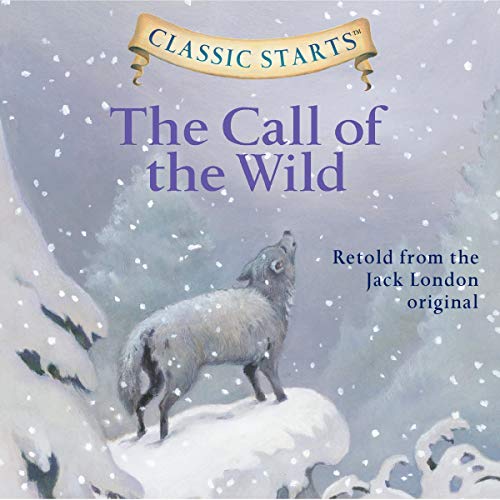
And when, on cold nights, he pointed his nose at a star and howled long like a wolf, it felt like one of his ancestors was howling through the centuries and through him.
His voice was their voice.
Buck's life had changed so much, all because some men had found a yellow metal in the north and because Manuel was a gardener's helper himself who loved to gamble.