This election season you can expect to hear a lot of news.
Some of it meaningful, much of it not.
Give the up first podcast 15 minutes, sometimes little less, and we'll help you sort it out.
What's going on around the world and at home?
Three stories, 15 minutes, up first, every day.
Listen every morning, wherever you get your podcasts.
This is Planet Money from NPR.
This is St. Croix.
And the US Virgin Islands.
It's a Caribbean paradise.
Pink and cream colored buildings.
Roosters are everywhere.
There's a harbor dotted with yachts and catamaranths.
And boardwalk people are having drinks and watching the sea planes take off.
The economy here mainly runs on tourism.
But our trip took us away from the beach and the palm trees, because we were here for something else.
Oh, this street is bumpy.
You see, these days there is only one major product that the Virgin Islands produces.
Rum and lots of it.
That is what we were here for the rum.
Oh my gosh, is that it? Holy, that's huge.
In particular, producer James Sneed and I are here for one of the biggest rum distilleries in the world.
We could see it on the horizon, rising out of the lush countryside, looking huge and out of place.
Let's pull up next to the sign.
The sign says, got a little captain in you.
A question mark.
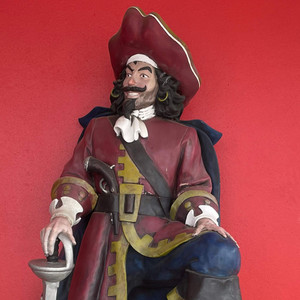
You know, captain as an captain Morgan, the rum with the pirate and the red coat, who's got his leg, you know, propped up on a barrel.
Ah, yes, the drink of my youth.
I know it well.
Sarah, you should have come with us.
My captain Morgan, days are long, long over Jeff.
Now, the captain Morgan people wouldn't let us into the distillery.
But we did try to peek in through the barbed wire fence.
If I saw this, I would assume that they were like manufacturing something way more serious.
Like fertilizer or like oil or something.
Yeah, it looks like an oil refinery.
A quarter of the rum that Americans drink is captain Morgan rum.
And all of it comes from this one mega distillery on St. Croix.
Oh, look, there's someone in a...
Yeah, hi.
They're in a hard hat and...
Oh, he gave us a thumbs up.
Nice!
We came to see this distillery because this was once the center of a vicious economic battle.
You see, captain Morgan didn't always come from St. Croix.
For many years, captain Morgan rum was actually made in a different place in another US territory in Puerto Rico.
Yeah, but in 2008, the government of the Virgin Islands made a secret plan to lure captain Morgan away from Puerto Rico and bring it to the Virgin Islands.
Those were the rum wars.
No, the competition has changed.
This was the beginning of the rum wars.
Hello, and welcome to Planet Money. I'm Jeff Kuo.
And I'm Sarah Gonzalez.
The rum wars between the Virgin Islands and Puerto Rico go back to this peculiar thing that Congress came up with over 100 years ago.
A scheme that was supposed to help these two US territories pay their bills.
Today on the show, how that scheme wound up giving big liquor companies hundreds of millions in US countries.
And how it turned these two territories into bitter rivals, competing to make as much rum as they can at almost any cost.
This message comes from NPR sponsor Grammarly.
What if everyone at work were an expert communicator?
In box numbers would drop, customer satisfaction scores would rise, and everyone would be more productive.
That's what happens when you give Grammarly to your entire team.
Grammarly is a secure AI writing partner that understands your business and can transform it through better communication.
Join 70,000 teams who trust Grammarly with their words and their data. Learn more at Grammarly.com.
Grammarly, easier said, done.
Support for this podcast and the following message come from Wise.
The app that makes managing your money in different currencies easy.
With Wise, you can send and spend money internationally at the mid-market exchange rate.
No guesswork and no hidden fees. Learn more about how Wise could work for you at Wise.com.
There are many things to love about St. Croix.
The rum.
Our rum from a quality standpoint is the best in the world.
How small it is.
Everybody knows everybody.
Young's it.
The local music.
Quail Bay music, which is like scratch band.
This is Neville James.
It's family. It's been here for generations.
We're a hard day's work for a hard day's peak.
That's the mentality I'm saying, girl, right?
Neville used to host a Saturday morning radio talk show.
It was called Give Me the Word.
Give me the word.
I don't know.
Like how would you introduce yourself on the air?
It was a crazy week in paradise.
And we're gonna break it down for you. Don't say it.
It's amazing.
Neville gave up his radio job to go into politics. He was actually a local senator on the island at a very important time back in 2008.
When the Virgin Islands and Puerto Rico first got wrapped up in the rum wars.
Tell you man, this thing made enemies for us.
The thing, the Virgin Islands and Puerto Rico were fighting over has to do with this special funding arrangement that the two territories have.
Territories are part of the U.S. People in the Virgin Islands and Puerto Rico are American citizens, but they don't have all the same rights.
And historically, Congress didn't want its territories to be too dependent on the federal government.
So it would look for ways to provide them with their own funding stream.
And for Puerto Rico and the Virgin Islands, rum plays a big role.
Now, if you have ever bought a bottle of liquor anywhere in the 50 states, you probably paid a bunch of taxes on it.
Local tax, state tax, federal tax.
The federal tax on hard liquor usually comes out to like $2 for a normal sized bottle.
And that money goes straight to the U.S. Treasury, where the government spends it on, you know, government-y stuff.
Yeah, unless you are talking about one particular kind of liquor.
Rum. When you buy a bottle of rum in the U.S., the federal taxes collected on that bottle do not all stay in the United States and in the Treasury.
Instead, most of the tax money gets sent to either the Virgin Islands or Puerto Rico, whoever made the rum in that bottle.
So if the rum was made in Puerto Rico, Puerto Rico gets the taxes.
If the rum was made in the Virgin Islands, the Virgin Islands gets the taxes.
And actually, in this part blew my mind, even if the rum was made in another country, like in Barbados, which is another big producer of rum,
the taxes still go to Puerto Rico and the Virgin Islands. They split it. That's the way Congress set it up.
What a deal.
Only two islands got this sweetheart deal. Puerto Rico and the U.S. for the lands.
Yeah, the more rum they make, the more tax dollars they get. And it's a decent amount of money.
Recently, the federal government paid the two territories more than $700 million in rum money.
Now, Puerto Rico and the Virgin Islands, they're like next door neighbors.
In the summertime, when it gets real clear, you could see Puerto Rico from the farthest point on St. Cray.
They are separated by just 40 miles of teal blue Caribbean ocean. But they're pretty different places.
The Virgin Islands is tiny. It's got like 90,000 people. Puerto Rico's got 3 million people.
And it's just like a much bigger economy.
Puerto Rico's rum industry, also much bigger. They're one of the biggest rum makers in the world.
So they get a way bigger share of that federal rum tax money.
Historically, they got like five times what the Virgin Islands would get.
Yeah. But in 2008, Neville says the Virgin Islands made a big play for Puerto Rico's big pot of rum money.
The governor told us, you got a big deal coming. And we were like, oh really?
Because we were looking for any kind of deal.
Neville had been serving in the Virgin Islands legislature for a few years at this point.
And the Virgin Islands was having a hard time. They were in an energy crisis.
There weren't enough jobs because most big companies didn't want to take a chance on this territory of tiny islands.
But in June of 2008, the governor announced that Captain Morgan, the second biggest rum brand in Puerto Rico,
was considering leaving Puerto Rico behind and coming next door to the Virgin Islands.
The plan was to build this big 165 million dollar distillery right in the middle of St. Croix.
Neville is hearing this and he's like, whoa, this could totally turn things around for us.
We were going to be a player. You know, that was big.
The governor calls a special session of the Virgin Islands legislature.
So they can all vote on the deal he's negotiated with the liquor company.
As a senator, Neville is going to have to decide, yes or no.
So he's like, okay, I'm going to analyze this thing inside and out.
Everybody has their niche, right?
So mine was history and numbers breaking on the numbers.
I'm not saying I'm the best at it, but I enjoy doing it.
So I got labeled as the numbers cruncher.
When the proposal lands on Neville, the number crunchers desk a few days later, it's long, 40 pages.
And in these pages, Neville starts to see things that kind of make him go like, hold on here.
It looks like there are these giveaways to Captain Morgan.
Like if this deal goes through, the Virgin Islands would subsidize molasses, the main ingredient in rum.
It would help pay for Captain Morgan's marketing budget.
It would give them these production incentive bonus things.
Altogether, the government would be handing over almost 80 million dollars a year to Captain Morgan,
once everything was up and running.
And you know that brand new distillery that Captain Morgan was going to put in the middle of St. Croix,
Neville sees that Captain Morgan wouldn't actually be the one paying for that.
The Virgin Islands would actually be the ones picking up the entire $165 million bill.
And the only way the deal made any financial sense at all for the Virgin Islands was because of that federal rum tax program.
The federal taxes we pay when we all buy a bottle of rum.
Right. Because of the way that program works, every gallon of rum that the new Captain Morgan distillery would produce
would be more of that rum tax money for the Virgin Islands government.
Yeah, and under the proposal, the Virgin Islands was going to funnel a lot of that rum tax money straight to Captain Morgan,
like 40% of the money.
The Virgin Islands would get the rest and they would actually still come out ahead by like $100 million a year.
So Neville's wrapping his head around those numbers and then he notices this other thing.
This whole deal with Captain Morgan.
It's not actually with Captain Morgan.
I thought Captain Morgan was Captain Morgan.
I didn't know Captain Morgan was a brand that was owned by Diazio.
Yeah, Diazio is one of the biggest liquor companies in the world, headquartered in London.
And they don't just own Captain Morgan. They also own Smirnoff, Johnny Walker, Guinness.
That's when I start doing our research about Diazio and who they're about and all that stuff.
Neville finds out that Diazio had been making Captain Morgan rum in Puerto Rico for years.
But their contract with the distillery was ending.
So they started to look around to see what their options were.
That's how this whole deal started in the first place.
The Diazio folk realized that they could play the Virgin Islands against Puerto Rico.
And against each other, you know what I'm saying?
Yeah, Neville is not so sure about this deal anymore.
He's starting to see it as just a way for this giant $50 billion company to muscle in and take a cut of that federal rum tax money.
Money that only the Virgin Islands and Puerto Rico have access to.
Our economy is a four to five billion dollar economy.
Why are we making all these amenities available for somebody whose ten times financially more valuable than we are as jurisdiction?
There's something's wrong with that.
There's too much money, man. That's given away public money, man.
A couple weeks after the governor's big 2008 announcement about this possible deal,
the legislature has a special two-day session to vote on it.
That was one of the highest profile sessions in the history of Western allies.
There are crowds of people outside, TV cameras rolling.
All these big wigs from Diazio have flown in from London to testify to persuade Neville and the other senators to approve the deal.
What guys are soos, you know what I'm saying?
They look like... they look like Madison Avenue.
These guys are sharks, man. They're trying to make money.
Yeah, and Neville and some of the other senators, they want to show these guys that they can hold their own.
Everybody's trying to sound Harvard.
Yeah, like, you know what I'm saying?
We're speaking about Yankee Twang.
We're letting them know, you know, we may be small, but we are loaded with quality.
One by one, the senators get their turn to speak and ask questions.
Most of the senators, they are for the deal.
They know Diazio is driving a hard bargain, but they're saying, look, the Virgin Islands is a tiny struggling economy.
We got to take what we can get.
There are a few senators on Neville side. They don't love the idea of giving so much money away to a big liquor company.
But they're also worried about how Puerto Rico will react to all of this, you know,
because stealing Captain Morgan isn't just going to cost Puerto Rico jobs.
It's also taking a whole lot of that federal rum tax money out of Puerto Rico's pocket.
And Neville is kind of like, I don't know, I think this is going to start something.
Pooching is a very dangerous practice because who's to say that Puerto Rico wouldn't do that to us?
We don't want to get in a competition with it.
Neville's like, Puerto Rico can play this game too.
And if they start giving away a lot of money to rum companies, where is this all going to end?
Neville is worried that this could be the beginning of a classic race to the bottom.
So when it's Neville's turn to talk, he pulls out three pages of a handwritten speech.
He unfolds it and starts to read.
He says, I know the Virgin Islands is in a tough spot. I know we need this money.
But giving away so much, that could really hurt us in the long run.
The thought of giving away the people's money to a foreign company,
replete with cash, I repeat, a foreign company, replete with cash, and equity is mind boggling.
And then Neville challenges his fellow senators.
He says, say no to this deal.
Force the governor and Diagio to go back to the table and come up with something better for the people of the Virgin Islands.
And this speech, it does not go over that well.
Everyone on the island is following these hearings, right?
And before the vote, Neville is like flooded with calls from neighbors, cousins, his friends, his dad's friends.
And most of them are saying things like, who's citer you on, Neville?
Oh, you cited me put a recall against the Virgin Islands.
My counterargument, I said, no, I want your mother and your sister and your wife to keep that money.
Instead of that money going back to people who already got money.
In the end, 10 out of the 15 senators vote to approve the Captain Morgan deal.
And Neville's like, all right, buckle up for some drama.
Now the competition has changed, right?
Both of you had your lane, so to speak.
Now it's no more lane.
We're crossing over. We're enemies now.
For years and years, Puerto Rico was producing their rum.
The Virgin Islands was producing theirs.
And they were both getting their cut of the federal rum tax money.
Neville's thinking, from here on out, it is not going to be that easy.
And it wasn't.
Because when people in Puerto Rico learned that the Virgin Islands had successfully stolen one of their major rum companies,
they were not happy.
When that happened, it was a complete shockwave from the island.
Because losing that industry will be catastrophic.
After the break, Puerto Rico makes a plan to get even.
This is my voice.
It can tell you a lot about me.
And I'm not changing it for anyone.
In NPR's Black Stories, Black Truths, you'll find a collection of NPR episodes centered on the Black Experience.
Search NPR Black Stories, Black Truths, wherever you get podcasts.
Black perspectives haven't always been centered in the telling of America's story.
Now we're taking center stage.
Introducing NPR's Black Stories, Black Truths, a collection of Black-led stories from NPR's podcasts.
Search NPR Black Stories, Black Truths, wherever you get your podcasts.
Imagine a house where every room follows a different architect's plan.
Doorways don't connect.
Sterecases lead nowhere.
Lost Patients is a new podcast examining our complicated system for treating psychosis,
one that loses patients to an endless loop between the streets, jail, and hospitals.
We'll ask how it got so bad and how it can get better.
Listen to Lost Patients from KUW in the Seattle Times, part of the NPR network.
When voters talk during an election season, we listen.
We ask questions we follow up, and we bring you along to hear what we learn.
Get closer to the issues of people and your vote at the NPR elections hub.
Visit npr.org slash elections.
When Puerto Rico found out about the deal the US Virgin Islands made with Captain Morgan,
there's a sense of danger, like they were suddenly at the edge of a precipice.
Because rum is a big part of Puerto Rico's economy and its culture.
Puerto Rico is the rum capital of the world.
Jennifer Gonzales Colón is Puerto Rico's representative in Congress.
You talk about Tennessee, you would think about whiskey, you talk about California, you would think about wine.
You think about Puerto Rico's going to be rum.
Jennifer used to serve in Puerto Rico's legislature.
She actually became house speaker around the time of the Captain Morgan deal.
And she says that there was almost a sense of panic at that time.
We just lost Captain Morgan is Bacardi doing the same thing and is moving to Virgin Islands or any other jurisdiction.
And what happened if we lose Bacardi?
Bacardi was Puerto Rico's top rum maker.
The Bacardi distillery was like the crown jewel of Puerto Rico's rum industry.
Helped them claim a big slice of that federal rum tax money.
And Puerto Rico did spend some of that money to subsidize its rum industry,
but only like 10%.
What the Virgin Islands was doing with this Captain Morgan deal was taking 40% of that rum tax money and giving it straight to this big liquor company.
And Jennifer was like, this is a dangerous precedent.
If you open the door to one company to take that money, that means that other companies can ask or do the same kind of deals.
Right. Puerto Rico was worried about the same thing Neville was worried about.
That they and the Virgin Islands were about to be forced into this downward spiral where companies would keep playing them off each other to get more and more generous tax breaks and subsidies until there wasn't much of that federal rum tax money left for the territories.
Now there is a solution to this game of escalating subsidies, which is to just blow up the game entirely.
And that is what politicians in Puerto Rico tried to do.
They went to Congress and said, you created this program. You can put some better rules around it so that all of this federal money doesn't end up in the pockets of big foreign liquor companies.
We try to say that the money was not a good investment of the federal funding because you were just making rich one company to make business.
This turned into a huge fight on Capitol Hill.
Now territories don't get a vote in Congress, but the Virgin Islands, Puerto Rico, Diasio, they all had people in DC making their case.
Diasio accused Puerto Rico of trying to quote, destroy the economy of the US Virgin Islands.
The territories each spent almost a million dollars on lobbyists.
There's a whole thing that was when people started calling it the rum wars.
Yeah, but then Congress stepped in to do what it is best at doing, which is nothing.
They did nothing. So Puerto Rico could not actually blow up the game.
So the next thing that Jennifer and her fellow politicians tried to do was resist.
See if they could hold the line on subsidies to rum companies.
The government of Puerto Rico was trying to meet directly with those companies trying to let them stay on the island, but it was impossible to fight with a good offer from the Virgin Islands.
Yeah, the companies were saying without getting those subsidies to how are we going to compete by 2011.
Three years after the Virgin Islands gave Captain Morgan that generous deal.
Politicians in Puerto Rico couldn't hold the line anymore.
They voted to increase subsidies for all of their remaining rum companies from around 10% all the way up to 46%.
So yeah, the thing that Neville feared that led him to vote against the deal.
It happened the subsidies of Virgin Islands gave Captain Morgan spread to Puerto Rico's rum industry.
And then these subsidies spread right back to the Virgin Islands, causing their government money to.
Because on the Virgin Islands, there was this one rum company that had been there all along.
That company was Cruisin rum.
In 2012, Neville says Cruisin comes to the Virgin Islands legislature and they're like, hey, all of these other rum companies in the Virgin Islands in Puerto Rico are getting these huge subsidies now.
We can't compete with that either. We are losing market share.
So Cruisin rum was in trouble.
So because of that, we had to go back to the table now and give Cruisin rum a similar deal.
This is how big rum subsidies became the new normal and for the Virgin Islands, the new normal is better.
They didn't quite get everything they were expecting, but they did come out ahead by tens of millions of dollars a year.
But the real real winners are the rum companies.
Yeah, it used to be that when you went to a liquor store in the US and bought a bottle of rum, federal taxes were basically divvied up between the Virgin Islands and Puerto Rico.
Ever since the rum wars, those taxes get divided between the Virgin Islands, Puerto Rico, and a bunch of rum companies.
In recent years, those subsidies added up to almost $300 million a year.
Do you feel like you've been proven right?
Oh, yeah, a long time ago. I don't really necessarily want to be right.
You know, I want the people to get paid.
You know, that's what I want. I want the state to get paid.
The rum wars have mostly died down by now, but there is one more twist to the story.
You know, the thing at the center of the rum wars, the federal rum tax program, it's not actually like a permanent set in zone program.
Part of it has to get renewed every couple of years.
But in 2021, Congress kind of forgot about it.
Just like in the rum wars, Congress did nothing. They did not renew it.
And it seems like there's no real reason for Congress not doing anything.
It's just that the territories are not a top priority. They never really have been.
So like when you go to the store to buy a bottle of rum in the United States today, a lot less of the tax money goes to Puerto Rico and the Virgin Islands now.
And for people in the Virgin Islands, that missing money is a huge problem.
If Congress doesn't restore all of that rum tax money soon, this territory of little islands will be in serious crisis.
And this time, they don't have a secret trick up their sleeve.
Coming up on planet money for a long time, steel manufacturing was one of the biggest sectors in the economy.
And when the steel industry in the US started to decline, once small company had a plan to transform it.
Ken gets out a rather large cocktail napkin and he's drawing this mill of the future to make sheet steels.
And I said, wow, that's a bold ambition.
What did you think? Like what was your thought when he said that to you?
You know, no many mill had ever made sheet steel before anywhere in the world.
What the fall of a once great industry can teach us about innovation and why you shouldn't undermine an underdog. That's out next Wednesday.
Drop us a line at planet money on social media and planet money at npr.org.
James Sniid produced today's show with help from Sam Yellow Horse Kessler.
It was edited by Molly Messick, fact checked by Sierra Juarez and engineered by Sina Lepredo.
Alex Goldmark is our executive producer. I'm Sierra Gonzalez.
I'm Jeff Quo. This is NPR. Thanks for listening.
What does it mean to be black in America?
An NPR's black stories, black truths, a collection of stories as varied, nuanced, and dynamic as the black experience.
You'll hear it means everything. Search NPR, black stories, black truths, wherever you get your podcasts.
This is my voice. I can tell you a lot about me and I'm not changing it for anyone.
An NPR's black stories, black truths, you'll find a collection of NPR episodes centered on black experiences.
Search NPR black stories, black truths, wherever you get your podcasts.
It's a high stakes election year. So it's not enough to just follow along.
You need to understand what's happening so you are fully informed on November.
Every weekday on the NPR Politics Podcast, our political reporters break down important stories and back stories from the campaign trail.
So you'll understand why it matters to you.
Listen to the NPR Politics Podcast, wherever you get your podcasts.