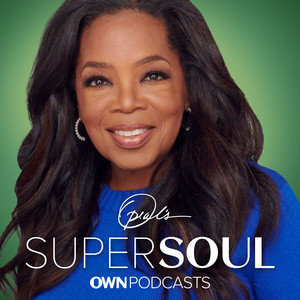
I'm Oprah Winfrey.
Welcome to Super Soul Conversations, the podcast.
I believe that one of the most valuable gifts you can give yourself is time, taking time to be more fully present.
Your journey to become more inspired and connected to the deeper world around us starts right now.
Born in 1962 in New York City, Dani Shapiro was an only child raised in an Orthodox Jewish home.
Her father was extremely religious, and her mother agreed to raise Dani according to tradition.
It wasn't until after her mother died Dani learned her mother had been an atheist.
Their home was fraught with tension, and for Dani, religion and spirituality soon became synonymous with trouble conflict, anxiety.
As a teen, she rebelled and left Judaism behind.
By the time she reached her 20s, Dani says her life had become out of control.
She dropped out of college to try modeling.
She had a string of bad relationships.
She started abusing drugs and alcohol.
And says she felt lost, far away from her true calling.
When she was 24, her parents were in a devastating car crash.
Her father died two weeks later.
Her mother was severely injured, shattered in every way.
Dani became her mother's caretaker. and had to get it together quickly.
It was precisely this moment that Dani says woke her up and saved her.
She felt compelled to make her life mean something.
She got sober. finished school, began writing and teaching, got married, and started a family.
She became a best-selling author of five nonfiction books and two memoirs, Slow Motion and, more recently, Devotion.
Despite all her success, Dani still felt a yearning for something more, for something to believe in.
At night, while being tucked in, her young son would ask the big questions.
Mom?
Do you believe in God?
What happens when we die?
And she didn't know what to tell him.
The religion of her childhood flooded back, and Danny suddenly found herself in the midst of her very own spiritual journey.
So this journey for you really started when your son Jacob, who's now 14, but was a younger boy, and started asking you what do you believe?
Yes.
Yeah.
I know many parents who were raised in either Orthodox traditional religion or not Question how they're going to now relay that to their children.
What do I want my son or daughter to believe?
And you were in that space.
Those questions set off an avalanche of feelings and thoughts. because I knew that my rote answer, my initial rote answer, which was the smorgasbord answer, it was, well, some people believe that there's a heaven Some people believe that we come back some people believe you know in that spirit where I mean I just gave him a kind of smorgasbord I knew that I was failing him I knew that I was failing myself too because I was giving you know giving a six, seven-year-old kid, they don't want a smorgasbord.
They want to know what their mom believes.
And the avalanche that it set off was that I was raised with so much in that way.
I was raised with the, this is what we believe.
There's no two ways about this.
Because you were raised with an Orthodox Jewish father and an atheist mother.
I'm like, how does that work for you?
Explain, first of all, what does Orthodox mean?
I mean, I know, but what does it mean?
Orthodox in the way that I was raised was what would be termed modern Orthodox.
So we weren't Hasidic.
My father didn't wear a black hat and a long beard.
It was...
But did you keep kosher?
We kept kosher.
Do you have two sinks?
Two sinks, two dishwashers.
No driving on the Sabbath, no turning on or off lights on the Sabbath, no electricity of any kind, no writing, no homework.
No playing the piano.
So you honored the Sabbath?
Completely honored the Sabbath.
And you watched your father do the ritual prayers every day?
Yes, as a little girl.
It's actually one of my favorite memories of him.
I would sometimes sit in his lap.
I would sometimes stand with him and watch him.
But what I was watching was devotion, which I really only understood so much later in life, really in writing about it, when I really delved into what was it that was so warm and so that made me feel so safe, And so the process of writing Devotion came about because you were in search.
It was your version of Eat, Pray, Love.
Yes.
Only you didn't leave your own backyard.
Yes.
Devotion is written like a spiritual detective story, with Dani delving deep into the events of her past, searching for clues.
She reflects on her parents' car accident and her father's early death, how she ran away from the God of her childhood and fell into a drug and alcohol-infused rebellion.
It's a story she first shared in her earlier memoir, Slow Motion.
And in slow motion, you write about that period.
And one of the biggest regrets, you say, is when your father died, that you were still in that period of rebellion and trying to figure out who you were, and all of that.
And that saddened you that he didn't get to see who you are now.
It was a great sorrow for me that he died when I was really a mess and that that was he died worried about me.
I believe that he knows.
Yeah, I do.
My father's death, which was in an accident, was such a turning point for me of feeling like if I can't make meaning out of this loss, out of his death, then I'm not even sure what I'm doing.
And that became for me, he became my compass.
And it's one of the reasons why eventually I needed to write that book, Slow Motion.
I needed to write it because I was trying to reconcile for myself how the worst possible thing that happened in my life my parents' accident, the loss of my father, my mother's injuries how that could turn out to actually be something that would turn my life around.
How a terrible thing that I would take back if I could could also turn out to be something that ended up.
So your father's death and the way he died in the car accident was an open door for these discoveries for you.
It was a shock.
And the shock created like a fissure in me, like a crack that allowed me to Wake up.
Which is what we're all trying to do.
Yeah.
And it's unfortunate that sometimes it takes tragedy and it takes crisis and it takes.
You know, We don't choose what's going to wake us up.
That's right.
We don't choose what's going to wake us up.
But you need to wake up.
Yeah.
As you pulled away from Judaism, you said that you rebelled with a vengeance.
What did that look like?
Oh, if you had looked up rebelling with Avengers in the dictionary, there would have been my picture.
You started first by eating bacon.
Oh, yeah.
Bacon started in high school, when all my other friends were doing slightly more interesting things in the woods.
I was eating bacon because...
But I moved on from bacon pretty quickly.
Because Orthodox Jews do not eat bacon, for those of you who are saying, what's wrong with bacon?
Right.
Yeah.
Bacon, shrimp.
Yes.
Yeah.
So once I went to college and I left high school a year early I was just kind of hell bent on getting out of Dodge.
And I...
I was about as ill-equipped to be on my own in a college with other people who hadn't been raised in this kind of really protected, cosseted other people who'd been doing things other than eating bacon.
Yeah.
You lost your mind a little bit.
I lost my mind a little bit.
I had no sense of my identity, like my outline, myself, my worth.
Yeah.
I felt like... And it had all been defined for you.
Yeah.
And you had to fit into this box.
And if you don't, then you don't know who you are.
Yeah.
But...
The rebelling, I think had to do with really not knowing myself.
Not knowing, you know just my guts not knowing what I was capable of, no idea.
No idea of what I might offer anyone else or myself or the world.
So let's talk about this process, because I think so many people are, or have been, where you are, are in the search for themselves.
So what, having still being in the journey, in the seeking phase for yourself, What advice do you give to those who want to know, who want this inner journey?
How should we open ourselves to that?
First thing that I would say is that one of the things that stopped me, the first thing that stopped me, was permission.
The first thing that stopped me was what right do I have?
I'm not a religious scholar.
I'm going against the way that I was raised.
I'm a woman.
I don't have time.
What right do I have to do this?
So step one, I think, was just the idea of this is important.
This is important for me, this is important for my loved ones, that I do this so that I can be there more for them, because I can be there more for myself.
Then the feeling of all the shoulds.
The thing that stopped me for a really long time was that I came from this all or nothing place.
It's our way or not at all.
And the feeling that I had about my Orthodox family was they got God, so that meant there was no God left over for me.
They were doing it right.
They were doing it by the book.
So that de facto meant that I was doing it wrong.
Yeah.
And also, their way of doing it didn't resonate with you.
And it didn't resonate.
It didn't resonate.
So that was in conflict with what you really believed.
With what I really believed.
But I put what I really believed kind of on a shelf because it was too painful to try to grapple with it.
It was too painful to pull it off the shelf and really say.
But at the time you didn't even know what you really believed.
I didn't know what I believed.
I didn't know that it was, no, I just, I shelved the question.
I retired the question.
And, as far as I was concerned, that question could have stayed retired, and might have, until my son Jacob, started asking those questions.
Or something else would have made it.
Because I think that's a question for all of our viewers, too.
What do you really believe?
Do you really believe it, or are you just, by rote, reciting what you've been told your whole life?
Fundamentally, what do you believe?
That's the question that you grapple with in devotion.
The greatest lesson I would say that I learned, and continue to be learning, is that I had felt, because I had been told what to believe.
I felt that it wasn't okay to build a spiritual life.
You had to take the one that had been handed to you on a platter, but you couldn't create one.
And the people who did create them were kind of seeking easy answers or like cherry picking, like a little bit here, a little bit there.
So to begin to define for yourself, for ourselves, maybe there's another way in.
Yes.
Maybe there's another way in.
Yes.
Was like... So liberating?
Yes.
Yeah.
Could you read the passage from page nine?
I think that really illustrates where you were and why this book's happened, and also where so many other people are in their life right now.
I love that.
Yeah, absolutely.
I had reached the middle of my life and knew less than I ever had before.
Michael Jacob and I lived on top of a hill surrounded by old trees, a vegetable garden, stone walls.
From the outside, things looked pretty good.
But deep down inside myself, I had begun to quietly fall apart.
Nights I quivered in the darkness like a wounded animal.
Something was very wrong, but I didn't know what it was.
Nothing, absolutely nothing I could put my finger on was the matter, except that I was often on the verge of tears, except that it seems that there had to be more than this hodgepodge of the everyday.
Inside each joy was a hard kernel of sadness, as if I was always preparing myself for impending loss.
Hmm.
A hard kernel of sadness.
What is it that you think that doesn't allow some people to feel and embrace fully the joy in their lives?
Because there's always this feeling that, even though it's going well right now, something really bad's gonna show up.
Even though, yeah, what is that?
Joy's frightening.
Mm-hmm.
To feel joy, to feel love, to feel it fully, is also to know that it won't always be so.
I mean, that's just a fact.
Yeah, that's just a fact.
The Buddhists say life is suffering.
Yeah.
Someday, the other shoe... To accept that problems are going to come.
They will.
They are going to come.
Right.
The other shoe will drop.
Yeah.
And so the idea or the I mean for me so much the desire to be able to embrace the joy as it flies, to be able to feel it fully without the uh-oh.
I think the hard kernel of sadness comes from leaning back into the past, of being frightened about the future.
When you're fully in the present with joy, when you're fully in the present with anything, it's impossible to feel anything other than that.
But you know, I know you watch Super Soul Sunday and when Brene Brown was on, she was sharing the thought that so many parents have that, even as you're looking in the room, as you put your children to bed at night, and you have that.
Oh, aren't they beautiful.
Isn't that wonderful?
And then, oh, my God.
Yes.
I hope nothing ever happens.
Yes.
Yes, exactly.
It's like the oh, uh-oh.
Yeah.
Yeah.
And I thought what you described on page seven.
You said that the words were coming to me unforced, unbidden.
Do better.
I wanted to be a better mother. a wife, writer, teacher, person, member of society.
I definitely want to sleep better.
We all want that one, don't we?
Oh, and eat better.
Oh yes, of course.
And have more patience, drink more water.
I say that to myself every day.
Okay, I'm gonna make it to six classes today.
I wanted to be someone who not only bought flax seed oil at the health food store, but actually ingested it.
I laughed at this because I buy it all the time.
I even buy the, flaxseed and right.
Shelves full of flaxseed.
There was no end to my desire for self-improvement, but was this what I meant?
Yes.
Yes.
And the question is, was this what you meant?
No, this wasn't what I meant.
I certainly had all of those desires to self-improve in all of those ways, but the desire was much deeper than that.
It was this feeling, you know, the part about wanting to sleep better.
I was waking up at three o'clock in the morning every morning into this state of sort of existential panic.
I didn't know what was wrong, but there was this feeling that I was falling and that there was just nothing to catch me.
And I intuitively knew that it had to do with a spiritual crisis that it had to do with.
Did you have that word for it?
I didn't have the word.
I'll tell you the moment that I knew.
I was actually in the middle of my yoga practice.
I was standing in tree pose in this little room doing yoga.
And the word devotion actually presented itself to me.
Like it was almost like in neon, it was like red and flashing.
And the moment that happened, I thought, oh, it all came together.
That's what this is.
I am in a spiritual crisis.
I need to understand this.
I need to write about this because that's how I understand things.
By writing.
By writing.
It's the only way I know to know what the heck is going on in my mind.
As I was reading the book, I was saying you know what's interesting is?
You were feeling this sense of angst, this sense of urgency, this sense of you know, flooding your body all of the time, but at least you were feeling it.
I think so many people are so disconnected and numbed by the routine of life that they don't even have an opportunity to stop and know what they're feeling.
And that's why sometimes it's 3 o'clock in the morning, it's waking you up.
Well, the feeling that I had was that I would get my whole day done and check everything off, every list that I had to do and drive everywhere that I had to drive, and do everything that I had to do, and get dinner on the table and answer emails and just do all of the things in that endless kind of Then.
Their last thought at night is oh, we're running out of dog food.
The same thing that everybody goes through.
And hit the pillow, fall asleep, and then something in my being was forcing me awake because it was the thing that I hadn't dealt with.
It was the most important thing.
But what happens in life is it's just very easy to kind of say well, I'll deal with that later.
I'll get to that at some point.
Yeah.
So you're blessed to have that restlessness, really.
Yeah, it's a gift.
It's a gift.
It's a wake-up call.
So tell us for everybody who has been where you were and is where you are seeking, because you would still consider yourself a seeker.
Very much so, yeah.
You were saying that you've got to be able to validate for yourself that you have the right to do this, that you have the right to seek and that the seeking really opens up what everybody is yearning for, and that is the deeper fuller, more joyful life.
Right.
Yeah, exactly.
I think it starts with actually what you said at the bottom of page seven.
And I think that so many people who are part of the SuperSoul platform expressed to me, through your tweets and through your Facebook messages, exactly what you said.
I want to do better.
Yeah.
I wanna do better.
But I wanna do better in a way that's not just about I'm gonna drink more glasses of water and I'm gonna make sure that my yoga poses are on point.
I just want to do and be better.
Well, it's that inner work.
Yes.
There's a beautiful piece of wisdom from Abraham Joshua Heschel, where he wrote things when magnified are forgeries of happiness.
Things when magnified. things when magnified, which I love, because everybody, things, great, things are great, right?
Love things.
But things when magnified are forgeries of happiness.
And I think so much of what we...
So many of them.
Magnified meaning put too much value in it.
Put too much value in it.
And the idea.
You're absolutely right.
I just, that was one of those.
Although we were talking about our shoes today.
When you get a closet full of shoes that you thought You thought was going to fill you up and make you happy.
Was going to fill you up.
And you walk into that closet space and it's still.
And then you need more.
And you need more.
And then you realize they're just shoes.
And that's the forgeries of happiness.
Forgeries of happiness.
Exactly.
Yes.
But that way in which, I think, so many of us go about our days, go about just the, there's always something that we need.
There's always a next.
You know we're either.
We're either leaning back into the past and regret and into that swamp which I think is where sort of depression lives and all of that.
Yes, that's where depression is.
Or we're- Impacted, pain.
Exactly, just, or we're, we're leaning forward into the future, into, you know, what if and worry and anxiety and all of that.
I mean the number of times that I've been driving somewhere in my car in this beautiful hilly, windy roads of New England where I live, and I'll realize that I've been driving 20 minutes and I haven't seen anything.
I've just been thinking thinking thinking thinking, and meanwhile I'm passing countryside that people drive to see, you know, beautiful foliage cows horses fences, stone walls, and I'm either, you know, back in 1975 or I'm in the future.
But it's the, what people who teach meditation say is it's the catching yourself.
How about coming back to the breath?
Yes.
How about coming back to the moment?
And because that's where joy resides, that's where anything that we can possibly accomplish in the spiritual realm like not in the all that stuff, at least the garbage can that my head can be.
And to be able to stop and actually get to that place.
I think that that's like the That's the place where it begins.
OK.
How do you begin to decipher the sacred in the ordinary?
Because that's really what you ended up doing in this book.
I think it begins or it began for me with an awareness kind of a constant awareness of the sacred, so that the idea that I'm driving in a car with my son in the backseat and it's a beautiful fall day and the leaves are turning, and it's just the two of us in the car and we're talking, that can be a sacred moment.
Or he can be playing on the phone and I can be like zoned out and thinking about 20 things that I need to do or didn't do or whatever, and then the moment is lost and Right.
There's a beautiful... So it's like when you're being with somebody, really be with someone.
And recognize the possibility of the divine in any given moment.
It's like a lens through which... to see the world.
It's so easy to not do that, and yet it's almost like flipping a switch.
And in doing it, the feeling of this place, the energy of this place feels sacred.
Abraham Joshua Heschel, who I really fell in love with during the time that I was writing devotion.
He said the task of life is to face sacred moments.
To face sacred moments.
I just thought that was so beautiful.
It requires a kind of courage.
It does.
To step into it.
To not shut down.
But to have that consciousness, this moment.
There was a moment one morning where I was packing Jacob's lunch.
And you know, the morning, everything's kind of, everybody's trying to get going.
There's a lot going on and crankiness and dogs and whatever.
And the words that came into my mind were, you're going to miss this someday.
You're going to miss this someday.
So how about not missing it while it's happening?
You know, like these are the good old days.
Be here.
And ever since that day, I really do pack his lunch differently.
And so there is this feeling, like this wax, paper bag, this piece of you know What you're making today.
Turkey.
Yes, yeah.
These things, putting together this lunch for this boy who's going off into his day.
Yeah.
Yeah, sacred too.
OK.
I want to feel a sense of devotion.
How do I do that?
Well, first of all, tell me how you did it in synopsis, because we have to read the whole book, because we can't get all the details.
The way I did it in the beginning was by opening my eyes to the teachers that were around me.
Really thinking.
And look, I live in the middle of nowhere in Connecticut, so it wasn't like I'm in New York City or I'm in LA or I'm in Chicago and the teachers are.
You know, throw a stick and you'll hit a teacher.
I didn't even know what that meant when I said that.
Are the cows my teachers?
What did I even mean?
But when you do that, your teachers do appear.
When the student is ready.
I mean, you know that better than anybody.
And for many people, this show itself is a teacher.
And may I say to all of you who are listening around the world that when you're open to it, you hear something.
It's on TV.
You're flipping through a magazine, you see a line, you see.
That's how it comes to you.
That's what being open means.
It's not Moses in the burning bush.
The burning bush is all around us, is what I want to say to people.
That's right.
Yes.
The burning bush is everywhere.
That's right.
Yes.
I love that.
Yeah.
Yeah.
You know, obviously, this shows a great opportunity.
You hear about a book, somebody suggests something, opens it up.
That's what you mean by teachers.
Yes.
And you don't need to be in the presence of the teacher.
When I began this, there were so many books that I wanted to read and I started going to the bookstore and buying them.
And then I realized I was buying multiple copies because I had them on my shelves, because I'd had them for years, I just hadn't opened them.
And hadn't opened them, yes.
So it's not necessarily about being in the same place.
Your teachers can be books.
Your teachers can be someone on television.
Your teachers can be something that you see on Twitter that takes you to a link.
That happened to me this past week.
There was an extraordinary link that it took me to where I read something.
That's happened to me a couple of times.
But it's the openness and I guess the centeredness to follow what those moments are.
I'm going to follow this.
I think what you just said here is key.
I am open and ready to receive.
Yes.
I am open and ready to receive.
And when you say that to the universe, it's just like in the alchemist the universe rises up to meet you exactly where you are.
Yes, all you need to do is ask.
OK, so you open to your teachers and then?
And then I began to Think both about my present and my past in terms of the spiritual lesson.
What am I meant to learn here?
What is the spiritual takeaway, if you will?
You mean from your life?
From my life.
Okay, that's good.
From this moment.
So for example, very difficult mother. who died unhappy.
One of the last things my mother said at the age of 80 was, I was just getting my life together.
And also recognizing the lesson in that.
Yes. recognizing the lessons from people who are not maybe giving you positive lessons.
Yes.
Well, that's what I think every death is.
You're sitting at a funeral.
You're going through the grieving process.
But every death, in my opinion, is a wake-up call for those of us who remain.
Every single one that affects you And when we are affected in the body of our country by horrible things like Sandy Hook and what happened in Oklahoma, It's a wake-up call for all of us.
It's a wake-up call.
How do you waste time in the face of that?
How do you waste time?
Stop wasting time.
Yes.
Yeah.
All right.
Because each one teaches one.
That's what Maya says.
That's what we're here to do.
When you learn, teach.
When you get, give.
If you can't do that, then there's no reason to be human here on earth.
But I love that question.
That's a tweet, tweet moment.
What is the spiritual takeaway of your past?
And now, what is that spiritual takeaway?
So you started asking that question.
I started asking the question.
And one thing that I realized is that in my past, and particularly in that time in my late teens and 20s, Life happened to me like life happened to me.
Now life happens to all of us and we can't control what we've been given.
But we absolutely can control what we do with what we're given always, no matter how harsh, no matter how painful, no matter how difficult.
And so the feeling for me, like sometimes people will say Dani, you've had a lot of difficult things or tragedy in your life.
I don't feel that way.
I don't carry that around like some sort of heavy satchel.
Nothing is wasted.
Yes.
There is not one experience, no matter how devastating, no matter how torturous it may appear to have been.
There's nothing that's ever wasted.
So that's what you mean by what is the spiritual takeaway.
And that's healing.
Everything gets used.
Everything that's ever happened to you can add value.
One of the questions that Jacob asked you when he was a little boy was, do you believe in God?
Your answer now?
Yes, I believe in God.
I believe in him differently than maybe our ancestors did.
I believe that there is an invisible fabric that connects us all and that God is here for all of us, for everyone.
I asked Jacob the other night how he feels about being Jewish and he said I like being Jewish and I like being a lot of other things too.
I wanted him to have his identity.
I wanted him to know where he came from.
He's going to develop his own sense of what God is because he's watched his mother live in the questions.
I brought God into our home by living in the questions, not trying to come up with an answer.
What do you think happens when we die?
That has changed for me over time.
What I'm beginning to think is that our soul, our energy, finds its way into another form, and that we don't vanish.
And what do you know for sure?
I know for sure that if I remain curious which I think is just about the greatest underrated trait.
And if I continue to follow, truly follow, the path of my own calling that, that is where i find peace, that is where i find contentment and that inner compass the, the feeling and living, and speaking from the gut, You know, not from, not from up here.
Up here can take you to a lot of places, but from right here doesn't steer me wrong.
You know what I wish for every person who watches us today and experiences the heart of you, that you, that you Do exactly what you say at the end of the book.
Understand that each of us human, full of longing, reaching out with our whole selves for something impossible to touch.
Still, we are reaching, reaching.
Thank you.
Thank you.
Namaste.
Namaste.
If you haven't yet, go to Apple Podcasts and subscribe, rate, and review this podcast.
Join me next week for another Super Soul Conversation.
Thank you for listening.