Hello, my friends.
Welcome back to English Unleashed.
I'm Tom, and today we are going to talk about forgetting English words.
Let me ask you something.
Have you ever felt like this?
You learn a new word.
You understand it.
You feel happy, but then, one day later or two days later, the word is gone.
You think, I learned this word before, but I can't remember it now.
If this happens to you, you are not stupid, you are not bad at English, and you are not alone.
This happens to everyone.
Today, I will show you simple ways to stop forgetting English words.
Easy ways.
Small ways.
Ways that work for real life.
Alright.
First, let's understand why we forget words.
This is very important.
We forget words not because we are bad learners.
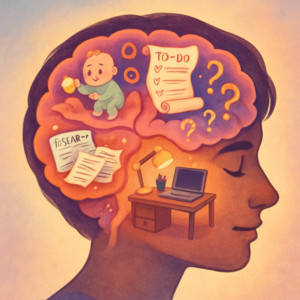
We forget words because of how the brain works.
Your brain is like a muscle.
If you use it, it becomes strong.
If you do not use it, it becomes weak.
When you learn a word one time, your brain says, this is new, but is it important?
If the word does not come back again, your brain thinks, okay, I will delete it.
This is normal.
Your brain wants to save energy.
It keeps only what it thinks is useful.
So let me say this very clearly.
Forgetting words is normal.
Forgetting words means your brain is working.
Now, the solution is not learning more words.
The solution is meeting the same word again and again.
Many learners make this mistake.
They try to learn too many words.
10 words a day, 20 words a day, 50 words a day.
They feel busy.
They feel productive.
But their brain feels tired, and tired brains forget.
Now, here is a better idea.
Learn one word.
For example, let's take a very simple word.
Morning.
This is a very simple word.
All of you know what it means.
Now, you do not need 10 new words today.
You need good morning, morning coffee, morning routine, in the morning, a morning person.
You see?
Same word, different places.
This helps your brain say, oh, I think this word is important.
And then your brain keeps it.
Now let me tell you something very important.
And please listen carefully.
Words do not like to be alone.
A word by itself is weak, and it is easy to forget.
When a word is alone, your brain does not know what to do with it.
For example, listen to this one word, cold.
Now stop for a moment and think.
Cold what?
Cold weather?
Cold water.
Cold coffee.
Cold hands.
Your brain starts to ask questions, and this makes the word unclear.
When a word is unclear, your brain cannot keep it for a long time.
Now listen again, but this time with full sentences.
It is cold today.
I like cold water.
My hands are cold.
Do you feel the difference?
Now the word cold is not alone anymore.
It has a place.
It has meaning.
It feels real.
This place is called context.
Context means the situation where the word lives.
It means how the word is used in real life with other words around it.
Context helps your brain understand a word clearly and remember it more easily.
When you learn a word alone, your brain forgets it quickly.
But when you learn a word inside a sentence, your brain understands it better and remembers it longer.
So please remember this simple and powerful rule.
Never learn a word alone.
Always learn the word inside a sentence.
A sentence gives the word a home.
Okay, my friends.
Now I want you to do something small but very brave.
I want you to say the words out loud using your voice.
Not in your head.
Not quietly inside your mind.
Out loud so your ears can hear your own voice.
This is important because English is not only something you think about.
English is something you use with your mouth.
Your mouth, your ears and your brain work together.
When you say a word out loud, your brain hears the word again.
When your brain hears the word again, it understands that the word is important.
This makes the memory stronger and easier to keep.
Now let us try together slowly and calmly.
I will say one sentence and you just listen first.
I drink water in the morning.
Now please say the sentence with me.
Do not hurry.
Say it slowly.
I drink water in the morning.
Good.
Very good.
Now let us say it one more time together.
Again, clearly and slowly.
Say it out loud, okay?
I drink water in the morning.
Excellent.
Every time you speak, you are helping your brain remember.
You are creating strong memory, not a weak one.
So please remember this simple idea.
Listening is good.
Speaking is even better.
Listening and speaking together help you remember English words for a long time.
Alright, now let me tell you a small secret about learning English.
You do not need to study for a long time.
You do not need one hour.
You do not need two hours.
Your brain does not like long study times.
Long times make your brain tired.
A tired brain forgets easily.
Your brain loves short times.
Five minutes, ten minutes, but every day.
This is very important.
For example, you learn one new word today.
You look at the word in the morning.
Just five minutes.
Then you stop.
Later, at night, you see the same word again in another sentence.
Just five minutes again.
This is called spaced repetition.
Spaced means there is space between learning times.
Repetition means you see the same word again and again.
So you do not learn the word one time only.
You learn it, you stop, and then you meet it again later in another sentence.
Your brain likes this very much.
First time, the word is new.
Second time, the word feels familiar.
Third time, the word feels easy.
This is how memory grows.
Five minutes today, five minutes tomorrow, five minutes the next day.
This is much better than studying for one long day and then stopping for many days.
So please remember this simple rule.
Short time is good.
Many days is better.
Small steps every day help your brain remember English words for a long time.
OK, now I want you to hear this clearly.
Forgetting is not failure.
Forgetting is part of learning.
You are learning English.
That means you are growing.
You will forget words.
That is normal.
What matters is not speed.
What matters is continuing.
Small steps every day.
Your English is not lost.
It is building.
Slowly, quietly, and strongly.
Thank you so much for listening to another episode of English Unleashed.
I'm Tom, and until next time, keep learning, keep practicing, and happy holidays!
Thank you.