NPR. Terror for uncertainty, government layoffs and sticky integrates are weighing on businesses.
Just yesterday on Truth Social, President Trump announced an extra 25 % terror from Canadian aluminum and steel.
There was a whole lot of Back and forth, Ontario Premier Doug Ford told CNN that this whole trade war is bad for both countries.
This is absolute chaos created by one person and that's Donald Trump.
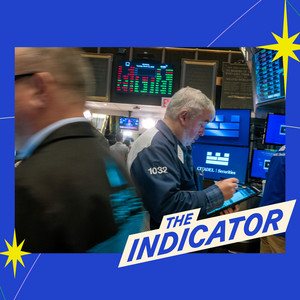
Not all of this turmoil has not been good for the stock market.
As of this recording, the S &P 500 index of stocks is down about 10 percent from its peak in February.
Many Americans are worried that the stock market fall, could snowball into a market crash.
The stock market doesn't reflect the whole of the economy, and it doesn't always hit everyone's savings, especially many lower income Americans.
But spills in the stock market do splash a lot of people.
Three out of every five American families own shares, either directly or indirectly through retirement plans.
So what are some ways these families could be navigating this moment?
Dan Villalon is an investment researcher and advisor.
Don't panic would be sort of the first answer I would have, There's a crisis.
We can't afford to panic.
This is like that line from Toy Story when Woody says, this is the perfect time to panic.
This is also the indicator from Planet Money.
I'm Waylon Wong. And I'm Darren Woods.
Today on the show, how to think through a stock market slump.
We brush away the cobwebs of fear and confusion and we bring some long held facts to the surface.
This message comes from Intuit TurboTax.
Now, Taxes is matching with an expert backed by tech to get you the most money back at TurboTax .com.
Experts only available with TurboTax Live see guarantee details at TurboTax .com slash guarantees.
This message comes from Charles Schwab.
When it comes to managing your wealth, Schwab gives you more choices like full service wealth management and advice when you need it.
You can also invest on your own and trade on thinkorswim.
Visit Schwab .com to learn more.
Support for NPR and the following message come from Yarl and Pamela Moone, thanking the people who make public radio great every day and also those who listen.
This message comes from Schwab.
At Schwab, how you invest is your choice, not theirs.
That's why when it comes to managing your wealth.
Schwab gives you more choices.
You can invest and trade on your own.
Plus get advice and more comprehensive wealth solutions to help meet your unique needs.
With award winning service, low costs and transparent advice, you can manage your wealth your way at Schwab.
Visit Schwab .com to learn more.
As the Trump administration lurches from tariffs on to tariffs off, – firing's ahoy to firing's halted – uncertainty is very high.
Yeah, and there's actually this indicator based on economic data and words in the news.
It shows that excluding the early part of the pandemic, economic policy uncertainty is at the highest level ever recorded since measurement began in the mid -1980s.
Uncertainty is stifling for business investment, and it's contributing to the recent fall in the stock market.
Now, we'll go through a full assessment of the current business climate in other shows.
But today we want to pull the lens back and look at the big picture for the stock market.
Dan Villalon has been analyzing markets for close to two decades, most of that with AQR Capital Management and investment firm.
He loves numbers. And based on the numbers he's looked at, Dan says there are a few reasons why investors shouldn't panic.
The first is that while the reasons for each stock market correction might be different, And the resulting stock market slip is common.
Markets lose money, a shockingly frequent amount of the time.
If you look at the past 50 years for the U .S.
stock market, and the U .S.
stock market has been among the strongest, if not the strongest, of most major markets, if you look at the past 50 years, 27 per cent of the time.
The market has been more than 10 per cent off of its previous peak.
So when the market is 10 per cent down, like it has been this week, that's pretty ordinary.
It's a situation almost a third of the time.
The second comforting fact for investors, Dan, says is about timing.
He has run the numbers for the last 50 years of the stock market.
Let's say you have a 10 -year investment horizon, and the question we asked is, okay, well, what happens if you started investing during the worst week to be an investor or the worst month or the worst quarter or the worst year?
The good news is we found that, whether or not you get unlucky with the start, doesn't really tell you anything about the next nine years and 11 months and three weeks.
The short term, as painful as it could be, tends not to really tell you that much about what's going to happen over your entire horizon.
And so that's why I feel some comfort in saying, don't panic.
A few disclaimers here.
These analyses are based on the past.
The past doesn't guarantee the future.
And of course market crashes with slow recoveries do occur and are painful.
And that's why a lot of Dan's advice is about long -term investing, like people saving for a retirement far in the future.
And that long -term perspective brings us to reason number three to take a deep breath.
If your main job is not looking at this stuff, I would suggest looking at it as infrequently as possible.
An analogy that might be helpful is outside of investing all together, it's tennis.
So Roger Federer, one of the greatest of all times, he won about 82 % of all of the matches he ever played as a professional.
But what about sort of the shorter term?
Well, what about the sets or the games or the points?
I think this would shock a lot of people.
you know, Federer won 54 % of all the points he played.
But he won more of the games, even more of the sets.
And by the time he gets to the matches, he's a world champion.
And it's just like the stock market, right?
If you ask, how often does the stock market go up over the short term?
Over a week. But the S &P 500 went up about 55 % of weeks, going back 50 years.
Now, the magic is as your horizon gets a little bit longer.
The stock market is gaining only a little over half of all weeks, but it's gaining a higher share of months, even more, when you look at years.
Over horizons it get kind of longer and longer.
You know, over months, over years, over 5 years.
That likelihood about performance increases same as in tennis.
In fact, there's evidence that people who check their stock portfolios more are likely likely to get worse performances over time than those who check it, say, once a year.
And that's because the vicissitudes of a stormy trading month turns people more conservative with their investing and they tend to become more likely to invest in things with lower risk, but also lower rewards.
Yeah, and there's a fancy term for that point, it's myopic loss aversion.
Myopic loss aversion.
I'm actually extremely nearsighted, but I don't think that's what he is referring to.
Well, hopefully you can be longsighted in your investing though.
Yes, yes, I'm not gonna check my portfolio, I'll just successfully check my Instagram likes instead.
Ignorance is bliss.
Myopic loss aversion if you haven't heard it before, congratulations, that means you're a normal human.
But what the term means is is is when you look at losses over periods that are sort of too short, the result is that you get an investor are overreacting to recent losses.
Dan says the point here is that, in the short term, there are all kinds of noisy actions and reactions.
Stock markets do go down by 10 % or even more fairly frequently.
Buying at the peak matters less than you might think for long -run savings.
And we shouldn't let this obscure the bigger truth, which is that the stock markets as a whole have trended way up over time.
And one more thing, Weyland, we've talked a lot about the US stock market, but Dan doesn't subscribe to the idea of so called American exceptionalism, you know, the idea that the way that the US is set up, it means that it's just destined to do better economically than the rest of the world.
So to learn more about diversification, we have a whole episode on that, and we'll link to it in the show notes.
Diversification is your friend.
Speaking of friends, if you find our show helpful or insightful, please tell them to listen to The Indicator.
This episode was produced by Cooper Katz McKim, an engineer by Kwesi Lee and was fact -checked by Tyler Jones.
K Kannan edits the show and The Indicator is a production of NPR.
Support for this program comes from Texas Mutual Insurance Company, a workers comp provider dedicated to handling claims efficiently and compassionately.
Their specialized adjusters are trained to take policyholders through each step of the process, providing clarity and direction after an on -the -job accident.
By proactively working to support businesses from the time a claim is reported, Texas Mutual can help injured employees get back on the job and back to their lives.
Learn more at texasmutual .com slash claims.
Support for NPR and the following message come from Boland Branch.
Change your sleep with Bolin Branch's airy blankets, cloud -like duvets, and breathable sheets.
Feel the difference with 15 % off your first order at bolinbranch .com with code NPR.
Exclusions apply, C -site for details.
This message comes from Bombus.
Socks, underwear and t -shirts are the top three requested clothing items by people experiencing homelessness.
Bombus makes all three and donates one item for every item purchased.
Go to bumbass .com slash NPR and use code NPR for 20 % off.