In this country, some truths aren't self-evident.
An NPR's Black Stories Black Truth, the collection of stories is wide-ranging and real,
as the people who tell them, we celebrate the Black experience for all its soul and richness.
Search NPR Black Stories Black Truths wherever you get podcasts.
You're listening to LifeKit.
NPR Black Stories Black Stories Black Stories Black Stories Black Stories Black Stories
From NPR.
Hey there, I'm Andy Tegel in for Maryl Sagarra.
It's officially summer and many people in the US are feeling the heat.
From the Midwest to the Northeast, millions of people are experiencing with a national weather service
is calling the first major heat wave of the summer.
The local heat index, that's what the weather outside feels like,
accounting for both air temperature and humidity, could reach 105 degrees in some places,
according to the NWS.
Highs in the 90s could be seen as far north as Vermont and New Hampshire.
And the rising temperatures are a global problem,
notes V. J. Lemay, a climate and health scientist at the Natural Resources Defense Council.
In Pakistan and across South Asia and recorded temperatures, you know, recent years have approached
or exceeded 120 degrees Fahrenheit.
That's near the limit of tolerability for what the human body can handle.
Not to mention another massive issue.
Impacts of climate change on public health are hugely inequitable around the world.
And the climate crisis threatens to widen and worsen existing health disparities
both here in the US and elsewhere, especially in the global South.
Lemay also says it's important to remember.
You know, behind all the headlines on climate extremes and broken temperature records,
there are real people that are increasingly in harm's way.
Dr. Renee Salis is an emergency medicine physician at Massachusetts General Hospital.
She says, when we get exposed to heat,
our body has ways to dissipate it and to keep us cool.
But when we are exposed to certain environments and certain extreme temperatures,
sometimes our body just can't keep up.
And that's important to know, because this year is slated to be the hottest on record.
This episode of Life Kid and Pierre Correspondent Sarah McCammon shares tips from the experts
about how to stay safer in the heat.
Support for this podcast and the following message come from Wise.
The app that makes managing your money in different currencies easy.
With Wise, you can send and spend money internationally at the mid-market exchange rate.
No guesswork and no hidden fees.
Learn more about how Wise could work for you at Wise.com.
It's a high stakes election year, so it's not enough to just follow along.
You need to understand what's happening so you are fully informed on November.
Every weekday on the NPR Politics Podcast,
our political reporters break down important stories and back stories from the campaign trail.
Do you understand why it matters to you?
Listen to the NPR Politics Podcast wherever you get your podcasts.
This is my voice.
It can tell you a lot about me, and I'm not changing it for anyone.
In NPR's Black Stories, Black Truths,
you'll find a collection of NPR episodes centered on the Black Experience.
Search NPR Black Stories, Black Truths, wherever you get podcasts.
When voters talk during an elections season, we listen.
We ask questions we follow up, and we bring you along to hear what we learned.
Get closer to the issues and the people and your vote at the NPR Elections Hub.
Visit npr.org slash elections.
We're approaching the hottest weeks of the summer, so let's dive right in.
Our first takeaway, keep your body as cool as possible.
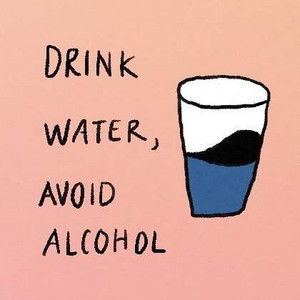
Starting with the fundamentals, like drinking enough water,
staying hydrated is very important so that our bodies can produce the sweat they need to keep cool.
But it's a good idea to stay away from your favorite beer or cocktail,
as disappointing as that might be.
We recommend avoiding alcohol during extreme temperatures.
People should be drinking water, sports drinks, or clear juices to help stay hydrated.
That's Paul Schram with the Climate Health Program at the Centers for Disease Control and Prevention.
Dr. Salis adds this advice.
The other thing is to try to have as much skin exposed to allow that evaporation of sweat to occur,
and wearing loose-fitting clothing, just like you what at the beach.
And if you have access to a shower, a bath, or a cool body of water, that can help lower your temperature.
Our body can actually transfer that heat to things touching it like water.
Now, that's something we can do for ourselves,
but we also want to try to create as cool of an environment as possible.
Now this next part may sound obvious, but when dealing with extreme heat,
it's very important to find the coolest space possible to be in.
If you need to be outside, that could mean a shady spot, and of course nothing beats an indoor air conditioned room.
But if you don't have access to air conditioning,
Dr. Salis recommends going to the coolest place in your home, like a basement if you have one.
Try to keep your house as cool as possible by covering windows to keep the sun out,
not using your oven or things that will actually heat up the inside of your house,
opening up the house when it's cool, like in the morning,
and using fans to try to bring that cool air in.
Even if you have air conditioning, these tips can also help you use less of it.
Dr. Salis says fans can help the body get rid of heat by moving air around,
so our sweat evaporates faster.
We also have to recognize that when it's really hot,
fans are just moving around hot air and won't be enough.
Paul Schram with the CDC agrees electric fans won't help much once the temperature reaches the high 90s.
And in any case, he says if you're unhoused or having trouble staying cool at home for any reason,
don't hesitate to look for a cooling center nearby.
That might be something like a community center, a public library,
even some places of business such as a coffee shop, a movie theater or a mall,
it might operate as a cooling center.
You can do that by looking at local information through your local media or your city or county's website.
That leads us to our next takeaway.
Stay informed.
Dr. Salis says it's important to note though that sometimes heat alerts are issued too late.
There's a study that found that often these heat alerts are going out at temperatures
that are actually well above when people are already getting sick and being hospitalized.
And so I think that that's really important for us to recognize that heat illness can happen
at much lower temperatures than what we'd think.
As climate change is making heat more intense and as heat waves are getting more frequent and lasting longer,
we all have to become very educated about what to do and what the signs and symptoms are.
So in addition to staying informed, try to be proactive,
which you're already doing by listening to this episode.
Our third takeaway, no when to seek medical help.
There are two major heat-related illnesses to keep in mind.
Those are heat exhaustion and heat stroke.
Heat exhaustion, if left untreated, can escalate to a heat stroke.
There's a condition that we call heat exhaustion that can come before
and I think of it like the body's warning sign that you're starting to get overheated
and it can't keep up.
So you need to do something about it.
Symptoms of heat exhaustion can be very broad and different for everyone,
but they can include things like sweating profusely as your body works overdrive to keep you cool.
You can feel weak, dizzy, nauseous, even vomit, you can faint and look pale.
Now whenever you have any concern for this, you always need to immediately begin to cool yourself and seek medical care.
But if you aren't able to change your environment and cool yourself,
this can progress to what's called heat stroke.
So with heat stroke, your body actually starts being unable to sweat.
So you aren't sweating.
So instead, your red hot and dry and a really bad sign is confusion or even passing out
because it means your brain isn't able to work the way that it should.
The CDC says heat stroke is a medical emergency and recommends calling 911 right away.
There are two general types of heat strokes.
The first can actually affect healthy active people who are being active in heat.
So you hear stories of student athletes collapsing on the sports field or outdoor workers.
And this is just what our body's mechanism just can't get rid of heat because we are just working it too hard and it can't keep up.
The second type tends to impact people whose bodies have limitations.
This can typically include people who are young, like children or the elderly,
but really anyone who has limitations in their ability to get rid of heat is at risk.
So this can be people who have certain health problems or take certain medications that may be make it harder.
So for example, drugs for blood pressure, like diuretics or a medication called an ACE inhibitor,
and other medications for mental health conditions, like those called the selective serotonin reuptake inhibitors,
or we often call them SSRIs.
Medications like that automatically make individuals more at risk for heat-related illness.
Talk to your doctor about whether any medications you're taking could increase your risk of suffering from heat-related illnesses.
There are other factors that make some groups of people more susceptible to these illnesses than others.
So I will always remember one of my patients. He was a young construction worker who was working two jobs in record-breaking Boston heat.
And he presented with heat stroke, which is again that the life threatening, most severe form.
And I think he just really highlights that for those who have to work outside or in hot indoor conditions,
they are extremely vulnerable and they have to be protected.
So it's really important to limit physical activity during the hottest part of the day.
That brings us to our fourth and final takeaway.
Know that some folks are disproportionately affected by extreme heat.
Here in the United States, we know that marginalized groups, including low-income communities, communities of color, the socially isolated,
and people with pre-existing health problems, are children a hugely disproportionate burden of harm tied to fossil fuel, air pollution, and climate change.
That's Vijay Lemay again, the climate and health scientist we heard from earlier.
Some of these groups are often more susceptible to climate risk because of long-standing health and environmental inequities.
Basically, poor health data shaped by social determinants, like income, education, lack of access to healthy foods or places to engage in physical activity, systemic racism, and lack of affordable health insurance coverage.
Dr. Salis notes some people are more exposed to heat depending on where they live.
This can include people who live in previously red-lined areas. Redlining is a outlawed racist practice for housing.
But if we actually look at areas that were previously red-lined and look at them today,
that these areas can actually be upwards of 10 degrees Fahrenheit hotter than areas of the same city that were not red-lined.
There was actually another study that showed that six of the largest hundred cities out of 175 that it looked at actually found that people of color had higher exposure to heat than white residents.
And so there are some people who live in areas that are just hotter than others.
If you can, look out for others around you. And I think importantly, we also have to make sure we need to check on our loved ones and neighbors when we know how weather is coming because we are all in this together and we have to look out for one another.
To recap, take away one, keep your body as cool as possible. Take away two, stay informed, check your local news for weather updates and information about community resources, and try to be proactive in protecting yourself against the heat.
Take away three, learn to spot the differences between heat exhaustion and heat stroke, and know when to seek medical help.
And lastly, take away four, know that some folks are disproportionately affected by extreme heat.
That was NPR Correspondent Sarah McCammon.
For more life kit, check out our other episodes. We have one on how to prepare for hurricanes and another on how to get ready for a wildfire.
You can find those at NPR.org slash life kit. And if you love life kit and want more, subscribe to our newsletter at NPR.org slash life kit newsletter.
This episode was produced by Audrey Wynn and Dustin DeSoto. It was edited by William Troop, Robert Baldwin III, and Rebecca Ramirez contributed to the reporting.
Maryl Saguera is our host. Our visuals editor is Beck Harlan. Our digital editor is Malik Kogareep. Megan Cain is the supervising editor. Beth Donovan is the executive producer.
Our production team also includes me, Andy Tagle, Claire Marish Nider, Margaret Serrino, and Sylvie Douglas.
Engineering support comes from Joshua Newell. I'm Andy Tagle. Thanks for listening.
Last year, over 20,000 people joined the Body Electric Study to change their sedentary screen-filled lives. And guess what?
We saw amazing effects.
Now you can try NPR's Body Electric Challenge yourself. Listen to updated and new episodes wherever you get your podcasts.
Black perspectives haven't always been centered in the telling of America's story. Now we're taking center stage.
Introducing NPR's Black Stories Black Truths. A collection of Black-led stories from NPR's podcasts. Search NPR Black Stories Black Truths wherever you get your podcasts.
All that sitting and swiping, your body is adapting to your technology. Learn how and what you can do about it.
I really felt like the cloud in my brain kind of dissipated. Once I started realizing what a difference these little breaks were making, there's no turning back for me.
Take NPR's Body Electric Challenge. Listen to the series wherever you get your podcasts.