You're listening to Roundtable, I'm Yong Hong -ing, joined by Steve and Ding Hong.
Coming up soon. In the business world, there are seasonal trends that dictate spending habits.
Black Friday in the US, Double Eleven shopping festival here in China...
but the world in In the world of tea, there's something even more specific, the spring tea economy.
Much more than just a niche product for enthusiasts, this can even be a driver of the local agricultural sector.
Spring tea production makes up a massive proportion of NUT output, setting the tone for the entire industry.
But what exactly makes spring tea such a powerhouse, and why does this single season dictate so much?
After that, we take a look at cheap shampoo.
Just a soap for your hair, or a silent villain in your fight against hair loss.
Some say it's harmless, others claim it's striping your scalp and accelerating baldness.
What's the truth? We'll break down the science, the myths, and whether you should be investing in that thirty dollar bottle.
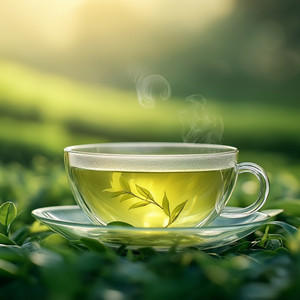
But now, spring is here, the air is crisp, the flowers are booming and most importantly, the tea lovers are on the hunt.
As soon as the first tender tea buds emerge, a nationwide frenzy kicks off.
Actually, I used to go to many business trips and one of my favorite experiences happened during a beautiful spring day in this misty tea plantation on a mountain, and the air was clear, carrying the finest scent of fresh earth and young leaves.
Around me, farmers plucked dedicated tea butts, each one a tiny green jam, cradled between skilled hands.
In Chinese TV shows and Chinese movies, actually the concept of spring tea, and if you are or the spring tea before one of the solar terms, qingming, that was different even more specific types.
So I was actually curious, let's forget about the sub -type to start with, let's focus on spring tea, is there a specific timeframe for just spring tea?
No, they refer to tea made from the tinder buds and leaves that sprout on tea trees after the end of the past winter.
In the traditional Chinese calendar, the harvesting period mainly follows between Lijuan, namely the the beginning of spring and Gu Yu, the grain range.
And in modern calendar.
It's roughly corresponds, corresponds to a period between February to April.
And generally speaking, teas that are picked and processed before the end of each May on our calendar is considered as spring tea and the science between spring tea goes like this.
I find it's very interesting.
During winter, tea buds go into dormancy, accumulating ample amount of nutrients, so to speak.
So, when spring arrives with moderate temperatures and abundant rainfall, the newly grown buds become so rich, so plump in terms of their organic compounds.
Therefore, we have this uniquely fresh, mellow, this kind of flavor.
Full -bodied flavor associated with spring tea.
I was watching videos on social media platforms yesterday.
I'm not really sure if it's because I did some research about spring tea or is it just the season.
Actually, I saw a lot of different videos selling spring tea.
And the price range from couple of hundreds just too really too expensive to buy, for me personally.
So, it's really interesting and it is really happening.
Spring tea is a thing.
So how about spring tea sales?
Is it also very important for tea industry?
Yeah. I would say it's crucial actually, spring tea in the development of China's tea industry.
They look at the spring tea as a barometer for the industry's growth.
that it counts for 40 % of all T produced.
40 % comes from one particular season.
So is it important?
It's vital, I'd say.
If it's 25%, no surprise at all.
40%, well, that's. Yeah.
Data from the China T Marketing Association showed that a couple of years ago in 2023, the total tea production reached 3 .3 million tons and that was almost a five -fold increase over the past 20 years, and specifically if you're curious about which types of tea, green tea production was at almost two million tons that made up nearly sixty percent of the total tea output.
So there's lots of different types of tea, and it all increased a lot over the past 20 years the production but it's green tea that leads the way.
Yeah, it makes sense.
I remember when I was a teenager, when I visited family friends with my parents, people would say, oh this is new tea from this year.
It's the spring tea.
It's something you must have a taste.
I was a little girl.
I didn't care for tea.
I didn't understand which tea is better than the other but for those tea lovers, definitely they have different ways, of course there are different types of tea but apparently min jiang cha, which is the tea harvested before Qingming Festival, and yu jiang cha, the tea harvested before Grang, have you know, they are quite different already and they are the special type.
And the reason people love it during the season is because of the flavor.
Dinghong gave a science, I'll give a little bit more this this is why the flavor is is so loved.
So when the dormancy of wintertime is over that's when the trees convert the minerals and the nutrients into amino acids and other compounds and they keep those in their buds and in their leaves.
Then when the significant temperature changes come between day and night in early spring, that slows down the growth of the tea and all of those compounds get concentrated and that's what gives spring tea.
It's very very signature fresh and mellow and full -bodied flavor and that's why people love it so much. Wow how's that for a sales pitch?
Spring tea. Yeah so I guess um another reason is that the scarcity, and the limited availability of these teas make them more valid.
Almost seasonal, right?
Because with regard to, say, this Mian Qian Tea or Yu Qian Tea that purposely you mentioned earlier, they have a very short picking window.
We are talking about somewhere between 15 to 20 days here annually, and they require manual labor, for manual plucking of each bud.
in, for example, in the case of Westlake Longjing, one of China's most famous teas, it takes 40 ,000 to 50 ,000 tea buds to produce only 500 grams of top grade dried tea.
So the scarcity and the limited availability is the main issue here.
It's like a golden window, and it's very impressive to see that when people actually fall in love with something, they can be very scientific and very picky about these things.
I've heard friends saying that the tea, well, she was sharing with me the tea that she was brewing at that time, I think it's around last year, it was called Mung Din Gan Lu, it's from Sichuan Province, and she said later around spring equinox, she planned to try Du Yuan Mao Jin that was a tea from Guizhou, and then just before the Qingming festival, she wanted to buy some Longjing and Bi Lu Quan which will be harvested around that time and those tea was from the Zhuajiang area and of course after that there's other kind of tea from other provinces that's the best at that very specific time.
And I kind of understand that, when you reach a certain level or you are a certain level of enthusiast about tea, you kind of want to be really picky because time is precious.
That golden window is just that short and valuable.
Yeah, that little brief.
It's almost a once a year occasion, isn't it?
So when I was trying, pardon me, when I was trying to research for this story.
And the first question that came to my mind, being from Canada, where we don't really have a tea culture, not really, was why is tea culture so important to China?
It's not just China, it's other countries around the world as well.
But it led me to the story, and I learned something today.
This is really cool.
The story of Liu Yu.
Am I saying that correctly?
The God of tea or the Sage of tea.
Wow. He is the celebrated author of a book called The Classic of Tea or Cha Jing and that was the definitive work on tea cultivation and preparation and appreciation.
It's basically I was told the encyclopedia for tea drinking and tea culture and his contributions.
He was around during the Tang Dynasty if I'm correct and his contributions laid the foundation for Chinese tea culture and he elevated tea drinking to an art form.
That book, The Classic of Tea or Cha Jing was published around 760 CE.
That's a long -long history.
Oh, tea culture. Exactly.
Yes, maybe that explains how come tea drinking or the art of tea are really it's a rich culture.
It has evolved with time it's diversified in different places and the technique, the art, even the gesture when you're enjoying tea, all of those things are quite important to those very elegant tea lovers in China.
Have you read this book before?
There's 10 different chapters.
Oh no. But - Chapter - Sorry I want to go through these quickly.
Chapter one is the origins of tea, two, tools for harvesting and processing tea, methods of tea production, tea utensils and their uses, brewing techniques, the art of drinking tea, historical references to tea, tea growing regions of China, simplified tea preparation methods, and finally, illustrations of tea utensils.
Like I said, this is the book on tea.
Yeah, fascinating. So, I think in Chinese, ancient culture, in particular tea drinking, or tea peeking even is regarded as an a behavior of following nature's rhythm I have not read this book the classic of tea but according to some you know pieces or quotes I can gather from the Internet it states that in one chapter that's the right timing and refined craftsmanship determining good tea so This is highlighting the importance of the right time for harvesting at a perfect time, timing to ensure the quality.
So that says a lot about China's tea culture, because I think it is more than just a beverage.
It was a reflection of even a refined scholarly lifestyle, right?
For example, All those highly esteemed ancient Chinese poets or scholars, they have in one way or another romanticized the act of drinking or tea.
For example, we are talking about a Northern Song dynasty poet who lived in the 11th century.
He once famously wrote, that try new tea with new lit fire in Chinese, while Lu You which was a Southern Song Dynasty poet who lives about one century later than Su Shi, he described delicate spring tea playfully brewed by the sunny window.
See why we need poetry classes in University?
I don't hear AI anywhere.
And besides those real tea lovers, the kind of enthusiasts who would spend tens of thousands of yen on one, just one bottle of new spring tea.
Actually for us, for us ordinary consumers, we also like to try a little bit of spring tea because the freshness is just not something that other things can compare to.
It's the taste of spring and the taste of spring actually triggered a new term here in China.
We call it spring economy.
That is to enjoy the fine things, the fine enjoyment, just in the brief spring period.
And that allowed for growth in tea related industries.
For example, tea garden home stays.
That sounds relaxing.
Or a tea picking experience.
Those things became popular and this allowed for tea enthusiasts to become involved in their tea making process.
Yes, I tried that, loved it.
Which is really cool.
You don't see that in the coffee industry or at least, I don't think you do.
Yeah, coffee maybe.
Chicken coffee beans.
This adds to the emotional reward or the emotional value, if you're a tea lover, being able to go to a tea garden homestay or be involved in a tea picking experience and then making it yourself.
It just sounds very romantic, doesn't it?
Some transformation is going on here.
right spring tea is getting or is being transferred from a simple form of commercial product into a memorable experience for especially for urban dwellers so there is a level or there is a layer of emotional value to its purchase and a couple of month ago or last month we were still talking about winter economy now we are started now we start talking about spring economy.
Spring economy. So the idea is that our government and our country is really trying to incentivize us, every one of us to spend more, to revitalize our economy.
So because spring brings warmer weather and say blooming flower, people tend to go to outdoor activities, outdoor activities like hiking, flower viewing, and team picking experience, wild vegetable collecting.
Well, that was really cool.
It was on Meituan, which is a domestic services app here.
In the past week, searches for flower viewing and spring outing spots in Chengdu, which is in the southwest here in the country, surged by 128 % than compared to the previous week, which is really cool.
You know the winter, the snow and ice economy, we talk about Harbin and the Northwest regions of the country a lot, and now we're shifting our focus to the spring economy, and we take our attention to different spots around China.
And we always need to enjoy life because at the end of the day, it is why we're here.
And I think if we bring the topic back to tea or spring tea, what's fascinating about it is how it continues to evolve.
It's as ancient as China's oldest traditions, yet it thrives in the digital age, feeling social media trends, high -end auctions, and even rural tourism, like Steve said.
And it's a perfect example of how tradition doesn't just fade.
It adapts, it reinvents itself, and it continues to capture the imagination of each new generation.
You're listening to Roundtable.
Men and their chief shampoo, a classic match or a tragic love story with a deceiving ending.
Stay tuned. Looking for passion?
How about fiery debate?
Wanna hear about current events in China from different perspectives?
Then tune into Roundtable, where East meets West and understanding is the goal.
This is Roundtable with me, Steve Heatherley and Ding Hung.
Fellas, let's be honest. Are you still using the same three -in -one shampoo, body wash and conditioner, or do you just steal whatever your amazing wife's have in the shower?
Let me know. Yes and yes.
How about you? The ladder pattern you were mentioning.
You know, whatever my wife was just stealing, because you know it's good, right?
You know, it's good.
For sure. And I really need to ask you, because for those of you who have not watched any of our Livestream before, those, these two men here in the studio, they have really great hair.
And I want to know their secrets.
So now let's discover, could that $3 bottle of shampoo actually be making things worse or is it just another marketing ploy designed to guild us into buying the luxury stuff?
Yeah, I'll get to that in a little while, but just a little bit on the mens grooming industry in general.
It's booming right now.
Statista said in 2023 that it was worth $115 billion by 2028.
That's up from $80 billion in 2022.
too. And it's changing too.
If you think, I'm not sure about here in China, but in the West, back in the 1990s, the male grooming industry was kind of a, kind of a one size fits all.
Like the shampoo. Yeah, like marketed towards men that didn't have any clue about how to take care of themselves.
And you had these really overly masculine scents that were always in black packages is with flashes of neon on them or something like that.
Just that real bro mentality.
But it's very, very different now.
The idea of masculinity has changed, and now men are aware of what a toner is, about a face care routine, things like that.
But still confused about hair products, I think.
Yes, I actually find it relieving because one of the standards a lot of girls, when we talk about guys, one standard of meeting strange guys and if we instantly feel, oh, it's okay.
We would describe this person as clean.
So he looks clean. It doesn't really necessarily mean he's clothes are with no staying.
It's more like the feeling, the vibe he sends.
Hair, not greasy, face also not greasy.
So it's a thing. We're very happy that men are taking care of them.
So how are you taking care of your hair?
Well, differently from what my dad used to do, I remember getting in the shower when I was in high school, Ding -Heng.
Did your dad ever do this?
I got in the shower one day, and the dish soap was in there.
Really? The dish soap.
The dish soap. And I asked my dad after I took a shower.
I said, is somebody washing the dishes in the shower?
He said, oh, no, that's my ...
I use that. I said, for what?
He said, for everything.
I said you wash your body and your face and your hair with the dish soap He said look Steve if that soap is good enough to clean the dishes that I eat my food off of Then it's good enough to wash my body Yes Listen, you know, it wasn't just my dad when I was in high school in in 2023.
This is from Yahoo There was a tick -tock trend It was called the Dawn dish soap trend because that particular type of dish soap had a high pH level.
So it opens hair cuticles apparently.
And there was this whole trend about it where people were washing their hair with Dawn dish soap.
A cosmetologist got online and said yeah, don't do that.
Let me say it again, both of you have really great hair.
so I want to ask Ding Hong, do you use conditioner or let me make it easy for you, do you know what conditioner is?
Not really. I find it very difficult to distinguish between shampoo and conditioner.
Well, listen closely.
Ding Hong and every man out there like him.
Shampoo and conditioner don't do the same thing to your head.
The fundamental difference between shampoo and conditioner lies in their purpose and what they actually do with your hair.
So shampoo that's easy.
Everybody knows what that is.
It cleanses your hair and your scalp and it has detergents that remove oil and dirt and sweat and product build -up.
And shampoo is very effective at cleaning those things away from your head but it can also strip away natural oils and And that's why if you don't use a conditioner, your hair will feel dry and feel rough.
Ah, so if I compare my scalp as a ground, uh, when the natural oil is stripped away, that means the fertile, um, the nutrients are washed away.
Yeah. Is that the case?
That's it. And that's why you need to use conditioner, because the primary function is to hide your hydrate and nourish and for those with longer hair to detangle your hair as well.
So it contains moisturizing ingredients that replenish all of the things that the shampoo can strip away.
Yeah, but what about expensive shampoo and cheap shampoo, because even here, well, actually here in the Chinese market, for girls, the cheap shampoo can be $3.
Seriously, I have bought and used 20 yuan shampoo myself and 20 yuan conditioners.
Yet, there are really, really expensive ones.
$30, $40, even higher than that.
Are they really that different?
The answer is yes and no. Higher end shampoos can run, they can be up to what, 60, $70 a bottle?
Really expensive. Depending on the brand, right?
Right, so does that dramatic price difference signify a difference in quality?
More specifically for men, could it be the difference between early balding and a thick, healthy head of hair?
Well, one part makes a difference, and then the other part really doesn't.
The crucial factor here is genetics.
Male pattern hair loss is predetermined at conception.
lower cost shampoos, including 3 -in -1 products that men love so much, don't cause or accelerate genetic hair loss.
That is a quote from Dr. Danielle Dubin, who is a dermatologist at Mount Sinai in New York.
Male pattern baldness is fundamentally rooted in your genetic profile, therefore it does not really matter what shampoo you use.
and an expensive shampoo, no matter how great they claim it to be, will not reverse that trend.
So in other words, if your genetic lottery blasts you with a full head of hair into well into your golden years...
Continue on with that three and one shampoo.
It's okay. Yes. You might not have the shiniest head of hair, but you'll have a head of hair.
If that is the case, I will become less anxious I guess.
Now, moving on, shampoo can have indirect effects on hair loss, so here's the but to that.
Inexpensive garden variety shampoos tend to contain sulfates, which are chemical compounds that help create that lathering effect when you wash your hair.
And these ingredients are really effective at removing oil and dirt from your hair, but they can be a little bit too effective at times.
Yeah, if they're too effective with those sulfates, then the lathering action strips away your hair's natural oils.
It can irritate your scalp, resulting in dry brittle hair that breaks more easily.
So, no, you're not going to reverse any trends with a cheaper hair product, but you might make things a little bit worse.
Yes, and in that case, for those of you who have carefully listened to today's Round Table, especially this topic, I think it's safe for you to find the hair shampoo for yourself, but for those of you who do not want to do the research, just keep on using whatever your your wife's use – you'll be safe then.
Until next time, keep the conversations going, and the ideas flowing.
I'm Neil Holing with Steve, and Ting Ho, bye bye!