Discussion keeps the world turning.
This is Roundtable.
You're listening to Roundtable.
I'm Steve together today with Yuxian and Yeohonglin.
Coming up, snacks...yum.
But what about bulk snack stores?
Have you heard of those?
With their cheap drinks and ever -changing treats, they've turned casual shoppers into loyal fans.
but how did they do it?
We'll dive into their bubbly, tasty world to see what this means for the snack industry.
And then those bright little eyes drawn to the tablets light a common sight for parents these days with their babies.
But it does make you wonder, are these digital peaks OK for our smallest humans?
And we're so careful about everything else we do with them.
Our podcast listeners, that's you can find us at Roundtable China on Apple Podcasts And don't forget, we love to hear from you as well.
An email is wonderful, but we want to hear your voice.
So send those voice notes our way with your thoughts on any of the issues that we discuss on the program.
Here's how you do it, roundtablepodcast .qq .com.
One more time, roundtablepodcast .qq .com.
And now, offering beverages at prices significantly lower than traditional convenience stores and presenting a constantly rotating array tempting snack options, bulk snack stores have successfully transformed casual browsers into devoted repeat customers.
So, what strategic methods are these stores employing to achieve such incredible customer loyalty and what are the broader implications of this trend for the very well established a snack and beverage industry as a whole?
Let's find out, nom nom nom, snack by snack by So let's start.
What is a snack bulk store and how popular are they right now?
Well, apparently these, what we call the bulk snack stores, they are operating on a low margin high volume model.
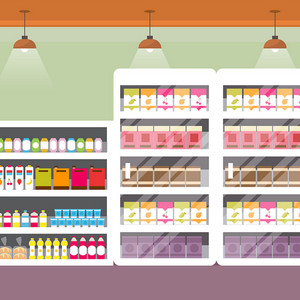
And they focus merely on snacks and beverages and that is different from the traditional supermarkets or say convenience stores where snacks and beverages, they're just one part of the products that's showcased on the shelves in those say traditional supermarkets but in these stores you can mainly, if not only find snacks and beverages and what's better, like you said Steve, the price is cheaper as well there because according to this 2023 report by China Insights Consultancy on China's snack bulk industry so the price discounts on branded products in snack bulk stores are significantly better
than those in offline supermarkets with discounts on popular items. The equivalent to 60 to 80 % of the price in offline supermarkets.
Yeah, one example would be the price of a say 500 milliliters coca -cola is approximately 4 .3 yuan or about 60 cents.
Yeah, 60 cents in in U .S. dollars but in that's it that's the price in convenience store but if you go to one of these say bulk snack stores then the price will cut by half so 2 .3 yuan or around not 0 .3 U .S. dollars 30 cents in U .S. dollars.
It's pretty good. Yeah, but it's just one example in probably one bulk snack store.
It's not universal.
Yet, one thing that I was a bit surprised about was that instead of, well, when we call it bulk snack stores, it doesn't mean that you have to buy a lot huge chunks of bulk of snacks.
It's a little misleading with the English title because bulk stores implies that it's a huge vat.
Or family share. It's not like that.
We do have those kind of supermarkets in China as well.
But for these, when we are calling them bulk snack stores, we're actually saying they're offering bulks of snacks instead of they are forcing us to buy that a month.
And with the discounts, you may actually leave - All key amount of potato chips or sodas or what have you.
Exactly. But in these stores, we can find snacks in different types of packages, different share, and one share can even be just a tiny little bag, which is the kind of small share that you can find in supermarkets, but it's like in supermarkets you may need to buy a huge bag full of little packages, little shares.
Yet in these places you can get that one little share with one flavor and then find the next one and next one so you're still buying a lot but at least in different flavors.
That's why it's a beautiful little retail market that once was just a niche player among say younger folks but nowadays apparently they're showing big spreads and expansions across China as well at a very astonishing pace i'll say because well There are several leading brands like Lin Shi Hen Mang which could be directly translated to snacks are busy.
They're making us busy eating them.
And also there's Ming Ming Hen Mang.
Why is everybody so busy?
Because this one is called Ming Ming is Busy.
Apparently everybody running such a snack bookstore is busy.
So these two brands as an example, they have already surpassed 15 thousand stores each, each, each. Yes, with thousands more popping up across cities and towns here in China.
And also, according to another domestic research platform, the total number of bulk snack stores in China was around 2 ,500 by the end of 2021, and that number grew to approximately 13 ,000 in 2022, just in one year, exactly.
And then it surpassed 22 ,000 by October 2023.
So again, it's estimated to still be growing and the number of such stores will reach 45 ,000 by 2025, and that's according to Xinhua News.
So this is obviously very attractive for customers, right, because you get variety, you get big, big discounts on many different items. That's from the customer's point of view.
From a business point of view, how are they able to offer such really low prices?
Well, there are definitely multiple reasons to start with.
They are having a direct source from the manufacturers, instead of relying on multiple layers of distributors and wholesalers, these stores buy directly from the producers.
So they're cutting the middleman, they're reducing costs.
For instance, we see traditional supermarkets and large retail chains can mark up snack prices by 60 to 80 percent and while bulk snack stores only increase prices by around thirty six percent.
And also these stores attract more focused consumers who buy snacks in large quantities.
I mean, yeah, if they're in a lower price with different varieties of flavors, why not?
Yeah, they are buying in bulk.
Yes, yes. And also they're actually reducing operational costs as well.
we see stores avoid unnecessary expense, such as expensive store decoration and additional services to keep costs low.
Also, they focus on 3rd and 4th tier cities, which are the relatively smaller cities here in China, which means that the rent would be not as high and finding the right locations, they would be able to have their targeted consumers as well.
And I have to say, I'm going to direct this to Yu Shem, not really sure if Steve feels the same way, but when i was a little girl i really really really loved grocery shopping in the stationery kind of stores, i buy little books, little notebooks, pens, different shape and color and smell of erasers and rubbers and just it's just something girls would like to do, i'm not really sure if that's the case for you as well.
oh yeah all of those stores just located right next to the school gate, yeah that's the one of the most popular places students love.
yeah and the first time i went into a snack bulk store, it's deja vu kind of feeling, because it's very colorful little boxes on the wall, huge, a wall full of different types of snacks and you can carefully select and find the one that you like and before you know your cart is already full and you're buying snacks in bulky, huge bags, and that is the idea, instead of inviting and hiring a lot of people being the salesperson or assistants in these kind of stores.
And instead of having careful decoration, what they do is they just use snacks to decorate to make up the entire space.
So you don't spend money on interior.
And also you're giving consumers this kind of treasure hunting fund that is to find the one that you would enjoy in this huge buffet of choices.
Yeah, there's lots of different ways to reduce costs, right?
But they use this low price model to their advantage.
Yes, I mean in some ways the low price are just for attracting, say, young people to walk in.
But in the meantime, it's also a good psychological pricing trick for many, I'll say.
Because when you see the prices lower than how is labeled in the supermarkets, of course, it prompts you to want to walk in and see what else is there that's cheaper than usual.
And nowadays we see a lot of big brands that are placed at the entrance, of course, the entrance of such stores with small but noticeable discounts to just attract customers that's walking past. Yet the packages are actually smaller than in the supermarkets, making the actual price per gram actually higher.
So that's just the little marketing tricks from brands.
In a supermarket this will cost you seven yuan but here it costs you three yuan.
But if you really look at the details on the packaging you might work out that you're saving money in the supermarkets more so than these stores.
But still it's another option for consumers.
One other very interesting thing I've realized about these stores is that they provide the kind of snacks that i've never heard of before, the kind of brands that are not that famous yet.
the taste, the material they're using which are listed on the package of the snack and also the kind of prize are quite preferable and i realized that instead of relying on big brands which is what i used to do and just something you know i trust the brand so i trust the new product, the brand release, now i can trust these box stores, i can trust these stores that they have done their job, they've selected the at least up to standard snacks that I can have a try, so that I am open to new choices.
So it's actually a win -win -win situation for all three sides.
For me as a consumer, I'm able to find the kind of snacks that I didn't used to know exist that I love.
For these snack bulk stores, they are getting these kind of food, these kind of snacks in definitely lower prices because they do not have to worry about the big brands.
Well, the kind of money putting into not the manufacturing of the snack, but the maintaining of the big brands, and also for the manufacturers.
They want to open the market.
They want to start their business.
If they want their stuff to be on the shelf of a supermarket, it's harder.
I was just about to say that, yeah, getting space on a supermarket shelf is a very competitive.
I'm not sure about China, but I know that in the West it's a very challenging thing to do.
So it's harder for new products to find their ways into really great shelf space.
But, here where you have, in these snack bulk stores, where you have brands that might not be household names, that's almost like an advantage, isn't it?
Yeah, definitely. Because for the customer it feels like you're walking into almost like a little Adventureland, somehow, someway, right?
because, oh what's this brand.
What's this flavour.
What's this snack. What's this beverage.
I've never seen any of this before.
That kind of adds to the draw to the attraction of the shops themselves.
I mean, in the meantime, it also stirs up competition directly between these brands as well.
There's one comment that I'm reading that's super funny that some customers give feedback for shopping in such bulk snack stores, that through our visits to those stores we found that each store typically offers nearly a thousand possibilities.
So let's imagine nowadays 1 ,000 snack brands, different possibilities.
Instead of competing over their shelf, say occupation in a supermarket, they're directly competing with each other on whose product can be at the most say noticeable area of the shop or which brand can offer more choices up there.
So that's kind of like an intensified competition that's occurring among these bulk snack buying stores.
Which is a great thing for consumers.
Exactly. So happy I don't live next to one of these places.
I just realized that right now!
Snack bulk stores - what a clever business idea and you heard the statistics and the growth obviously they are doing very very very well for themselves.
You're listening to Roundtable and coming up putting a tablet screen in front of a baby for hours at a time is okay, right?
Right? Maybe not, not so fast. Stay with us.
Looking for passion?
How about fiery debate?
Want to hear about current events in China from different perspectives?
Then tune in to Roundtable where east meets west and understanding is the goal.
You're listening to Roundtable, I'm Steve with Neonglin and Yushan today.
In an increasingly digital world, infants and toddlers are exposed to more and more screens from a younger and younger age, prompting a wave of parental concern and expert debate.
From educational apps to captivating cartoons, the allure of digital devices is undeniable, yet the potential impact on a child's developing brain remains a subject of intense scrutiny.
Should parents be alarmed by their baby's screen time or is it just a harmless byproduct of living in the year 2025?
This question fuels ongoing discussions among, goodness, it's an endless list, pediatricians, educators, families and then members within those families.
They're grappling with this evolving landscape of childhood in the age of screens.
Thinking back to when you were a young person, a smaller human.
How did you entertain yourself at the age of five or six years old?
It would have been a completely different world, no?
Completely, totally completely different world.
To start with, to start with, I realized that at that time there were not only that many screens but also not many of the kind of kind of like radio machine designated for kids because my kid was exposed to that when he was, I don't know, more than five or even three months old, he was using the little storytelling machines, the machine does not have a screen yet, it can it basically plays the recordings of little lullaby and songs and stories and something like that, but I didn't have that when I was a little...
what did I do when I was in five or three?
Maybe I was talking to my nanny most of the time?
It's hard to remember a time when we didn't have screens available, right.
Yuxin, how about you?
I mean when I was how would you say?
Five to eight years old?
Just when you were really young.
Oh, we were going to school in kindergarten.
That's what we did.
And also when I was five to eight years old.
That's around the time when China's computer and internet sectors was just booming and growing, you know.
So that's around the time when families start to have computers.
So that's the one major thing that I remember.
We didn't have portable devices as commonly seen as it is nowadays, but we used to have a computer, which was such a, you know, one of the best friends I used to have. Yeah, but it's different though, isn't it?
Nobody, I mean I don't think anybody props their baby up in front of their laptop.
This is a different time.
We're talking tablets, we're talking smartphones.
And that's the issue here.
Kids are getting younger using their screens.
There was a report from Common Sense Media.
This is from 2024 via NPR.
The report looked at media habits in kids eight years old and younger, and then they measured daily behavior like the time they spent looking at screens, the types of programs that they were watching, and the differences in habits, depending on gender and socioeconomic status.
But they used a sample of about 1 ,600 parents of children of that age.
It was a survey done online and this is what they found.
40 % of toddlers have their own tablet device by the time they are two years old.
By the way, 40 % of 2 year olds have a tablet PC.
Okay, allow me to explain here.
On behalf of parents, it's not that we are too rich and too reluctant and we buy our kids little tablets or cell phones, it's because there's the kids mold that we can use on the designated device, meaning that if they are smart enough to actually use the tablet, actually the software's, the kind of content designed, and also there would be time restriction on these kind of devices if you set the kind of restriction, meaning that kids can, for example, watch cartoon on that one and they do not have to worry about inappropriate content jump in front of their eyes when they are watching their cartoon.
And it also means that one it's the time that you set for them, for example, 14 minutes, 15 minutes or 20 minutes or even half an hour the screen would automatically turn off.
That is the perk of giving a kid his or her own device from the same report.
Screen time daily screen time remained steady at about two and a half hours a day.
That would be a little extreme for me this is problematic.
So what do experts say when the question is posed at what point is it okay for a baby to have some screen time?
I mean speaking of what experts say here's what I found because some experts would agree that babies should be kept away from screens for as long as possible and the official guideline from the American Academy of Pediatrics states that children should avoid screens until they are at least 18 months old with an exception made for video calls and here is one with family members I assume not for important business meetings perhaps not that is the thing because my kid is only two and a half year old and because my husband is working remotely from our home not from his office these days actually I
we spent at least 20 minutes video chatting his dad every single day and that is a month to his cartoon time already.
Well, basically I would agree with you on that, that's very necessary.
But let's hear what Dr. Sean McKenna says.
He is a pediatrician at the Children's Hospital of Richmond at Virginia Commonwealth University and according to him, in the first well in the first few years of our lives we are constantly absorbing and learning and our brains are growing and developing.
So, we change more in those first two or three years than we will in the rest of our lives and also babies thrives from just using all of their senses to explore their world, climbing on the floor walking around, running around even whether it's just playing or moving about or simply interacting with others outside of screen time.
They are sponges for sure that's very well established but you brought up the point before you know Honglin about like parental control in terms of the content that they're watching but this isn't necessarily about the content now itself it's about the screen itself right there is a doctor a board -certified developmental behavioral pediatrician by the name of dr. Fadia DOp well and this is the quote children don't learn as well from two -dimensional images if a baby is watching a screen there's not much processing or learning happening in their brain especially when they are under two years old,
and this is a really important point.
Screen -based media is designed to capture and hold the attention of kids.
The quote continues – Well, yeah.
But babies, too. If you think about the things that babies watch, right?
This is very colorful, moving things to draw their attention.
That quote continues.
the earlier kids start watching TV and other screens, it's harder for them to focus on things that aren't TVs and screens.
And that's deeply agreed by people around me as well.
I have like family relatives who strictly forbid the toddlers in the house to just approach any screen time because quoting from them, that's like a Pandora box.
Once the kids get used to it, when they grow up, it's really hard for them to try to quit it even though they themselves want to, and even though the parents would suggest that as well, so really how to develop such a habit at an early age, it's something that worries, not worries, but concerns a lot of people nowadays.
And I think that idea is not only suitable or propable for children, it's for us as well.
When we have a lot of screen time, we find it hard for us to focus on reading books, for example, we find it hard to think can work at our head straight when it comes to complicated issue, we need to really dissect and understand.
And for kids, there's one thing, when I'm raising a kid, I notice certain behavior or behavioral habits of kids that make me reflect on my own behaviors.
And also I learn about things about parenting, about raising a kid that I can use to better my own living habits.
Two examples first is that we talk about, restricting kids screen time.
but you know what unless you're playing them a really attracting cartoon like Steve said with a lot of colors with fun sounds they're not going to focus on the screen for as long as you do when I screen video or actually when my kid and I video chat my husband he my kid does not stare at the screen all the time and talking to his dad he run around every five seconds Yeah, because your husband's not a cute cartoon character with attractive sounds.
For cute cartoon characters.
I'm sure he has a lovely voice.
That's fine, too. I mean for cartoons it's it's a little bit definitely more attractive to kids, but now most of the cartoons, at least I selected, are only around five minutes, which is much, much better.
And that yeah, that's what experts say is OK.
It is OK. at least, they're saying that 15 -minute bursts are okay and having 15 minutes of non -screen time in between, then they can repeat the process, which is not that bad for kids.
That's another point.
And another thing is, I used to think having longer screen time would be definitely very harmful for kids eyesight, and the short -sighted problem might generate from that.
But after learning about raising a kid, I realized that that is definitely something you should look out for.
But more importantly is to have long enough outdoor time, outdoor activities is more important.
So that teaches me to extend my outdoor time as well.
Yeah. I mean, we have to talk about what's reasonable, right?
I remember my friend, my good friend Carl, who I met in Korea.
Carl has two daughters and before his daughters were born Carl was so righteous I'm never giving them a tablet PC.
You know what I'm taking the TV out of my house They're gonna grow up reading books and become scholars and world leaders six months into their lives Carl straight to the electronics store to get a tablet PC.
He said I remember the conversation.
He said Steve it's magical.
They're screaming and crying and yelling and then you just give this to them they immediately stop.
Am I a terrible parent?
I'll find out later but for now I'm a happy parent.
So that's what I say when I say reasonable right?
I mean but but that being said that's a bit terrifying isn't it what we learned before the earlier kids start watching TV and other screens the harder it is for them to focus on other screens or things that aren't screens.
So what are some good tips?
I mean, what can parents do then?
15 minutes at a time for a little bursts of screen time is OK.
What else? It is OK.
And also, if you really need to video chat your kids, even the kid is under the age of 18 months.
It's still considered all right.
As long as you hold your baby or you are watching one episode of TV show or film, it's just like leaving.
making sure that you leave a nice gap between watching the show and your baby's bedtime so, do not overly excite them.
And also, we talk about stick with simple programming because if it's too loud and too exciting then your baby's attention are totally grabbed with all that effect instead of the content itself.
And you make sure watch specific shows rather than allowing your kid to watch whatever happens on the screens.
That would be another tip and set rules right away make sure your kids understand They cannot watch TV for I don't know as long as they want and all those I think comes down to what kind of parents you want to be and what kind of kid you want to raise turn off the TV And turn on round table.
Yes Sleep well that's it for roundtable for Yishan, and you know and I'm Steve Thanks for being with us, and please do come back again next time