Hello everybody.
We have just got some breakfast and we'll be speaking in slower English today.
We have some activities.
Notice activities.
We can say activities lined up.
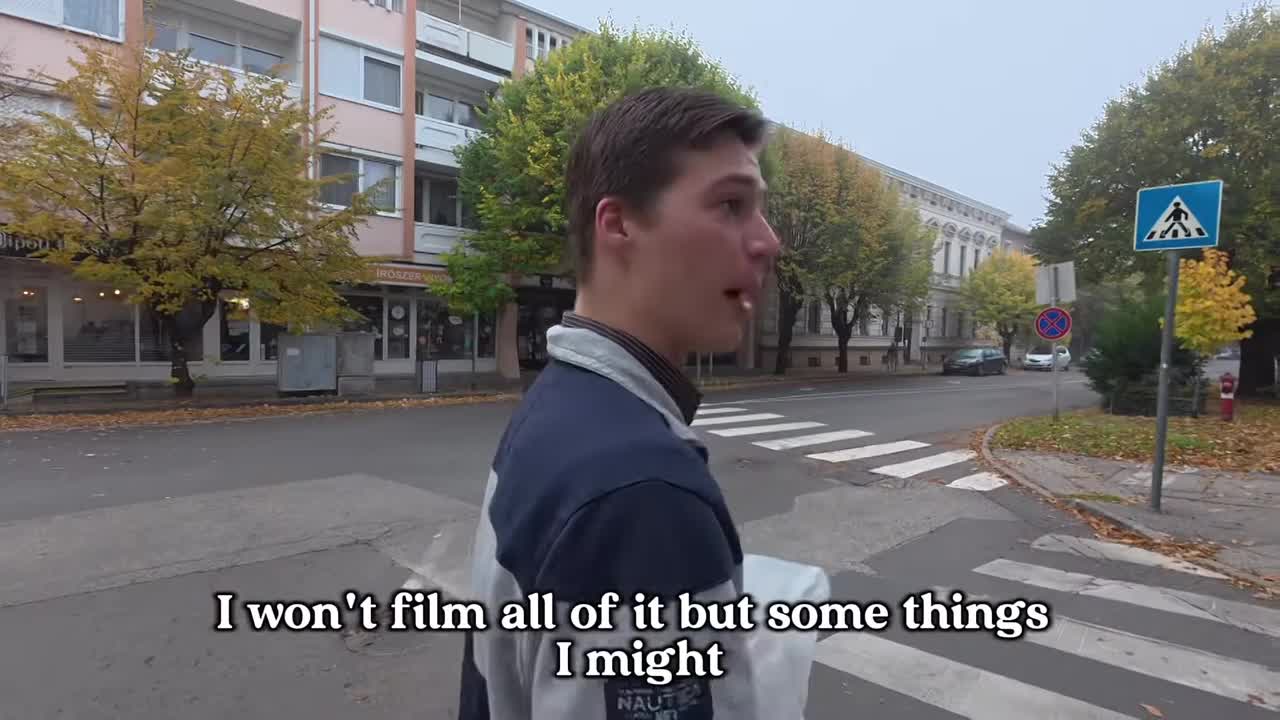
I won't film all of it, but some things I might also.
Later in the video I'll show the books which have arrived.
I posted them on my post section or part of the channel.
So I will talk about that and give you the update on when we will start the reading and which book we will start reading first.
Okay everybody, we're going to buy some honey and then we will continue our journey.
Somebody recently asked in a group class what is the difference between to travel and to trip.
To travel and to trip are both verbs, but when we speak about taking a trip, it means traveling.
So we can say, I will take a trip to Paris next week, or I love taking trips.
I love traveling.
Those are the ways we can use those two words, slightly different.
We also got honey.
This is organic raw honey.
The difference between raw honey and honey you buy from the grocery store is that raw honey is not heat treated.
That is the difference.
A lot of stores or other places will heat the honey so that it will stay in this liquid form or consistency for a longer period of time.
You can see on the bottom, the honey is crystallizing.
It is a thicker consistency.
So you would need a spoon to dig it out and it won't be so liquid.
I want to address a comment from English English Z2 username or Z29.
They asked about how can we improve our spelling.
They said that when they're practicing their writing skills, they have trouble spelling words and remembering the correct spelling for different words.
This is quite common.
I believe a good tool is to read more books and use less autocorrect when you're typing on your computer.
I think Grammarly is a great tool while you're writing, but you can mix, turning off autocorrect and the other half of the time using Grammarly to correct your sentence structure as well as doing a lot of reading and, on your phone, turning off the spelling corrections while you're texting someone in English.
I think those will help improve your spelling.
I would also suggest writing by hand.
So by hand instead of typing all the time.
If you have a journal or a diary where you can write down your thoughts or what you have planned for the day, that would be a good time to practice writing by hand on paper.
We have arrived at this castle, or just me this time.
This is the castle wall behind me.
I wanted to share an idiom that I've reviewed recently with a class.
The idiom is to get the ball rolling.
A lot of these idioms you can imagine, you can envision what they mean when you hear the idiom.
To get the ball rolling, to start rolling the ball.
For example, in bowling, if anybody does bowling, you can envision starting to roll the ball.
So to get the ball rolling means to start.
Something can say i have been procrastinating or delaying something.
I have been procrastinating on my english studies.
So this week i will get the ball rolling and i will start practicing my english.
I need to get the ball rolling on my academics.
I need to get the ball rolling on my exercise plan.
That I want to do.
So it's a good idiom, try to use it this week if possible.
Also keep in mind I talked about the book challenge, the reading challenge.
At the end of this video I'll add clip which I filmed, so it will have all the details or sometimes people say details.
It will have all the details on what book we're reading and how many pages, how many chapters.
So stay tuned, keep an eye out for that.
So that will be at the end of this video.
I'll add that clip so you can follow along those of you who want to read and you want to participate.
To participate is to take part in something.
If you want to participate and practice your reading, then that will be a good chance to follow along the videos.
I think in three weeks, we'll finish the first book and then we'll start the second book.
So I have two books ready and prepared.
So three weeks for the first book.
And then I think maybe a bit longer maybe three, four weeks for the second book.
So The Magic Treehouse and Diary of a Wimpy Kid.
But again, at the end of the video, I'll have that clip for you, those of you who want to join.
Check this out.
I don't know what that is.
I'll walk over and take a closer look.
To see something closer, we can say to take a closer look.
To inspect something.
To look at, we can say to inspect.
To take a closer look.
Flowers in a circle.
And we have this.
I don't know what it is. but it's interesting.
If anybody knows, you can comment.
So we talked about the four pillars before and reading, writing, listening, speaking.
I mentioned the viewer who struggles with their spelling practice or spelling correctly.
And that is a good idea to write comments or write for yourself some sentences in a journal or in a documents app or folder.
It's a gate.
It's locked.
We can say the gate is locked with a lock.
This is a lock.
This is a chain lock chain.
The gate is locked.
So some vocabulary.
This is also listening practice listening, comprehension.
We can see how tall the castle walls are.
We have tall and we have short tall, short.
A person can be tall, they can be short.
They can also be big and small, but sometimes that can refer to their weight.
If they are heavy, we can say they are big or bigger.
If they are light skinny, we can say they are small or smaller.
Okay guys, these are the two books that we will read for the reading challenge or the book challenge.
This is the first one, so I want people to get this book.
It is the magic treehouse series and, And you can see, the first book is called Dinosaurs Before Dark.
Di-na-soars before dark.
Notice sometimes we say before.
Before.
We can also say before dinosaurs, before dark.
So there are 10 chapters.
I want everyone everyone, to read the first three chapters.
So until page 16, I believe until page 16 we should read, and then we'll discuss it next week.
So every week we'll read about the same amount and or amount, and in a few weeks we'll finish the book and then we'll start the second book.
I'll show you in a second.
So this is the book.
You can find it in a bookstore or online or from your library.
Library.
If you have English books in your library, you can check it out there.
See if they have this book.
It's the first of the series, the first book from the series.
After this book, we'll read Diary of a Wimpy Kid.
This is also a book series.
You can see the different books.
There's maybe more than 15, definitely more than 10.
This is the first book as well of the series.
So these are easier books, but they're good for improving your English as well as everyday vocabulary, especially this one.
So this is the first book.
I want everybody to find the book online.
Even audio books are okay.
If you have the audio book, I would prefer for you to read, so that way we have reading practice as well and we can discuss it during class.
Remember, there are the four pillars, the four pillars of learning a language, which are reading writing, listening and speaking.
So I know everybody wants to improve their speaking, but we need to work on the other three as well.
So this will improve our reading which will help improve our speaking.
So these videos are listening practice and the comment section is writing practice.
You can also have your own journal or a diary where you can do writing, writing.
We can say writing practice.
This is the book.