Hey, History This Week listeners, we have something very exciting to share.
This podcast has been going since 2020.
But for the first time ever, we are taking it live.
If you are in the New York City area, please join us for a live episode at the Tenement Museum in downtown Manhattan on Wednesday, March 4th, at 630 pm.
I will be in conversation with historian Tyler Anbinder, exploring the history of Irish immigration to the United States, cutting through some of the most common myths and looking closely at how Irish immigrants actually navigated life, work and assimilation in America.
This is history where it happened, in one of the most meaningful spaces in the city, and we would love to see you there.
We will drop a link with all the details in the episode description and you can also find the event at historythisweekpodcastcom.
Hope to see you there.
We'll see you next time. and the loss of taste as compared to conventional radiation.
If you've been diagnosed, don't wait.
Get your second opinion today and see KC's largest, most experienced proton therapy team.
Visit kcpi.com, Kansas City Proton Institute, where you see the best in KC.
Meet Natural Cycles, the only FDA cleared and CE marked birth control app.
That's 100 natural, hormone free and side effect free.
Here's how it works.
The app analyzes daily changes in your body temperature to find your fertile window, so you can plan or prevent pregnancy naturally.
Natural Cycles is a clinically proven non-hormonal birth control option that's 93 effective with typical use and 98 effective with perfect use.
No synthetic hormones, just science.
And if you're ready to start family planning.
Switching from preventing to planning a pregnancy is as easy as tapping a button.
Plus, the Natural Cycles app makes tracking fertility easy.
You can measure your temperature trends using an Oura Ring Apple Watch or our Bluetooth thermometer, which is free when you sign up for an annual subscription.
Join over 4 million registered users who are taking control of their fertility naturally.
Save 15% when you sign up with code RADIO15 at naturalcycles.com.
That's RADIO15 for 15% off today.
History This Week, February 13th, 1920.
I'm Sally Helm.
The Paseo YMCA is no stranger to meetings.
There are meetings of Midwestern missionaries, of something called the Texas Club of the Board of Directors, at a local hospital.
The YMCA is a key institution in Kansas City, especially if you're Black.
It's a place where young Black men without a place to stay can get a nice room for about 2 a week, eat in the cafeteria, play piano in the lobby.
It's a place where Black kids can take swimming lessons at the indoor pool, the only one in town that Black swimmers are allowed to use.
And today more than a dozen men have come to this brick building on Paseo Street for a very important meeting.
The topic of the meeting is not missionaries, Texas, or hospitals.
The men are here to talk baseball.
Baseball at this time is the most popular sport in America.
But Black players have been shut out of the major leagues for over 30 years.
And so they have their own professional teams the Chicago American Giants, the Detroit Stars and the hometown Kansas City Monarchs.
Black baseball players have their own teams, but they don't have their own league.
And lately, a lot of people have been calling for exactly that.
One prominent Black team owner wrote a big article about it this very month.
He said, quote we produce splendid players, men of brilliant talents, many of whom could play rings around the average ballplayers in the white leagues if they were given the opportunity.
Still, these black teams don't see the same popularity or financial success as their white counterparts.
The problem, the owner writes, is simple.
Quote, lack of organization, exclamation point.
So that is why these men have come to Kansas City. to get organized.
And they do.
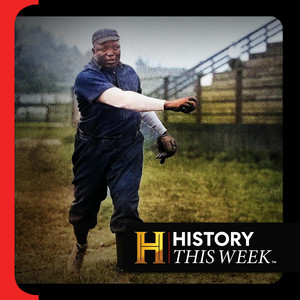
Rube Foster runs the meeting.
He's the manager and owner of the renowned Chicago American Giants and already a legendary figure in the world of black baseball.
In some ways, he has the most to lose from forming a league, because he's already doing so well on his own.
But Foster is in.
In fact, he's so in that he's already gotten started.
He pulls out a document and presents it to the group, a charter for the new Negro National League.
Foster has even picked out a motto.
One thing I was wondering.
The motto of the league that they announce is we are the ship, all else the sea.
Uh-huh.
What does that mean?
I think it meant that it was the Negro League's declaration of independence.
They were sending a message to Major League Baseball that a new player had arrived on the scene to be reckoned with.
So the ship is the Negro League's?
And what's the sea?
The sea is everything else that's in its wake.
Today, they were the ship, all else the sea.
How did black baseball survive when segregation became the unofficial policy of the major leagues?
And how did black players, owners and managers join together to create something that no baseball?
A lot of times, a story about black baseball begins with the name Jackie Robinson.
But when Robinson joined the Brooklyn Dodgers in 1947, he was not the first black athlete to play in the major leagues.
He was just the first in six decades.
Before Jackie Robinson, there was Bud Fowler, who started playing professional baseball in 1877.
And Fowler was far from the first Black baseball player.
Really, Sally.
There's remnants or evidence of Black folks playing baseball, even as enslaved people.
So it certainly wasn't new that we were playing the game.
We just didn't have many places to play the game from a professional standpoint.
That's Bob Kendrick, president of the Negro League's.
We talked to him last year for our episode on the life of baseball superstar Henry Aaron.
Bud Fowler was also a star player.
You just might not have heard his name.
He started out as a pitcher, and he had a great rookie season.
For any baseball fans wondering, he pitched 130 innings with a 2.08 ERA.
For non-baseball fans, that is very good.
Despite how talented he was and the fact that he outperformed so many of the people that he was playing with, he would always get kicked off his team.
White players sometimes even tried to literally kick him off the field.
Fowler also played second base and players would sometimes slide right into him.
Try to take him out.
To protect himself.
Fowler invented an early version of shin guards, specially shaped pieces of wood that he'd slip into his sock.
Today, you can see the modern version on the shins of every catcher from Little League on up.
In general, the game looked very different back then.
Pitchers threw underhand.
Batters could ask to have the ball pitched low or high, and Bud Fowler didn't even use a glove.
He caught balls barehanded, a distinction he shared with the last Black major leaguer before Jackie Robinson Moses Fleetwood Walker.
Moses Fleetwood Walker was a barehanded catcher.
Ouch.
Yeah.
Walker was a standout player in college and left school in 1883 to sign with the Toledo Blue Stockings.
And in August of 1883, almost right away, white players begin a racist campaign against him.
We talked about this with Phil S Dixon, who's written several books on the history of black baseball.
He told us that summer, Walker's team was set to play an exhibition game against the Chicago White Stockings, who will eventually become known as the Cubs.
The leader of the White Stockings is Cap Anson.
He is the best player of his era.
Many consider him baseball's first superstar.
So people are listening, and what Cap Anson says is pretty important in that particular time.
And Cap Anson says... he won't play against a Black man.
When he says that he doesn't want to be on the ball field with Fleet Walker.
Fleet Walker's in trouble.
Walker actually isn't even supposed to play in this game.
He's suffering from a sore hand, which will happen if you're catching over 100 pitches per game without a glove.
But that is not enough for Anson.
He wants Walker totally out of sight.
And he threatens that if he doesn't get his way, he won't play.
But the manager of Walker's team, the Toledo Blue Stockings, he doubles down.
He calls Anson's bluff and tells him, I am putting Walker in the lineup.
You can either play or lose the money you'd have made on ticket sales.
Bob Kendrick told us.
Ultimately, he relented and played the game and said it wasn't going to happen anymore.
And that started that whole movement.
The whole movement against black players in the major leagues.
The reason that after Fleetwood Walker, there won't be another until Jackie Robinson.
This is the story of the one.
As an HVAC technician, he and his digital multimeter are in high demand.
So when a noisy office HVAC turns out to be a failing blower motor, he doesn't break a sweat.
With Grainger's easy to use website and product information.
He selects the product he needs to keep everything humming right along.
Call 1-800-GRAINGER, clickgrainger.com or just stop by.
Grainger, for the ones who get it done.
Life can feel overwhelming, but you don't have to go through it alone.
On my podcast From the Heart with Rachel Brathen.
I share openly and vulnerably about everything life brings us and what we can learn by living with our hearts a little bit more open.
Every Friday, a new episode brings you a new story with topics on self-care motherhood, healing and more.
You are enough just the way you are.
This podcast is a reminder of that.
Follow and listen to From the Heart with Rachel Brathen wherever you get your podcasts.
It's tax season, and at LifeLock, we know you're tired of numbers.
But here's a big one you need to hear.
Billions.
That's the amount of money in refunds the IRS has flagged for possible identity fraud.
Now here's another big number.
100 million.
That's how many data points LifeLock monitors every second.
If your identity is stolen, we'll fix it guaranteed.
One last big number.
Save up to 40% your first year.
Visit lifelock.com slash podcast for the threats you can't control.
Terms apply.
Cap Anson was saying out loud something that had been brewing behind the scenes in baseball for years.
Now the other guys may have shared that same sentiment, not nearly as outspoken.
So you need that front guy to kind of give you the courage to fall in line.
But on the flip side of that, you likely had some other guys who didn't feel that way.
You know, because I've always believed that great athletes want to compete against great athletes.
Because the only way you can measure how good you are is by playing with and against the very best.
But ultimately Anson's campaign to make professional baseball unwelcoming and hostile towards Black players that carries the day.
You can even see it show up in statistics from the next season in 1884, when Walker's team gets moved up to the major leagues.
Phil Dixon told us one of the pitchers on Toledo that year, Tony Mullane.
He didn't like Fleet Walker being on the team, so he refused to take signals from a black man.
Normally, the catcher signals the pitcher which pitch to throw, a fastball, a curveball.
And if the pitcher ignores him, if the catcher doesn't know what's coming, it can be dangerous.
And the whole year whenever Millane threw a curveball and he had a pretty good one at that time.
Moses Fleetwood Walker never knew when it was coming.
Millane was quoted as saying, I used to pitch anything I wanted without looking at his signals.
And if you look at the numbers, you can see that it's true.
Millane led the league that year in wild pitches. pitches that got away from the catcher.
And Walker, in turn, led the league in passed balls, pitches he was supposed to catch but didn't.
You can also see the hostile atmosphere in the physical evidence from the time.
If you look at many team pictures from that period, very seldom do you see the white guys with their hand around the black guy's shoulder or something like that, but you see them take those same positions with other white players.
Two weeks before the end of the season, Toledo cuts Moses Fleetwood Walker.
It could have been because of injury, poor performance, the racial pressure the team experienced throughout the year, or some combination of all of those.
But after Walker leaves the league, no other Black player will join a major league team for more than six decades.
There was no written doctrine, just a verbalized agreement amongst players, managers and owners that essentially said if you allow a Black to play with you, you can't play with us.
It was called the Gentleman's Agreement, and it established baseball's color line.
But this is not the end of Black baseball.
Far from it.
Black players now can't play in the major leagues.
So black teams begin to spring up around the country.
And one of the people leading that charge is none other than Bud Fowler, the first black professional baseball player, the guy who invented those wooden shin guards.
He now sees that black players need their own teams.
And so he starts one, the Page Fence Giants out of Adrian, Michigan.
He plays for that team and for others, the Smoky City Giants, the Kansas City Stars.
These teams were traveling around the country playing games as they went.
It was known as barnstorming.
They took the game on the road, and people loved it.
The towns would shut down to watch these ballplayers play.
And it was the whole town.
Black and white fans would come out to the ballpark to see these teams.
Barnstorming is freewheeling, exciting, and chaotic.
It was just too haphazard.
Guys jumping from team to team, and it needed structure.
Enter a pitcher named Rube Foster.
Rube Foster was light years ahead of his time.
He is credited with having invented what we now know to be the screwball.
Rube Foster was an absolute genius pitcher.
Ruth Foster, without question, is the greatest baseball mind this sport has ever seen.
And most baseball fans still don't know who the heck he is.
Foster started playing baseball as a kid in Calvert, Texas.
And the sport was a lifeline, literally.
Dixon told us all of Foster's siblings had died from tuberculosis.
And in order to avoid the same fate himself...
One of the prescriptions that doctors gave was to be outside as much as you can.
And through that, Rube Foster was out and he started playing baseball.
By the time he's a teenager, Foster is playing for independent Black teams throughout Texas.
And at first, he's kind of underrated.
He's the largest pitcher that anyone has ever seen.
And many times he would go into town, the white fans would come out to see him, and they'd laugh.
They'd laugh because they would think this guy's overweight, out of shape.
He's not going to beat anybody.
And at the end of the game, you know, he might win one to nothing.
And he was the last man laughing.
In fact, he's developing a reputation as the best Black pitcher in America.
And he's playing on these barnstorming Black teams.
He goes from Chicago to Michigan and finally joins the premier block team of the era, the Cuban X Giants.
Man, this guy is on fire.
The major leagues would come out to see him pitch and they knew that he was in a league by himself, but they weren't about to break that color barrier, no matter what it took.
After he joins the X Giants in 1902, Rube Foster makes an important move.
He's still an amazing pitcher, but he also starts to get more involved with the business side of the game.
He starts to become a player advocate.
Generally he's going to be the highest paid player on the team, but he's not just satisfied with that.
He wants the other guys to receive more money.
So that's where he starts to fight for those guys.
And then, when he doesn't get enough money from one owner, he decides hey, I'm going to jump to the Philadelphia Giants and I'm going to take a few of these guys with me.
By 1907, at age 28, Foster has become both a player and a manager for Chicago's Leland Giants.
Bob Kendrick told us he starts to encourage a distinct style of play on his team.
Fast, aggressive, daring.
They bought their way on.
They steal second.
They steal third.
And if you weren't too smart, they were stealing home.
To enforce this, Foster would actually fine his players.
As much as $5 if you were tagged outstanding up, you were supposed to slide.
Rube would draw a circle down the first baseline and a circle down the third baseline.
And if every one of his players couldn't drop a bunt inside that circle, he would fine them.
But Leland Giants are good.
They're playing teams around the country and around Chicago.
And Phil Dixon told us, in Chicago... Just so happens that Cap Anson had a team in the City League.
Cap Anson.
One of the first superstars of baseball, the man who refused to take the field against Moses Fleetwood Walker.
The man many consider responsible for the color line.
He was still playing baseball in 1907.
He was 55, which for a baseball player is very old.
He was playing first base and also managing a local independent team called Anson's Colts.
And apparently, he now had no issue playing against black ball players.
At that particular time, Cap Anson needed the Leland Giants to make money.
He was in financial straits.
One particular matchup on May 6th, 1909 went as follows.
Here's a quote from a newspaper at the time.
The Leland Giants walked all over the Anson Colts Sunday at the latter's grounds.
Rube Foster doing the pitching act, and he could scarcely do enough to get warmed up, as Anson's orphans were such easy meat.
The big fellow felt sorry for them and only defeated them eight to one.
But, satisfying as it must have been for these Black players to beat Cap Anson, Black baseball as a whole was starting to feel some strain.
Bud Fowler had begun organizing these teams about 20 years earlier.
And by this point, the lack of a centralized structure meant that Black baseball wasn't thriving as much as it could be.
And teams faced economic pressures.
They needed to have a structure that essentially would mirror the success of Major League Baseball.
Rube Foster sees that.
And that is what led him down that path of working to pull those other independent Black baseball team owners together.
Foster begins laying this groundwork in the 19-teens.
He thinks working together in a Black nationwide league is one path that might help Black baseball thrive.
But at the same time, Foster still believes it's also possible that the major leagues will eventually realize that the color line is absurd and give it up.
After all, look at all the amazing Black players on these amazing Black teams.
But during this same period, there are forces of racism brewing in the North that make integrating the major leagues look ever more impossible.
Large numbers of Black Americans had moved to Northern cities during what was known as the Great Migration.
They hoped to escape the Jim Crow South, but now those same forces were turning up in the North.
The Ku Klux Klan was on the rise.
And in the summer of 1919, things come to a head across the country.
In Chicago, the summer is brutally hot.
On Sunday, July 27, temperatures reach 96 degrees.
The scorching heat sends thousands of people to the shores of Lake Michigan, including 17-year-old Eugene Williams and his friends.
As the group of boys floats in the lake on their raft, they cross an invisible informal color line in the water itself, the line separating the white and black sections of the 29th Street Beach.
A white beachgoer sees the raft and starts throwing rocks.
Some witnesses later say they saw Williams get hit.
Others say he slipped to avoid getting hit.
But what we know is that Eugene Williams drowns that day in Lake Michigan.
Afterwards, violence erupts across the city.
It happens mainly in the city's Black neighborhoods and it leaves 38 people dead, over 500 injured and a thousand Black families homeless after their homes burn.
It's soon after the riots that Rube Foster gives up for good on the idea that integration is coming to the major leagues and instead goes all in on the prospect of a black baseball league.
Historian Robert Kuhn McGregor wrote in his book A Calculus of Color quote though he never once referred to the summer's violence.
To argue that his thinking was not affected by events would be to strain belief in coincidence beyond any reasonable breaking point.
The following winter, Foster is finally ready to make this league happen.
Now, he just has to convince the other independent team owners to join in with him.
Foster had to be a master salesman because the other guys were having to relinquish their independence.
And that couldn't have been an easy sale.
But he calls a meeting in Kansas City and makes his pitch.
If journalism is the first draft of history, what happens if that draft is flawed?
In 1999, four Russian apartment buildings were bombed.
Hundreds killed, but even now we still don't know for sure who did it.
It's a mystery that sparked chilling theories.
I'm Helena Merriman and in a new BBC series I'm talking to the reporters who first covered this story.
What did they miss the first time? the History Bureau, Putin and the apartment bombs.
Listen on BBC.com or wherever you get your podcasts.
By the time, Rube Foster calls that meeting in Kansas City at the Paseo YMCA, he already owns one baseball team and has a partial stake in four more.
So when it comes to giving up his autonomy as a team owner to a nationwide league.
No one had more to lose than Rube Foster.
Because he's doing great on his own.
Winning games, making money.
But it's also clear that black baseball as a whole will be better off if they work together.
Organize, share resources.
And a nationwide league won't just help baseball players or baseball fans.
In many instances, wherever you had successful Black baseball, you had thriving Black economies.
Foster has seen this firsthand in Chicago.
His team drew Black fans from the surrounding community and also white fans from outside the community, all of whom then patronized Black businesses.
Foster also held several community benefit games each year.
The proceeds went to Black civic organizations.
So he comes to Kansas City already committed to a national Black baseball league and all that it represents.
And in fact, he's already put in a ton of work to make it happen.
He's even recruited some of the country's most prominent Black sports writers to help draft the league's bylaws.
And at the meeting he presents his fellow owners and managers with the charter he's already written.
The corporate papers have been filed.
He was very, very convincing in what he said.
He was able to get them to join into this effort.
And that was kind of the birth of the Negro Leagues.
The opening game is played on May 2, 1920.
8,000 fans turn out to see Foster's American Giants face off against the Indianapolis ABCs.
Foster's team loses that game, but after a 62-game season they emerge as the league's first champions.
And the style of baseball that Foster encouraged daring athletic, exciting will become signature play for the entire league for years to come.
The Negro National League was an immediate success.
For the African-American community, the Negro Leagues was everything.
Yeah, not because it was ours.
It was inherently ours.
And we were proud of it.
And we supported it.
And it was more than a sporting event.
It was more than entertainment.
This was a social event.
Oh, you went to see and you went to be seen.
The Negro Leagues continue to thrive through a few iterations over the next several decades, until 1947.
When Jackie Robinson enters the major leagues, It is the beginning of the end for the Negro Leagues.
Other star players start getting signed to the majors.
Here's Phil Dixon.
When the ballplayers are gone, the fans follow.
So now they're going to give their allegiance to a major league team and they don't care if your team is all black.
And Bob Kendrick reminded us it was always about more than baseball.
When we lost the Negro Leagues, we lost a tremendous catalyst that sparked economic development in so many African American communities.
18th and Vine, where the museum operates today, is no exception.
The South Side of Chicago, Harlem in New York, these places where again typically, wherever you had successful Black baseball, you had thriving Black economists.
And so really I'm not sure Sally, that the African-American community realized what it was losing when we lost the Negro League.
We were so excited about the possibility of integration.
It seems to me like it's like what you're talking about with the Black business districts, too.
It kind of is an example of kind of the devil's bargain of integration in a way where it's like.
Yeah, no, you're absolutely right.
The old adage, be careful what you ask for, you might get it.
And because what we asked for was integration.
What we wanted was equality.
Those two are not the same.
They're nowhere near the same.
Equality has been elusive.
While baseball has seen many Black stars since Jackie Robinson, there have only been six Black general managers in Major League history and no black majority team owners.
Black baseball is alive, but much of that power and autonomy has been lost since the Negro Leagues faded away.
And it's taken a long time for this history to be recognized.
In December of 2020, Major League Baseball announced that statistics from the Negro Leagues would finally be counted with the same weight, alongside Major League stats from that same era.
And in December 2021, Bud Fowler, the first Black professional baseball player, was finally elected to baseball's Hall of Fame.
Kendrick told us, This story is not a woe is mine kind of story.
These amazing athletes never cried about the social injustice.
They went out and did something about it.
Again, you won't let me play with you?
Okay, I'll create my own league.
And when you stop to think about that, that is the American spirit at her absolute finest.
So, while America was trying to prevent them from sharing in the joys of her so-called national pastime, it was the American spirit that allowed them to persevere and prevail.
So in essence, you make a way when there seemingly is no way.
These players, managers, owners, they became the ship.
All else, the sea.
Thanks for listening to History This Week.
For moments throughout history that are also worth watching.
Check your local TV listings to find out what's on the History Channel today.
If you want to get in touch, please shoot us an email at our email address historythisweek at historycom, or you can leave us a voicemail at 212-351-0410.
Special thanks today to our guests Bob Kendrick, president of the Negro Leagues Baseball Museum and host of his own podcast, Black Diamonds.
And also to Phil S Dixon, baseball historian and author of Andrew Rube Foster A Harvest on Freedom's Fields and also many other books.
This episode was produced by Ben Dickstein, sound designed by Brian Flood and story edited by Jimmy Gutierrez.
History This Week is also produced by Julie Magruder, Julia Press, and me, Sally Helm.
Our researcher is Emma Fredericks.
Our executive producers are McKamey Lynn and Jesse Katz.
Don't forget to subscribe, rate, and review History This Week wherever you get your podcasts.
And we will see you next week.