Welcome to Spotlight.
I'm Alice Irizarry.
And I'm Colin Lowther.
Spotlight uses a special English method of broadcasting.
It is easier for people to understand no matter where in the world they live.
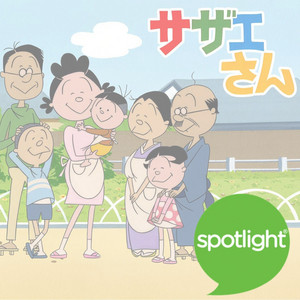
Sazae-san's life has not changed for almost 80 years.
She, her husband and children live together with her parents.
She spends most of her time keeping house, as most post-war Japanese women do.
Her children have not aged.
She will stay 24 forever.
Today's Spotlight is on Sazae-san.
Sazae-san is the main character of the longest running cartoon or animated drawing television program in history.
Her name, Sazae-san, gives the program its title, Sazai-san.
She represents a simpler time for Japanese people.
But the main character's history is anything but simple.
Created during a difficult time in Japan's history, Sazai-san was part of a wave of changes that transformed the country itself.
Machiko Hasegawa was a Japanese artist.
She made manga – stories with drawn pictures and words.
She also created Sazae-san.
Born in 1920, Hasegawa was a strange girl in Japanese society.
Most women were expected to be gentle.
Their mothers trained them that men were in charge.
But Hasegawa did not like to obey the rules.
By the time she was 14, Hasegawa had decided she would have her own career.
She was going to make a living creating manga.
Hasegawa's courage helped her succeed.
She published her first manga, or story cartoon, called Badger Mask when she was still a teenager.
But Sazae-san was her first major success.
First published in 1946, the manga explores the home life of the main character.
Unlike the Sazae-san of today, Hasegawa's first manga explored life in modern Japan.
Sazae-san's Japan was a very complicated place.
Much of the country's traditional culture held great importance.
But the Second World War had just ended.
Japan was on the losing side.
Its defeat forced many changes in Japanese culture.
The United States and Europe brought different technology and ideas.
Philip Lu studied these changes and taught about them.
He said, The 1950s were very disorganized, changing times.
They subjected the Japanese people to shifts in beliefs and changes in old ideals.
One of the greatest changes was a shift toward democracy.
The New Japan promised that everyone would have the right to vote on their government.
This included women, who had very few rights in traditional Japanese culture.
Though Sazae-san was still traditional in many ways, its main character was a good example of a free Japanese woman.
Sometimes she worked outside of the house to make money.
She made her opinions known, especially to her husband.
Hasegawa's original manga also examined other changes in everyday life.
In one, Sazae-san is waiting in line for rations.
A small amount of food given to people in times of hardship.
This was a real situation many Japanese people lived through during the war.
While Sazae-san contained many of these situations, it was not about them.
At its center, the manga was about family. and the humour that comes from it.
It showed the difficulty of everyday life in Japan.
But it also gave readers a way to laugh at themselves and their situation.
Hasegawa worked through the seriousness of her age.
But she understood it through laughter.
Hasegawa's manga changed her life.
Soon after she first published Sazae-san, the manga became a national sensation.
Everyone knew about and read Sazae-san.
By the time Hasegawa retired in 1976, she was the best known female manga artist in the country.
Sazae-san is still one of the best selling manga of all time.
Machiko Hasegawa died in 1992.
But her creation would last much longer.
And it would change in ways that Hasegawa could never have expected.
Shortly before she retired, the company Fuji Television talked to Hasegawa.
They requested her permission to make a television program based on the manga.
The show, also called Sazae-san, first aired in 1969.
It has been running ever since.
At first, the Sazae-san show was very similar to the manga.
But it was different in one very important way.
It stopped being about modern life.
Its showrunners, the directors and creators of the show wanted Sazae-san to be as close as possible to the original manga.
So its characters did not change much.
Even today.
Sazae-san's main character has the same haircut that was popular in the 1940s and 50s.
The show's family does not use modern technology.
The family all still lives together.
This is different than most current Japanese families.
The Sazae-san show was most popular in the 1970s.
But even today, it holds a wide viewership.
Many of its viewers are older – 60 years old or more.
For many of these people, watching Sazae-san is like looking into the past.
Japan has changed even more since the manga was published.
The show offers comforting memories.
It is a reminder of a time when things seemed simpler.
Deborah Shamoon is a teacher at the National University of Singapore.
She told the New York Times, Sazae-san is like a box where you store memories.
It has become a warm coloured memory of how things used to be.
The Sazae-san show is not just popular with old people.
The television series makes the past seem like a pleasant place.
Some younger viewers are drawn to the sense of happiness it gives.
Watching the show is like comforting yourself with a warm blanket.
But its current popularity can be explained by one Japanese word – Natsukashi.
Erika Hobart is a writer whose family is Japanese.
She explains In Japan, Natsukashi is a reminder that you are lucky to have had the experiences you have had in life.
You cannot return to those experiences, but this makes these memories even more touching.
Sazae-san's show creates this feeling of natsukashi in viewers.
It is recognizing the life you have lived.
Japan's population is aging.
Fewer young people are being born each year.
Not as many people watch the show.
But as long as there are people who remember, there will be people who watch Sazae-san.
This may be why the show is the longest-running animated television show in history.
It helps people feel happy about what they have done.
And it lets younger people dream of a simpler, easier time.
Midori Kato is a voice actor.
She has been the voice of Sazae-san since she was in her 20s.
She has a different theory about why the show is so popular.
She told the New York Times, This is the worst thing people are afraid of.
All women say, this is good.
The characters live forever.
Holding on to something which remains the same can be a comfort in a constantly changing modern world.
Sazae-san and her story offers Japanese audiences the joy of an earlier time of life.
What makes you happy about the things you have experienced?
What creates Natsukashi for you?
A good memory of an earlier time in your life.
We want to hear your thoughts.
You can leave a comment on our website at www.spotlightenglish.com.
You can also find us on YouTube, Facebook, TikTok, Blue Sky and Etsy.
You can also get our programs delivered directly to your Android or Apple device through our free official Spotlight English app.
The writer of this program was Dan Christman.
The producer was Michio Ozaki.
The voices you heard were from the United States and the United Kingdom.
All quotes were adapted for this program and voiced by Spotlight.
This program is called, Life Never Changes.
We hope you can join us again for the next Spotlight program.
Goodbye.